Noise Reduction for USA Made CNC Machines: Damping Alternatives
Compare vibration damping and noise reduction alternatives for USA made CNC machines. Analyze air mounts, elastomeric pads, and acoustic enclosures.
The Baseline: Structural Dynamics in Domestic CNC Equipment
USA made CNC machines, such as the Haas VF series, Hurco VMX models, and Fadal vertical machining centers, are engineered with heavy cast-iron bases and steel weldments to maximize static rigidity. However, high material removal rates (MRR) in aerospace and automotive job shops generate dynamic cutting forces that excite structural resonances. This results in tool chatter, poor surface finishes, and shop floor noise levels that frequently exceed 95 dBA. According to OSHA standard 1910.95, prolonged exposure to noise above 90 dBA requires mandatory hearing conservation programs, making acoustic and vibrational mitigation a critical operational priority.
While domestic manufacturers prioritize structural stiffness, the inherent damping capacity of standard Class 30 gray cast iron is often insufficient to absorb high-frequency spindle harmonics (200 Hz to 2,000 Hz) generated during aggressive roughing cycles. To achieve premium surface finishes and extend tool life, shop managers must evaluate aftermarket vibration damping and noise reduction alternatives. This analysis compares the most effective isolation and damping upgrades available for American-manufactured CNC equipment.
Expert Warning: Never place precision CNC machinery directly on steel plates or raw concrete without an isolation medium. The acoustic impedance mismatch causes high-frequency spindle harmonics to reflect back into the machine base, accelerating bearing wear and inducing micro-fractures in carbide end mills.Floor Isolation Alternatives: Air Springs vs. Elastomeric Pads
The foundation of any vibration control strategy begins at the machine-to-floor interface. Floor-borne vibrations from nearby forklifts, stamping presses, or heavy lathes typically operate in the 5 Hz to 50 Hz range. Selecting the correct isolation mount requires matching the machine's static weight and dynamic center of gravity to the mount's natural frequency.
Comparative Matrix: Isolation Technologies
| Technology | Load Capacity (Per Mount) | Resonant Frequency | Est. Cost (Set of 4) | Best Application |
|---|---|---|---|---|
| Pneumatic Air Springs (e.g., Firestone) | 3,000 - 8,000 lbs | 1.0 - 2.5 Hz | $3,500 - $5,500 | Precision jig grinding, micro-milling, diamond turning |
| Elastomeric Pads (e.g., Fabreeka Fabcel) | 2,000 - 6,000 lbs | 8.0 - 14.0 Hz | $180 - $350 | General CNC milling (Haas VF-2, Tormach 15L) |
| Mechanical Wedge Levelers | Up to 10,000 lbs | N/A (Rigid Coupling) | $300 - $600 | Heavy roughing, manual lathes, non-precision work |
For a standard 6,800 lb Haas VF-2SS operating in a facility with overhead cranes, Fabreeka Fabcel pads (specifically the 100-series with a 70-90 durometer rating) offer the optimal balance of cost and performance. Unlike generic hardware-store neoprene, which compresses permanently (takes a 'set') and bottoms out under heavy cast-iron bases, engineered elastomeric pads utilize a ribbed geometry that maintains consistent deflection and isolates frequencies above 12 Hz. Air springs provide superior isolation but are generally overkill and financially unjustifiable for standard vertical machining centers unless the shop is located on an unstable soil profile or adjacent to heavy forging equipment.
Spindle & Toolholder Damping Strategies
While floor isolation handles low-frequency environmental vibrations, tool chatter is a high-frequency phenomenon (typically 200 Hz to 1,200 Hz) driven by the regenerative effect of the cutting edge interacting with the workpiece. Upgrading the toolholding system is the most cost-effective method to dampen these specific harmonics.
Collet Chucks vs. Hydraulic Expansion Chucks
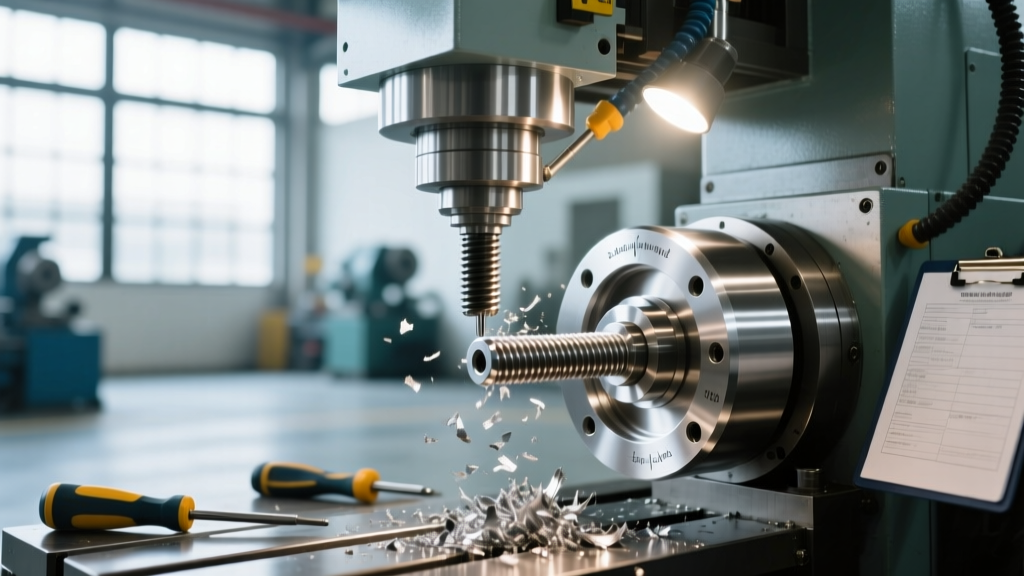
- Standard ER Collet Chucks: Rely on mechanical friction and the elastic deformation of the collet. They offer high gripping force but minimal damping capacity. At 12,000 RPM, micro-vibrations transfer directly from the spindle taper through the collet and into the end mill shank, resulting in audible 'screaming' chatter during slotting operations.
- Hydraulic Expansion Chucks (e.g., Haimer, Schunk):strong> Utilize a pressurized internal oil chamber to expand a thin-walled metallic sleeve uniformly around the tool shank. The hydraulic fluid acts as a localized shock absorber, dissipating high-frequency radial vibrations. Shops upgrading from ER32 collets to hydraulic chucks for finishing passes in 6061-T6 aluminum and 304 stainless steel routinely report a 30% to 50% reduction in audible chatter noise and a measurable improvement in Ra surface finish values.
"The acoustic signature of a milling operation is a direct indicator of dynamic stiffness. If you can hear high-pitched chatter, you are actively destroying your spindle bearings and burning money on premature carbide tooling." — Manufacturing Dynamics Research Group
Tuned Mass Dampers (TMDs) for Boring and Turning
For CNC lathes and boring mills, long overhangs are unavoidable. Passive Tuned Mass Dampers (TMDs) integrated into the rear of anti-vibration boring bars utilize a heavy-metal core suspended in a viscous fluid or elastomeric matrix. When the primary structure (the bar) begins to oscillate, the internal mass moves out of phase, effectively canceling the vibrational energy. Expect to pay a premium of $800 to $1,500 for a high-quality damped boring bar, but the return on investment is realized immediately through the elimination of scrapped parts due to chatter marks on deep internal bores.
Acoustic Enclosures vs. Path Treatment
Beyond vibration, airborne noise is a major compliance and ergonomic hurdle. NIOSH guidelines recommend keeping occupational noise exposure below 85 dBA over an 8-hour time-weighted average. USA made CNC machines typically ship with OEM sheet-metal and polycarbonate enclosures, but these are designed primarily for coolant containment, not acoustic isolation.
Upgrading Machine Enclosures
To achieve meaningful noise reduction, the enclosure must address both airborne transmission and structural resonance.
- Constrained Layer Damping (CLD): Applying self-adhesive viscoelastic CLD sheets (such as Dynamat Xtreme or specialized industrial equivalents like Soundown Vinyl) to the interior panels of the machine's sheet metal enclosure. This converts acoustic vibrational energy into negligible amounts of heat, eliminating the 'drumming' effect caused by coolant pumps and spindle motors. Cost: $3 to $6 per square foot.
- Mass-Loaded Vinyl (MLV) Barriers: Hanging 1 lb/sq ft MLV curtains with an STC (Sound Transmission Class) rating of 27 around the machine perimeter or creating a secondary room-within-a-room enclosure. This is highly effective for blocking the broadband, high-frequency noise (2 kHz - 8 kHz) generated by flood coolant hitting the workpiece and chip evacuation conveyors.
- Active Noise Cancellation (ANC): While consumer ANC technology has advanced, industrial ANC remains ineffective for CNC environments. ANC works well on low-frequency, predictable drone (like HVAC systems), but cannot process the chaotic, broadband, high-decibel transients of carbide cutting through titanium or hardened steel. Do not invest in ANC for shop floor machining noise.
Decision Framework: Selecting the Right Damping Solution
Use the following diagnostic framework to allocate your capital improvement budget effectively based on your specific machine dynamics and shop environment.
If/Then Damping Selection Guide
- IF your primary issue is poor surface finish on tall, thin-walled aluminum parts, THEN invest in hydraulic expansion toolholders and optimize spindle speed mapping (using tap-test software) before spending money on floor isolation.
- IF your shop floor is subjected to heavy impacts from drop forges, stamping presses, or overhead crane drops, THEN elastomeric pads (Fabreeka) or pneumatic air springs are mandatory to protect the machine's linear guideways and ball screws from shock loads.
- IF OSHA has cited your facility for noise violations exceeding 90 dBA, THEN prioritize Constrained Layer Damping (CLD) on all OEM sheet metal enclosures and install MLV acoustic curtains between machining cells. Floor mounts will not solve airborne acoustic complaints.
- IF you are performing heavy roughing (e.g., hogging out titanium or Inconel) on a rigid USA made CNC machine like a Hurco VMX60i, THEN rigid mechanical wedge levelers bolted directly to a reinforced concrete foundation are required. Isolation pads will introduce unwanted compliance, reducing the dynamic stiffness needed for heavy interrupted cuts.
By systematically addressing the machine-to-floor interface, the spindle-to-tool connection, and the airborne acoustic path, manufacturers can dramatically extend the capabilities of domestic CNC equipment. Proper damping is not merely an ergonomic upgrade; it is a fundamental requirement for maintaining tight tolerances, maximizing spindle lifespan, and ensuring regulatory compliance in modern manufacturing environments.