CNC Machine Financing for Hobbyists: Entry-Level Alternatives
Compare CNC machine financing options for hobbyists. Analyze entry-level router alternatives, loan rates, and total cost of ownership for makers.
The Capital Barrier to Desktop CNC Routing
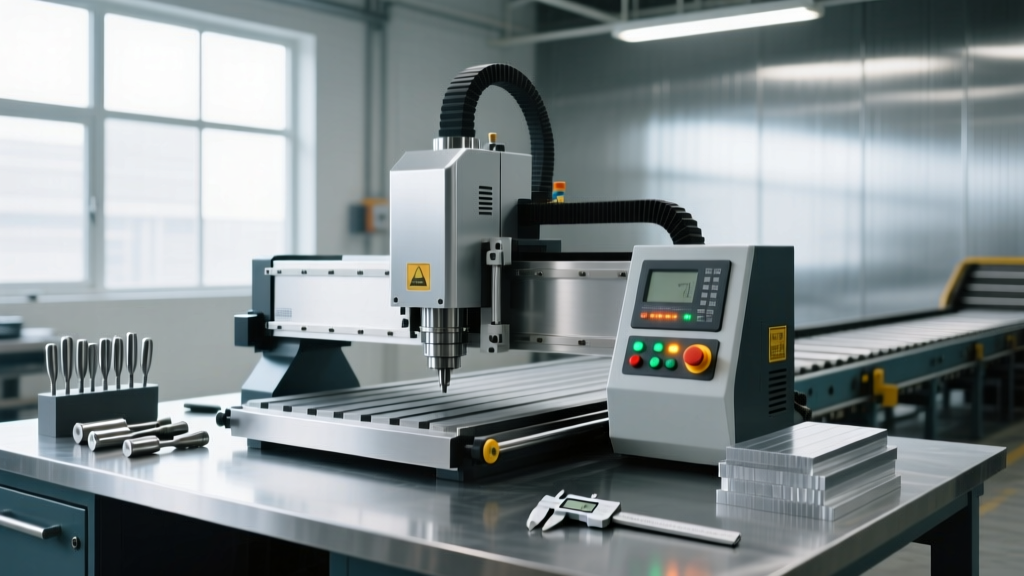
Transitioning from 3D printing or manual woodworking to desktop CNC routing requires a significant capital jump. While a high-end 3D printer might cost $800, a reliable, rigidity-tested entry-level CNC router typically ranges from $1,500 to $3,500. For hobbyists and independent makers, dropping this cash upfront is not always feasible, especially when factoring in the mandatory peripheral equipment. This is where strategic cnc machine financing becomes a vital tool for workshop expansion rather than a last-resort liability.
With the Federal Reserve's baseline rates stabilizing in early 2026, the landscape for unsecured consumer and micro-business equipment loans has shifted. Makers now have to weigh point-of-sale installment plans against traditional credit lines. This analysis breaks down the exact entry-level machines you should be looking at, the hidden costs of ownership, and the most mathematically sound financing alternatives available to hobbyists today.
The Entry-Level CNC Landscape: What Are You Financing?
Before securing capital, you must define the asset. The hobbyist CNC market is dominated by three primary architectures, each catering to different material removal needs. Below is a comparison of the top three entry-level alternatives based on 2026 manufacturer pricing and structural capabilities.
| Machine Model | Base Price (2026) | Work Area | Drive System | Best Application |
|---|---|---|---|---|
| Shapeoko 5 Standard | $1,799 | 16' x 16' x 3.5' | Belt-driven (V-belts) | Woodworking, plastics, light aluminum |
| Onefinity Woodworker | $2,199 | 32' x 32' x 4.5' | Ball screws (X-axis), belts (Y/Z) | Large format signs, furniture parts |
| Bantam Tools Desktop CNC | $3,999 | 7' x 9' x 3.5' | Precision linear guides | PCB milling, precision aluminum parts |
The Shapeoko 5 remains the baseline standard for makers cutting 2D profiles and shallow 3D carves in wood and HDPE. The Onefinity Woodworker solves the rigidity issues of its predecessors with its X-axis ball screw, making it the superior choice for makers needing a larger footprint without upgrading to a $6,000 industrial machine. The Bantam Tools machine is strictly for high-tolerance, small-format work; its high-frequency spindle and enclosed ecosystem justify the premium price tag for engineering hobbyists.
CNC Machine Financing Alternatives Compared
Once you select your machine, the method of acquisition dictates your total cost of ownership. Here is how the primary financing routes compare for a $2,500 equipment purchase.
1. Point-of-Sale (POS) Installment Plans (Affirm, Klarna, Shop Pay)
Most direct-to-consumer CNC brands now integrate POS financing at checkout. These platforms offer terms from 6 to 36 months. In 2026, standard APRs on these platforms hover between 12% and 24% for makers with average credit (670-730 FICO). However, manufacturers frequently subsidize promotional 0% APR offers for 12 months to move inventory during Q4 holiday sales. If you can secure a 12-month 0% promo, this is mathematically the cheapest route, provided you have the cash flow to absorb $208/month in principal payments.
2. 0% Introductory APR Credit Cards
Cards offering 15 to 21 months of 0% introductory APR on purchases remain a staple for workshop expansion. According to the Federal Trade Commission's consumer credit guidelines, the critical risk here is deferred interest or the post-promotional APR cliff, which often jumps to 24% or higher. This route is optimal only if you are running a maker side-hustle and can guarantee paying off the $2,500 balance before month 15 using business revenue.
3. SBA Microloans and Personal Equipment Loans
If you operate your maker space as a registered LLC, you may qualify for micro-financing. The U.S. Small Business Administration (SBA) outlines microloan programs up to $50,000, often administered through local non-profit lenders. While the application process is heavier than a POS checkout, rates are typically capped lower than unsecured personal loans, and the interest is fully deductible as a business expense. For pure hobbyists without an LLC, standard unsecured personal loans from credit unions average 9.5% to 14% APR in the current market.
Warning: The 'Lease-to-Own' Trap
Avoid consumer lease-to-own platforms (like Progressive Leasing) for CNC equipment. These agreements often carry implied APRs exceeding 40% when factoring in lease fees and buyout costs. Stick to traditional installment loans or revolving credit.
The Hidden Capital Requirements of CNC Ownership
A common mistake makers make when applying for cnc machine financing is calculating the loan amount based solely on the router's base price. A CNC router is useless without workholding, tooling, and dust management. When structuring your loan or credit line, you must pad the principal by at least 25% to cover these immediate necessities.
- Workholding & Spoilboard: A 4'x4' sheet of 3/4-inch MDF for a spoilboard costs roughly $45. A Whiteside 1-inch carbide spoilboard surfacing bit costs $85. Add $120 for a set of low-profile toggle clamps or a T-track system.
- Endmills & Tooling: Hobbyists burn through cheap Amazon carbide bits. Budget $150 for a starter set of quality 1/4-inch and 1/8-inch upcut and downcut spiral bits from reputable brands like Specline or Harvey Tool.
- Dust Collection: CNC routing MDF or hardwood generates hazardous particulate. A 4-inch Wen dust collector ($160) and a Dust Deputy cyclone separator ($110) are non-negotiable for indoor air quality and machine longevity.
- Spindle Upgrades: Many entry-level machines ship with a basic Makita compact router. Upgrading to a 2.2kW VFD water-cooled spindle kit costs an additional $450 to $600 but is required for reliable aluminum milling.
For a $2,199 Onefinity Woodworker, your actual 'ready-to-cut' capital requirement is closer to $2,800. Finance accordingly.
Decision Framework: Matching Capital to Your Maker Profile
The optimal financing vehicle depends entirely on your production intent and cash flow predictability.
Scenario A: The Pure Hobbyist (No Revenue)
Profile: You cut projects for your own home, friends, and family. No consistent income stream from the machine.
Optimal Route: 15-month 0% Intro APR Credit Card.
Strategy: Use the 15-month interest-free window to pay down the principal using your standard monthly salary. Do not use a personal loan with a 12% APR, as you are paying interest on a depreciating hobby asset that generates no taxable revenue to offset the cost.
Scenario B: The Side-Hustle Etsy Seller
Profile: You produce custom wooden signs, acrylic templates, or leather goods for online sale. You generate $400 to $1,000 in monthly gross revenue.
Optimal Route: POS 12-Month 0% Promo or SBA Microloan (if LLC).
Strategy: If the manufacturer offers a 12-month 0% checkout promo, take it. Allocate 20% of your monthly shop revenue directly to the machine payment. If you need to finance the hidden costs (tooling, dust collection) separately, use a low-interest credit union personal loan and deduct the interest against your Schedule C business income.
Scenario C: The Prototyping Engineer
Profile: You are milling precision aluminum enclosures and PCB boards for freelance engineering clients.
Optimal Route: Equipment Financing / B2B Credit Line.
Strategy: Because you are cutting metals, you are likely looking at the Bantam Tools ecosystem or a Tormach PCNC 440 (which pushes $5,500+). The Consumer Financial Protection Bureau (CFPB) notes that secured loans often offer better rates. If you have existing shop equipment, a secured line of credit or a dedicated equipment loan allows you to leverage Section 179 tax deductions, effectively having the government subsidize 20% to 30% of your machine's cost through tax savings.
Real-World Cost of Capital: A 24-Month Breakdown
To visualize the impact of your financing choice, below is a breakdown of the total cost to finance a $3,000 CNC setup (machine + tooling + dust collection) over a 24-month term across different vehicles.
| Financing Method | Est. APR (2026) | Monthly Payment | Total Interest Paid | Total Cost |
|---|---|---|---|---|
| POS Promo (Paid off in 12 mo) | 0% | $250 (for 12 mo) | $0 | $3,000 |
| Credit Union Personal Loan | 10.5% | $139 | $343 | $3,343 |
| Standard POS Installment | 18.0% | $149 | $590 | $3,590 |
| Standard Credit Card (No Promo) | 23.9% | $157 | $785 | $3,785 |
As the data illustrates, falling back on a standard credit card balance or a high-interest POS plan without a promotional window adds nearly $800 to the cost of your shop setup. That $785 in wasted interest is equivalent to the cost of a premium VFD spindle upgrade or a year's supply of high-quality carbide endmills.
Final Acquisition Strategy
Securing cnc machine financing as a hobbyist requires treating your workshop like a micro-enterprise. Calculate your true ready-to-cut cost, pad your loan request by 25% for mandatory peripherals, and aggressively target 0% promotional windows or low-interest credit union loans. By aligning your repayment terms with your actual material output and revenue generation, a desktop CNC router transitions from a heavy financial burden into a self-liquidating asset that pays for its own spindle hours.