Goliath CNC Machine Cost Guide: Stainless Steel Machining in 2026
Analyze the true costs, tooling budgets, and rigidity limitations of using a Goliath CNC machine for stainless steel versus rigid alternatives.
The Goliath CNC Stainless Steel Paradox
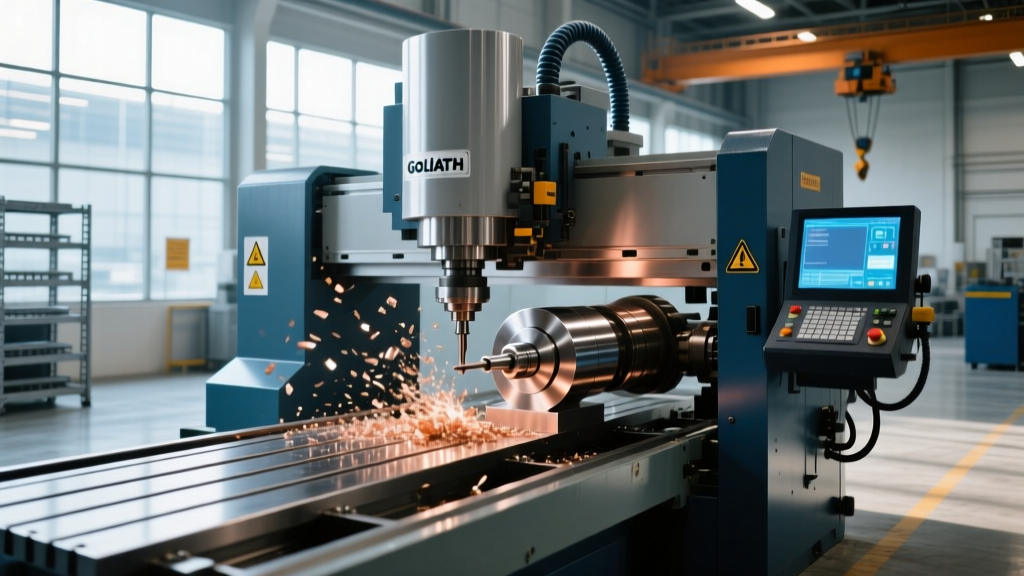
The Goliath CNC machine, primarily recognized as a highly capable portable CNC router, has disrupted the woodworking, prototyping, and light aluminum fabrication spaces. Its portability and large format capabilities make it an attractive capital expenditure for small shops. However, when fabricators attempt to allocate budget for machining stainless steel (grades 303, 304, and 316) on a portable Goliath platform, they encounter a severe mismatch between machine kinematics and material science.
This 2026 cost analysis breaks down the hidden expenses, tooling attrition rates, and retrofitting budgets required to force a portable Goliath CNC to cut stainless steel, and compares this financial reality against investing in entry-level rigid alternatives.
The Physics Problem: RPM, Torque, and Work Hardening
To understand the budget implications, you must first understand the physics of austenitic stainless steels. Alloys like 304 and 316 possess low thermal conductivity and high tensile strength. According to Sandvik Coromant's machining guidelines, maintaining a constant chip thickness and avoiding work hardening is critical when milling these materials.
Let us look at the math for a standard 1/4-inch (6.35mm) carbide endmill cutting 304 stainless steel:
- Target Cutting Speed (SFM): 150 to 200 SFM
- Required RPM: Approximately 2,200 to 3,000 RPM
- Chip Load: 0.001 to 0.002 inches per tooth
Standard router spindles equipped on portable CNCs are designed to operate efficiently between 12,000 and 24,000 RPM. They produce almost zero usable torque below 8,000 RPM. If you command a standard router spindle to run at 2,500 RPM to safely cut stainless, the spindle will stall under the cutting load. The endmill will rub against the material instead of shearing it, generating immense heat and instantly work-hardening the stainless surface.
⚠️ The Work Hardening Trap: When a low-torque spindle fails to push through the cut, the friction hardens the surface layer of 304 stainless to over 40 HRC. This renders the part uncuttable with standard tooling and will snap a $45 variable-helix carbide endmill on the next pass. Your tooling budget will evaporate in days if the spindle torque is insufficient.Budgeting the Modifications: Retrofitting a Portable Goliath
If your shop is committed to utilizing a Goliath CNC machine for stainless steel parts, the base purchase price of roughly $3,500 to $4,000 is merely the entry fee. You must budget for significant mechanical and electrical retrofits to handle the cutting forces and thermal loads.
| Modification / Expense | Estimated 2026 Cost | Technical Justification |
|---|---|---|
| Low-RPM High-Torque Spindle Upgrade | $1,400 - $2,200 | Required to maintain 2,000-4,000 RPM with enough torque to prevent stalling. |
| VFD & Controller Rewiring | $350 - $600 | Necessary to drive the upgraded spindle and map RPM commands correctly. |
| Custom Rigid Fixturing Jigs | $500 - $900 | Portable beds lack T-slots for heavy Kurt-style vises; custom bolt-down plates are mandatory. |
| High-Pressure Mist Coolant System | $300 - $450 | Flood coolant is impossible on an open portable bed; mist is required for heat evacuation. |
| Total Estimated Retrofit Budget | $2,550 - $4,150 | Brings total Goliath investment to $6,000 - $8,150. |
Grade-Specific Tooling Attrition Rates
Even with a retrofitted spindle, the lack of mass and rigidity in a portable CNC frame guarantees harmonic chatter. Chatter destroys tool life. When budgeting your monthly consumables, factor in the specific stainless grade you are machining:
- Grade 303 (Free-Machining): Contains sulfur additives that break chips easily. Tooling wear is moderate. Budget $40/month in replacement endmills.
- Grade 304 (Standard Austenitic): Highly gummy and prone to work hardening. Requires 3-flute or 4-flute AlTiN coated variable-helix endmills to manage chip evacuation. Expect to budget $120/month due to chatter-induced edge chipping.
- Grade 316 (Marine/Abrasive): Contains molybdenum, making it significantly more abrasive. Carbide wear is rapid. Budget $200+/month and strictly limit radial engagement to 10% of the tool diameter.
Alternative Budget Planning: Dedicated Rigid Mills
When your total modified Goliath CNC budget crests the $6,500 mark, you enter the territory of purpose-built, rigid CNC milling machines designed specifically for ferrous metals. If stainless steel is a core part of your 2026 revenue strategy, diverting capital to a rigid mill yields a vastly superior return on investment through faster cycle times, lower tooling costs, and superior surface finishes.
Capital Allocation Matrix: Portable vs. Rigid
| Metric | Goliath CNC (Heavily Modded) | Tormach 440 Mill | Haas Mini Mill |
|---|---|---|---|
| Ready-to-Cut Cost (2026) | ~$7,500 | ~$8,500 (w/ Enclosure) | ~$28,000+ |
| Machine Mass & Rigidity | Extremely Low (Aluminum/Plastic) | Moderate (Cast Iron Base) | High (Heavy Cast Iron) |
| Spindle Torque @ 2500 RPM | Low (Even with upgrades) | High (Geared/Belt driven) | Very High (Vector Drive) |
| Coolant Capability | Mist Only (Open bed) | Flood / Enclosure Ready | High-Pressure Flood |
| Monthly Tooling Attrition | High (Chatter breakage) | Low (Stable cuts) | Very Low (Optimal SFM) |
Note: Pricing reflects baseline 2026 market estimates. Tormach and Haas configurations vary based on tooling packages and coolant add-ons.
The Coolant Conundrum in Portable CNCs
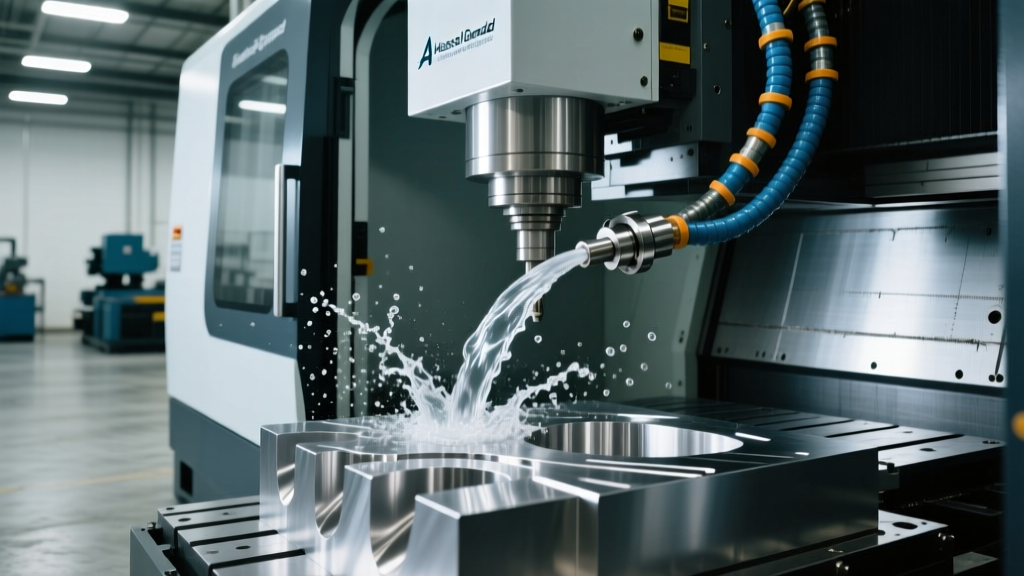
A frequently overlooked line item in budget planning is thermal management. Stainless steel requires aggressive cooling to prevent the chips from welding to the cutting edge (built-up edge or BUE). On a rigid mill, flood coolant delivers high volume and high pressure directly to the cutting zone, flushing chips and cooling the tool.
Because the Goliath CNC machine operates on an open, portable bed, flood coolant is entirely unfeasible without building a massive, custom-sealed enclosure—which defeats the purpose of a portable machine. You are forced to rely on air-blast or mist coolant systems. While mist is better than dry cutting, it cannot penetrate the deep flutes of an endmill during aggressive slotting operations in 316 stainless. This limitation forces you to program lighter radial and axial depths of cut, effectively doubling or tripling your cycle times compared to a flood-cooled rigid mill. When calculating your shop's hourly machine rate, this extended cycle time represents a massive hidden opportunity cost.
Final Verdict: Where Should Your Capital Go?
If your shop primarily machines wood, plastics, and soft aluminum, and you only receive an occasional, low-tolerance stainless steel bracket request, the Goliath CNC machine is a phenomenal asset. For those rare stainless jobs, you can outsource the roughing to a local machine shop and use the Goliath strictly for light finishing passes or engraving.
However, if your 2026 business plan relies on the consistent production of stainless steel components—particularly 304 or 316 grades—attempting to budget for a retrofitted portable router is a misallocation of capital. The $6,500 to $8,000 you will spend modifying a Goliath CNC and replacing shattered carbide tooling is far better invested in a dedicated, rigid entry-level mill like the Tormach 440 or 770MX. By prioritizing machine mass, low-RPM torque, and flood coolant capabilities, you will drastically reduce your cost-per-part and eliminate the chronic downtime associated with work-hardened stainless steel failures.