How to Bid on Equipment: CNC Machines Company Profile & ATC Safety
Learn how to evaluate a CNC machines company profile for ATC safety compliance before you bid on equipment. Includes interlock specs & RFQ clauses.
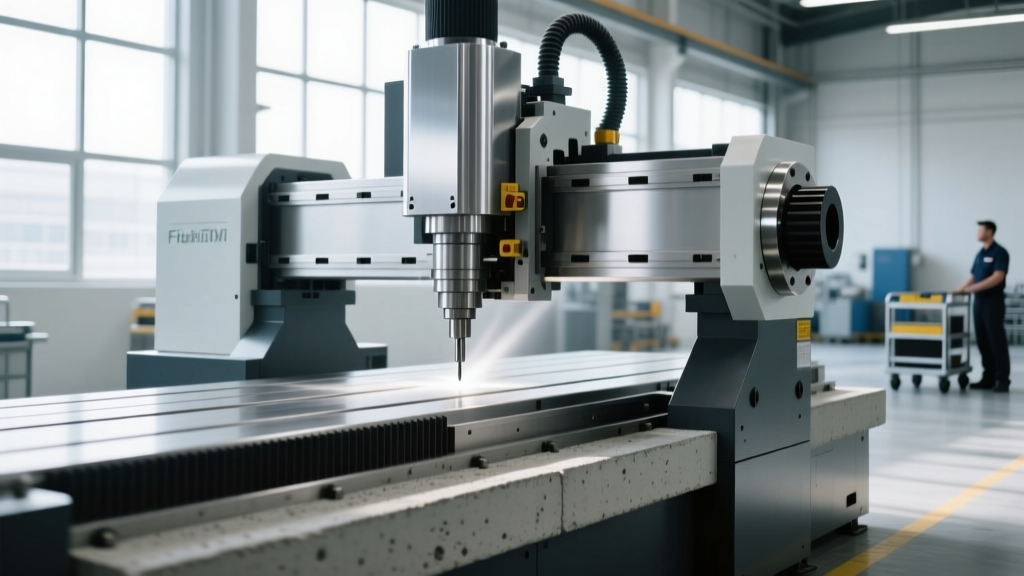
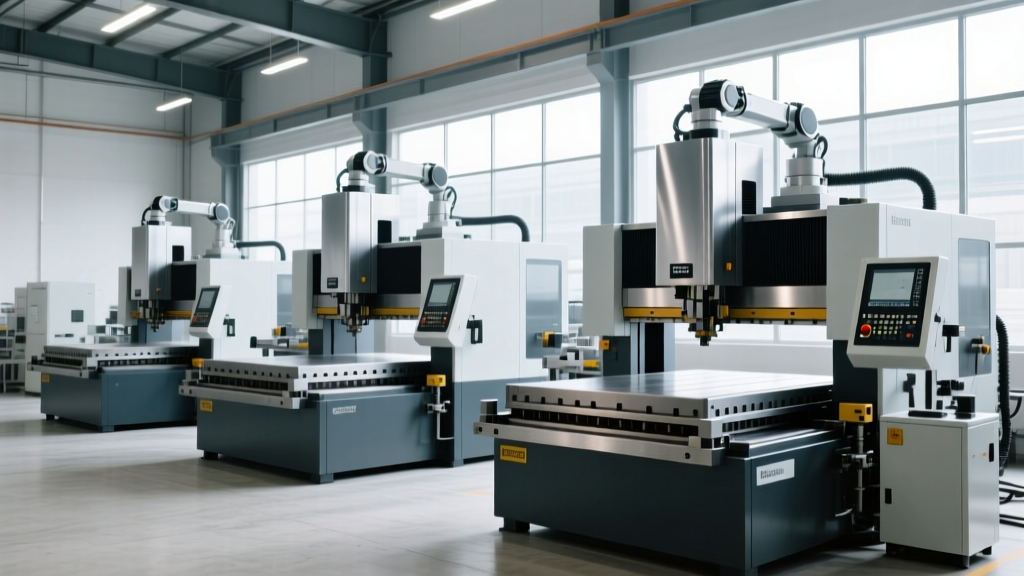
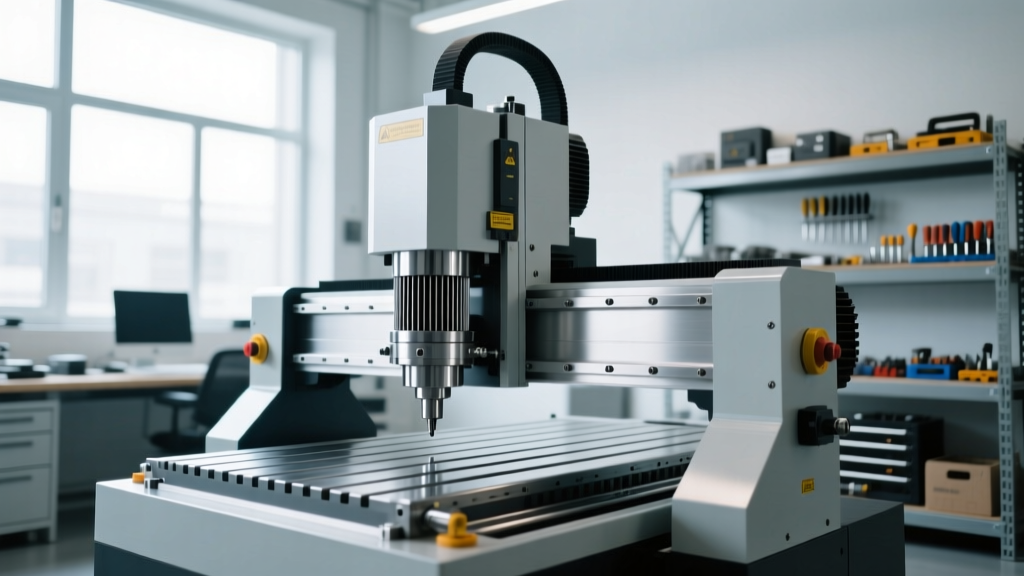
When procurement teams and manufacturing engineers prepare to bid on equipment, evaluating the CNC machines company profile is often reduced to checking spindle warranties, axis travels, and control package versions. However, overlooking the safety architecture of the Automatic Tool Changer (ATC) is a critical procurement failure. A malfunctioning ATC does not merely cause cycle-time downtime; it presents a lethal kinetic hazard.
A standard CAT40 tool holder assembly weighing 5 kg (11 lbs) ejected from a spindle rotating at 15,000 RPM carries over 15,000 Joules of kinetic energy—equivalent to a small vehicular collision. To mitigate this, modern CNC OEMs must engineer redundant safety interlocks into the tool change sequence. This guide details how to scrutinize an OEM's safety profile, decode ATC failure modes, and draft ironclad Request for Quote (RFQ) safety clauses.
OSHA Compliance Alert: Failure to implement proper ATC interlocks and physical guarding violates OSHA 1910.212(a)(1) general machine guarding requirements. As of 2026, OSHA fines for willful machine guarding violations have reached a maximum of $161,323 per instance.Decoding the OEM Profile: Beyond the Brochure
Before you bid on equipment, the CNC machines company profile must demonstrate verifiable adherence to international safety standards. Marketing brochures frequently use the term 'fully interlocked,' but procurement engineers must demand specific certification documentation.
- ISO 23125 & ISO 16089 Compliance: Ensure the OEM designs turning centres and grinding machines to the specific safety requirements outlined in ISO 23125 and ISO 16089, which dictate guard impact resistance and interlock logic.
- ISO 13849-1 Performance Levels: The ATC safety circuit (including the Z-axis brake and tool unclamp sensors) must be rated at minimum Performance Level (PL) d, Category 3. This requires dual-channel redundant architecture.
- Recall & Service Bulletin History: Investigate the OEM's historical service bulletins. A pattern of cam-box replacements or proximity switch recalibrations in a specific machine generation indicates underlying ATC design flaws.
ATC Architecture & Safety Interlock Matrix
Different ATC mechanisms introduce unique mechanical failure modes. When comparing bids, use the following matrix to evaluate the inherent safety and upgrade costs of the proposed tool change systems.
| ATC Type | Primary Safety Interlock | Common Edge-Case Failure Mode | Safety Upgrade Cost (2026) |
|---|---|---|---|
| Carousel (Umbrella) | Spindle orientation & Z-axis home position limit switch. | Carousel door pneumatic cylinder failure mid-cycle, causing tool crash. | $1,800 - $2,500 (Redundant door sensors) |
| Swing-Arm (Cam-Driven) | Arm home-position proximity & spindle unclamp confirmation. | Cam-follower degradation causing arm to stop at 45 degrees, colliding with the spindle nose. | $3,500 - $5,200 (Absolute encoder upgrade) |
| Chain-Type Matrix | Chain tension monitor & pocket selection verification. | Chain stretch causing pocket misalignment; extraction fork shears the tool retention knob. | $6,000+ (Laser pocket verification) |
Tool Retention Physics: The Danger of Pneumatic Drawbars
The most critical safety component of the ATC system is the internal drawbar that retains the toolholder. Standard CAT40 and BT40 spindles rely on a stack of Belleville spring washers to generate clamping force, typically around 15 kN (3,370 lbf). To release the tool, a pneumatic or hydraulic cylinder pushes against the drawbar to overcome this spring force.
The Shop Air Vulnerability
Many mid-tier CNC machines utilize a pneumatic cylinder tied directly to the facility's shop air supply for the unclamp/clamp sequence. This introduces a severe safety vulnerability: if the shop air pressure drops below 85 psi due to demand spikes elsewhere in the plant, the drawbar may fail to fully unclamp, or worse, fail to fully re-clamp. If the retention force drops below 10 kN during a heavy roughing cut, the lateral forces will overcome the friction of the taper, resulting in tool pull-out and ejection.
Procurement Specification: Mandate a gas-charged pneumatic cylinder or a standalone hydraulic power pack for the drawbar actuation. This isolates the tool retention system from plant air fluctuations and guarantees a consistent 18-25 kN clamping force regardless of external facility conditions.HSK vs. CAT/BT Tapers for High-Speed Safety
For spindles operating above 12,000 RPM, standard CAT/BT tapers are unsafe due to 'spindle growth.' As the spindle heats up and expands centrifugally, the toolholder taper pulls deeper into the spindle, altering the Z-axis datum and reducing clamping rigidity. When bidding on high-speed equipment, mandate HSK-A63 or HSK-E50 tooling. HSK utilizes a dual-contact (face and taper) clamping system with a hollow shank that expands outward under centrifugal force, actually increasing retention rigidity and safety at high RPMs.
Drafting the RFQ: Mandatory Safety Clauses
To protect your facility from liability and ensure operator safety, copy and paste the following technical clauses directly into your RFQ documentation when you bid on equipment:
- Redundant Unclamp Interlock: 'The spindle drive must be physically and logically inhibited from rotating via a dual-channel safety relay (Category 3 / PL d) if the tool unclamp proximity switch is triggered or if the drawbar cylinder is not in the fully clamped, verified position.'
- Z-Axis Brake Verification: 'The ATC cycle must not initiate until the Z-axis servo brake is mechanically engaged and verified by a secondary pressure switch, preventing Z-axis drift during the tool unclamp sequence.'
- Tool RFID Overspeed Protection: 'The machine control must feature an integrated RFID reader in the ATC mechanism. If a toolholder equipped with an RFID chip containing a maximum RPM tag is loaded, the CNC control must automatically cap the spindle speed override and trigger an alarm if the programmed S-code exceeds the tool's rated limit.'
- Guard Impact Rating: 'All polycarbonate viewing windows and sheet metal guarding enclosing the ATC swing radius must be certified to withstand a 5 kg mass impact at 100 m/s, compliant with ISO 23125 impact testing protocols.'
FAQ: ATC Compliance & Procurement
How often should ATC safety interlocks be tested?
Safety interlocks (such as the door switch and unclamp inhibit) should be tested weekly by the operator using the OEM's specific diagnostic M-codes. Full mechanical verification of the drawbar retention force using a calibrated drawbar force gauge must be performed every 6 months or every 500,000 tool changes, whichever comes first.
Does adding an ATC tool-breakage detection system improve safety?
Yes. While primarily a quality control measure, tool-breakage detection (via laser or contact probe) prevents the machine from executing a secondary tool change with a broken shank still stuck in the spindle. Attempting to load a new tool into a spindle that already contains a broken shank is a leading cause of ATC arm destruction and subsequent guarding breaches.
Are retrofitted ATCs safe for older machines?
Retrofitting an ATC onto a manual or older CNC mill is highly discouraged unless performed by the original OEM. Third-party retrofits often bypass the machine's original safety PLC logic, relying on simple external relays that do not meet modern ISO 13849-1 Performance Level requirements, voiding insurance and violating OSHA regulations.