Troubleshooting Your CNC Rolling Machine for Composite Cutting
Expert troubleshooting guide for CNC rolling machines cutting composite prepregs and fabrics. Fix web drift, blade wear, and vacuum hold-down issues.
Introduction to Roll-Fed Composite CNC Systems
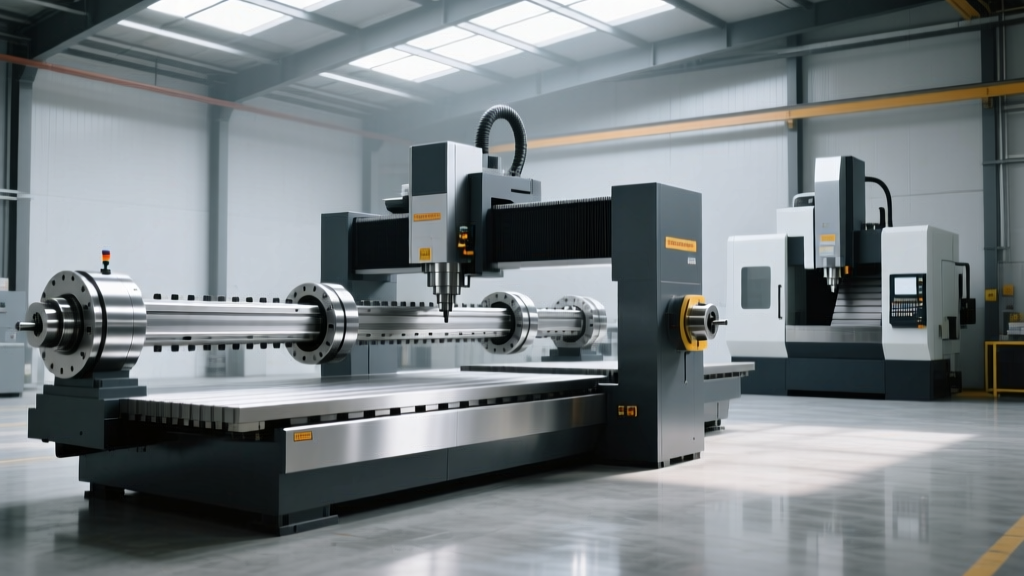
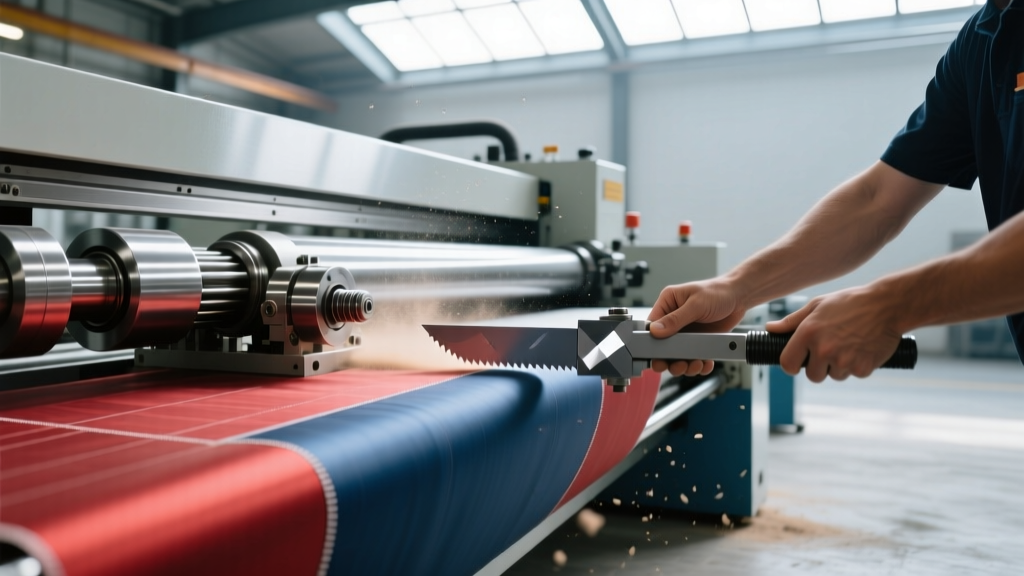
In advanced composite manufacturing, processing continuous webs of carbon fiber prepreg, dry non-crimp fabric (NCF), and aramid materials requires specialized equipment. A CNC rolling machine—specifically configured as a roll-fed CNC web cutter—is the backbone of the automated cutting cell. Unlike flatbed routers used for rigid G10 or cured laminates, a CNC rolling machine integrates dynamic web tensioning, ultrasonic edge tracking, and continuous material feeding with high-frequency cutting heads.
When these systems fail, the cost of scrapped aerospace-grade prepreg (often exceeding $150 per linear yard) escalates rapidly. This guide provides deep-dive troubleshooting protocols for the three most critical failure domains in CNC rolling machines used for composite material cutting: web feed mechanics, cutting head degradation, and vacuum hold-down inefficiencies.
⚠️ Safety Warning: CFRP Dust ExtractionCutting dry carbon fiber or aramid webs generates conductive, microscopic particulate matter. Ensure your CNC rolling machine's localized extraction system maintains a minimum capture velocity of 200 FPM at the cutting head to prevent short-circuiting the machine's logic boards and to comply with OSHA respiratory standards.
Diagnosing Web Tension and Tracking Drift
The defining feature of a CNC rolling machine is its ability to unroll, tension, and cut flexible composite webs on the fly. Tracking drift and tension spikes are the most common causes of misaligned ply cuts, which can compromise the structural integrity of the final cured laminate.
1. Ultrasonic Edge Sensor Calibration
Most modern CNC rolling machines utilize ultrasonic sensors to detect the edge of the composite web and dynamically adjust the guiding rollers. If your material is drifting laterally by more than 0.5mm over a 10-meter run, the sensor is likely failing to differentiate between the backing paper and the prepreg edge.
- Cause: Buildup of resin transfer or carbon dust on the ultrasonic transducer face.
- Fix: Clean the sensor face with isopropyl alcohol (IPA). Recalibrate the sensor's threshold voltage using a scrap piece of the exact same prepreg backing paper. For highly reflective silicone backing papers, switch the sensor frequency from 40 kHz to 80 kHz to prevent signal scatter.
2. Dancer Arm and Pneumatic Clamping Failures
Web tension must remain constant—typically between 15 N/m for thin unidirectional (UD) tapes and up to 50 N/m for heavy dry fiberglass NCF. If the material bunches or stretches:
- Inspect the pneumatic dancer arm cylinders. A pressure drop below 4.5 bar will cause tension sag during rapid X-axis accelerations.
- Check the rubberized pinch rollers on the feed assembly. Composite sizing agents (the chemical coating on dry fibers) act as a dry lubricant, reducing the friction coefficient of the rollers. Wipe the rollers with a mild abrasive pad and replace them if the Shore A hardness has dropped below 70 due to chemical degradation.
Cutting Head Failures: Prepreg vs. Dry Fabrics
Composite materials are highly abrasive and notoriously difficult to sever cleanly. The cutting head on a CNC rolling machine must be matched precisely to the material state (tacky prepreg vs. dry woven fabric).
Oscillating Knife vs. Tangential Drag Knife
Using the wrong blade kinematics is the primary reason for frayed edges and delamination during the cutting process.
| Material Type | Recommended Tool | Blade Angle & Specs | Failure Mode if Incorrect |
|---|---|---|---|
| Carbon Fiber Prepreg (Tacky) | Tangential Drag Knife | 45° PTFE-coated carbide | Material lifts, backing paper tears |
| Dry Woven Carbon / Fiberglass | High-Freq Oscillating Knife | 60° Tungsten blade, 20k RPM | Frayed edges, fiber pull-out |
| Aramid (Kevlar) Webs | Shear Wheel / Crush Cut | Tungsten carbide rotary | Severe fraying, blade snapping |
Troubleshooting Prepreg Adhesion to the Blade
When cutting B-staged prepregs, the tacky resin often adheres to the cutting blade, pulling the material upward and ruining the cut path.
- Solution 1: Install an automated blade wiping station with a PTFE-impregnated felt pad, set to clean the blade every 50 meters of cut path.
- Solution 2: Reduce the Z-axis cutting depth by exactly 0.15mm. The goal is to cut 95% through the composite ply while leaving the sacrificial backing paper intact. The backing paper acts as a continuous web carrier, eliminating the need for the blade to penetrate the tacky resin layer completely.
Vacuum Hold-Down on Porous Composite Webs
A CNC rolling machine relies on a segmented vacuum bed to hold the flexible web flat during cutting. Dry composite fabrics are highly porous, causing vacuum pressure to bleed through the material and drop below the required threshold to hold the web taut.
The Masking and Bleeder Technique
If your dry NCF material is shifting during high-speed contour cuts, the vacuum system is starving. According to manufacturing guidelines published by the Society of Manufacturing Engineers (SME), maintaining uniform vacuum distribution across porous media requires specialized bed preparation.
- Apply a Sacrificial Mask: Lay down a continuous sheet of 6-mil polyethylene masking film over the cutting bed before feeding the composite web. The CNC machine will cut through the poly and the composite simultaneously. The poly seals the vacuum pores of the fabric.
- Zone Segmentation: Ensure your CNC software is actively closing vacuum valves in zones not currently covered by the material. An open, uncovered zone will drop the entire bed's vacuum pressure from the required 25 inHg down to under 10 inHg, causing material shift.
Expert Insight: When cutting multi-layer composite stacks (up to 4mm thick) on a rolling feed system, standard vacuum beds are insufficient. Upgrade to a high-flow regenerative blower capable of delivering 250 CFM per zone, rather than relying on standard rotary vane pumps which prioritize pressure over the volume needed for porous materials.
Symptom-Cause-Fix Troubleshooting Matrix
Use this rapid-diagnostic matrix when your CNC rolling machine produces out-of-tolerance composite plies.
| Symptom | Root Cause | Corrective Action |
|---|---|---|
| Ply dimensions shrink by 1-2mm post-cut | Excessive web tension during cutting; material relaxes post-cut | Reduce dancer arm pneumatic pressure by 1.5 bar; update nesting software to apply negative kerf compensation. |
| Frayed, fuzzy edges on dry carbon fabric | Oscillating knife frequency too low; blade micro-chipping | Increase oscillation to 18,000+ strokes/min; inspect blade under 10x loupe and replace if edge radius exceeds 0.05mm. |
| Backing paper severed, prepreg sticks to bed | Z-axis zeroing error; cutting too deep | Re-calibrate Z-axis touch probe; add +0.1mm Z-offset in the CAM post-processor. |
| Diagonal skew across long rectangular plies | Feed rollers slipping on one side of the web | Clean feed rollers with IPA; check parallelism of the upper and lower pinch roller shafts using a dial indicator. |
2026 Preventative Maintenance Schedule & Cost Baselines
To maintain aerospace-grade tolerances (typically ±0.25mm over a 2-meter ply), a strict preventative maintenance schedule is non-negotiable. Based on current 2026 industrial service rates and parts pricing, budget for the following intervals:
- Weekly (Operator Level): Clean ultrasonic edge sensors and vacuum bed plenums. Inspect oscillating knife belts for micro-fractures. Cost: $0 (Labor only).
- Monthly (Technician Level): Lubricate the tangential knife rotation axis with synthetic PTFE grease. Calibrate the web tension load cells using certified test weights. Replace vacuum pump intake filters (critical for carbon dust environments). Cost: ~$180 for filters and lubricants.
- Bi-Annually (OEM Service): Re-tension the X and Y-axis linear drive belts. Re-map the cutting bed flatness using a laser interferometer to correct for any thermal warping in the aluminum extrusion bed. Cost: $2,500 - $4,000 depending on bed size and OEM travel rates.
For further reading on automated composite cutting parameters and material handling standards, refer to the technical archives at CompositesWorld, which frequently publishes updated benchmarks on automated fiber placement and roll-fed cutting efficiencies.
Final Calibration Check
Before initiating a full production run of high-value composite prepreg, always execute a 'dry run' cut using a surrogate material of identical thickness and backing paper type. Measure the surrogate ply with a digital CMM (Coordinate Measuring Machine) or optical scanner to verify that the CNC rolling machine's feed, tension, and cutting parameters are perfectly synchronized. This single step prevents thousands of dollars in scrapped aerospace materials and ensures seamless integration into the downstream automated tape laying or manual layup processes.