CNC VTL Machining for Small Workshops: Real-World Applications
Discover how small workshops leverage CNC VTL machining for large-diameter parts. Explore case studies, footprint specs, and 2026 pricing.
The Spatial and Mechanical Case for CNC VTL Machining in Small Shops
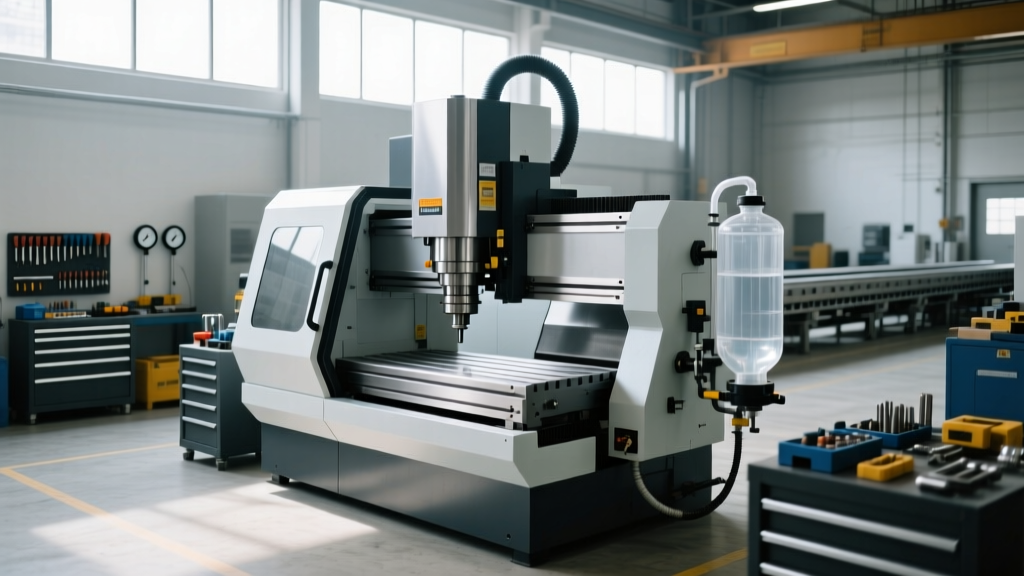
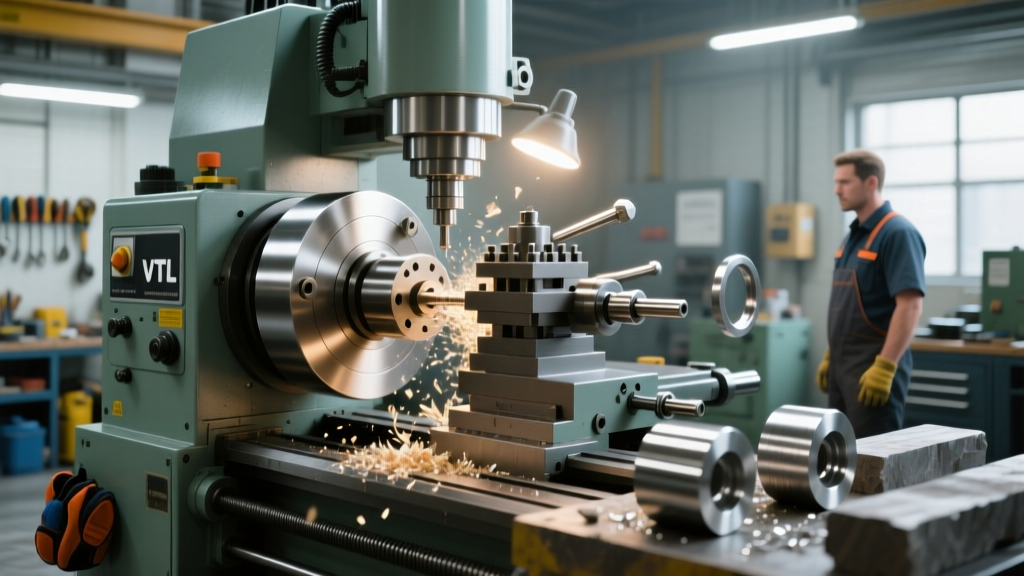
Small and mid-sized job shops frequently encounter a specific manufacturing bottleneck: machining large-diameter, relatively short parts like flanges, valve bodies, and heavy rings. Traditionally, these parts require massive horizontal lathes with extended bedways and heavy-duty tailstocks. For a workshop operating out of a 5,000 to 10,000 square foot facility, the physical footprint and overhead crane requirements of a horizontal machine often make this impossible. This is where CNC VTL machining (Vertical Turret Lathe) transforms shop floor capabilities.
By orienting the spindle and workpiece vertically, VTLs utilize gravity to assist in fixturing, eliminate the need for massive tailstock quills, and drastically reduce the machine's X-axis footprint. According to industry analyses published by Modern Machine Shop, vertical turning centers can reduce the required floor space by up to 35% compared to horizontal lathes of the same swing capacity, making them an ideal strategic investment for space-constrained environments.
Setup Time & Fixturing Metrics
- Horizontal Lathe Setup (40-inch flange): 3.5 to 5 hours (requires dialing in tailstock, supporting part weight to prevent chuck jaw lift, and extensive crane maneuvering).
- CNC VTL Setup (Same part): 45 to 90 minutes (part is lowered directly onto the horizontal table; gravity provides the primary seating force).
- Crane Dependency: VTL loading requires simple vertical drops, freeing up the shop's overhead crane for other material handling tasks during the setup phase.
Case Study 1: Aerospace Flange Production in a Compact Facility
A precision machining contractor in Ohio, operating out of an 8,000 sq ft facility with a 15-foot ceiling clearance, needed to machine titanium aerospace flanges (38-inch OD, 6-inch thick, weighing roughly 1,100 lbs). Their existing horizontal lathes suffered from severe chatter during interrupted cuts on the bolt-hole circles, leading to premature carbide insert failure and scrapped parts.
The shop invested in a Takisawa VTL-1200, a compact vertical turning lathe designed specifically for mid-sized workshops. The VTL-1200 offers a 1,200mm (47.2-inch) maximum swing diameter and a 1,000mm turning height. By mounting the titanium flange flat on the VTL's horizontal rotary table, the cutting forces were directed straight down into the machine's massive cast-iron base rather than laterally across a cantilevered spindle.
Results and ROI
The shop utilized Sandvik Coromant Capto C6 tooling interfaces for maximum rigidity. Because the part was supported entirely by the table, they increased the depth of cut (DOC) from 0.080 inches on the horizontal lathe to 0.250 inches on the VTL without inducing chatter. Cycle times dropped from 14 hours to 8.5 hours per flange. At a shop rate of $145/hour, the machine paid for its estimated $285,000 capital cost within 14 months of single-shift operation.
Case Study 2: Oil & Gas Valve Housings and Chip Evacuation
Machining deep, blind bores in heavy valve housings presents a unique challenge: chip evacuation. In a horizontal orientation, chips fall into the bottom of the bore, requiring frequent cycle pauses to clear them, or risking tool breakage. A Texas-based energy sector job shop integrated a DN Solutions VTS 1610 to handle 60-inch diameter valve bodies.
As highlighted by manufacturing standards from the Society of Manufacturing Engineers (SME), vertical orientations naturally allow chips to fall away from the cutting zone in external turning, but internal boring requires specialized coolant strategies. The shop equipped their VTS 1610 with a 1,000 PSI high-pressure coolant system routed directly through the spindle and turret. In the VTL orientation, gravity assisted in pulling the chips down and out of the blind bore as the high-pressure coolant flushed the cutting edge, eliminating manual chip-clearing stops and extending boring bar tool life by 40%.
Facility Infrastructure: The Hidden 'Gotchas' for Small Shops
While CNC VTL machining saves horizontal floor space, it introduces strict vertical and foundational requirements that small shop owners must calculate before signing a purchase order. Ignoring these can lead to catastrophic installation failures.
1. Ceiling Clearance Mathematics
A common mistake is measuring only the machine's static height. You must calculate the dynamic Z-axis envelope. Use this formula for minimum ceiling clearance:
Machine Base Height + Z-Axis Travel + Turret/Toolholder Length + Max Part Height + Crane Hook Clearance (minimum 36 inches) + Sling/Rigging Length.
For a mid-size VTL with a 40-inch Z-travel, a shop typically needs a minimum clear ceiling height of 16 to 18 feet to safely load parts using a standard bridge crane.
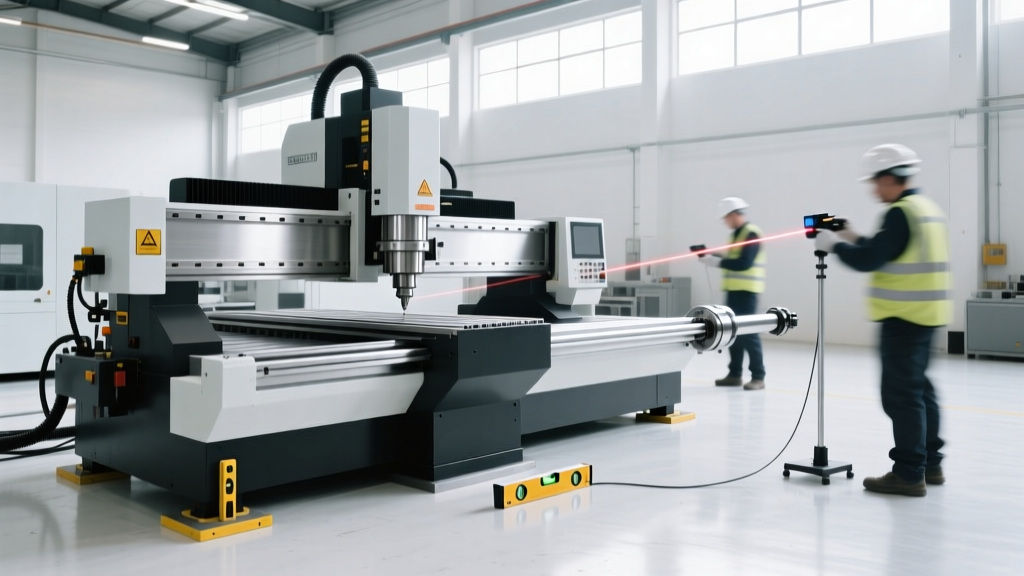
2. Foundation and Vibration Isolation
VTLs concentrate massive dynamic loads directly downward. A standard 4-inch warehouse concrete slab will crack and settle under the cyclic loading of a 1,200 lb part spinning at 250 RPM. Small shops must pour an isolated foundation pad. Specifications generally require:
- Minimum 18-inch depth of 4,000 PSI concrete.
- Heavy #6 rebar grid on 12-inch centers.
- A 1-inch isolation gap around the perimeter of the pad, filled with high-density polyurethane foam to prevent vibration transfer to adjacent precision machines like CMMs or jig borers.
'When installing a VTL in an older industrial park, always core-test the existing slab. Many 1980s-era light industrial buildings have only 4 inches of unreinforced concrete over uncompacted fill. You will almost always need to saw-cut and pour a dedicated isolated pier for the machine table.' — Facilities Engineering Guidelines, DN Solutions
2026 Machine Selection Matrix for Small Environments
Selecting the right VTL requires balancing swing capacity with physical footprint. Below is a comparison of three dominant compact/mid-size VTL models favored by small-to-medium job shops in 2026.
| Machine Model | Max Swing | Max Turning Height | Footprint (W x D) | Est. 2026 Base Price |
|---|---|---|---|---|
| You JI VTB-1100 | 1,100 mm (43.3') | 800 mm (31.5') | 3.2m x 3.0m | $235,000 - $260,000 |
| Takisawa VTL-1200 | 1,200 mm (47.2') | 1,000 mm (39.4') | 3.8m x 3.5m | $280,000 - $315,000 |
| DN Solutions VTS 1610 | 1,600 mm (63.0') | 1,000 mm (39.4') | 4.8m x 4.2m | $360,000 - $410,000 |
Note: Pricing reflects base machine configurations. Adding high-pressure coolant, automated tool setters, and live-tooling Y-axis capabilities typically adds 15% to 25% to the final capital cost.
Decision Framework: Is CNC VTL Machining Right for Your Floor?
Before reallocating capital from a horizontal turning center to a VTL, run your typical part mix through this operational decision matrix:
- The Diameter-to-Length Ratio: If your parts consistently feature a diameter-to-length ratio greater than 3:1 (e.g., a 30-inch diameter part that is only 8 inches thick), a VTL is mechanically superior. Horizontal lathes waste bed space and require massive tailstock support for parts that simply don't need it.
- The Weight Threshold: If parts exceed 800 lbs, horizontal chucking becomes a safety and precision risk due to jaw lift and centrifugal force. VTL tables securely hold heavy parts via gravity and simple OD/ID clamps.
- The Interrupted Cut Factor: If you are machining castings with uneven surfaces or parts with extensive bolt-hole patterns on the face, the downward cutting force vector of a VTL prevents the spindle bearings from absorbing destructive radial shock loads.
- The Crane Limitation: If your shop's overhead crane is rated for 5 tons or less, and you are struggling to safely manipulate heavy parts into horizontal chucks, the drop-down loading nature of a VTL will drastically improve operator safety and reduce rigging time.
When to Stick with Horizontal Lathes
CNC VTL machining is not a universal replacement. If your shop primarily produces long, shaft-like components (e.g., drive shafts, hydraulic cylinders) where the length exceeds the diameter, or if you require extensive Y-axis milling and B-axis contouring on the outside diameter, a multi-tasking horizontal lathe or a turn-mill center remains the correct choice. VTLs excel specifically where gravity, footprint, and heavy, flat geometries intersect.