Router Machine CNC Workholding: Real-World Industry Case Studies
Explore real-world case studies on router machine CNC workholding. Learn how aerospace, woodworking, and composite shops optimize fixturing methods.
The limiting factor in high-precision routing is rarely the spindle or the controller; it is the workholding. When a $150,000 5-axis router machine CNC produces scrapped parts, experiences severe chatter, or suffers from cycle-time bloat, the root cause almost always traces back to fixturing deflection, vacuum leaks, or harmonic resonance. According to industry data tracked by Modern Machine Shop Workholding Topics, shops that upgrade from legacy mechanical clamping to engineered hybrid fixturing systems reduce setup times by up to 70% and eliminate micro-movement during aggressive roughing passes.
Fixturing a router machine CNC requires balancing holding force against part accessibility. Below, we analyze three distinct industry applications—aerospace aluminum, high-volume MDF, and carbon fiber composites—to demonstrate exactly how top-tier manufacturers engineer their workholding solutions.
Case Study 1: Aerospace Aluminum Pocketing (Hybrid Mechanical-Vacuum)
The Challenge: Chatter in Deep Pocket 7075-T6
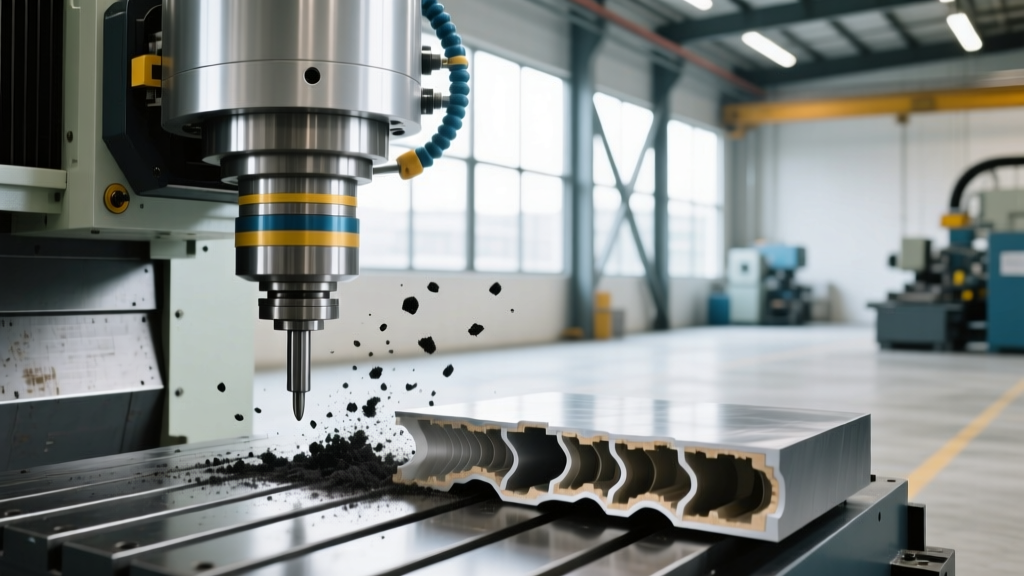
A Tier 2 aerospace supplier was machining complex 7075-T6 aluminum wing ribs on a C.R. Onsrud 5-axis router machine CNC. The parts featured deep pockets (up to 4 inches) and thin walls (0.040 inches). During the roughing pass, the aggressive material removal rates (MRR) caused harmonic vibration. The shop was using standard strap clamps, which restricted Z-axis clearance and forced the machine to take lighter depth-of-cut passes, inflating cycle times by 35%.
The Fixturing Solution: Pierson Modular Clamps & Kurz Vacuum
The engineering team implemented a two-stage hybrid workholding strategy. For the roughing pass, they utilized Pierson 420 modular toe-clamps. Unlike strap clamps, these low-profile toe-clamps apply downward and inward force simultaneously, generating up to 2,500 lbs of clamping force per unit while leaving the top Z-clearance completely open for 5-axis articulation.
Once the roughing was complete and the part was flipped for finishing, the shop transitioned to a custom Kurz vacuum chuck system integrated into the machine bed. By pulling 29.5 inHg (inches of mercury) of vacuum across a 120-square-inch contact area, the chuck generated roughly 1,770 lbs of uniform downward holding force. This eliminated the need for manual indicator sweeps and allowed the 5-axis router machine CNC to access all five sides of the wing rib without fixture interference.
Engineering Insight: Vacuum holding force is strictly a function of atmospheric pressure and surface area. At a perfect 29.92 inHg (sea level), one square inch of part area yields 14.7 lbs of hold-down force. Always calculate your required CFM (Cubic Feet per Minute) based on the porosity of your raw material, not just the pump's maximum static pressure.
Case Study 2: High-Volume MDF Cabinet Manufacturing (Nested-Based Vacuum)
The Challenge: Sheet Migration on a Homag 5-Axis
In nested-based manufacturing (NBM), a single 4x8 foot sheet of MDF is routed into dozens of individual cabinet components. A mid-sized millwork shop operating a Homag Centateq N-500 router machine CNC was experiencing 'sheet migration'—where the cutting forces of a 15mm compression bit would slowly push the MDF sheet off the zero-point, ruining the entire $80 sheet and wasting 45 minutes of machine time.
The Fixturing Solution: Schmalz Suction Cups & Becker Pumps
The issue was not a lack of vacuum pressure (inHg), but a lack of volume (CFM). The shop's legacy liquid-ring pump could not compensate for the air bleeding through the porous MDF edges during cutting. They upgraded to a Becker U4.400 dry vane vacuum pump, which delivers a massive 400 CFM at 29 inHg.
Furthermore, they retrofitted the router bed with Schmalz VCBL-S universal vacuum suction cups paired with a zoned valve system. The zoned system allows the CNC controller to automatically close off vacuum to unoccupied pods, maintaining maximum suction on the active cutting zone. This 'leak compensation' ensures that even when the router bit cuts completely through the MDF sheet, the remaining vacuum volume is sufficient to hold the nested parts firmly in place until the final tab is severed.
Decision Matrix: Workholding Methods by Material
Selecting the correct fixturing method for your router machine CNC depends heavily on material porosity, cutting forces, and required part accessibility. Use the matrix below to guide your capital equipment investments.
| Fixturing Method | Best Suited Materials | Typical Holding Force | Setup Time | Estimated 2026 System Cost |
|---|---|---|---|---|
| Mechanical Toe-Clamps | Aluminum, Steel, Titanium | 1,500 - 3,000 lbs / clamp | 10 - 20 mins | $400 - $800 per clamp |
| Zoned Vacuum Grid | MDF, Plywood, Plastics | 14.7 lbs / sq inch (max) | 1 - 3 mins | $12,000 - $25,000 (inc. pump) |
| Sacrificial Spoilboard + Adhesive | Carbon Fiber, Delrin, Small Composites | 50 - 200 lbs / sq inch | 5 - 10 mins | $0.15 - $0.40 per sq foot (consumable) |
| Modular Tombstones / Grid Plates | Complex 3D Aerospace / Medical Parts | Variable (Mechanical) | 15 - 45 mins | $3,000 - $10,000 per fixture |
Case Study 3: Carbon Fiber Composites (Adhesive & Sacrificial Spoilboards)
The Challenge: Delamination and Micro-Vibrations
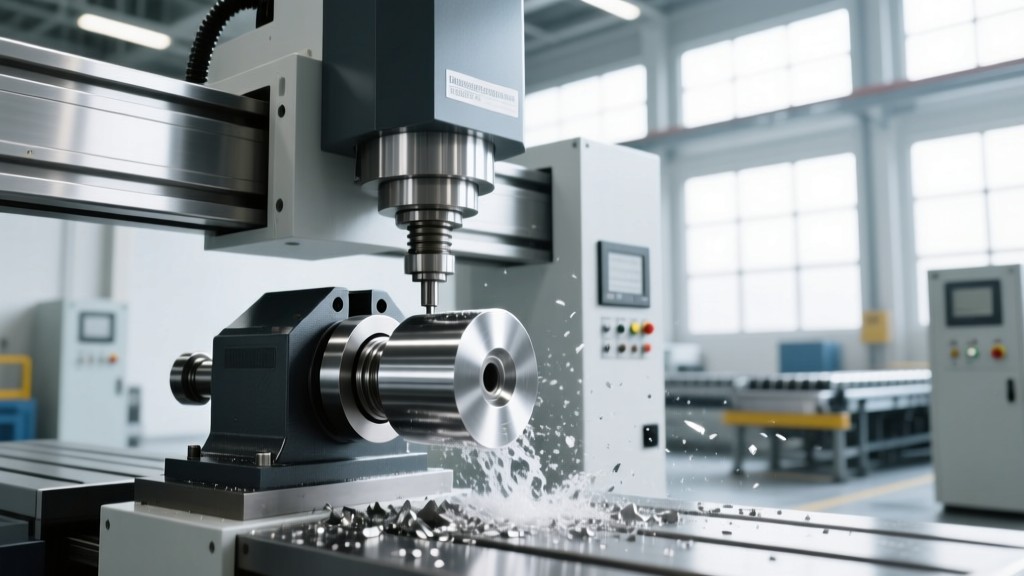
Routing Carbon Fiber Reinforced Polymer (CFRP) on a 3-axis router machine CNC presents a unique paradox. Mechanical clamps crush the brittle composite layers, causing edge delamination. Vacuum chucks often fail because the micro-pores in the CFRP allow air to bleed through, destroying the vacuum seal and pulling resin into the vacuum plumbing.
The Fixturing Solution: 3M 468MP and Cyanoacrylate Tacking
A specialized drone manufacturer solved this by utilizing a dual-layer sacrificial spoilboard system. The base layer is a high-density MDF board, surfaced perfectly flat. The top layer is a thin sheet of Luan plywood, attached to the base with 3M 468MP double-sided adhesive tape. The CFRP workpiece is then secured to the Luan using a combination of high-tack double-sided tape and strategic 'super-glue' (cyanoacrylate) dots activated with an aerosol accelerator.
This method provides immense shear-strength holding force, completely neutralizing the lateral cutting forces of diamond-coated compression routers without applying any downward crushing pressure. The trade-off is consumable cost and maintenance.
⚠️ Spoilboard Maintenance Protocol: When using adhesive fixturing on a router machine CNC, the sacrificial board must be fly-cut (surfaced) regularly. If the board absorbs moisture or becomes scored by previous toolpaths, the adhesive will fail. Schedule a 3-inch fly-cutter surfacing pass every 40 hours of spindle run-time, removing exactly 0.020 inches of material to expose a fresh, perfectly planar bonding surface.Calculating the ROI of Upgraded Workholding
Upgrading the fixturing on a router machine CNC is a capital expense that yields immediate operational returns. Consider the transition from manual mechanical clamping to a zoned vacuum system for a plastics fabrication shop:
- Setup Time Reduction: Dropping from 25 minutes of manual clamp positioning to 2 minutes of placing the sheet on the vacuum grid saves 23 minutes per cycle. Over 10 cycles a day, this reclaims nearly 4 hours of spindle cutting time daily.
- Consumable Elimination: Eliminating double-sided tape saves approximately $0.20 per square foot. For a shop processing 500 sheets (4x8 feet) a month, this equates to $3,200 in monthly material savings.
- Scrap Reduction: Uniform vacuum pressure eliminates the 'bowing' effect caused by uneven mechanical clamps, reducing edge-chatter scrap rates from 4% to under 0.5%.
With a comprehensive vacuum pump, plumbing, and zoned bed upgrade costing between $12,000 and $18,000 in 2026, the typical ROI payback period for a high-volume router machine CNC environment is under seven months. Mastering workholding is not just a setup task; it is the primary lever for maximizing spindle utilization and protecting profit margins in precision routing.