Rack and Pinion CNC Machine: Enclosure and Coolant Troubleshooting
Diagnose and fix enclosure seal failures, way cover breaches, and coolant leaks on large-format rack and pinion CNC machines with this expert guide.
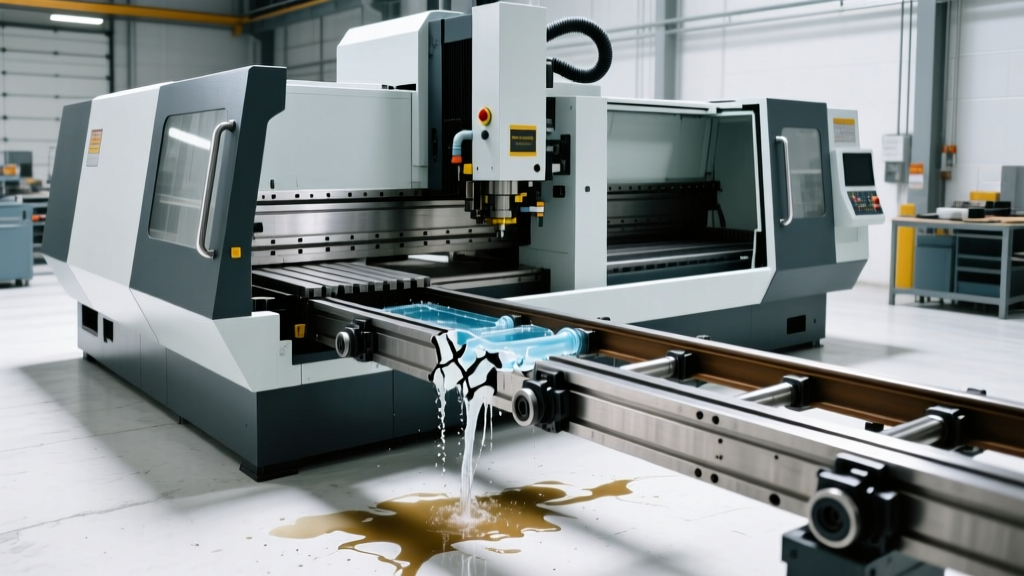
Large-format rack and pinion CNC machines—typically deployed on 4x8 to 10x20 ft beds for routing non-ferrous metals, plastics, and composites—face a unique set of fluid containment challenges. Unlike ballscrew-driven machining centers where the drive mechanism is compact and easily sealed within a cast-iron saddle, rack and pinion systems require long-travel way covers and extended perimeter enclosures. When flood coolant or high-pressure mist is introduced for cutting materials like 6061-T6 aluminum, fluid inevitably exploits microscopic breaches in these seals. Left unchecked, coolant ingress destroys the Y-axis gear racks, washes out critical pinion lubrication, and degrades polycarbonate enclosure panels.
This troubleshooting guide addresses the specific mechanical and chemical failure modes of enclosure and coolant systems on rack and pinion CNC machines, providing actionable repair protocols and material specifications.
The Y-Axis Way Cover Paradox
The most vulnerable point on any rack and pinion CNC machine is the Y-axis way cover (accordion bellows). These covers must stretch and compress over several feet while maintaining a seal against high-velocity coolant splatter and abrasive metal chips.
Critical Failure Mode: Neoprene way covers, while inexpensive, rapidly degrade when exposed to modern semi-synthetic coolants (pH 8.8–9.2). The alkaline environment breaks down the rubber's vulcanization, leading to micro-tears that allow coolant to pool directly on the helical gear racks.Diagnosing and Repairing Way Cover Tension
A common misconception is that way covers seal purely through compression against the machine base. In reality, they rely on internal spring tension to maintain contact with the sealing wipers. If coolant is pooling at the ends of the Y-axis travel, the tension springs have likely fatigued.
- Testing Protocol: Attach a standard spring scale to the leading edge of the way cover. The tension should read between 15 and 20 lbs of pull across the entire travel distance. If the tension drops below 12 lbs at maximum extension, the internal springs require replacement.
- Material Upgrade: When replacing degraded neoprene, specify 90A durometer polyurethane with an aramid-reinforced spine. Polyurethane offers superior resistance to the alkaline hydrolysis caused by synthetic metalworking fluids. Expect to invest between $800 and $1,400 for a complete set of heavy-duty polyurethane covers for a standard 5x10 machine.
- Wiper Maintenance: The polyurethane wiper lips at the base of the cover must be replaced every 1,200 machine hours. If the wiper lip is worn down to less than 2mm of overhang, coolant will bypass the seal during rapid traverse movements.
Diagnosing Enclosure Stress Cracking
Operators frequently report that their machine's clear polycarbonate (Lexan) enclosure panels develop sudden, web-like stress cracks near the mounting screws or aluminum extrusion seals. This is rarely a mechanical impact issue; it is a chemical reaction known as Environmental Stress Cracking (ESC).
According to OSHA's Metalworking Fluids guidelines, maintaining the proper concentration and pH of coolants is vital not just for operator health, but for machine integrity. When synthetic coolants with high alkalinity (pH > 9.0) or extreme-pressure (EP) sulfur additives come into contact with polycarbonate under mechanical stress (such as being bolted tightly into a frame), the plastic's polymer chains break down.
| Enclosure Material | Coolant Compatibility | Failure Mode | Recommended Sealant |
|---|---|---|---|
| Polycarbonate (Lexan) | Poor with high-alkaline synthetics; Good with straight oils | ESC (web cracking) when exposed to acetoxy silicones | 3M VHB 5952 Tape or Neutral-Cure Silicone |
| Acrylic (Plexiglas) | Excellent chemical resistance to most water-soluble coolants | Brittle shattering from mechanical vibration or chip impact | Dow Corning 795 Building Sealant |
| PETG | Superior resistance to alkaline fluids and EP additives | Thermal warping if enclosure lacks adequate exhaust ventilation | 3M VHB 5952 Tape |
Step-by-Step: Resealing Polycarbonate Panels
If your enclosure panels are leaking at the frame joints, do not reach for standard hardware-store silicone. Standard acetoxy-cure silicones release acetic acid (the vinegar smell) during curing, which will instantly craze and weaken polycarbonate. Follow this protocol for a permanent, chemically safe seal:
- Surface Preparation: Remove the old sealant using a plastic razor blade. Clean both the polycarbonate edge and the aluminum frame with 99% isopropyl alcohol. Never use acetone, MEK, or brake cleaner, as these solvents will cause immediate micro-crazing.
- Sealant Selection: Apply 3M VHB 5952 (Very High Bond) acrylic foam tape for structural joints, or a neutral-cure silicone (like Dow Corning 795) for flexible, watertight gaskets. Neutral-cure silicones release alcohol instead of acid during curing.
- Clamping and Curing: If using neutral-cure silicone, apply a consistent 3mm bead and clamp the panel using soft-jaw clamps. Allow 24 hours for the initial skin-over, and 72 hours for a full depth cure before introducing coolant mist to the chamber.
Fluid Delivery: Overcoming Long-Run Pressure Drop
A unique troubleshooting scenario on rack and pinion machines involves coolant starvation at the nozzle, despite the pump functioning perfectly. Because these machines feature massive beds, the coolant lines must travel 8 to 12 feet from the reservoir to the spindle. Standard 1/2-inch ID hoses create massive friction loss over these distances, leading to pump cavitation and erratic coolant flow.
Hydraulic Rule of Thumb: For every 5 feet of 1/2-inch ID hose, you lose approximately 3 to 5 PSI of pressure when pumping standard semi-synthetic coolant at 2 GPM. On a 10-foot bed, this pressure drop can cause the coolant stream to atomize prematurely, creating a hazardous mist rather than a targeted flood.To resolve long-run delivery issues, upgrade the main trunk line from the reservoir to the gantry drag chain to a 3/4-inch ID polyurethane hose. Only reduce to a 1/4-inch or 3/8-inch ID hose at the final 12 inches before the nozzle. This maintains high volume and pressure through the drag chain, ensuring the nozzle receives a solid, coherent stream necessary for evacuating aluminum chips from deep pockets.
Furthermore, consult the Master Fluid Solutions troubleshooting matrix if you are experiencing excessive foaming in the return tray. Foaming on large machines is often caused by 'waterfall' returns where coolant drops more than 12 inches from the table edge back into the reservoir, trapping air in the fluid. Installing a 45-degree angled return chute lined with cross-hatched baffles will break the fluid's surface tension and eliminate trapped air before it reaches the pump intake.
Rack Lubrication vs. Coolant Washout
The ultimate paradox of applying flood coolant to a rack and pinion CNC machine is that the fluid designed to cool the cutting tool simultaneously strips the vital grease from the drive racks. Standard NLGI Grade 2 lithium-complex greases will emulsify and wash away within hours of exposure to water-soluble synthetic coolants, leading to catastrophic pinion wear and backlash errors.
To troubleshoot premature rack wear in a wet-cutting environment, you must decouple the cutting coolant from the way lubrication system:
- Implement Automated Way Lube: Install a positive displacement injector system (such as a Bijur Delimon metered unit) programmed to pulse a dedicated way oil directly onto the racks after the cutting cycle concludes and the air-blast has cleared the bulk of the coolant.
- Specify Water-Resistant Grease: If manual greasing is required, abandon standard lithium greases. Transition to a polyurea-based grease or a calcium sulfonate complex grease that passes the ASTM D1264 water washout test with less than 2% loss. These formulations physically resist being displaced by alkaline coolant splatter.
- Way Cover Scrape Plates: Install brass scrape plates at the leading edge of the X-axis gantry. As the machine moves, these plates physically wipe coolant and sludge off the top of the Y-axis rack teeth before the pinion gear engages, preserving the integrity of the lubrication film.
By addressing the chemical incompatibilities of enclosure plastics, upgrading way cover materials to resist alkaline hydrolysis, and optimizing fluid dynamics for long-travel beds, operators can eliminate the chronic leaks and drive-train degradation that plague large-format rack and pinion CNC machines.