Sizing a CNC Machine Dust Collector for Mill-Turn Centers
A 2026 buying guide for selecting a CNC machine dust collector and mist extraction system for multi-function mill-turn centers like the Mazak Integrex.
The Dual-Threat Contaminant Profile of Mill-Turn Centers
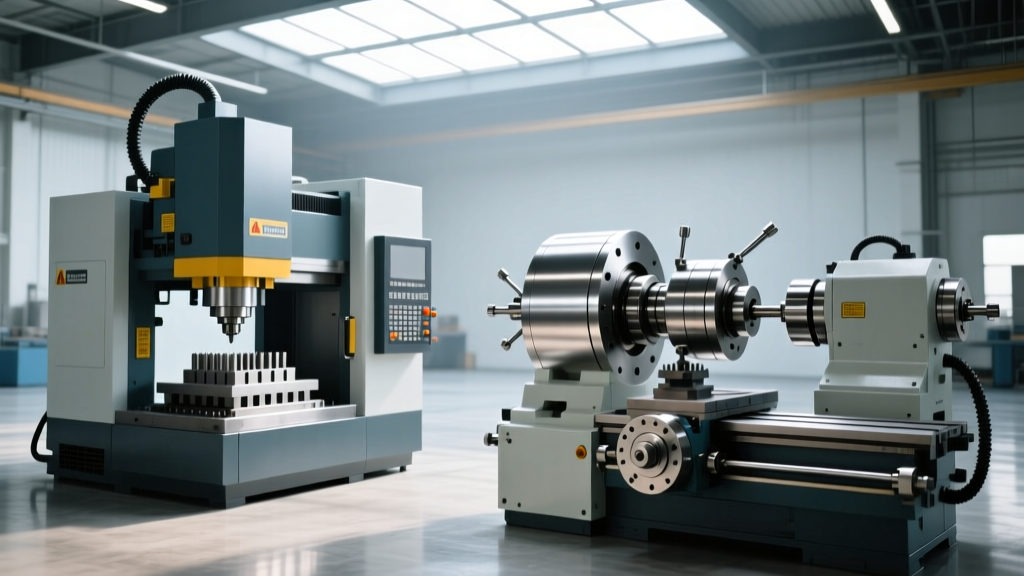
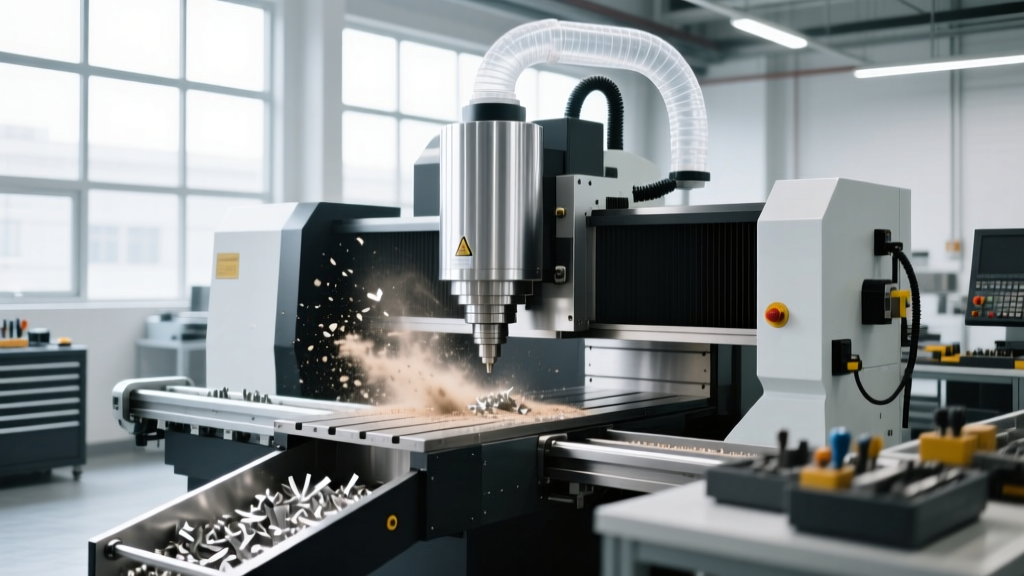
Multi-function CNC machines for milling and turning—commonly known as mill-turn or turn-mill centers (e.g., Mazak Integrex, DMG MORI NTX, Okuma Multus)—present a unique challenge for air quality engineering. Unlike standard vertical machining centers that primarily generate fine metallic dust and aerosolized mist, mill-turn centers produce a chaotic mix of heavy, stringy swarf from turning operations and sub-micron particulate from high-speed milling. When selecting a cnc machine dust collector for these hybrid environments, standard dry-routing extraction units will fail catastrophically within weeks due to filter blinding and moisture ingress.
⚠ CRITICAL WARNING: Never route exhaust from a wet mill-turn environment into a standard dry CNC machine dust collector. The combination of synthetic cutting fluids and fine metallic dust creates a dense sludge on standard cellulose filters, destroying pulse-cleaning mechanisms and creating a severe fire hazard if the dust is combustible (e.g., aluminum or titanium fines).Contaminant Breakdown by Process
To specify the correct extraction hardware, you must map the airborne contaminants generated by both spindles on a turn-mill center. The table below outlines the distinct particulate profiles you are engineering against.
| Operation | Primary Contaminant | Particle Size | Coolant State |
|---|---|---|---|
| Heavy Turning | Long, stringy chips; heavy droplets | > 100 µm (swarf) | Liquid splash / coarse mist |
| 5-Axis Milling | Fine metallic dust; aerosolized vapor | 0.5 µm - 10 µm | Sub-micron aerosol (smoke) |
| MQL (Minimum Quantity Lubrication) | Dry dust coated in micro-oil film | 1 µm - 50 µm | Sticky oil aerosol |
Calculating CFM and Static Pressure for Hybrid Enclosures
Sizing a cnc machine dust collector for a mill-turn center requires calculating both the enclosure volume and the thermal dynamics of the cutting zone. A standard Mazak Integrex i-400S features an internal working envelope of roughly 450 cubic feet.
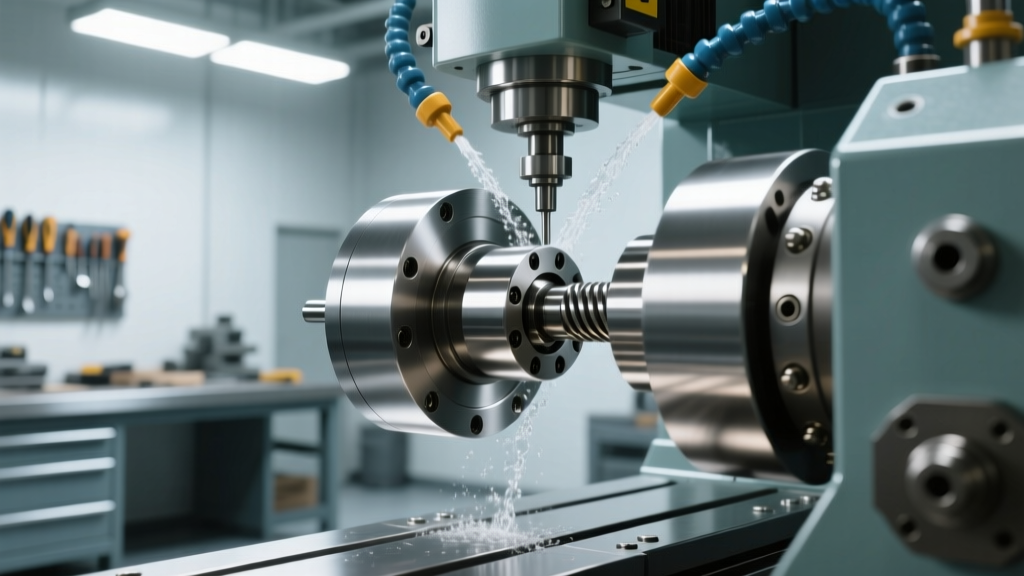
For basic mist clearance, industry standards dictate 30 to 40 Air Changes per Hour (ACH). However, modern mill-turn centers frequently utilize high-pressure coolant systems operating at 70 to 150 bar (1,000 to 2,100+ PSI). At these pressures, coolant atomizes instantly upon contact with the cutting tool, expanding in volume and creating a dense vapor cloud that requires aggressive extraction to prevent escape when the operator opens the heavy sliding doors.
- Base CFM Requirement: 450 cu ft × 40 ACH / 60 minutes = 300 CFM (Insufficient for high-pressure coolant).
- High-Pressure Coolant CFM: 450 cu ft × 90 ACH / 60 minutes = 675 CFM minimum.
- Door-Open Capture Velocity: To maintain negative pressure during rapid door cycling, specify a unit capable of 800 to 1,200 CFM with variable frequency drive (VFD) control.
The Static Pressure Reality
Do not ignore static pressure (SP). Moving air through 15 feet of 6-inch flex duct, a spark trap, and a loaded PTFE filter cartridge requires significant suction. A unit rated for 1,000 CFM at 0" SP will drop to 450 CFM at 8" water gauge (w.g.). Always size your blower motor to deliver your target CFM at 8" to 10" w.g. of static pressure.
Filter Media: Why PTFE is Non-Negotiable
The most common failure mode in mill-turn extraction is filter blinding. When fine aluminum or steel dust from the milling spindle mixes with the vaporized synthetic coolant from the turning spindle, it forms a sticky paste. Standard cellulose or cellulose/polyester blend filters absorb this moisture, causing the dust to cake into a solid shell that pulse-jet cleaning systems cannot dislodge.
"For any CNC application utilizing water-soluble coolants, semi-synthetic fluids, or MQL oils, a PTFE (Polytetrafluoroethylene) membrane laminated to a polyester substrate is mandatory. The PTFE surface prevents particulate penetration into the filter media depth, ensuring the dust cake remains dry and easily pulsed off."
While PTFE membrane cartridges cost approximately 30-40% more upfront than standard cellulose ($180-$250 per cartridge vs. $90-$120), their operational lifespan in wet environments extends from 3 months to over 24 months, yielding a massive reduction in total cost of ownership and machine downtime.
Pre-Separation: Protecting the Primary Filters
Mill-turn machines generate long, bird-nest stringy chips, particularly when turning ductile materials like 300-series stainless steel or Inconel. If these chips are pulled into the main filter housing, they wrap around the pulse-valves and tear the filter gaskets.
Your extraction system must include a primary drop-out box or cyclonic pre-separator. This mechanical stage uses centrifugal force and gravity to drop heavy swarf and coarse liquid droplets into a collection drawer before the air stream reaches the delicate PTFE cartridges. For operations machining aluminum or titanium composites, an inline spark arrestor is also legally required under NFPA 652 combustible dust standards to prevent ductwork fires.
Operator Health and Regulatory Compliance
Extraction is not just about machine cleanliness; it is a strict regulatory requirement. The aerosolized metalworking fluids (MWF) generated by mill-turn centers are classified as respiratory hazards. According to the OSHA Metalworking Fluids guidelines, prolonged exposure to MWF mist can cause occupational asthma, hypersensitivity pneumonitis, and chronic bronchitis. Furthermore, the NIOSH Criteria Document on Metalworking Fluids recommends maintaining airborne MWF concentrations below 0.4 mg/m³ (time-weighted average). A properly sized hybrid dust and mist collector with HEPA secondary filtration is the only reliable way to keep a multi-function CNC cell within these federal exposure limits.
2026 Procurement Costs and ROI Framework
Budgeting for industrial-grade extraction requires looking beyond the initial hardware cost. Below is the current market pricing for hybrid dust/mist collectors engineered for 800-1200 CFM mill-turn applications.
| System Tier | Specifications | Estimated 2026 Cost |
|---|---|---|
| Tier 1: Basic Centrifugal Mist | 1000 CFM, no dust filtration, mesh pads | $4,500 - $6,500 |
| Tier 2: Hybrid Cartridge (Recommended) | 1200 CFM, PTFE cartridges, cyclonic pre-separator, VFD | $11,500 - $16,000 |
| Tier 3: HEPA Wet-Dry Hybrid | 1500 CFM, PTFE + HEPA secondary, spark trap, auto-purge | $19,000 - $24,500 |
Application-Specific Decision Matrix
Use this quick-reference framework to finalize your equipment selection based on your specific mill-turn operational profile:
- If machining primarily steel/iron with flood coolant: Specify a Tier 2 Hybrid unit with PTFE filters and a 55-gallon liquid/solid separation drum.
- If machining aerospace aluminum/titanium dry or with MQL: Specify a Tier 3 unit with an inline wet spark arrestor, NFPA-compliant ducting, and HEPA secondary filtration to capture sub-micron metallic smoke.
- If running 24/7 lights-out manufacturing: Ensure the selected unit features automated filter-pulse monitoring via PLC integration, allowing the machine's M-code to trigger the extraction system's self-cleaning cycle during tool changes.
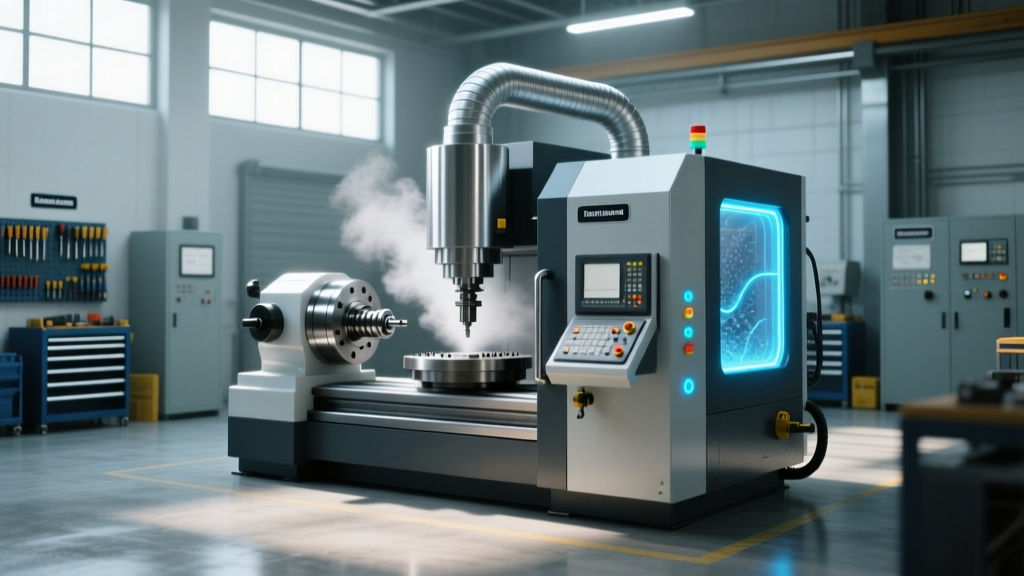
Selecting the correct extraction hardware for a multi-function milling and turning center is an exercise in fluid dynamics and materials science. By prioritizing PTFE media, adequate static pressure, and robust pre-separation, manufacturers can protect both their precision machine tools and their workforce from the complex hazards of hybrid machining.