CNC Machine Punching vs Mill-Turn: Complex Part Guide
Compare CNC machine punching and mill-turn centers for complex part fabrication. Explore costs, cycle times, and equipment selection frameworks for 2026.
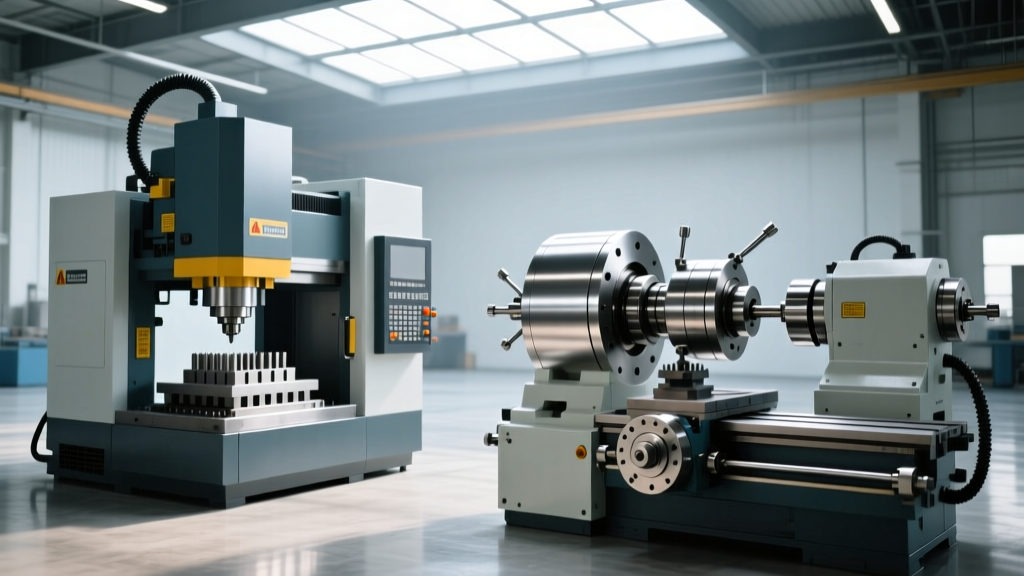
Fabricating complex structural brackets, aerospace enclosures, and heavy-duty machinery housings often forces a critical equipment selection decision. When a part features both cylindrical bearing surfaces and flat, pierced mounting planes, shops must choose between machining the entire component from solid billet on a multi-function mill-turn center or utilizing a cnc machine punching and welding workflow. In 2026, the line between sheet metal fabrication and solid machining continues to blur, but the economic and metallurgical realities of each process remain distinctly different.
The 2026 Fabrication Dilemma
Do you invest $800,000+ in a 5-axis mill-turn center to machine a complex bracket from a single block of 6061-T6 aluminum or 17-4 PH stainless? Or do you leverage a $250,000 CNC turret punch press to blank and form the flat features, subsequently welding them to turned cylindrical sub-components? The answer depends entirely on material thickness, batch volume, and geometric tolerance requirements.
The Mill-Turn Approach: Machining from Solid Billet
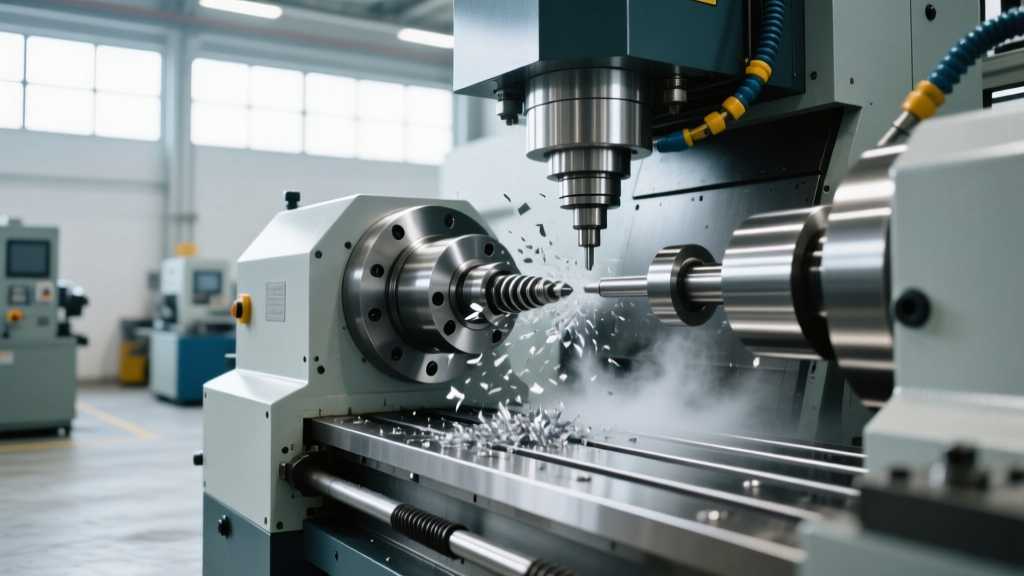
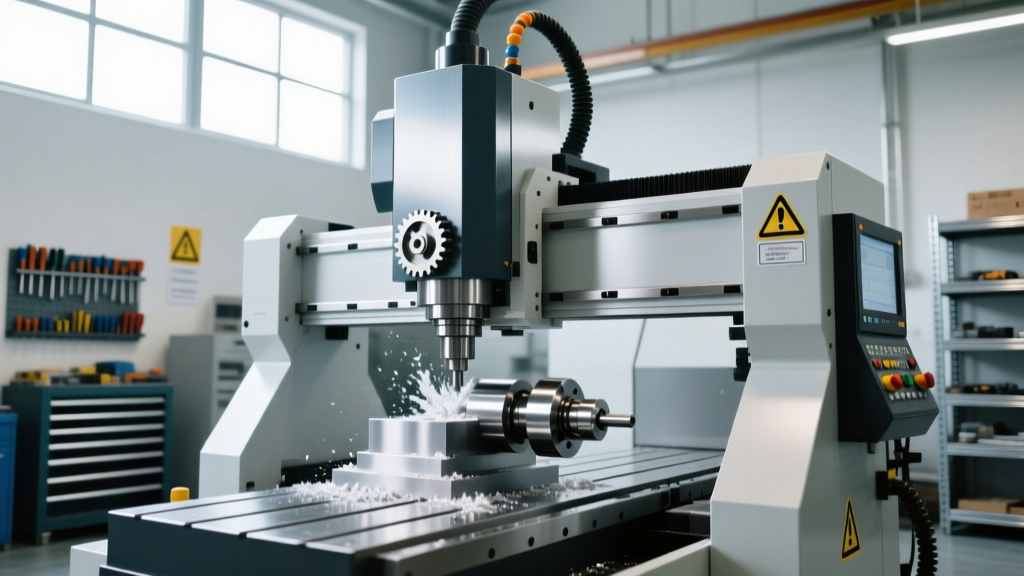
Multi-function CNC machines for milling and turning (commonly known as mill-turn or turn-mill centers) consolidate multiple setups into a single chucking. Machines like the Mazak INTEGREX series or the DMG MORI NTX line feature a main turning spindle, a lower turret, and a B-axis milling spindle capable of 5-axis simultaneous contouring.
For complex aerospace fittings or hydraulic manifold blocks that require intersecting deep holes, turned journals, and milled flat pads, mill-turn centers eliminate the cumulative tolerance stack-up inherent in multi-setup workflows. A B-axis milling spindle with a 35,000 RPM capability and Capto C6 tooling interface allows operators to perform high-speed milling of flat surfaces and precision boring without unclamping the part.
Material and Geometric Constraints
- Billet Cost vs. Yield: Machining a 40 lb bracket from a 150 lb solid block of titanium (Ti-6Al-4V) yields massive material waste. Chip-to-part ratios exceeding 70% make mill-turn economically unviable for low-cost, high-volume production.
- Residual Stress: Removing massive amounts of material from solid billet can introduce warping due to residual stress relief, particularly in 7075 aluminum and thick carbon steel plates.
- Work Envelope: While large mill-turns handle bar stock up to 4 inches in diameter and chucking diameters over 40 inches, they are fundamentally limited to solid or tubular stock, not flat sheet.
The CNC Machine Punching Workflow: Blank, Form, and Weld
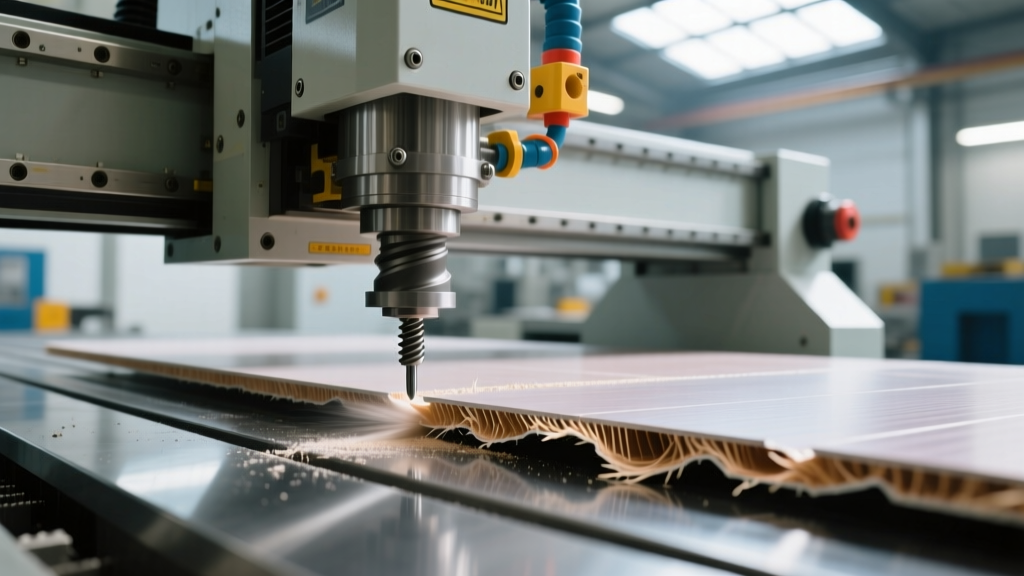
When the flat features of a complex assembly dominate the design—such as a heavy-duty electrical enclosure with dozens of louvers, knockouts, and PEM stud insertions—a dedicated CNC punch press is vastly superior. Modern cnc machine punching systems, like the Amada VIPROS King series or Trumpf TruPunch 5000, utilize servo-electric or hybrid hydraulic drives to deliver up to 30 tons of punching force at high hit rates (up to 1,800 hits per minute on 1-inch centers).
According to fabrication data from the Society of Manufacturing Engineers (SME), CNC punching remains the most cost-effective method for producing formed features like louvers, embossed ribs, and tapped extrusions in sheet metal up to 0.25 in. (6.35 mm) thick. Unlike laser cutting, which only provides 2D profiles, a CNC punch press can form threads and create stiffening ribs in a single hit, drastically reducing secondary assembly time.
Limitations of Punching Thick Plate
The primary limitation of cnc machine punching is material thickness. Punching 0.5 in. (12.7 mm) mild steel requires immense tonnage, accelerates die wear exponentially, and increases the risk of slug pulling and die chipping. For structural plates thicker than 0.25 in., shops typically abandon punching in favor of plasma/laser cutting or direct milling on a CNC bed mill.
Head-to-Head Decision Matrix
Use the following framework to determine which equipment category aligns with your specific part geometry and production volume.
| Criteria | Mill-Turn Center (Solid Machining) | CNC Punching + Welding Assembly |
|---|---|---|
| Ideal Material Thickness | Solid bar/billet (Any thickness) | Sheet/Plate (0.04 in. to 0.25 in.) |
| Forming Capabilities | None (Subtractive only) | Louvers, ribs, tapped extrusions |
| Setup Time | High (4-8 hours for complex CAM) | Low (1-2 hours for tooling load) |
| Tolerance Stack-up | Minimal (Single chucking) | High (Weld distortion variables) |
| Best Batch Size | 1 to 50 pieces (Prototypes/Short run) | 500+ pieces (High volume production) |
Total Cost of Ownership (TCO) and Tooling Economics
Capital expenditure is only the beginning of the equipment selection process. The ongoing tooling and maintenance costs diverge sharply between these two technologies.
Mill-Turn Tooling Costs
Equipping a mill-turn center requires a significant investment in precision toolholding. A single Sandvik Coromant Capto C6 driven tool holder can cost between $800 and $1,500. Add in high-pressure coolant unions, B-axis milling heads, and specialized VDI or BMT turret stations, and a shop can easily spend $40,000 to $60,000 just on initial tooling. Furthermore, carbide insert costs for heavy interrupted cuts on turned features add $15 to $30 per cutting edge, though tool life is generally predictable.
CNC Punching Tooling Costs
Conversely, industry fabrication resources note that CNC punch tooling is highly commoditized and relatively inexpensive. A standard Wilson Wheel or Mate Precision tooling station costs between $150 and $400. However, punch dies require frequent sharpening. A shop running abrasive materials like galvannealed steel or fiberglass-reinforced plastics will need to send punch and die sets out for regrinding every 15,000 to 25,000 hits, adding hidden downtime and maintenance costs to the TCO.
Edge Cases: Thin-Wall Tube and Extrusions
A unique overlap between these technologies occurs when machining thin-walled aluminum extrusions or structural tubing. While a standard CNC punch press cannot easily index and punch the multiple faces of a 3D extrusion without complex, expensive rotary-indexing fixtures, a mill-turn center equipped with a bar feeder and a programmable steady rest can machine complex cross-holes, milled flats, and end-faces on long tubular components in a single cycle. For architectural hardware and automotive subframe components, the mill-turn approach completely eliminates the need for secondary CNC machine punching or drill-press operations.
Final Equipment Selection Verdict
Do not purchase a multi-function mill-turn center simply to avoid welding. If your primary output consists of sheet metal enclosures, brackets under 0.25 in. thick, and panels requiring formed louvers, a high-speed CNC punch press paired with a robotic welding cell will yield a drastically lower cost-per-part. Reserve the $750,000+ investment in a 5-axis mill-turn center for high-value, low-volume components where material integrity, single-setup geometric tolerances, and the elimination of weld-induced distortion are non-negotiable engineering requirements.