OEM CNC Machine Manufacturers' Guide to Chip & Dust Maintenance
Discover the exact chip management and dust collection maintenance schedules recommended by OEM CNC machine manufacturers to prevent downtime.
Spindle hours and axis repeatability dominate most preventative maintenance checklists, but the unglamorous reality of CNC machining is that catastrophic failures often originate in the chip pan. When reviewing warranty claim data and service bulletins from OEM CNC machine manufacturers, a clear pattern emerges: improper swarf evacuation and neglected dust collection systems are the leading causes of premature way cover breaches, ball screw scoring, and conveyor motor burnouts. Managing the byproduct of material removal requires the same rigor applied to the cutting tool itself.
The Hidden Toll of Swarf: Why OEMs Prioritize Evacuation
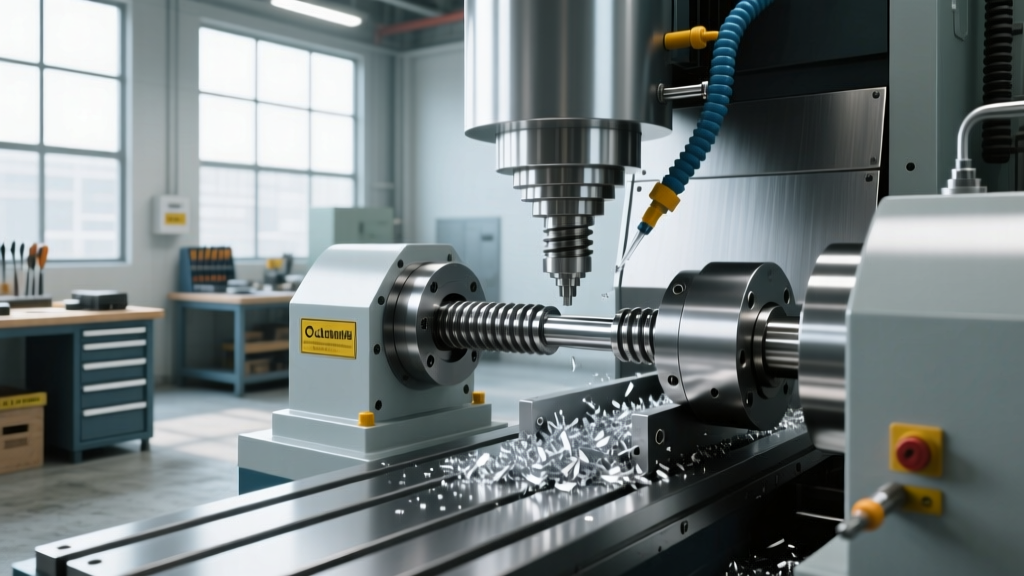
Chip morphology dictates the maintenance strategy. Machining 304 stainless steel produces long, stringy, work-hardened chips that wrap around augers and jam hinge-belt cleats. Conversely, machining gray cast iron or silicon-aluminum alloys generates fine, abrasive particulate that infiltrates telescopic way covers and acts as a lapping compound on linear guideways. OEM CNC machine manufacturers design evacuation systems around specific chip loads, but they rely on the end-user to maintain the mechanical clearances and fluid dynamics required for those systems to function.
'Fine metallic particulate suspended in coolant or airborne dust in dry machining environments accelerates wear on machine seals by up to 400% if extraction systems fall below 80% of their rated CFM capacity.' — Industrial Tribology and Machine Maintenance Standards
OEM-Recommended Maintenance Intervals for Chip Conveyors
Conveyor selection is rarely an afterthought for top-tier OEM CNC machine manufacturers; it is integrated into the base casting design. However, the service intervals vary drastically based on the conveyor mechanism and the material being cut. Below is the baseline maintenance matrix for standard production environments running two shifts (16 hours/day).
| Machine Type / Conveyor Style | Daily Operator Tasks | Monthly Maintenance (800 Hrs) | Annual Overhaul (10,000 Hrs) |
|---|---|---|---|
| Vertical Machining Centers (Hinge Belt) | Check coolant level; clear stringy chips from the discharge chute. | Inspect belt tension; grease drive sprocket bearings (NLGI #2). | Replace hinge belt pins; inspect torque limiter for slip calibration. |
| CNC Lathes (Auger / Screw) | Verify auger rotation; listen for grinding from packed fines. | Check gearbox oil level; clear tail-pulley packing. | Replace auger motor brushes; recalibrate shear-pin or electronic overload. |
| Horizontal Boring Mills (Scraper) | Inspect scraper blade polyurethane edges for tearing. | Adjust chain tension; lubricate scraper linkages. | Replace scraper blades; inspect floor pan for abrasive wear-through. |
Dust Collection Systems: Filter and Ductwork Service Schedules
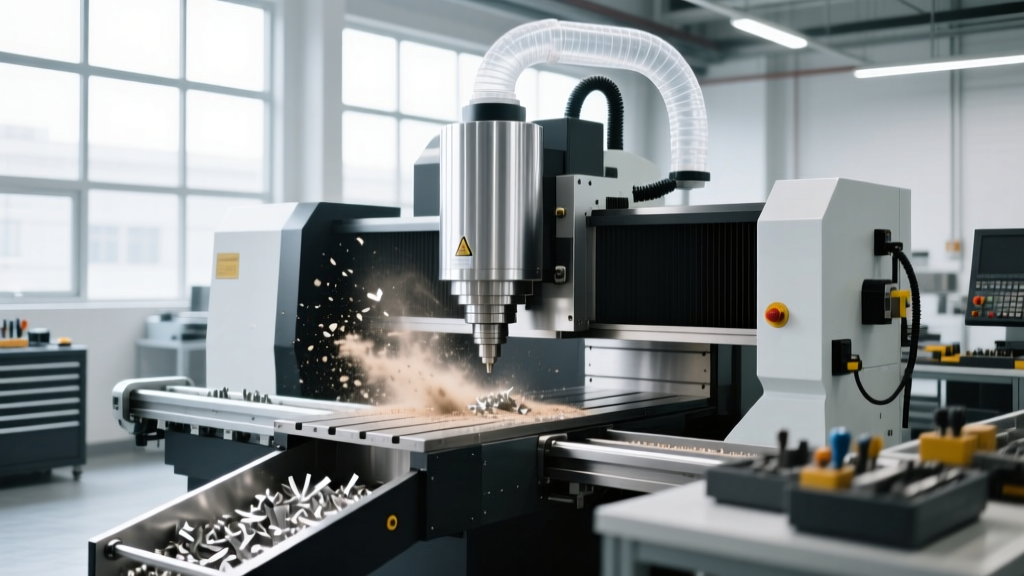
For CNC routers processing MDF, solid wood, or carbon-fiber composites, and for graphite milling centers, dust collection is not just about cleanliness—it is a critical safety and precision requirement. Airborne particulate infiltrates spindle bearings and degrades the epoxy grout used in machine foundations. Furthermore, combustible dust poses a severe deflagration risk, heavily regulated under OSHA's Combustible Dust National Emphasis Program.
Maintaining a dust collector requires monitoring static pressure drops across the filter media to determine service intervals, rather than relying on arbitrary calendar dates.
- Baseline Measurement: Record the static pressure drop across clean cartridge filters. A new system typically reads between 3.0 and 4.5 inches of water column (in. w.g.).
- Pulse-Jet Verification: Weekly, verify the pulse-jet cleaning system is firing at 90-100 PSI. If the compressed air contains moisture, the filters will blind prematurely. Drain the compressor tank daily and replace coalescing filters every 6 months.
- Filter Replacement Threshold: When the pressure drop consistently reads above 8.0 in. w.g. after a pulse cycle, the PTFE membrane on the cartridges is permanently blinded. Replace the filters immediately. Operating above 10.0 in. w.g. will cause the flex-hoses to collapse and drastically reduce CFM at the spindle shroud.
- Ductwork Inspection: Every 6 months, inspect the inside radius of steel ductwork elbows. High-velocity abrasive dust will wear through 16-gauge steel elbows in under 18 months. Upgrade to wear-back elbows or line them with replaceable ceramic tiles.
Coolant and Chip Filtration: The 50-PPM Threshold
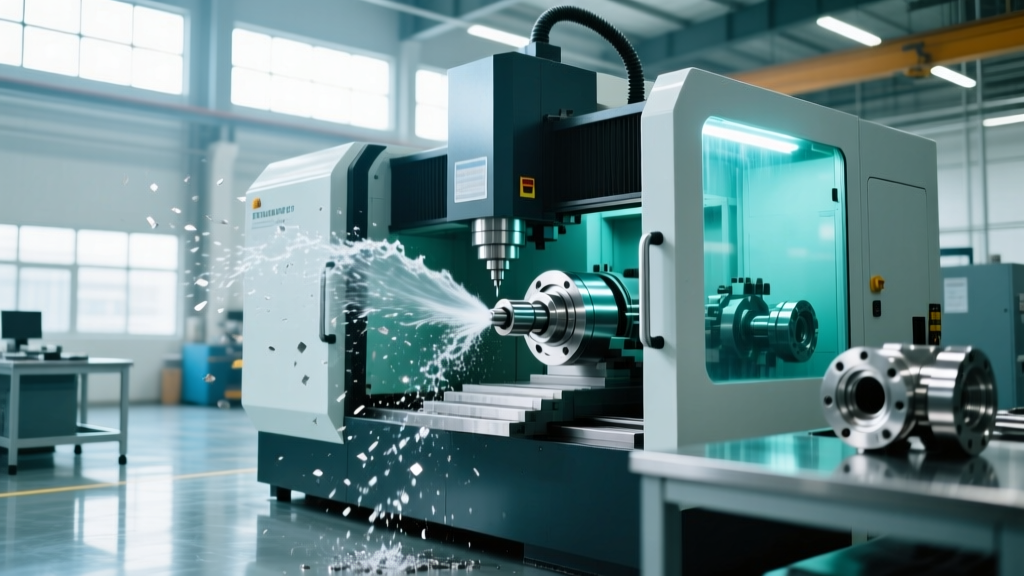
Chip conveyors remove the bulk material, but the fines that remain suspended in the coolant are what ruin surface finishes and clog high-pressure through-spindle coolant (TSC) pumps. According to NIOSH guidelines on metalworking fluids, controlling particulate and biological growth in coolant is essential for both machine longevity and operator respiratory health.
OEM CNC machine manufacturers typically offer three tiers of integrated filtration, each with distinct maintenance profiles:
- Band Filters (15-20 Micron): The workhorse for standard milling. The disposable paper or synthetic media roll must be replaced when the roll diameter reaches the core (typically every 3-6 weeks depending on volume). Media rolls cost between $150 and $300. Failure mode: If the float switch sticks, the coolant overflows the dirty side of the tank, bypassing the filter entirely.
- Centrifugal Separators (10 Micron): Ideal for cast iron and aluminum where tramp oil is minimal. These require no disposable media. Maintenance: The collection bowl must be manually scraped out weekly. If the bowl fills with sludge, the separation efficiency drops to near zero, and the machine will recirculate abrasive fines.
- Vacuum Drum Filters (3-5 Micron): Mandatory for high-precision grinding and honing. Maintenance: The permanent stainless-steel wedge wire screen must be backwashed monthly using a dedicated high-pressure washdown to clear embedded micro-fines.
Way Cover and Wiper Blade Replacement Framework
Telescopic steel way covers protect the ball screws and linear guideways from the swarf that bypasses the primary conveyor. The first line of defense on these covers is the wiper blade. When wipers fail, abrasive fines are dragged under the steel covers, scoring the precision ground surfaces of the machine axes.
| Wiper Material | Best Application | Expected Lifespan | Approximate Replacement Cost (Per Axis) |
|---|---|---|---|
| Brass / Bronze | Heavy cast iron machining; high-heat environments. | 1,500 - 2,000 Hours | $120 - $180 |
| Polyurethane (90A Durometer) | General aluminum and steel milling; wet environments. | 3,000 - 4,000 Hours | $80 - $140 |
| Felt / Rubber Composite | Light dust environments; CNC routers. | 800 - 1,200 Hours | $40 - $70 |
Troubleshooting Common Evacuation Failures
When chip management systems fail, the root cause is rarely the motor itself. Use this diagnostic framework to identify the actual point of failure before ordering replacement parts.
Symptom: Conveyor Motor Trips Overload Relays Repeatedly
Cause: Fines and sludge have packed tightly under the tail pulley of a hinge-belt conveyor, or a long stringy chip has wrapped around the drive shaft, exceeding the torque limit.
Fix: Lock out the machine. Remove the tail pulley guard and use a putty knife to clear the packed sludge. If the machine processes stringy materials (like titanium or 304 SS), install an air-purge nozzle aimed at the tail pulley to prevent packing.
Symptom: Dust Collector Loses Suction at the Spindle Shroud
Cause: The flexible polyurethane hose connecting the spindle shroud to the main ductwork has collapsed due to high static pressure, or an internal abrasion hole has developed, bleeding vacuum.
Fix: Replace standard PVC flex-hose with heavy-duty, 3/16-inch wall thickness polyurethane flex-hose rated for 150 in. w.g. collapse pressure. Ensure the hose routing does not contain sharp 90-degree bends during axis travel.
Symptom: Coolant Overflows the Machine Enclosure During High-Volume Cycles
Cause: The chip conveyor is moving the bulk material, but the volume of coolant being pumped by the high-pressure TSC system exceeds the return flow rate of the gravity-fed drain pan, or the screen on the band filter is blinded by fine aluminum paste.
Fix: Check the band filter paper advancement mechanism. If the paper is advancing but the coolant is still backing up, the paper micron rating is too fine for the specific aluminum alloy being cut. Switch to a heavier, 30-micron synthetic media that allows higher flow rates while still protecting the TSC pump.