Why the Cheapest CNC Machine Fails Field Work Safety Standards
Discover why the cheapest CNC machine fails industrial field work safety standards, OSHA compliance risks, and how to properly spec portable on-site mills.
The Hidden Liabilities of On-Site Machining
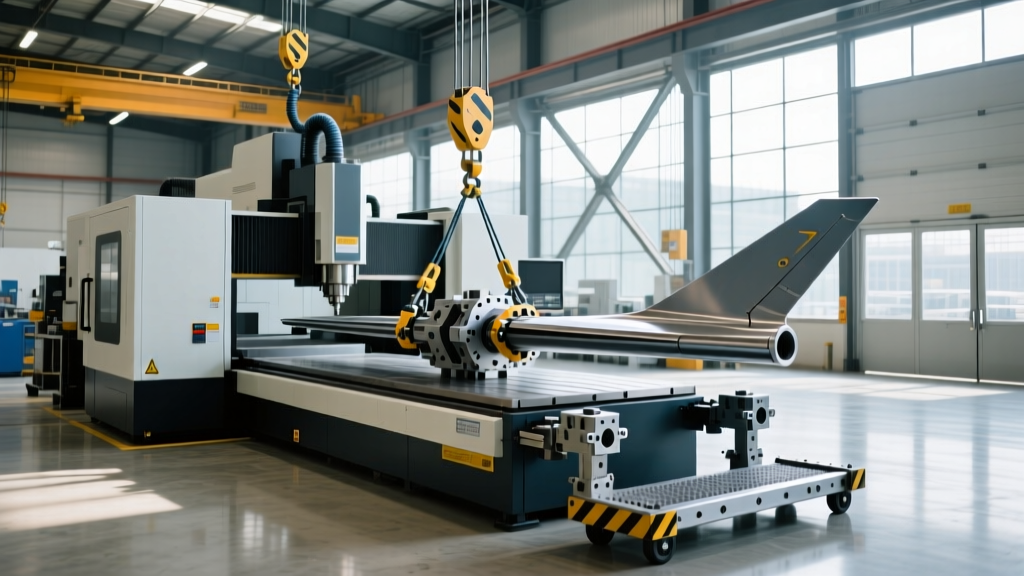
On-site machining—deploying portable CNC mills, lathes, and line boring equipment to repair turbine casings, pipeline flanges, and heavy mining equipment in the field—is a highly specialized discipline. When procurement teams or independent contractors attempt to reduce overhead by sourcing the cheapest CNC machine and adapting it for remote repair contracts, they introduce catastrophic safety and compliance liabilities. A hobbyist or light-duty import router retrofitted with magnetic bases or bolted to temporary steel plates lacks the fundamental engineering required to withstand uncontrolled field environments.
Field work strips away the safety net of the traditional machine shop: fixed guarding, stable concrete foundations, regulated 3-phase power, and controlled climate. As of 2026, regulatory bodies are heavily penalizing contractors who deploy non-compliant, uncertified machinery in heavy industrial zones. Understanding the gap between budget-friendly desktop CNCs and purpose-built portable field machines is critical for avoiding severe OSHA citations and jobsite accidents.
⚠️ COMPLIANCE WARNING: As of 2026, OSHA's maximum penalty for a serious machine guarding violation under standard 1910.212 has climbed to $16,131 per instance. Willful or repeated violations regarding uncertified equipment in hazardous zones can exceed $161,323 per citation, not including civil liabilities from resulting injuries.OSHA and ISO Compliance in Uncontrolled Environments
The foundation of machine safety in the United States is governed by OSHA 1910.212 (General Requirements for All Machines), which mandates that one or more methods of machine guarding shall be provided to protect the operator and other employees in the machine area from hazards such as those created by point of operation, ingoing nip points, rotating parts, and flying chips.
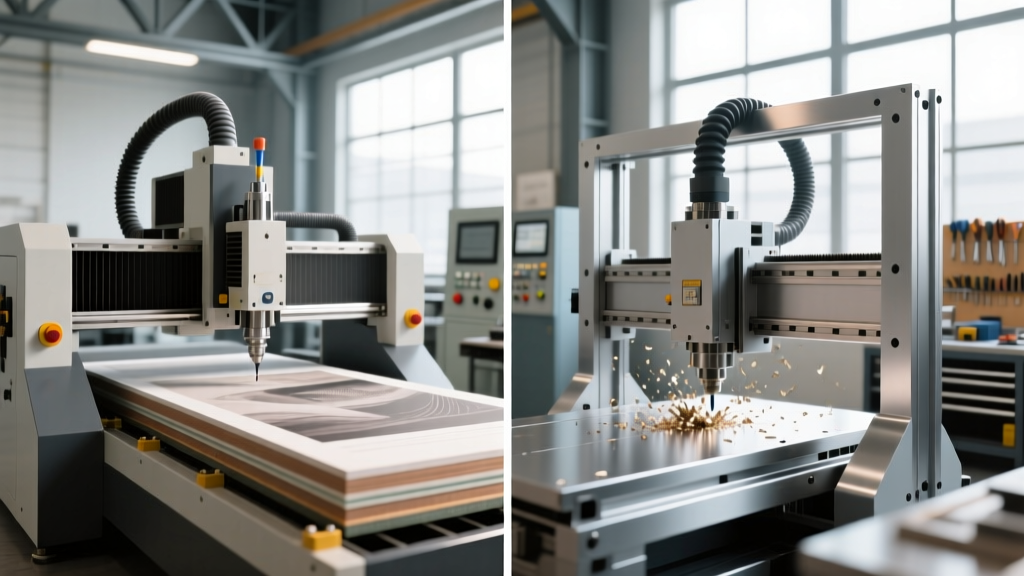
In a shop floor environment, a cheap CNC router might rely on a simple acrylic enclosure or a light curtain. In field work, these safeguards are rapidly compromised. Wind, rain, airborne silica dust, and heavy vibrations from nearby heavy equipment render standard light curtains useless and shatter acrylic guarding. Purpose-built portable CNCs comply with ISO 16089 and ISO 13849-1 by utilizing heavy-duty, hinged steel polycarbonate-blended shields with integrated safety interlock switches that physically cut power to the spindle contactor when opened.
Comparison Matrix: Adapted Budget CNC vs. Industrial Portable CNC
| Feature | Cheapest CNC Machine (Adapted Import) | Industrial Portable Field CNC | Compliance Impact |
|---|---|---|---|
| E-Stop Architecture | Software-based halt via USB/Controller | Hardwired Dual-Channel Category 3/4 Safety Relay | Software stops fail during power sags; hardwired is OSHA mandatory. |
| Mounting / Clamping | C-clamps or generic bolted plates | Calibrated Electromagnetic Bases (15,000+ N shear force) | Improper mounting causes tool ejection and workpiece shift. |
| Enclosure Rating | IP20 (Indoor, dry conditions only) | NEMA 4X / IP65 (Watertight, corrosion-resistant) | Field moisture causes short circuits and electrocution hazards. |
| Spindle Runout under Load | 0.005"+ (High vibration, tool breakage) | < 0.0005" (Preloaded angular contact bearings) | Excessive runout shatters carbide inserts, creating shrapnel. |
Critical Failure Modes of Low-Cost Field Adaptations
When operators attempt to utilize the cheapest CNC machine for heavy-duty field milling, three specific failure modes consistently trigger safety incidents and regulatory shutdowns.
1. Inadequate Emergency Stop (E-Stop) Architecture
Budget CNC machines typically route the E-stop button through the main microcontroller or a basic single-channel relay. If the controller freezes due to voltage fluctuation—a common occurrence when running off temporary diesel generators on a remote pipeline site—the E-stop becomes entirely unresponsive. Industrial portable CNCs utilize dual-channel safety relays compliant with ISO 13849-1 Performance Level (PL) d or e. These systems physically sever the 3-phase power to the spindle motor and engage a mechanical brake on the Z-axis to prevent the tool from dropping onto the workpiece or operator when power is cut.
2. Environmental Ingress and NEMA/IP Ratings
Field environments expose equipment to cutting fluids mixed with rain, mud, and conductive metallic dust. The cheapest CNC machine options feature open stepper motors and unsealed control boxes (IP20). According to guidelines on portable power tool safety from the CCOHS, using unsealed electrical equipment in wet or damp outdoor environments is a direct violation of electrical safety codes. Industrial portable mills utilize NEMA 4X or IP65-rated enclosures, ensuring that high-pressure coolant washdowns and heavy rain cannot bridge electrical contacts.
3. Magnetic Base Shear Force Failures
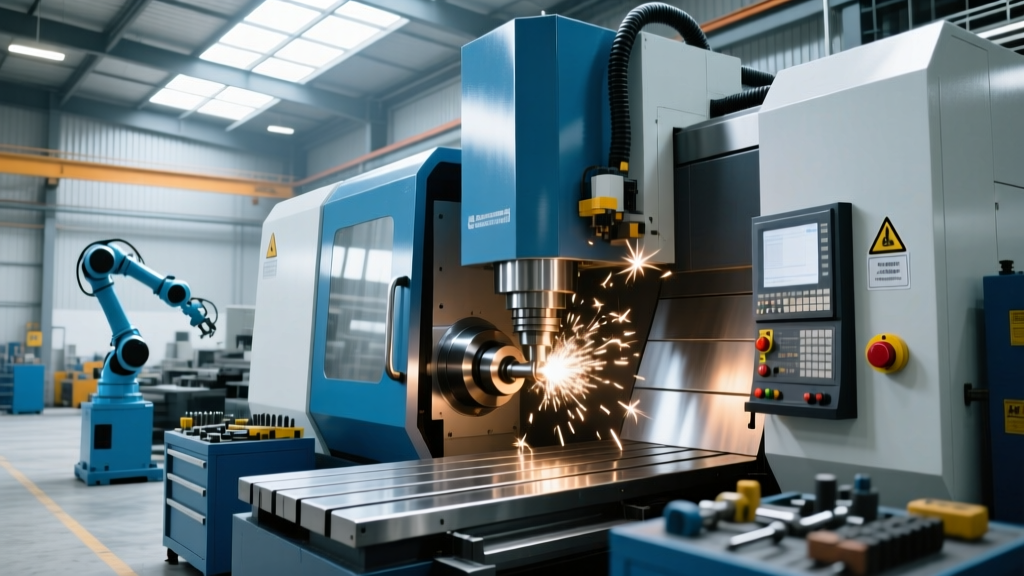
Portable CNCs often rely on electromagnetic bases to mount to curved pipes or heavy steel structures. Low-cost adaptations use undersized magnets that may hold the machine's static weight but fail under the dynamic lateral shear forces of a 2-inch face mill cutting through hardened steel. A purpose-built portable field CNC includes a safety interlock circuit that monitors the magnetic base's voltage; if the holding force drops below a safe threshold (e.g., due to generator voltage sag), the system instantly halts the spindle and feed axes before the machine can tear itself free from the workpiece.
Explosive Atmospheres: ATEX and IECEx Requirements
One of the most dangerous applications for portable CNCs is in-line pipeline repair and offshore rig maintenance. These environments are frequently classified as explosive atmospheres due to the presence of combustible gases or dust. Deploying a standard, non-certified CNC machine in a Zone 1 or Zone 2 hazardous area is a severe violation of ATEX directives and OSHA combustible dust standards.
The stepper motors, spindle cooling fans, and limit switches on budget CNC machines produce electrical arcs during normal operation. Purpose-built portable CNCs for the oil and gas sector are ATEX/IECEx certified. They utilize specialized pneumatic motors or heavily encapsulated, spark-free brushless servos, alongside intrinsically safe pendant controls that limit electrical energy to levels incapable of igniting a methane or hydrogen sulfide atmosphere.
Procurement Framework: Rent vs. Buy for Field Compliance
The primary driver for seeking out the cheapest CNC machine is capital expenditure limitation. However, in field work, the financial calculus must include liability, insurance premiums, and regulatory fines. If your operation requires portable CNC capabilities only for specific, intermittent turnaround projects (e.g., annual plant shutdowns), purchasing a $65,000 compliant portable mill may not yield an immediate ROI.
💡 Actionable Procurement Strategy: Instead of compromising safety by buying a cheap, non-compliant import mill, utilize certified equipment rental networks. Renting an industrial-grade, fully guarded 3-axis portable CNC mill typically costs between $1,200 and $2,500 per week. This ensures you arrive on the jobsite with equipment that possesses current calibration certificates, valid NEMA 4X ratings, and documented LOTO (Lockout/Tagout) procedures, satisfying site safety managers and OSHA inspectors alike.Lockout/Tagout (LOTO) and Temporary Power Isolation
Field machining frequently requires tying into the client's existing electrical infrastructure or utilizing temporary generators. OSHA's LOTO standard (1910.147) requires that portable machinery must have a clear, accessible, and lockable main disconnect switch. The cheapest CNC machine options often rely on a simple plug-and-cord setup or a non-lockable toggle switch, making it impossible for the operator to apply a personal padlock during tool changes or maintenance. Compliant portable field CNCs feature integrated, NEMA-rated main disconnects with lockout hasps, allowing the operator to secure the machine in the zero-energy state while swapping out heavy boring bars or adjusting the magnetic base.
Frequently Asked Questions
Can I build my own guarding for a cheap CNC to pass field inspections?
No. OSHA requires machine guarding to be designed and integrated into the machine's safety circuit. Retrofitting homemade polycarbonate shields without certified safety interlock switches (which physically break the control circuit when opened) will not pass an OSHA inspection and voids any equipment liability insurance.
Are portable CNC line boring machines subject to the same rules as milling machines?
Yes. While line boring machines operate on a single axis and often use lower RPMs, the rotating boring bar creates severe entanglement and ingoing nip point hazards. They must still comply with OSHA 1910.212 guarding requirements and utilize secure, vibration-resistant mounting to prevent the bar from whipping or dislodging.
What documentation must I have on-site for a portable CNC?
Site safety managers will require the equipment's Operator Manual, a documented Risk Assessment (RA), proof of annual electrical PAT testing (or equivalent), and the specific Lockout/Tagout procedure for that exact machine model. Budget imports often lack translated, legally defensible documentation.