Operator CNC Machine Maintenance: Fixing Enclosure and Coolant Leaks
Learn how to troubleshoot and repair CNC machine enclosure seals and coolant system leaks. Actionable fixes for CNC operators to reduce downtime.
The True Cost of Enclosure and Coolant Failures
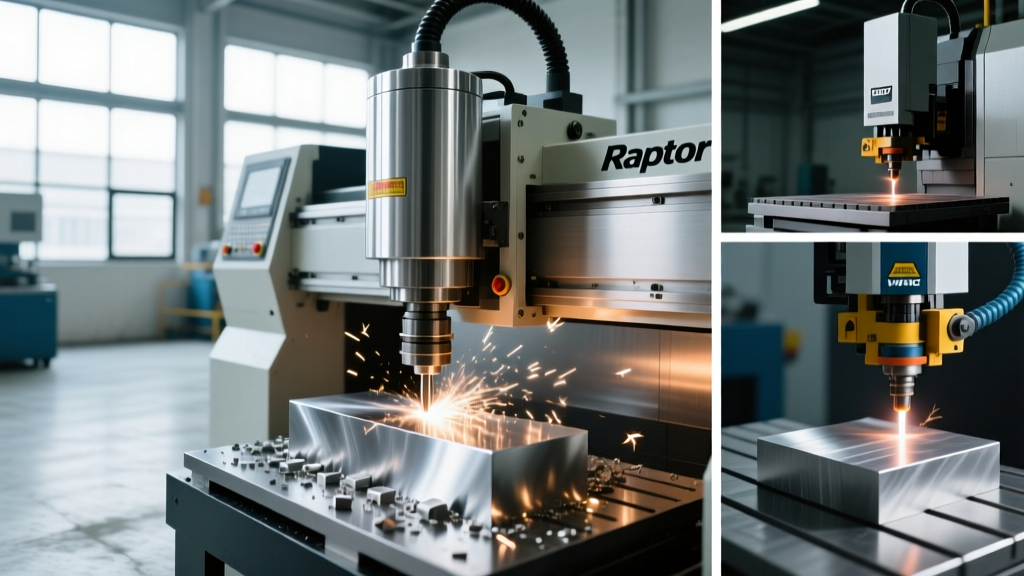
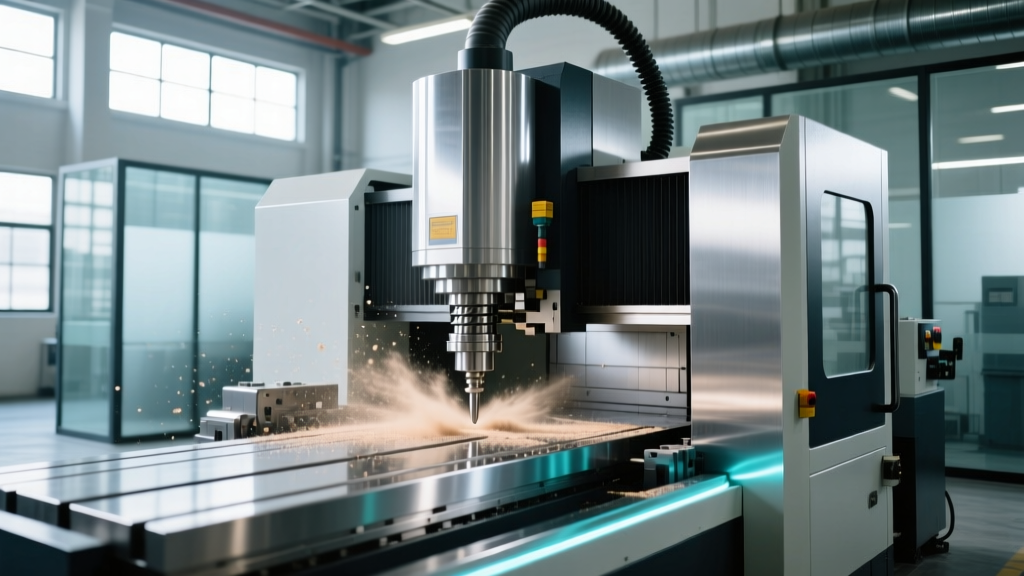
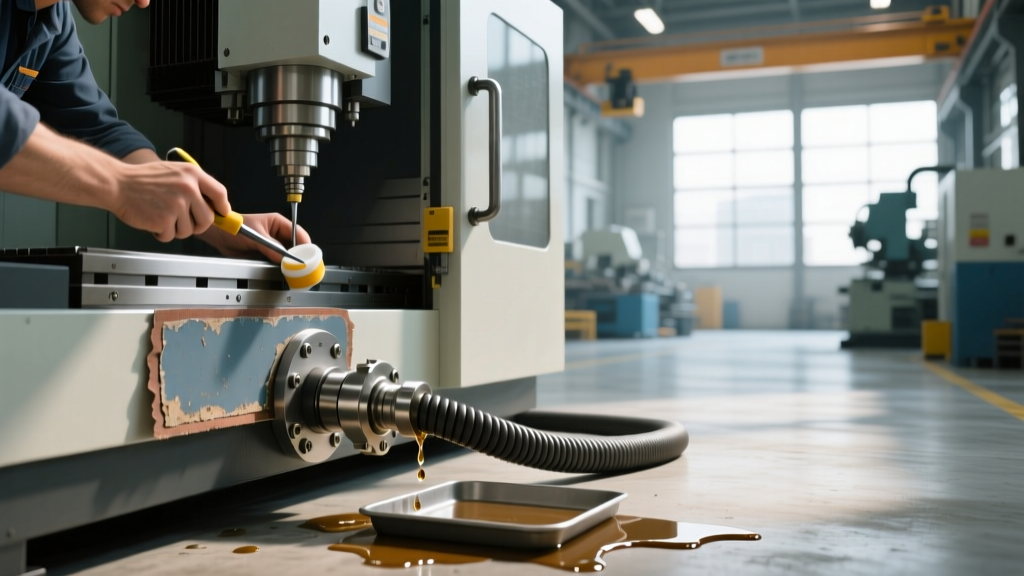
When an operator CNC machine encounters a coolant leak or enclosure breach, the immediate result is often a slipped part, a scrapped component, or a safety hazard. However, the secondary costs are where shops truly bleed money. A single hour of unplanned downtime on a 5-axis VMC can cost upwards of $250 in lost overhead and delayed deliveries. More insidiously, persistent micro-leaks degrade way lube, contaminate hydraulic reservoirs, and accelerate guideway wear. This guide provides actionable, deep-level troubleshooting frameworks for enclosure seals, way covers, and coolant delivery systems, moving beyond basic "wipe and refill" tactics to address root-cause failures.
Symptom-to-Solution Diagnostic Matrix
Before grabbing a replacement seal or adding more concentrate to the sump, use this diagnostic matrix to isolate the exact failure mode. Misdiagnosing a pressure drop as a pump failure when it is actually a clogged TSC (Through-Spindle Coolant) union filter is a $3,000 mistake.
| Symptom | Root Cause | Diagnostic Step | Permanent Fix |
|---|---|---|---|
| Coolant foaming excessively in sump | Water hardness below 50 ppm or tramp oil emulsification | Test water with hardness strips; check skimmer belt | Add calcium acetate to reach 100-150 ppm; replace skimmer belt |
| Enclosure misting/fogging | Mist collector static pressure drop or incorrect coolant nozzle velocity | Measure collector vacuum (target 2-4 in. w.c.) | Clean HEPA pre-filters; reduce nozzle PSI from 60 to 40 |
| TSC pressure drops below 300 PSI | Spindle rotary union seal wear or 5-micron filter bypass | Check TSC filter differential pressure gauge | Replace 5-micron core; rebuild rotary union if leak persists |
| Chips accumulating under way covers | Wiper blade durometer degradation (hardening) | Press thumb into wiper; if no deflection, it is dead | Install 70A durometer polyurethane wipers with Kevlar backing |
Enclosure Seal Degradation: Beyond the Quick Patch
The most common mistake operators make is replacing swollen or brittle enclosure gaskets with generic hardware-store Nitrile (Buna-N) cord stock. Modern semi-synthetic and ester-based synthetic coolants are highly aggressive solvents. When Nitrile is exposed to these fluids, it absorbs the liquid, swells by up to 30%, and loses its memory, leading to massive leaks at the sump pan and door jambs.
Material Selection: Nitrile vs. Viton vs. EPDM
To permanently solve enclosure seal failures, you must match the elastomer to your specific coolant chemistry:
- Nitrile (Buna-N): Only suitable for straight cutting oils or older emulsifiable oils. Fails within 300-500 hours in synthetics. Cost: ~$0.85/linear foot.
- Viton (FKM): The gold standard for synthetic and semi-synthetic coolants. Highly resistant to chemical swelling and maintains flexibility up to 400°F. Cost: ~$4.50/linear foot. The 5x upfront cost pays for itself by extending replacement intervals from 3 months to over 3 years.
- EPDM: Excellent for water-soluble fluids and alkaline environments (pH > 9.0), but will rapidly degrade if exposed to way lube or petroleum-based tramp oils.
Never bypass an enclosure door interlock to run a cycle while the coolant is spraying. High-pressure flood coolant (60+ PSI) can atomize into respirable aerosols. According to NIOSH criteria for metalworking fluids, chronic exposure to untreated MWF aerosols is directly linked to occupational asthma and hypersensitivity pneumonitis. Always repair the seal rather than bypassing the safety switch.
Way Cover and Bellows Breaches
Way covers protect the linear guideways and ballscrews from abrasive swarf. When a way cover bellows tears, or the wiper blades fail, cast iron or hardened steel chips fall onto the rails. These chips act as a lapping compound, destroying the ball recirculation caps and causing axis following errors.
Setting Wiper Tension and Alignment
Wiper blades must maintain constant contact with the way cover without creating excessive drag. If the tension is too loose, chips bypass the seal. If too tight, the friction accelerates the wear of the way cover hinges and increases the servo motor load, potentially triggering overload alarms.
- Remove the old wiper and clean the mounting surface with a non-chlorinated brake cleaner.
- Install a polyurethane wiper with a 70A to 80A durometer rating. This provides the optimal balance of flexibility for contouring and stiffness for chip deflection.
- Adjust the tensioning springs so the wiper exerts exactly 1.5 to 2.0 lbs of drag against the cover. You can measure this using a standard digital force gauge pulled horizontally across the wiper lip.
- Apply a thin film of way lube (ISO 68) to the wiper lip to prevent dry-run scoring during the first startup.
Coolant System Failures: Pumps, Skimmers, and Concentration
The coolant system is the circulatory system of the CNC machine. A failure here doesn't just affect surface finish; it ruins tool life and compromises dimensional accuracy due to thermal expansion.
Refractometer Readings and pH Drift
Operators must check coolant concentration daily using a handheld refractometer. The target Brix reading for most semi-synthetics is between 6% and 8% (multiply the Brix reading by the manufacturer's refractive index multiplier, usually 1.0 to 1.5). If the concentration drops below 5%, the biocides in the fluid fail, leading to anaerobic bacterial growth (the "rotten egg" smell) and a drop in pH below 8.0, which causes flash rusting on cast iron components.
For comprehensive safety and handling protocols, always refer to the OSHA metalworking fluid safety guidelines, which outline permissible exposure limits and necessary PPE when adjusting chemical concentrations.
Tramp Oil Separation
Way lube inevitably leaks into the coolant sump, floating to the top as tramp oil. This oil seals the coolant surface, depriving aerobic bacteria of oxygen and allowing anaerobic bacteria to thrive. A standard belt skimmer should run continuously during machine idle times. If the skimmer belt is slick and not picking up oil, the belt material has degraded. Replace standard steel belts with textured polyurethane or stainless-steel coalescing belts, which increase oil adhesion by up to 40%.
Through-Spindle Coolant (TSC) Rotary Union Diagnostics
When running 1000+ PSI TSC for deep hole drilling or carbide tool cooling, the spindle rotary union is under immense stress. A common failure mode is a slow leak at the union interface, which allows high-pressure coolant to enter the spindle bearing housing. This washes out the spindle grease and leads to catastrophic bearing failure—a $15,000+ repair.
💡 Pro-Tip: The Dry-Run TestBefore engaging high-pressure TSC after a tool change, run the TSC pump for 3 seconds with the spindle in a stationary, unclamped state while observing the union weep hole. If coolant drips from the weep hole, the internal mechanical seals are scored. Shut down immediately and schedule a union rebuild kit installation ($450-$800) before the coolant breaches the primary labyrinth seal.
Preventative Maintenance Schedule for Operators
To transition from reactive troubleshooting to proactive management, implement this operator-level maintenance cadence:
- Daily (Start of Shift): Check sump level, verify refractometer Brix (6-8%), and inspect way cover wipers for chip buildup.
- Weekly: Empty mist collector pre-filters, test coolant pH (target 8.5-9.2), and run the tramp oil skimmer for 4 hours during a weekend shutdown.
- Monthly: Inspect enclosure door gaskets for compression set (if the foam doesn't rebound after pressing, replace it). Check TSC filter differential pressure.
- Bi-Annually: Drain and completely clean the sump. Replace all standard Nitrile O-rings on coolant manifold quick-disconnects with Viton equivalents.
Mastering the enclosure and coolant systems transforms an operator from a simple button-pusher into a critical asset. By understanding the chemical interactions of elastomers, the physics of fluid dynamics, and the mechanical tolerances of way covers, you eliminate the micro-stoppages that destroy shop profitability.