2026 CNC Machine Tending Costs: Budgeting for Tight Tolerances
Analyze 2026 CNC machine tending costs based on accuracy and tolerance specs. Discover budget frameworks for standard, high, and ultra-precision automation.
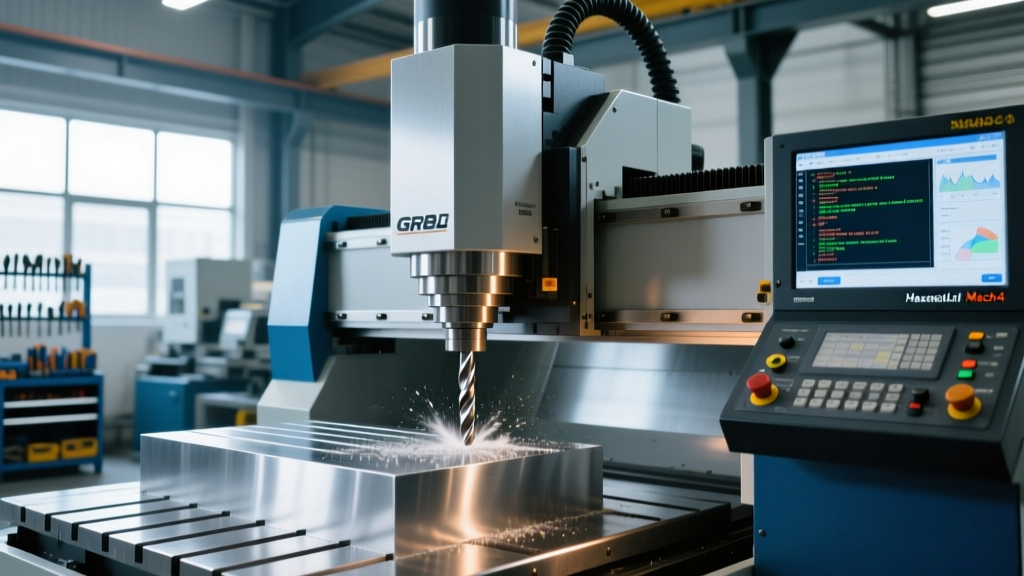
When engineering a manufacturing cell, the Geometric Dimensioning and Tolerancing (GD&T) requirements of your parts dictate far more than just the spindle and axis drives of the CNC equipment. The required accuracy directly governs the capital expenditure for cnc machine tending automation. A standard ±0.001-inch tolerance allows for a relatively straightforward, cost-effective articulated robot integration. However, as tolerances tighten into the sub-micron realm (±0.00005 inches), the automation system must evolve from a simple material handler into a precision metrology and fixturing extension of the machine tool.
For manufacturing engineers and plant managers planning 2026 capital budgets, understanding the correlation between machine accuracy and tending system complexity is critical. Under-budgeting for the end-of-arm tooling (EOAT), vision systems, and environmental controls required to support high-precision CNC machining is a primary cause of automation project failure and scrap generation.
The Tolerance-to-Capex Multiplier in Automation
In robotic integration, there is a recognized non-linear cost multiplier associated with precision. As the required part tolerance shrinks by a factor of 10, the cost of the cnc machine tending system typically increases by a factor of 2.5 to 4.0. This is not due to the robot arm itself, but rather the peripheral technologies required to guarantee part placement and thermal stability.
According to automation integration guidelines published by the Society of Manufacturing Engineers (SME), standard machine tending relies on the robot's inherent repeatability. But for high-precision machining, robot repeatability (often ±0.01mm to ±0.03mm) is insufficient. The system must incorporate kinematic couplings, active vision feedback, and thermal isolation, shifting the budget from the robotic arm to the fixturing and metrology hardware.
Warning: The Thermal Shock FactorManual operators inadvertently introduce thermal variance when loading cold parts into a temperature-controlled CNC enclosure. In ultra-precision jig grinding or diamond turning, the heat transfer from a human hand to the raw material can cause microscopic thermal expansion, ruining sub-micron tolerances. Automated tending eliminates this variable, but the robot itself generates heat that must be managed via specialized enclosures.
2026 Cost Matrix: Tending Systems by Accuracy Class
To build an accurate 2026 budget, categorize your CNC assets and part families into one of three accuracy tiers. The following matrix outlines the realistic integration costs, accounting for current hardware pricing, engineering labor, and validation protocols.
| Accuracy Class | Tolerance Range | Typical CNC Machine | Required Tending Tech | Est. 2026 Integration Cost |
|---|---|---|---|---|
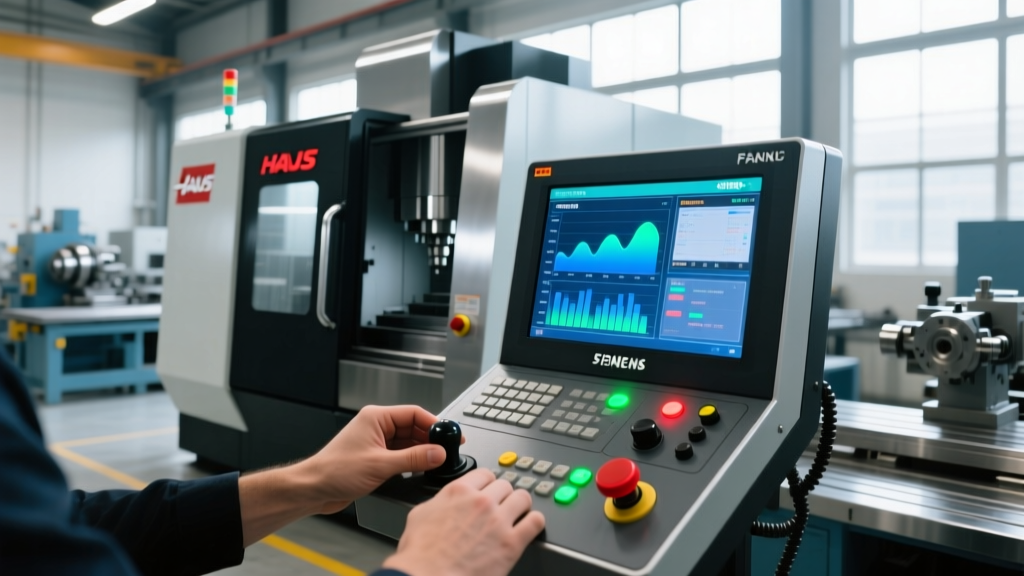
| Standard | ±0.001" (±25µm) | Haas VF-2SS, Doosan DNM | FANUC LR Mate 200iD, Standard Pneumatic Grippers, 2D Proximity Sensors | $45,000 - $65,000 |
| High-Precision | ±0.0002" (±5µm) | Makino a61nx, Hermle C400 | KUKA KR AGILUS, 2D/3D Vision (Cognex), Zero-Point Clamping | $95,000 - $130,000 |
| Ultra-Precision | ±0.00005" (±1.2µm) | Moore Nanotech 350FG, Kern Micro | Epson G6 SCARA, Kinematic Couplings (System 3R), Thermal Enclosures, In-Cycle Probing | $180,000 - $240,000+ |
Component-Level Budget Breakdown for Sub-Micron Tending
When moving from a Standard to an Ultra-Precision cell, the budget increase is absorbed by specific hardware and software upgrades. Understanding these line items prevents sticker shock during the vendor quoting phase.
1. End-Effectors and Kinematic Couplings
A standard dual-pneumatic gripper assembly costs between $1,200 and $3,500. It relies on the robot's positional accuracy to seat the part in the CNC vise. For high-precision cnc machine tending, this is unacceptable. Instead, integrators utilize kinematic coupling systems, such as the System 3R MacroMagnum or Hainbuch** zero-point clamping systems. These chucks use precision-machined mating geometries to pull the part into exact alignment, bypassing the robot's joint-play entirely. Budget $12,000 to $18,500 per machine node for the chuck, pallets, and pneumatic draw-tube integration.
2. Machine Vision and Metrology Feedback
Standard tending uses $500 inductive proximity sensors to verify part seating. High-precision applications require vision systems to inspect the part's orientation and cleanliness before loading. A Cognex In-Sight 2D camera system adds $8,000 to the bill of materials. For ultra-precision, where a single metal chip left on the chuck can cause a $50,000 aerospace turbine blade to be scrapped, integrators deploy 3D laser profilers like the Keyence LJV series to map the seating surface in real-time, adding $22,000 to $28,000 to the project cost.
3. Environmental and Thermal Stabilization
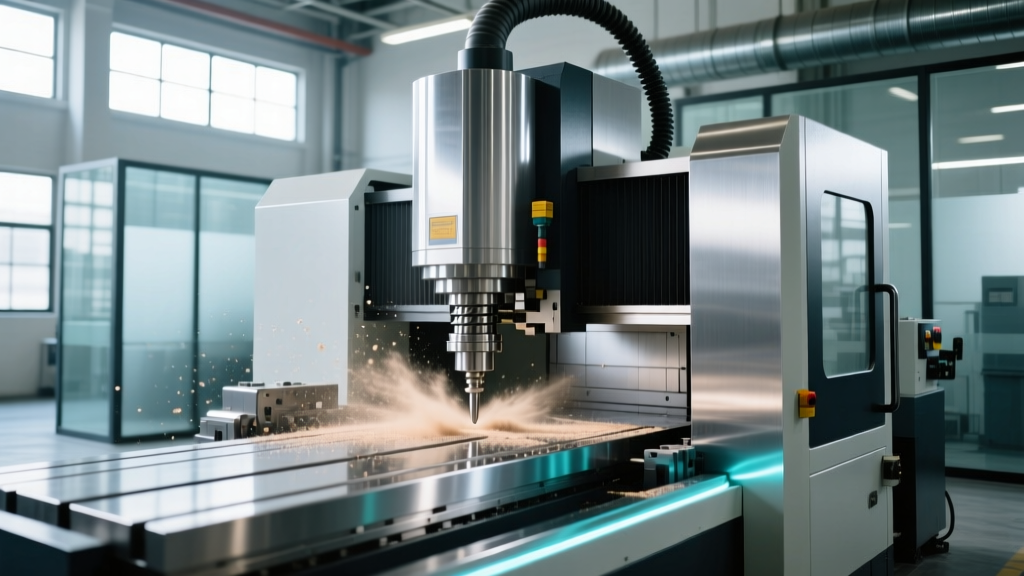
As noted by NIST's Precision Engineering research, thermal gradients are the enemy of sub-micron machining. A robot arm's servos generate significant heat. In an ultra-precision cell, the robot cannot simply sit next to the machine. The budget must include a thermally isolated enclosure with active chilling units to maintain the ambient air around the CNC and robot at exactly 20°C (68°F). Allocate $15,000 to $25,000 for HVAC integration and insulated safety guarding.
Budgeting Tip: The Rule of 10In metrology and automation, the "Rule of 10" dictates that the measuring or placement system must be 10 times more accurate than the tolerance being held. If your CNC holds ±2µm, your robot's repeatability and fixturing system must guarantee placement within ±0.2µm. Always spec the fixturing system, not just the robot arm, to this rule.
Calculating the True ROI: Scrap Reduction vs. Cycle Time
Standard cnc machine tending ROI is calculated purely on direct labor replacement and lights-out runtime, typically yielding a payback period of 14 to 22 months. However, the ROI for high-precision tending must be modeled differently. The financial justification relies heavily on scrap elimination and OEE (Overall Equipment Effectiveness) improvements.
"In medical and aerospace machining, a single scrapped part due to manual loading misalignment can wipe out a week's profit margin. High-precision automated tending is rarely justified by the hourly wage of the operator it replaces; it is justified by the elimination of $10,000 raw material losses and the recovery of 40 hours of re-machining time."
— Adapted from Modern Machine Shop automation integration case studies.
When building your 2026 business case, calculate the annual cost of scrap attributed to human loading errors, thermal shock from manual handling, and machine downtime required for operators to manually indicate and tram high-value parts. These factors frequently reduce the payback period of a $180,000 ultra-precision cell to under 12 months.
Step-by-Step Budgeting Framework for 2026 Integration
To finalize your capital expenditure request, follow this sequential framework to ensure no hidden costs are omitted from your automation project.
- Audit the GD&T Critical Features: Isolate the specific datums and tolerances that dictate machine accuracy. Separate parts that require ±0.0001" positioning from those that only require it for the final bore. You may only need high-precision tending for the secondary operation, allowing a standard robot to tend the roughing mill.
- Spec the Fixturing Before the Robot: Choose your zero-point clamping or kinematic coupling system first. Once the fixturing repeatability is established, you can often downgrade the robot arm from a premium high-precision model to a standard model, saving $8,000 to $12,000 on the arm itself without sacrificing part accuracy.
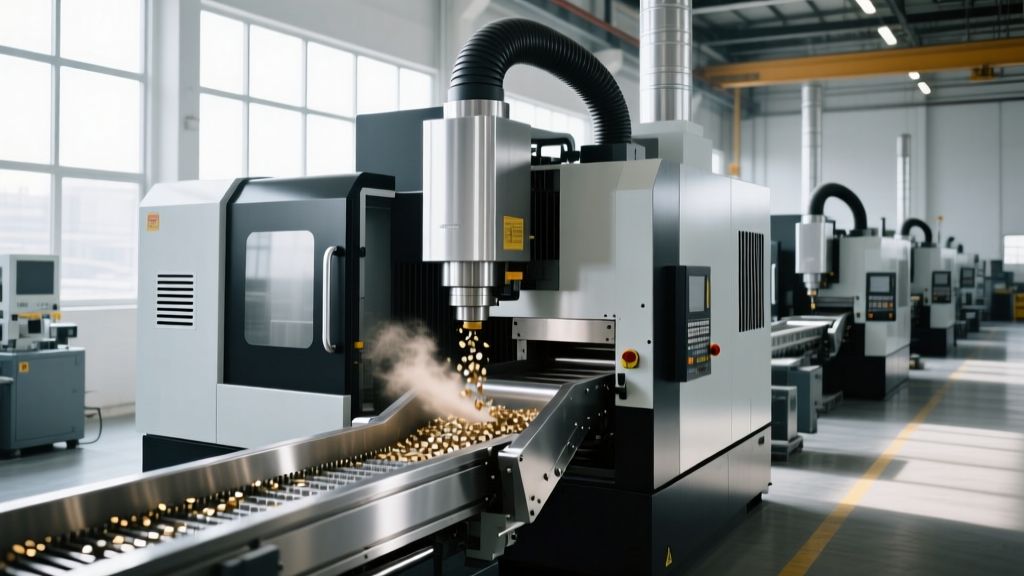
- Factor in Post-Process Gauging Integration: High-precision tending cells often require the robot to move the finished part to a post-process air-gauge or CMM station before placing it in the out-feed conveyor. Budget $10,000 to $15,000 for the communication handshake (e.g., FOCAS or MTConnect) between the CNC, the robot controller, and the external gauging hardware.
- Allocate 15% for Validation and Run-Off: Ultra-precision cells require extensive thermal soak testing and statistical process control (SPC) run-offs. Engineering labor for a 3-week validation phase will cost between $8,000 and $12,000. Do not omit this from the initial CapEx request.
Key Takeaways for 2026 Budget Planning
- Tolerance dictates technology: Sub-micron CNC accuracy requires kinematic couplings and 3D vision, pushing cell costs past $180,000.
- Invest in fixturing, not just arms: A $60,000 standard robot paired with a $15,000 System 3R chuck will outperform a $90,000 high-precision robot using standard pneumatic grippers.
- Redefine ROI: Justify high-precision cnc machine tending through scrap reduction and OEE recovery, not just direct labor displacement.