Chip Management & Dust Collection Specs from Top CNC Machine Makers
Explore how top CNC machine makers design chip management and dust collection systems, plus exact maintenance schedules to prevent downtime.
The Thermal and Mechanical Cost of Swarf Accumulation
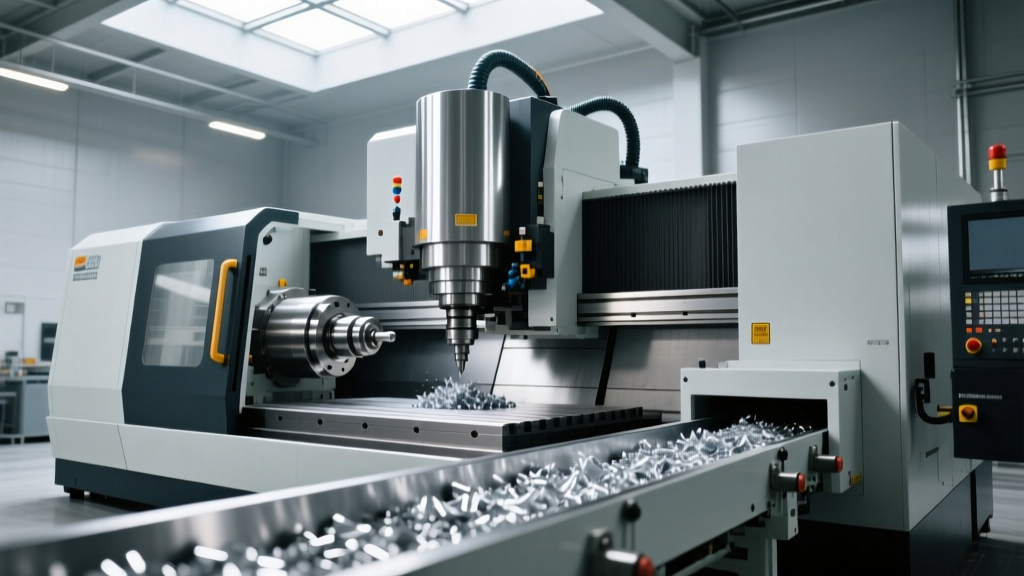
Swarf management is frequently treated as an afterthought in machine shop maintenance schedules, yet it remains a primary vector for catastrophic mechanical failure. When leading CNC machine makers engineer a new horizontal or vertical machining center, the chip conveyor and coolant filtration systems are sized based on maximum Material Removal Rates (MRR). If the evacuation system fails to keep pace with the spindle's output, stringy aluminum chips or abrasive cast iron dust will infiltrate the Z-axis way covers, compromise the spindle labyrinth seal, and cause thermal distortion in the casting.
Industry Data Highlight: According to reliability analyses reported by Modern Machine Shop, nearly 34% of premature spindle bearing failures in high-speed machining centers are directly linked to chip ingress and coolant contamination degrading the labyrinth seal. A single spindle replacement on a 15,000 RPM HMC can cost between $18,000 and $28,000, excluding the 72+ hours of lost production.OEM Chip Evacuation Architectures: A Comparative Matrix
Different CNC machine makers approach chip management based on their target demographic and standard machining processes. Understanding your specific OEM's architecture is the first step in building an accurate preventative maintenance (PM) schedule.
| OEM Brand | Standard Conveyor Type | Coolant Filtration Spec | Ideal Material Application |
|---|---|---|---|
| Haas Automation | Hinge-Belt (1/4 HP drive) | 25-micron internal drum screen | Steel, short-chip aluminum, plastics |
| Mazak | Scraper-Type with bottom flush | 15-micron paper band filter (optional) | Stringy aluminum, high-volume MRR |
| DMG MORI | Automated coolant nozzle flush | Magnetic separator + 10-micron paper band | Cast iron, abrasive composites, titanium |
As of 2026, the industry standard for high-pressure through-spindle coolant (TSC) systems demands filtration down to 10 microns to prevent ceramic bearing scoring. If your machine utilizes a standard 25-micron drum screen but you are running 1,000 PSI TSC, you are operating outside the safe maintenance parameters established by the manufacturer.
Strict Maintenance Schedules for Chip Conveyors
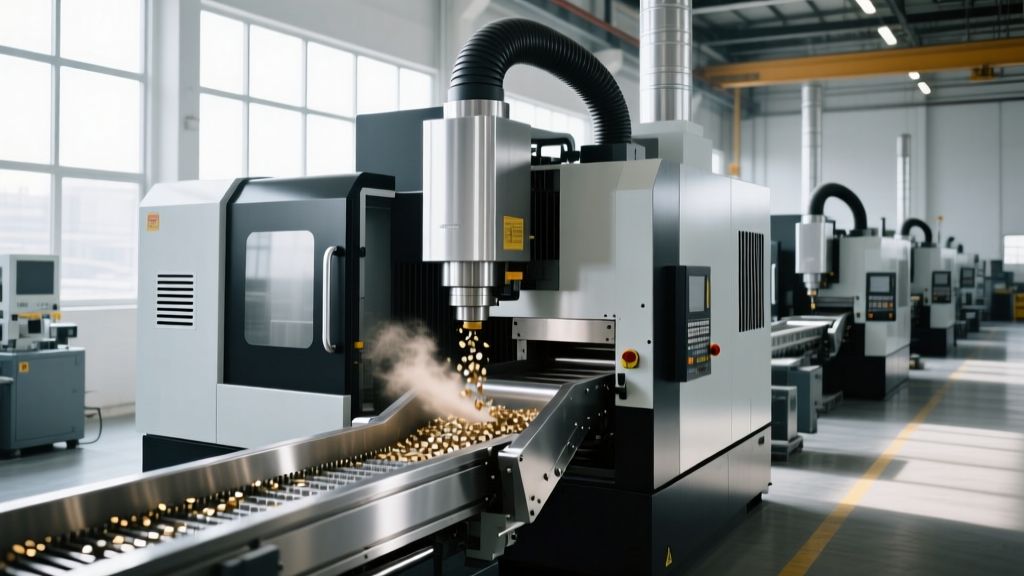
A reactive approach to chip conveyors—waiting for a jam to clear the bin—guarantees accelerated wear on the drive chain and motor gearbox. Implement the following intervals to maintain OEM tolerances.
Daily and Weekly Intervals
- Daily (End of Shift): Inspect the Z-axis and X-axis way cover wipers. Clear any packed chips from the bellows folds. Packed chips act as an abrasive paste, tearing the polyurethane wiper lips within weeks.
- Weekly: Check hinge-belt tension. Apply 10 lbs of downward pressure to the center of the return belt; deflection should not exceed 1/2 inch. Excessive slack causes the belt to slip on the drive sprocket, shearing the locating pins.
- Weekly: Verify coolant level and concentration. Evaporation increases the concentration of tramp oils and fine swarf, turning the coolant into a viscous sludge that starves the conveyor pump.
500-Hour and Annual Overhauls
- 500-Hour (Quarterly): Drain the primary coolant tank and shovel out the settled fines. Inspect the conveyor drive chain and apply ISO 68 chain oil. Do not use standard WD-40 or light aerosol lubricants, as they lack the tackiness required to adhere to the chain in a high-wash environment.
- 1,000-Hour (Bi-Annual): Inspect the conveyor torque limiter. On scraper-style conveyors, manually test the shear-pin or ball-detent clutch to ensure it trips at the manufacturer's specified torque (typically 40-60 Nm). A seized torque limiter will burn out the $1,200 drive motor if a jam occurs.
- Annual: Replace the polyurethane belt wipers at the discharge chute. Worn wipers allow fine chips to fall back into the return trough, leading to catastrophic underside binding.
Dust Collection for Dry Machining: Graphite and Composites
While wet machining dominates metal cutting, dry machining of graphite electrodes, G10 fiberglass, and advanced ceramics requires specialized dust collection. The physics of airborne particulate management differs vastly from heavy metal swarf.
Leading CNC machine makers design dry-machining enclosures with negative pressure zones, but the external dust collector must be maintained to handle highly abrasive, electrically conductive dust. Graphite dust, for instance, is notorious for infiltrating standard shop vacuums and shorting out universal motors.
Calculating and Maintaining Duct Velocity
To prevent particulate settling inside the ductwork, you must maintain a minimum transport velocity. For heavy metal dust, 3,500 FPM (feet per minute) is required; for graphite and composite fibers, 4,000 to 4,500 FPM is mandatory.
Pro-Tip for Static Pressure: If you add a new CNC enclosure to an existing dust collection manifold, recalculate the static pressure (SP). A 4-inch duct pulling 800 CFM requires roughly 1.5 inches of SP. Undersizing the blower motor will result in dust settling in horizontal runs, eventually causing a complete blockage and potential fire hazard with combustible composite dusts.Filter Pulse-Cleaning Schedules
Cartridge dust collectors utilize compressed air pulse-jets to shake dust off the PTFE-coated filters. Maintenance Rule: The compressed air supplying the pulse valves must be strictly regulated to 90-100 PSI and equipped with a desiccant dryer. Moisture in the air lines will cause graphite or aluminum dust to cake onto the filter media, blinding the pores and dropping the system's CFM by up to 60% within a single shift.
Troubleshooting Decision Tree: Conveyor Jams and Coolant Starvation
When the chip management system fails, use this diagnostic framework before calling a service technician.
Symptom: Conveyor Motor Hums but Belt Does Not Move
- Check 1: Inspect the torque limiter. If the ball-detent clutch is slipping, tighten the adjustment nut by 1/4 turn and retest. If it still slips, the internal springs are fatigued and require replacement.
- Check 2: Look for 'bird-nesting'. Stringy chips (common in 6061 aluminum or 304 stainless) can wrap around the lower idler shaft. Lock out the machine, cut the wrap with diagonal cutters, and install a secondary scraper plate to prevent recurrence.
Symptom: Coolant Pump Cavitates (Loud Grinding Noise)
- Check 1: The suction strainer is clogged with fine swarf. Bypass the internal drum screen and install an external 50-micron bag filter on the return line to catch fines before they reach the main tank.
- Check 2: Coolant viscosity is too high due to water evaporation. Add fresh water to restore the refractometer reading to the OEM-specified 6-8% concentration.
Aftermarket Upgrades: When OEM Filtration Falls Short
Many standard CNC machines ship with basic coolant screens that are entirely inadequate for modern high-speed milling. Upgrading your filtration is one of the highest-ROI maintenance decisions a shop can make.
According to machining research published by Sandvik Coromant, maintaining consistent coolant pressure and cleanliness directly impacts tool life by up to 20% in deep-cavity milling operations. If your OEM setup relies on a simple drop-in drum screen, consider retrofitting a centrifugal separator or an automatic paper band filter.
- Centrifugal Separators ($3,500 - $6,000): Ideal for cast iron and abrasive steels. They use centrifugal force to separate particles down to 15 microns without requiring consumable filter media. Maintenance is limited to emptying the collection bowl weekly.
- Paper Band Filters ($2,500 - $4,500): The gold standard for through-spindle coolant. They provide consistent 10-to-15-micron filtration. The only maintenance required is replacing the roll of filter paper (approximately $120 per roll) every 2 to 4 weeks, depending on MRR.
'The integration of advanced chip evacuation and ultra-fine filtration is no longer a premium option; it is a baseline requirement for shops running unattended or lights-out manufacturing. A machine choked by its own swarf cannot hold micron-level tolerances.' — The Association For Manufacturing Technology (AMT) guidelines on automated manufacturing readiness.
Final Verification for Shop Managers
A robust maintenance schedule for dust collection and chip management requires shifting the shop floor mentality from 'cleaning up' to 'system preservation'. By adhering to the specific torque, micron, and velocity parameters outlined by top CNC machine makers, you eliminate the hidden variables that cause spindle degradation, way-cover tearing, and unplanned downtime. Audit your current PM sheets today, integrate the 500-hour drive chain inspections, and verify your coolant micron ratings against your TSC requirements to secure your machine's longevity well into the future.