CNC Machine: What Is a Mill-Turn Center? (Selection Guide)
Learn what a multi-function mill-turn CNC machine is, compare top models like the Mazak Integrex, and use our framework to select the right turn-mill center.
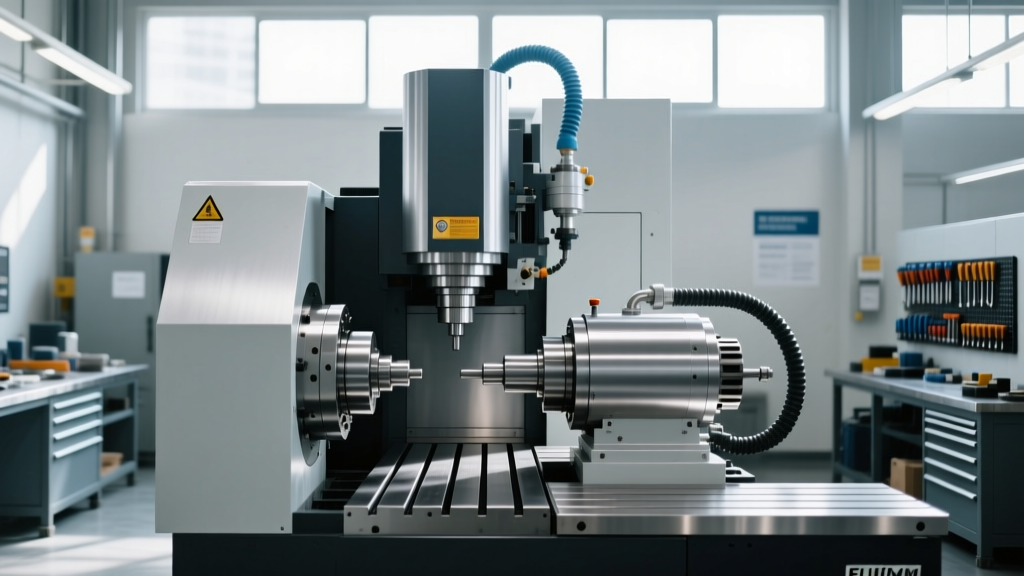
When researching advanced manufacturing equipment, a common foundational question from shop floor managers is: regarding a multi-axis CNC machine, what is the actual operational advantage of a mill-turn center over separate lathes and vertical machining centers (VMCs)? The answer lies in kinematic consolidation. A multi-function mill-turn center (often called a turn-mill) integrates the rotational workholding and turning capabilities of a lathe with the multi-axis, off-center milling capabilities of a machining center into a single footprint.
For job shops and aerospace manufacturers, this 'done-in-one' architecture eliminates secondary operations, reduces fixture-induced tolerancing errors, and drastically cuts work-in-process (WIP) inventory. However, the capital expenditure for these machines is substantial, often ranging from $350,000 to over $1.2 million depending on automation and axis configuration. This guide breaks down the mechanical architecture, hidden operational costs, and decision frameworks required to select the right multi-function CNC machine for your production environment.
Core Kinematics: Beyond Simple Live Tooling
A basic CNC lathe with live tooling and a C-axis (spindle orientation) is not a true mill-turn center. True multi-tasking machines are defined by three critical mechanical additions:
- The B-Axis Contouring Head: Unlike a standard lathe turret that locks into fixed positions, a mill-turn B-axis spindle head can tilt and lock at any angle (typically -30 to +210 degrees). This allows for 5-axis simultaneous contouring, angled drilling, and complex surface milling without re-fixturing the part.
- The Y-Axis Travel: Standard lathes only move in X (radial) and Z (longitudinal). The addition of a Y-axis allows the cutting tool to move perpendicular to the spindle centerline, enabling the machining of flats, keyways, and off-center features directly on the turned part.
- Lower Turret with Sub-Spindle Integration: High-end mill-turn centers feature a lower turret that operates independently of the upper B-axis head. When paired with a sub-spindle (a secondary chuck that pulls the part off the main spindle), the lower turret can perform backworking and simultaneous roughing while the upper head finishes complex milled features.
2026 Flagship Model Comparison Matrix
When evaluating the market, three OEMs dominate the mid-to-large format multi-tasking sector. Below is a specification and pricing matrix for their benchmark models, reflecting current 2026 capital equipment estimates.
| Specification | Mazak Integrex i-200S | DMG MORI NTX 1000 | Okuma MULTUS U3000 |
|---|---|---|---|
| Max Turning Diameter | 26.0 in (660 mm) | 17.3 in (440 mm) | 25.6 in (650 mm) |
| B-Axis Travel | -30 to +210° | -30 to +210° | -30 to +210° |
| Rapid Traverse (X/Y/Z) | 1,181 ipm (30 m/min) | 1,181 ipm (30 m/min) | 1,181 ipm (30 m/min) |
| Tool Magazine Capacity | 36 to 72 tools | 24 to 48 tools | 40 to 80 tools |
| Estimated Base Price (2026) | ~$450,000 | ~$380,000 | ~$420,000 |
Note: Base prices exclude high-pressure coolant systems, bar feeders, and advanced probing packages, which typically add $40,000 to $80,000 to the final invoice.
The 'Done-in-One' Decision Framework
Not every shop should buy a mill-turn center. The technology excels in specific production scenarios but can become a bottleneck if misapplied. Use the following framework to determine if a multi-function CNC machine aligns with your part family.
Buy a Mill-Turn Center IF:
- Your parts require 5-axis milling features on a cylindrical base (e.g., aerospace landing gear actuators, medical bone screws).
- Batch sizes are low-to-medium (1 to 500 parts), making dedicated fixture tooling for secondary VMC operations cost-prohibitive.
- Part accuracy is compromised by re-clamping (e.g., concentricity between a turned OD and a milled pocket must be held within 0.0005 inches).
- Floor space is at a premium, and consolidating a lathe and a 5-axis VMC into one footprint yields a positive ROI on real estate and utility costs.
Stick to Dedicated Lathes/VMCs IF:
- You are running high-volume production (>5,000 parts) of simple turned components; a multi-spindle automatic or Swiss-type lathe will yield a faster cycle time and lower cost-per-part.
- Your parts are primarily prismatic (blocks/cubes) with minimal turning requirements.
Hidden Capital and Operational Costs
The purchase price of the machine is only the beginning of the financial commitment. According to Society of Manufacturing Engineers (SME) research on advanced machining adoption, shops frequently underestimate the peripheral costs required to make a mill-turn center profitable.
1. Advanced CAM Software and Post-Processors
Standard 3-axis CAM software cannot generate toolpaths for a B-axis contouring head and a lower turret operating simultaneously. You must invest in specialized Mill-Turn CAM modules (such as Mastercam Mill-Turn or Hexagon ESPRIT). Expect to pay between $15,000 and $25,000 per seat for the software, plus an additional $5,000 to $10,000 for a custom, machine-specific post-processor verified for your exact kinematic configuration.
2. Tooling Interfaces: The Capto Standard
Standard VDI or BOT tooling lacks the rigidity required for heavy B-axis milling. The industry standard for multi-tasking machines is the Coromant Capto interface (typically C6 or C8 size). Capto provides a dual-contact face-and-taper connection that ensures high torsional rigidity and repeatability. However, building a comprehensive Capto tooling library from scratch can easily cost $50,000 to $100,000 before you purchase the first cutting insert.
3. Machine Simulation and Collision Avoidance
With a main spindle, sub-spindle, upper B-axis head, and lower turret all operating inside a confined envelope, the risk of a catastrophic collision is high. Physical prove-outs are dangerous and waste spindle hours. Purchasing a digital twin simulation package like VERICUT or CGTech is mandatory. These systems read the exact G-code and machine kinematics to verify clearances down to 0.001 inches before the program ever reaches the shop floor.
Real-World Failure Modes and Edge Cases
Even with top-tier equipment from OEMs like those listed in the Mazak Multi-Tasking lineup, operators encounter specific physical limitations that must be managed.
Thermal Drift in the B-Axis Head: The B-axis spindle head is densely packed with motors and bearings. During heavy milling operations, heat generation can cause the head to expand, shifting the tool center point (TCP) by 0.001 to 0.003 inches over a 4-hour cycle. To mitigate this, utilize machines equipped with internal thermal compensation sensors, and always run a warm-up cycle that exercises the B-axis through its full range of motion before cutting tight-tolerance aerospace features.
Chip Evacuation in Deep Cavity Milling
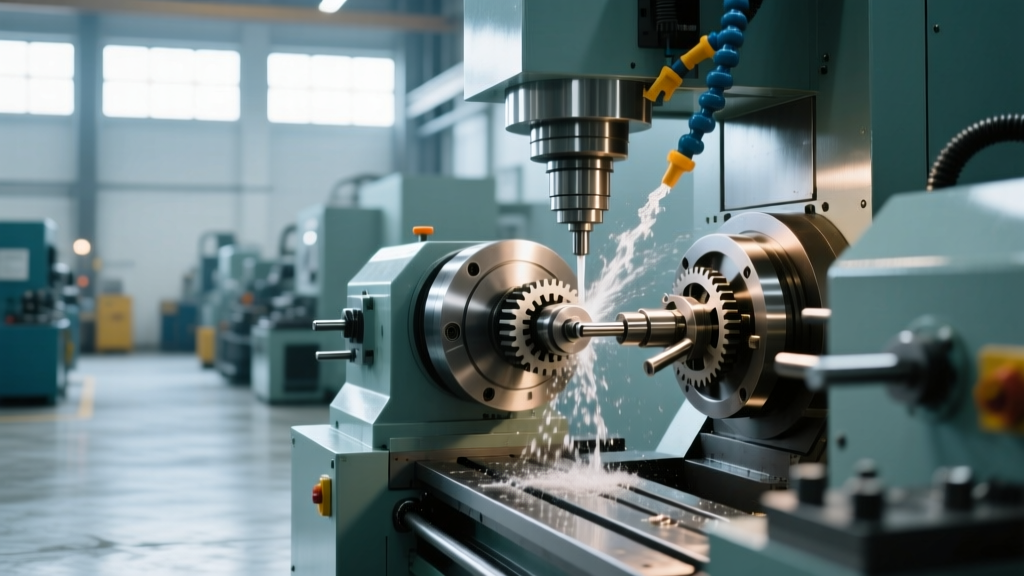
When using a mill-turn center to machine deep pockets on a large diameter part, chips can fall into the lower turret or wrap around the sub-spindle. Unlike a VMC where chips fall straight down into a conveyor, the horizontal orientation of a turn-mill center traps chips. You must specify high-pressure through-spindle coolant (minimum 1,000 PSI) to blast chips out of deep cavities, and consider installing an automated air-blast system to clear the sub-spindle chuck between part transfers.
Final Selection Directives
Selecting a multi-function CNC machine requires looking past the marketing brochures and focusing on the integration of software, tooling, and thermal management. When evaluating quotes, demand that the OEM include a turnkey package encompassing the Capto tooling starter kit, the verified CAM post-processor, and the digital simulation software. As highlighted by NIST Manufacturing Engineering guidelines on smart manufacturing, the true ROI of a mill-turn center is only realized when the digital thread from CAD to final cut is seamlessly validated, ensuring that your $500,000 investment produces complex, finished parts on the very first cycle.