Best Mill-Turn CNC Machine for Rims: 2026 Buying Guide
Discover the best mill-turn CNC machines for rims in 2026. Compare specs, workholding strategies, and ROI for alloy wheel manufacturing and repair.
The Shift to Multi-Function Mill-Turn Centers
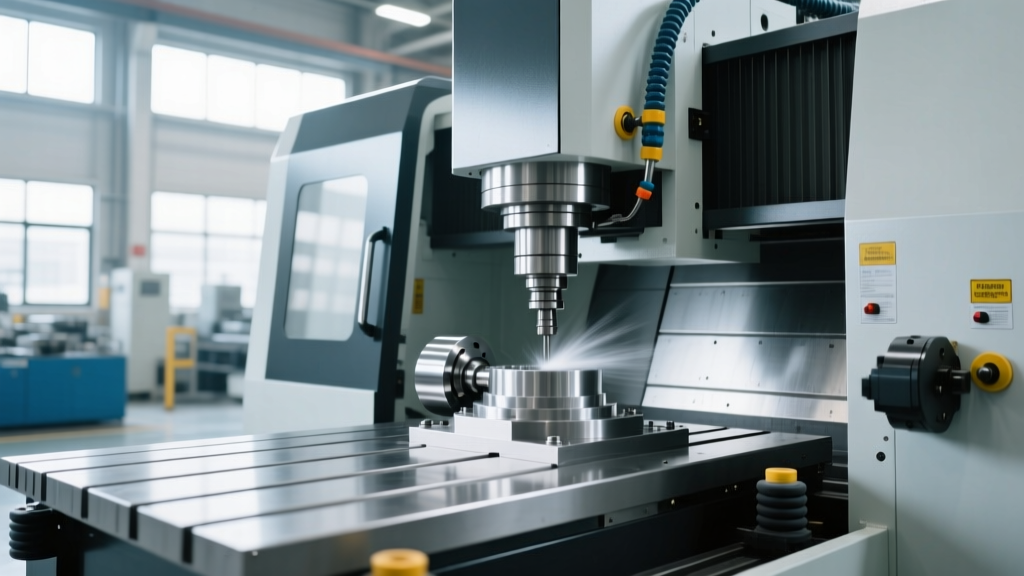
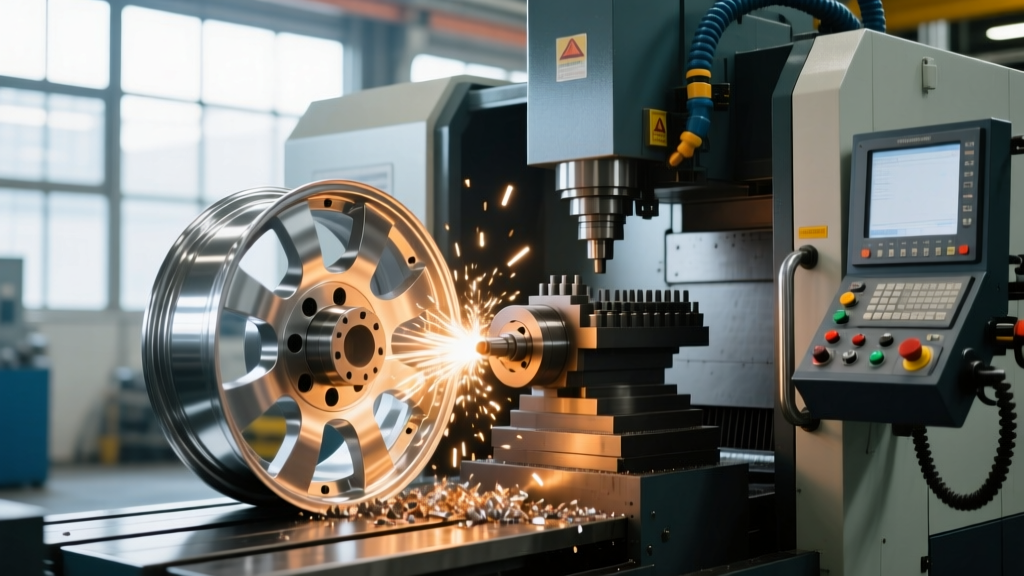
Manufacturing and repairing high-performance alloy wheels requires navigating complex geometries, tight runout tolerances, and thin-walled structures. Historically, shops relied on a two-machine cell: a vertical turning lathe (VTL) for the barrel, bead seats, and hub bore, followed by a 5-axis vertical machining center (VMC) for spoke profiling, lug nut holes, and center cap pockets. In 2026, this fragmented workflow is being rapidly replaced by the multi-function CNC machine for rims—the mill-turn center.
Mill-turn centers integrate high-torque turning spindles with full 5-axis milling capabilities via a B-axis head. By completing a rim in a single chucking, manufacturers eliminate secondary setup errors, reduce floor space requirements, and slash cycle times. According to SAE International wheel standards (J2530), maintaining strict radial and lateral runout tolerances (often under 0.3 mm) is critical for high-speed vehicle dynamics. Single-setup mill-turn machining is the most reliable method to guarantee these concentricity requirements.
Decision Framework: Mill-Turn vs. Traditional Cell
- Choose Mill-Turn If: You produce forged or flow-formed rims (18"–24"), require diamond-cut face finishing in the same setup, and prioritize runout precision over raw roughing volume.
- Choose Traditional VTL + 5-Axis VMC If: Your primary output is high-volume, low-mix gravity-cast wheels where dedicated roughing spindles and automated pallet pools offer faster throughput for simple geometries.
Core Specifications for Alloy Wheel Production
Selecting the right equipment requires matching the machine's physical and dynamic capabilities to the specific rim profiles and materials (typically A356-T6 cast or 6082-T6 forged aluminum) you intend to process.
Swing Capacity and Chuck Dynamics
The aftermarket and EV truck sectors are driving demand for larger wheel diameters. A mill-turn center intended for rim manufacturing must offer a minimum swing over bed of 30 inches (762 mm) to comfortably accommodate 24-inch rims with deep lip profiles, plus clearance for the B-axis milling head. Look for machines equipped with large-bore chucks (minimum 15-inch through-hole) to allow for specialized expanding mandrels or internal clamping mechanisms when machining the outer lip.
Spindle Dynamics for Forged and Cast Aluminum
Aluminum machining demands a dual-threat spindle profile. Roughing the hub and inner barrel of a forged 6082-T6 billet requires high torque at lower RPMs (e.g., 800 Nm at 1,500 RPM) to drive large-diameter indexable inserts. Conversely, diamond-cutting the outer face for a mirror finish requires high surface speeds, demanding a secondary motor or high-speed spindle attachment capable of 12,000+ RPM. Machines with integrated motor spindles (rather than belt-driven) provide the vibration dampening necessary to achieve an Ra 0.4 µm surface finish during light PCD (Polycrystalline Diamond) finishing passes.
B-Axis and Live Tooling for Spoke Geometry
The B-axis is the heart of the milling operation. For complex multi-spoke or mesh designs, the B-axis must feature a continuous 360-degree rolling capability with a locking Hirth coupling or direct-drive torque motor for rigid 3D contouring. A minimum B-axis travel of ±120 degrees is required to reach undercuts in deep-dish rim designs without requiring specialized angled toolholders.
2026 Mill-Turn Equipment Comparison Matrix
The following table highlights three premier multi-function CNC machines for rims currently dominating the market, based on turning diameter, milling integration, and estimated capital expenditure.
| Machine Model | Max Turning Dia. | Milling Spindle RPM | B-Axis Travel | Est. Base Price (2026) |
|---|---|---|---|---|
| Mazak INTEGREX i-400S | 25.6" (650 mm) | 12,000 RPM | ±120° | $580,000 - $650,000 |
| DMG MORI NTX 2000 | 25.2" (640 mm) | 12,000 RPM (compactMASTER) | ±120° | $620,000 - $710,000 |
| Okuma MULTUS U4000 | 27.5" (700 mm) | 12,000 RPM | ±120° | $550,000 - $630,000 |
Note: Pricing reflects base configurations. Fully loaded cells with gantry loaders, high-pressure coolant units, and automated tool changers (ATC) with 80+ tool magazines will push capital costs between $850,000 and $1.2 million.
Workholding: Solving Thin-Wall Distortion
The most common failure mode in CNC machining rims is clamping distortion. Modern forged rims feature outer lips as thin as 3.5 mm. Standard 3-jaw hydraulic chucks exert radial forces that easily ovalize the rim during roughing; when unclamped, the rim springs back out of round, resulting in catastrophic runout failures.
Warning: Never use standard hard jaws on the outer diameter of a finished rim lip. Always utilize axial clamping or internal expanding mandrels for secondary operations.Recommended Workholding Solutions:
- SMW-AUTOBLOK Vacuum Chucks: Ideal for the second setup (machining the hub face and lug holes). Vacuum chucks grip the finished outer face uniformly without radial distortion, provided the sealing surface is perfectly flat.
- Custom Stepped Soft Jaws: For the first setup (gripping the raw forging), machine soft jaws with a stepped profile that contacts the rim at the thickest cross-section (usually the hub flange), combined with low-pressure hydraulic regulators (under 30 bar).
- Internal Expanding Mandrels: Used for finishing the outer lip and diamond cutting. The mandrel expands into the machined center bore, locking the rim axially against a precision faceplate.
Tooling and Chip Evacuation Strategies
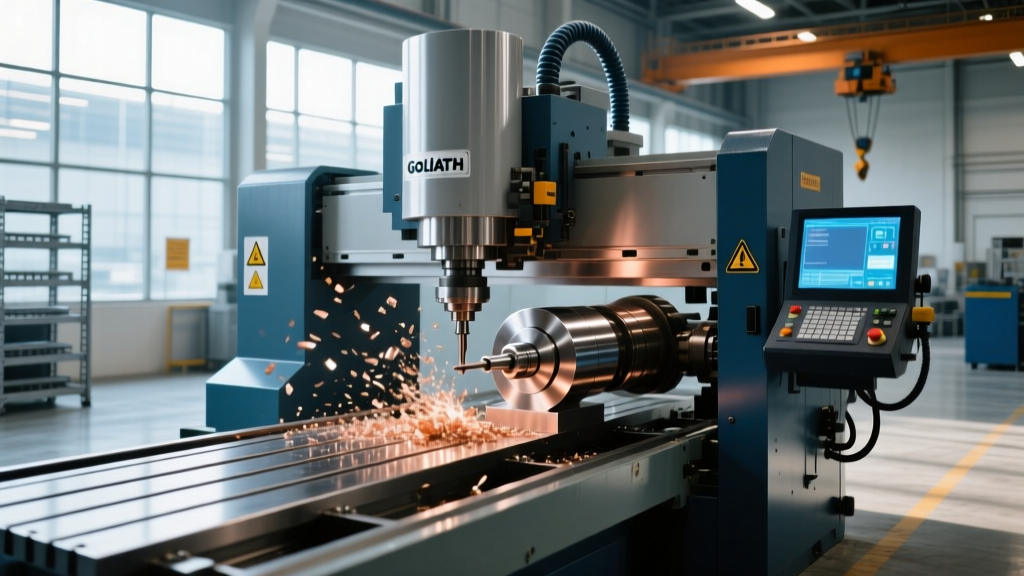
Aluminum generates long, stringy chips that can wrap around the B-axis head, scratch the cosmetic face of the rim, or jam the ATC. Managing swarf is non-negotiable in rim manufacturing.
High-Pressure Coolant (HPC) Integration
Specify a machine with a minimum 1,000 PSI (70 bar) through-spindle coolant system. HPC breaks aluminum chips into manageable "C" shapes at the source. For diamond-cutting operations, switch to a high-lubricity, low-viscosity minimum quantity lubrication (MQL) or specialized clear cutting fluid to prevent staining the mirror finish.
Chip Conveyor Selection
Standard hinge-belt conveyors fail with aluminum stringers. Require a scraper-type or drum-filter chip conveyor with an integrated coolant filtration system capable of handling fine aluminum particulate down to 20 microns. This protects the high-pressure pump and ensures consistent surface finishes during diamond turning.
ROI and Cycle Time Economics
Transitioning to a mill-turn center represents a significant capital expenditure, but the operational economics justify the investment for mid-to-high volume shops.
- Cycle Time Reduction: A complex 20-inch forged monoblock wheel typically requires 28 minutes of turning and 18 minutes of milling in a traditional cell (46 minutes total, plus 12 minutes of inter-machine transfer and re-indication). A mill-turn center completes the part in 26 minutes total—a 43% reduction in lead time.
- Scrap Reduction: Eliminating the secondary setup reduces runout-related scrap rates from an industry average of 4.2% down to under 0.8%.
- Floor Space Optimization: A single mill-turn center occupies roughly 35% less floor space than a VTL and 5-axis VMC combined, freeing up square footage for automated inspection (CMM) or balancing stations.
Final Procurement Checklist
Before issuing a purchase order for a multi-function CNC machine for rims, verify the following specifications with the OEM:
- Swing Clearance: Confirm X-axis travel and physical bed swing can handle your maximum target diameter + 2 inches for tool clearance.
- ATC Capacity: Ensure the magazine holds at least 60 tools to accommodate roughing, semi-finishing, finishing, drilling, and tapping tools for multiple rim families without manual intervention.
- Probe Integration: Require a spindle-mounted Renishaw or Blum touch probe for automated in-cycle part verification and automatic tool breakage detection.
- Thermal Stability: Verify the machine casting includes thermal compensation software, as aluminum finishing tolerances are highly sensitive to ambient shop temperature fluctuations.