Seeing the Full CNC Machine Picture: 2026 Mill-Turn Guide
Master the 2026 mill-turn market. Compare Mazak, DMG MORI, and Okuma multitasking CNC machines, pricing, B-axis specs, and hidden integration costs.
The Multitasking Paradigm Shift in 2026
When shop owners and manufacturing engineers try to visualize their next major capital expenditure, getting an accurate cnc machine picture means looking far past the sheet metal enclosure and basic axis travels. In 2026, multi-function CNC machines for milling and turning—commonly known as mill-turn centers or multitasking machines—have evolved from niche aerospace solutions into the backbone of high-mix, low-to-medium volume production across medical, automotive, and defense sectors.
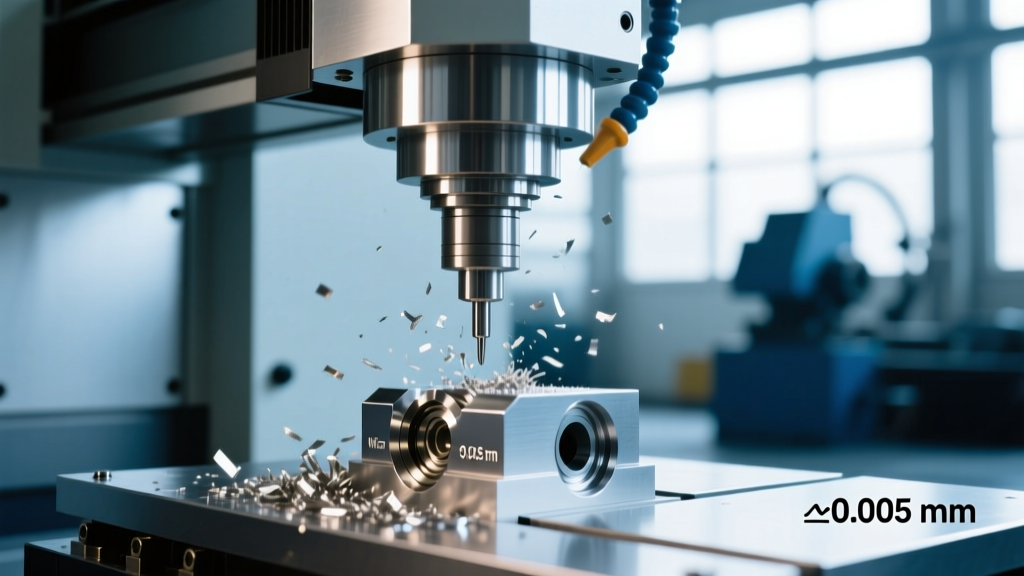
A literal cnc machine picture of a modern mill-turn center reveals a dense, highly integrated workspace: opposing spindles, lower turrets with driven tooling, and a B-axis contouring milling head operating simultaneously within a single thermal envelope. The promise of 'done-in-one' machining is compelling, eliminating secondary operations, reducing work-in-progress (WIP) inventory, and slashing cumulative setup times. However, the leap from a standard 2-axis lathe and 3-axis VMC to a 5-axis mill-turn center introduces complex kinematic, tooling, and programming challenges that buyers must quantify before signing a purchase order.
Core Architecture: B-Axis Contouring vs. C-Axis Indexing
The defining feature separating a true multitasking machine from a simple turning center with live tooling is the milling spindle architecture. Understanding this distinction is critical for matching the machine to your part geometry.
B-Axis Contouring Heads
Premium mill-turn machines utilize a B-axis milling head, which provides full 5-axis simultaneous interpolation. The B-axis allows the milling spindle to tilt and lock at any angle (typically ranging from -30 to +210 degrees), enabling the machining of complex aerospace structural components, impellers, and angled medical implant features without unclamping the part. In 2026, direct-drive torque motors in B-axes have largely replaced older worm-gear drives, eliminating backlash and increasing contouring accuracy to sub-5-micron tolerances.
C-Axis and Y-Axis Configurations
Entry-level or mid-range multitasking machines often rely on a C-axis (spindle orientation/indexing) combined with a Y-axis (cross-travel) and a turret-mounted driven tool. While capable of off-center drilling, keyway milling, and flat-surface milling, these machines cannot perform simultaneous 5-axis contouring. They are ideal for hydraulic manifolds and valve bodies but will bottleneck shops producing complex blisks or turbine blades.
⚠️ Thermal Growth Warning: In mill-turn operations, the milling spindle and turning spindle generate massive, asymmetrical heat. If the machine casting lacks integrated thermal compensation sensors and chilled coolant jackets for the spindle bearings, Z-axis thermal growth can exceed 40 microns during a 4-hour roughing cycle, ruining tight-tolerance aerospace parts. Always verify the manufacturer's thermal stability protocols.2026 Market Leaders: Spec & Price Matrix
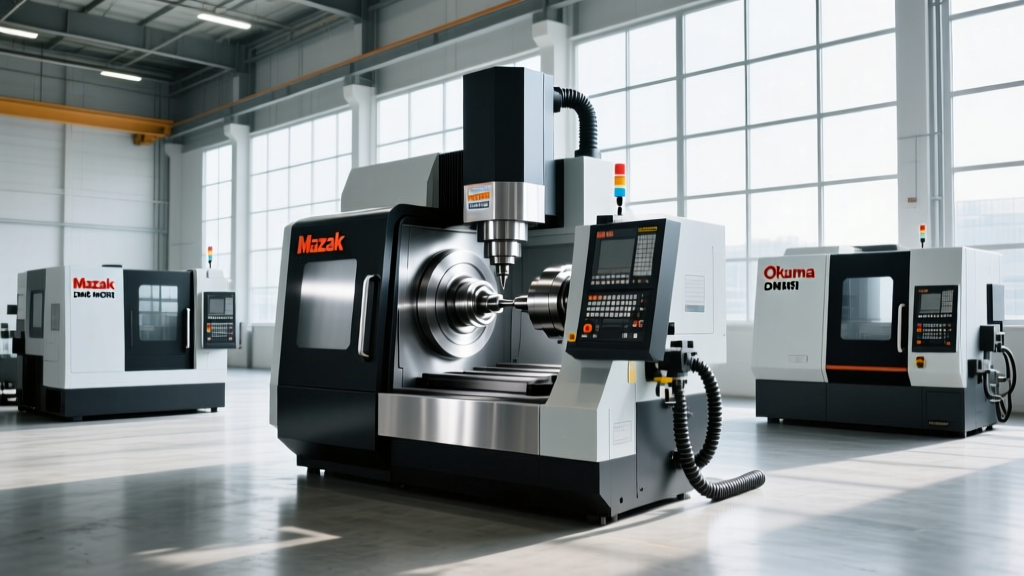
The global multitasking market is dominated by three primary engineering philosophies. Below is a comparative matrix of the industry-standard mid-sized mill-turn platforms for 2026, reflecting current base-to-loaded pricing and core kinematic specifications.
| Model | Estimated Price Range (USD) | Main Spindle (Turning) | Milling Spindle (B-Axis) | Max Turning Diameter |
|---|---|---|---|---|
| Mazak INTEGREX i-200S | $650,000 - $850,000 | 5,000 RPM / 45 kW | 12,000 RPM / 22 kW | 26.0 inches |
| DMG MORI NTX 2000 | $750,000 - $980,000 | 10,000 RPM / 35 kW | 20,000 RPM (compactMASTER) | 20.5 inches |
| Okuma MULTUS U3000 | $580,000 - $760,000 | 5,000 RPM / 30 kW | 12,000 RPM / 22 kW | 25.6 inches |
Note: Pricing reflects typical configurations including high-pressure coolant, chip conveyors, and basic probing. Advanced automation packages and extended Y-axis travels will push prices to the upper bounds or beyond.
The Hidden Costs of 'Done-in-One' Machining
Brochures highlight cycle time reductions, but they rarely detail the ancillary investments required to make a mill-turn center profitable. Buyers must budget for the following hidden costs:
1. Custom CAM Post-Processors ($3,000 - $8,000)
You cannot run a generic 5-axis post-processor on a mill-turn machine. The kinematic chain of a B-axis milling head combined with a lower turret and sub-spindle requires a highly customized, machine-specific post-processor (via Mastercam, Siemens NX, or hyperMILL). A poorly tuned post will result in catastrophic collisions or inefficient rapid movements. Budget at least $5,000 and three weeks of lead time for a certified post-processor developer to build and verify your specific machine configuration.
2. Polygone Clamping and Capto Tooling
Standard V-flange or BT tooling lacks the rigidity and repeatability required for mill-turn operations, especially when switching between heavy turning and high-speed milling. The industry standard is the Sandvik Coromant Capto interface (typically C5 or C6 for mid-sized machines). Capto provides simultaneous face-and-taper contact, ensuring micron-level repeatability. However, outfitting a new machine with 40 to 60 Capto toolholders and shrink-fit or hydraulic chucks can easily add $45,000 to $70,000 to your initial capital expenditure.
3. High-Pressure Coolant (HPC) Systems
Machining exotic alloys like Inconel 718 or Ti-6Al-4V on a mill-turn center requires HPC to break chips and prevent built-up edge (BUE) on the cutting insert. While standard machines offer 300 PSI, effective exotic metal milling and deep-hole turning demand 1,000 to 2,000 PSI delivered directly through the spindle and turret. Upgrading to a 2,000 PSI variable-frequency drive (VFD) coolant pump adds roughly $18,000 to the machine cost but is non-negotiable for aerospace job shops.
Automation and Chip Evacuation Realities
Because mill-turn centers are designed for long, unattended cycle times (often 8 to 24 hours per part), automation integration is mandatory for ROI. In 2026, the most reliable loading solutions for mill-turn machines are gantry-style top loaders or articulated 6-axis robots equipped with dual grippers. These systems can load raw billets into the main spindle chuck while simultaneously unloading the finished part from the sub-spindle.
"The number one cause of unattended shift failures on multitasking machines isn't tool wear; it's chip entanglement. Long, stringy chips from ductile materials wrap around the lower turret and B-axis head, triggering proximity sensor faults and halting production."
To mitigate this, specify a machine with a steeply sloped internal bed design (minimum 45-degree incline) and a dual-hinge belt chip conveyor. For shops machining aluminum or brass, a scraper-type conveyor is required to handle the high volume of fine, abrasive chips that will jam a standard hinge belt.
Decision Framework: Is Mill-Turn Right for Your Shop?
Use this diagnostic checklist to determine if a multi-function CNC machine aligns with your production reality:
- Part Complexity: Does the part require features on more than 3 orthogonal planes? If yes, mill-turn eliminates 2-3 secondary setups.
- Lot Sizes: Are you running batches of 1 to 50 parts? Mill-turn excels here. If you are running 10,000 identical simple shafts, a dedicated Swiss-type or multi-spindle lathe is vastly more economical.
- Material Removal Rate (MRR): If 80% of your cycle time is heavy roughing of large billets, a dedicated 5-axis HMC and a heavy-duty lathe will outperform a mill-turn center, as mill-turn machines compromise some structural rigidity to accommodate the complex internal kinematics.
- Floor Space Constraints: A single mill-turn center replaces a lathe, a VMC, and a manual deburring station, typically freeing up 30% to 40% of shop floor real estate.
For a comprehensive look at current multitasking configurations and OEM capabilities, review the latest engineering data on the Mazak Multi-Tasking portal or consult independent analyses via Modern Machine Shop's multitasking archives.
Ultimately, investing in a mill-turn center is an investment in process consolidation. By accurately forecasting the hidden costs of tooling, CAM programming, and chip management, manufacturers can leverage these platforms to drastically reduce lead times and capture higher-margin, complex contract work in the 2026 manufacturing landscape.