Hobbyist CNC Wire EDM Machine Options vs. Desktop Alternatives
Compare entry-level CNC wire EDM machine options for hobbyists against desktop fiber lasers, plasma cutters, and CNC mills for hard metal cutting.
The Reality of Entry-Level CNC Wire EDM Machines
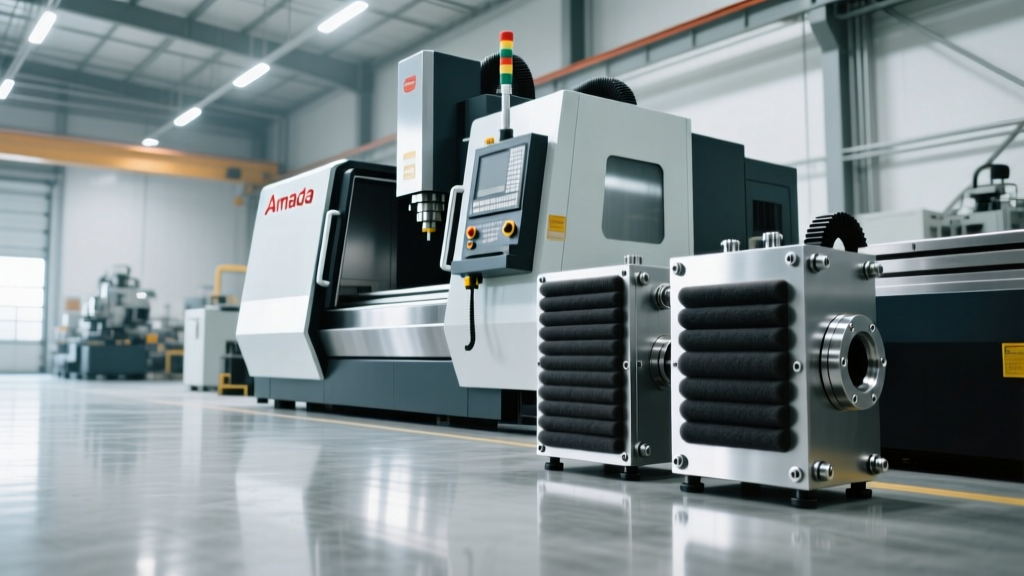
Wire Electrical Discharge Machining (EDM) cuts conductive materials using a series of rapid electrical sparks, eliminating mechanical cutting forces. This allows for the machining of hardened tool steel, titanium, and tungsten carbide without workpiece distortion or tool deflection. For industrial job shops, Sodick and Fanuc slow-wire machines are the standard, but they carry price tags upwards of $150,000 and require massive facility footprints.
For hobbyists, makers, and micro-manufacturers, acquiring a true CNC wire EDM machine requires navigating the niche market of imported mini fast-wire EDMs or pivoting to alternative desktop cutting technologies. As of 2026, the only accessible entry-level wire EDMs are the DK77-series fast-wire machines (such as the DK7720 or DK7725) imported from China. These machines typically cost between $4,500 and $8,500, excluding shipping and phase converters.
⚠️ Maker Warning: Fast-Wire vs. Slow-WireUnlike industrial slow-wire EDMs that use single-pass brass wire and deionized water, entry-level DK77 machines use a continuous loop of molybdenum wire (typically 0.18mm diameter) and an oil-based emulsion dielectric. The wire is reused until it snaps, resulting in a rougher surface finish (Ra 2.5 to Ra 3.5) and a wider kerf compared to slow-wire systems. According to Thomasnet's comprehensive guide on Wire EDM, fast-wire systems are fundamentally designed for roughing and mid-tier tolerance work, not micro-precision finishing.
Comparison Matrix: Mini Wire EDM vs. Desktop Alternatives
Because true hobbyist wire EDMs are messy, power-hungry, and mechanically complex, many makers achieve better results using alternative desktop CNC technologies. Below is a direct comparison of the DK7725 mini wire EDM against the three most common desktop alternatives for cutting hard metals.
| Technology | Model Example | Est. Price (2026) | Max Cut Thickness | Tolerance | Edge Finish |
|---|---|---|---|---|---|
| Fast-Wire EDM | DK7725 (Import) | $5,500 - $8,500 | 300mm | ±0.015mm | Rough (Ra 2.5) |
| Fiber Laser | OmTech FL-50 / xTool F1 | $3,500 - $6,000 | 2mm - 4mm | ±0.05mm | Smooth, slight dross |
| CNC Plasma | Langmuir CrossFire | $1,500 - $2,500 | 25mm+ | ±0.5mm | Heavy dross, large HAZ |
| Desktop CNC Mill | Tormach PCNC 440 | $6,000 - $8,500 | N/A (3D Profiling) | ±0.005mm | Machined (Ra 1.0) |
Evaluating the Alternatives for Makers
If the DK77-series wire EDM is too cumbersome for your garage or small workshop, you must select an alternative based on your specific material thickness and tolerance requirements.
Desktop Fiber Laser Cutters (Thin Sheet Precision)
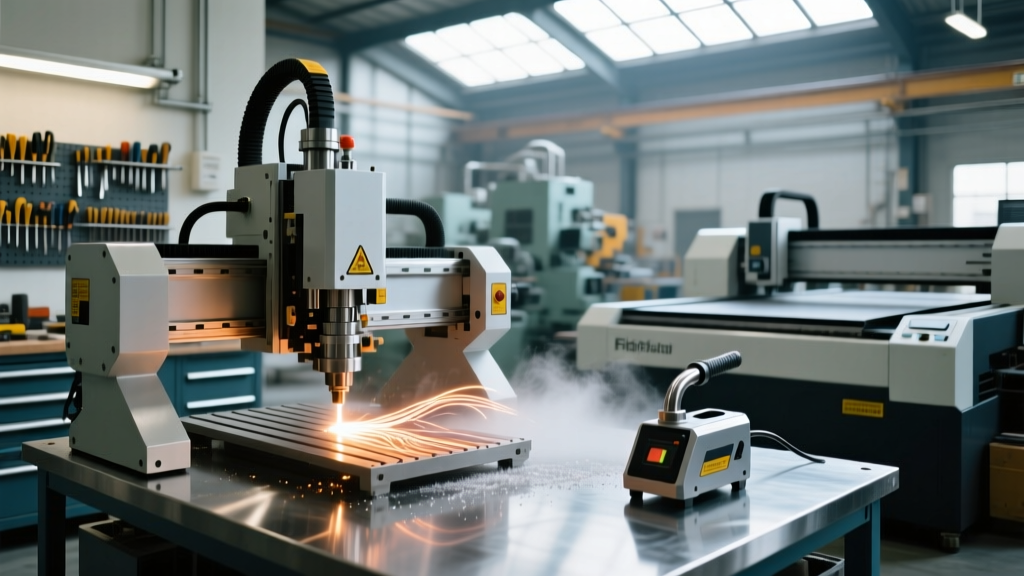
For makers cutting sheet metal under 3mm thick (such as mild steel, stainless, or brass brackets), desktop fiber lasers have largely replaced the need for wire EDM. A 50W to 100W galvo fiber laser can cut intricate 2D profiles in 1mm steel in seconds, with a kerf as narrow as 0.05mm. Unlike wire EDM, there is no dielectric fluid to manage, no wire to thread, and the machine operates on standard 110V/220V single-phase power. The limitation is strictly thickness; attempting to cut 10mm tool steel with a desktop fiber laser will result in severe edge tapering and incomplete penetration.
Desktop CNC Plasma Systems (Thick Plate, Low Tolerance)
When cutting thick plate (10mm to 25mm) for structural frames, heavy brackets, or automotive components, CNC plasma is the most cost-effective alternative. Systems like the Langmuir CrossFire utilize high-temperature plasma arcs to slice through hardened steels that would snap standard CNC router bits. However, plasma cutting introduces a massive Heat Affected Zone (HAZ) that alters the metallurgy of the cut edge, requiring secondary grinding or milling if the part interfaces with precision bearings. Plasma is strictly a roughing technology.
Rigid Desktop CNC Mills (3D Contours and Micro-Machining)
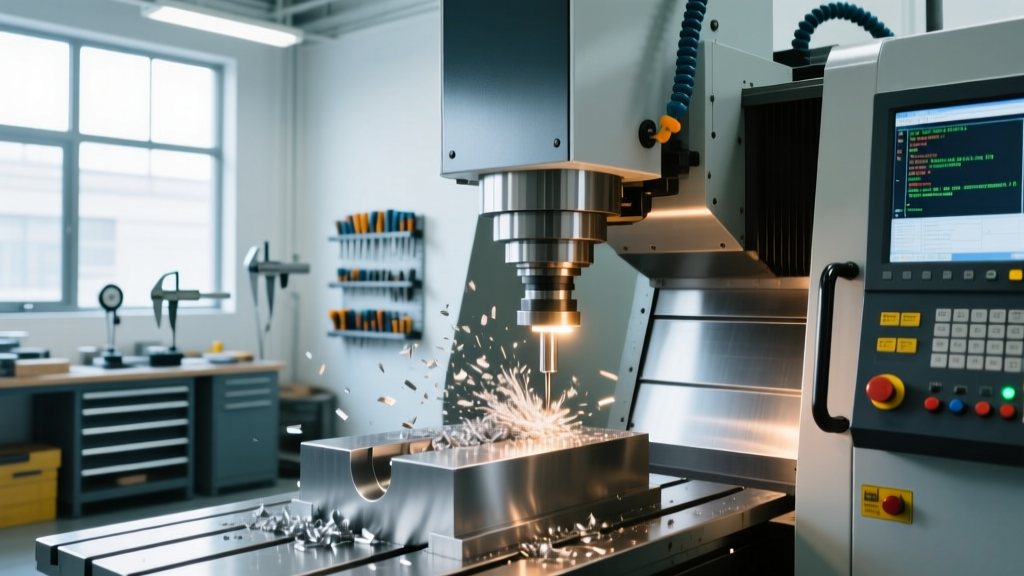
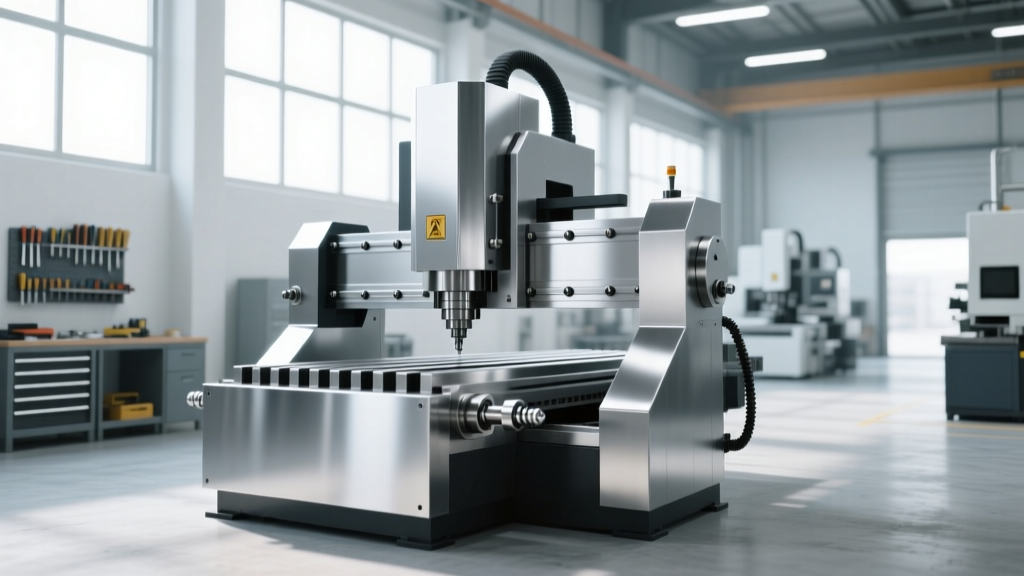
If your goal is to create internal pockets, complex 3D contours, or precision dies in hardened steel, a rigid desktop CNC mill is the only viable alternative to wire EDM. By utilizing solid carbide micro-endmills (down to 0.5mm diameter) and employing high-speed machining (HSM) toolpaths with trochoidal milling techniques, machines like the Tormach PCNC 440 or Syil X7 can machine pre-hardened tool steels (up to 60 HRC). While a mill cannot cut a true zero-radius internal corner like a wire EDM, a 0.5mm endmill leaves a corner radius small enough that most hobbyist injection molds and stamping dies function perfectly without secondary EDM burning.
Dielectric and Wire Maintenance: The Hidden Costs of Mini EDMs
Makers considering a DK7725 wire EDM often underestimate the operational overhead. Wire EDM is not a 'load and forget' process like a desktop laser. To maintain cutting accuracy and prevent wire breakage, you must manage the following:
- Wire Tensioning: Molybdenum wire stretches during operation. The tensioning mechanism must be manually adjusted to maintain exactly 10-12 Newtons of force. Too loose, and the wire vibrates, causing striations and poor tolerances; too tight, and the wire snaps mid-cut, ruining the workpiece.
- Dielectric Emulsion Mixing: Fast-wire EDMs use a water-soluble oil emulsion (typically mixed at a 1:15 to 1:20 ratio). If the concentration drops, the dielectric loses its insulating properties, leading to arcing and short circuits. If it is too rich, the fluid becomes viscous, failing to flush the eroded metal particles (swarf) out of the kerf.
- Conductivity Monitoring: As the machine cuts, metal particles contaminate the dielectric fluid. Hobbyist machines lack the advanced centrifugal filtration systems of industrial slow-wire EDMs, meaning you must manually monitor the fluid's conductivity and replace the 20-liter reservoir every 40 to 60 hours of cutting time.
According to machining experts at Machining Doctor, flushing pressure is just as critical as electrical parameters. If you are cutting thick materials (>50mm) on a mini EDM, ensure the top and bottom flushing nozzles are pressed directly against the workpiece. A gap of even 1mm will cause the dielectric pressure to drop, trapping swarf in the kerf and causing catastrophic wire breakage.
Decision Framework: Which System Should You Buy?
Use this practical framework to determine whether an entry-level CNC wire EDM machine or a desktop alternative is the correct investment for your workshop.
- Choose the Mini Wire EDM (DK7725) IF: You need to cut extremely thick, hardened conductive materials (e.g., 100mm thick D2 tool steel blanks for stamping dies), you require straight vertical walls without taper, and you have the space, 3-phase power, and patience to manage dielectric fluids and wire threading.
- Choose a Desktop Fiber Laser IF: Your work is strictly 2D profiling of sheet metal under 3mm thick, you need high-speed production of small brackets or enclosures, and you want a clean, dry process that can sit on a workbench in a shared space.
- Choose a CNC Plasma System IF: You are cutting thick structural steel (10mm+) for welding projects, robotics chassis, or automotive parts where a ±0.5mm tolerance and heavy edge dross are acceptable, and budget is your primary constraint.
- Choose a Desktop CNC Mill IF: You need to machine 3D cavities, pockets, or complex contours in hardened steel, and you can design your parts with small corner radii to avoid the absolute need for a zero-radius internal corner that only wire EDM can provide.