Cost of Building CNC Machine for Stainless Steel in 2026
Discover the true cost of building a CNC machine for stainless steel in 2026. Get a detailed budget breakdown for rigid frames, spindles, and tooling.
The Mechanical Penalty of Austenitic Stainless
Machining austenitic stainless steels like 304 and 316L introduces severe mechanical penalties that standard DIY or light-duty CNC routers simply cannot survive. Unlike mild steel, stainless steel exhibits high tensile strength, poor thermal conductivity, and a massive tendency to work-harden. When a cutting tool deflects or rubs against the material instead of shearing it cleanly, the surface hardness can increase by up to 200%, instantly destroying carbide tooling and stalling low-torque spindles.
If you are planning a custom build or heavy retrofit for stainless steel fabrication, your budget must prioritize mass, rigidity, and low-end torque over high-speed traversal. According to Harvey Tool's technical guidelines on stainless steel machinability, maintaining a consistent chip load and preventing tool rubbing are the most critical factors in avoiding work hardening. This requires a machine architecture that completely eliminates harmonic chatter under heavy radial loads.
Warning: The Aluminum Extrusion TrapDo not attempt to machine 300-series stainless steel on a frame built from 80/20 aluminum extrusions. The torsional flex inherent in slotted aluminum profiles will cause micro-deflections at the cutter tip, guaranteeing work hardening and catastrophic tool failure. You must use welded steel, cast iron, or epoxy-granite composite bases.
2026 Capital Expenditure: Component Budget Matrix
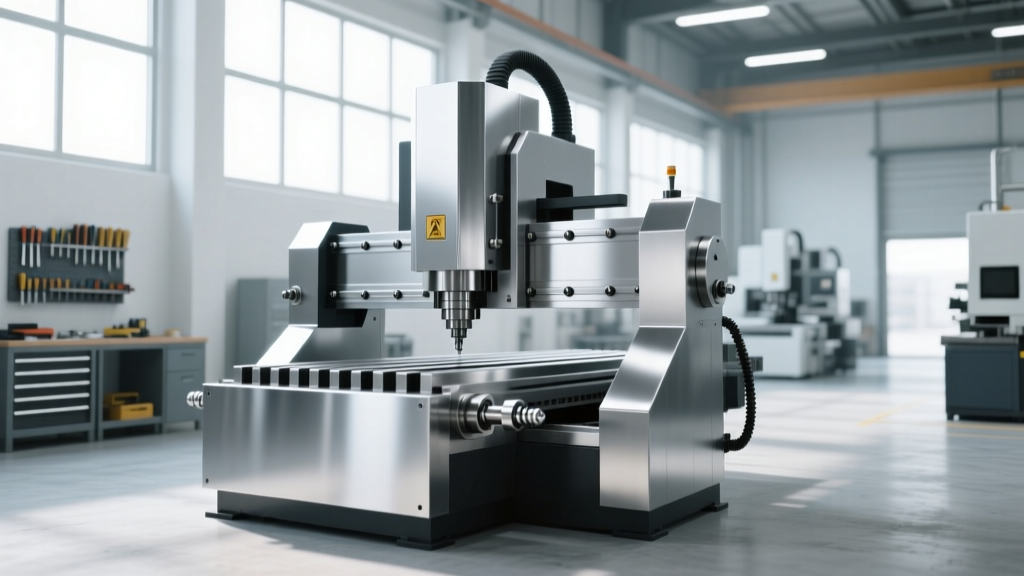
Building a stainless-capable CNC mill in 2026 requires sourcing industrial-grade motion components. Below is a realistic budget matrix for a 3-axis vertical machining center (VMC) footprint (approximately 24' x 16' x 16' travel) engineered specifically for high-torque stainless cutting.
| Component Category | Required Specification | 2026 Est. Cost (USD) | Engineering Rationale |
|---|---|---|---|
| Base & Frame | Epoxy granite filled steel weldment or cast iron | $3,500 - $6,500 | High mass dampens high-frequency chatter during heavy roughing passes. |
| Linear Motion | HIWIN HG35/HG45 rails, C3 ground SFU2510 ballscrews | $1,800 - $2,800 | 25mm diameter ballscrews resist buckling under high Z-axis thrust loads. |
| Spindle Unit | BT30 or BT40 cartridge, 5HP VFD or Servo driven | $3,200 - $5,500 | Requires peak torque at 2,500-4,000 RPM, not 24,000 RPM. |
| Drive Motors | Closed-loop AC servos (1.5kW - 2.5kW per axis) | $1,200 - $1,800 | High holding torque required to maintain position during interrupted cuts. |
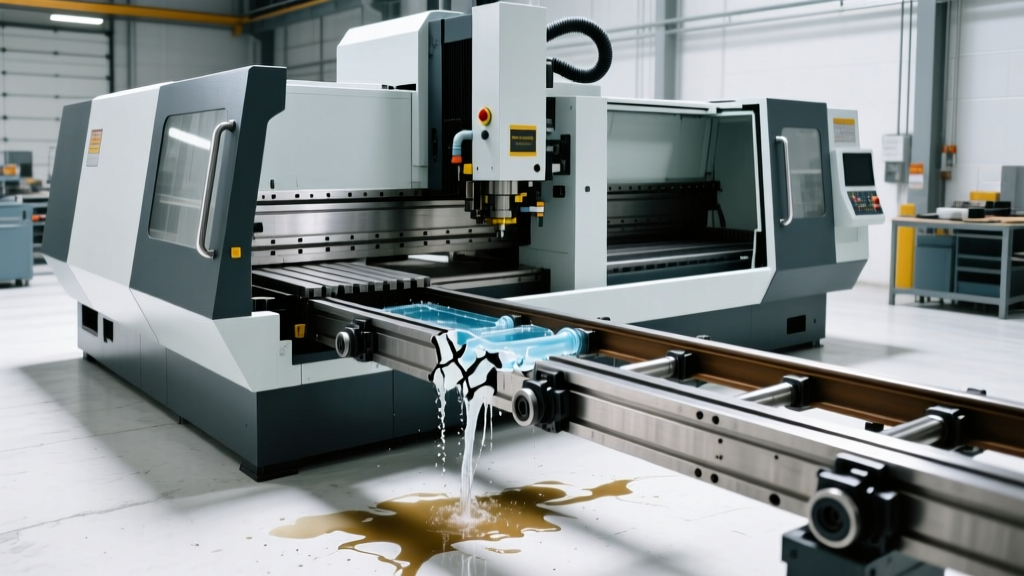
| Coolant & Enclosure | 150+ PSI flood system, full poly-carb enclosure | $1,400 - $2,200 | Mandatory for heat extraction and containing stringy, razor-sharp chips. |
| Control System | Centroid Acorn, Masso G3, or Siemens Sinumerik | $900 - $2,500 | Requires advanced look-ahead and rigid tapping cycles. |
| Total Estimated Build | $12,000 - $21,300 | Excludes tooling, workholding, and 3-phase power conversion. |
Spindle and Drive Train Engineering
Why Router Spindles Fail
The most common budget mistake when building a CNC machine for stainless steel is attempting to use a high-speed, low-torque router spindle (e.g., 2.2kW HSD air-cooled spindles designed for aluminum or wood). Stainless steel requires surface speeds (SFM) between 150 and 250 SFM when using solid carbide tooling. For a 1/2-inch endmill, this translates to a spindle speed of roughly 1,100 to 1,900 RPM. Router spindles produce virtually zero torque at these low RPMs, leading to immediate stalling and tool breakage.
The BT30/BT40 Torque Requirement
Your budget must accommodate a BT30 or BT40 taper spindle cartridge driven by a high-torque AC servo or a heavily geared VFD motor. A 5-horsepower spindle capable of delivering 40-60 ft-lbs of continuous torque at 3,000 RPM is the baseline for productive 304 stainless machining. Sourcing a refurbished or surplus BT40 spindle assembly from suppliers like HSD or Colombo will cost between $3,200 and $5,500, but it provides the necessary pulling force to shear the material cleanly without rubbing.
Coolant and Chip Evacuation Systems
Stainless steel is notorious for generating long, stringy, and extremely sharp 'bird's nest' chips. These chips can wrap around the toolholder, mar the finished surface, and cause recutting. Furthermore, because stainless steel is a poor conductor of heat, up to 80% of the cutting heat is absorbed directly into the cutting tool.
'Air blast and mist coolant systems are entirely inadequate for austenitic stainless steel. You must utilize a high-volume flood coolant system delivering a minimum of 150 PSI directly to the cutting zone to penetrate the chip-tool interface and force the heat away from the carbide substrate.' — CNC Cookbook's Machining Guidelines
Budget at least $1,400 for a robust 30-gallon coolant tank, a high-pressure pump (such as a 1/2 HP centrifugal or positive displacement pump), and a machine enclosure lined with polycarbonate or sheet metal. Stainless chips will easily embed themselves in drywall or wood shop walls, making a fully sealed enclosure a non-negotiable safety and facility requirement.
The Consumables and Tooling Ledger
The initial machine build is only half the financial equation. Machining stainless steel accelerates tool wear significantly compared to aluminum or mild steel. You must allocate a dedicated initial tooling budget of $1,500 to $3,000 to ensure success.
- Endmills: Avoid generic uncoated carbide. Invest in variable helix, variable pitch solid carbide endmills with AlTiN or TiAlN coatings (e.g., Harvey Tool or Helical Solutions). These coatings withstand the high thermal loads of stainless cutting. Budget $45-$85 per endmill.
- Workholding: Standard 6-inch milling vises will allow the workpiece to lift under the aggressive axial forces required to prevent work hardening. Budget $600-$1,200 for a high-clamping-force hydraulic or precision CNC vise (like a Kurt DX6 or equivalent clone) with hardened serrated jaws.
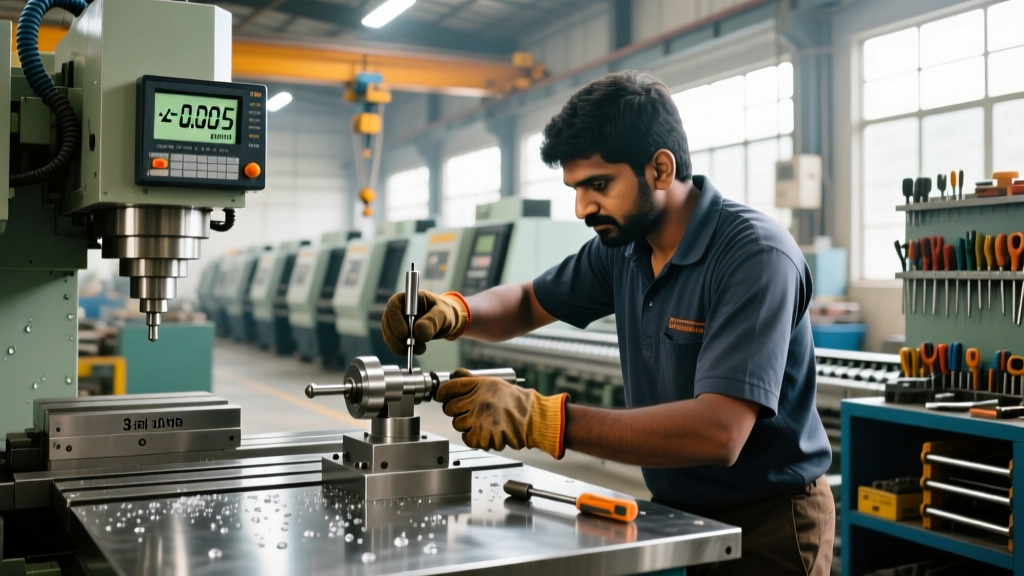
- Toolholders: Standard ER32 collets may slip under heavy radial loads. Upgrade to ER40 collets or, ideally, hydraulic/shrink-fit toolholders for finishing operations to guarantee zero runout. Runout exceeding 0.0002 inches will cause uneven flute engagement, destroying the tool in minutes.
Decision Framework: Custom Build vs. Used VMC
When does the cost of building a CNC machine for stainless steel exceed the logic of the project? In 2026, the secondary market for used vertical machining centers remains highly active.
The Break-Even Analysis
If your custom build budget approaches $22,000, you are entering the territory of a used, early-2010s Haas VF-2 or Doosan DNM 400. While a custom build offers the educational value of integration and the ability to spec exact components, a used production VMC provides factory-grade cast iron rigidity, a 20-tool automatic tool changer (ATC), and a proven 7,500 RPM inline spindle with high-torque vector drives.
Build if: You have strict spatial constraints, require a custom 4th-axis integration for specific stainless aerospace fittings, or possess the in-house electrical/mechanical engineering skills to execute the retrofit without costly delays.
Buy Used if: Your primary goal is immediate production revenue, unattended machining, and avoiding the 300+ hours of calibration required to tram a heavy-duty custom ballscrew assembly to sub-0.0005-inch tolerances.