Entry-Level CNC Machines: Midwest Distributors vs Direct in 2026
Compare entry-level CNC machines for hobbyists. We analyze direct-to-consumer routers vs buying prosumer mills through CNC machine distributors in the Midwest.
The Hobbyist Dilemma: Direct-to-Consumer vs. Regional Distribution
For makers and hobbyists in the Midwest transitioning from 3D printing to subtractive manufacturing, the entry-level CNC market presents a distinct geographical and logistical fork in the road. On one side are the Direct-to-Consumer (DTC) desktop routers shipped in flat-rate boxes. On the other is the network of cnc machine distributors midwest makers rely on to source prosumer and light-industrial milling machines. While DTC brands dominate YouTube tutorials, regional distributors offer critical advantages for hobbyists attempting to machine steel, manage Midwest humidity, or avoid residential freight surcharges.
2026 Midwest Maker Logistics Snapshot:- Average LTL Residential Freight Surcharge: $125 - $185 (Direct DTC shipments)
- MDF Spoilboard Z-Drift (Summer Humidity): Up to 0.015" variance in states like OH, IL, and MI
- Distributor Local Support Radius: Typically within 150 miles for on-site spindle diagnostics
The Direct-to-Consumer Contenders: Belt-Driven Routers
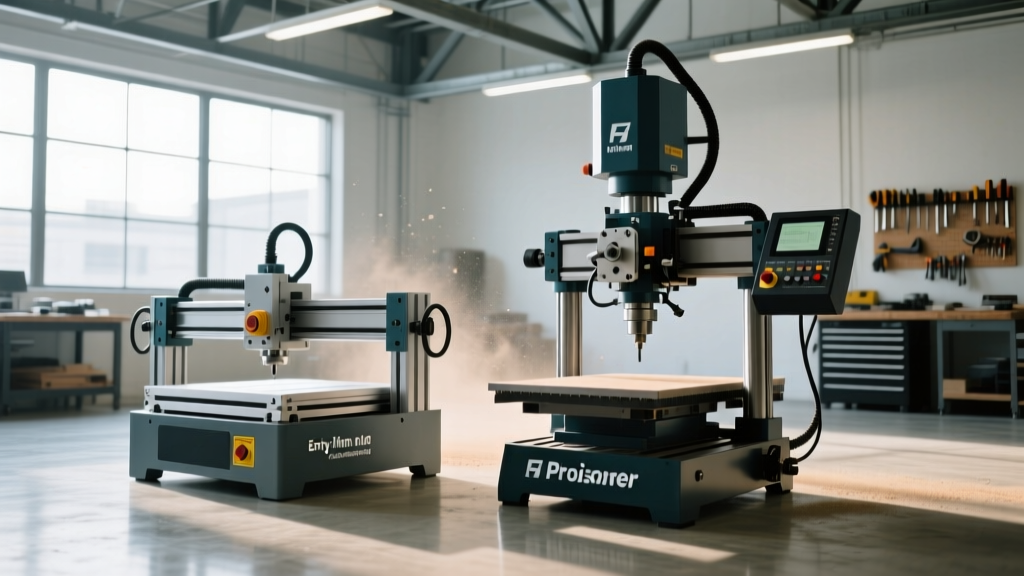
The DTC market is anchored by machines like the Carbide3D Shapeoko 5 Pro and the Onefinity Foreman. These machines are engineered for wood, plastics, and soft aluminum (6061). They utilize NEMA 23 stepper motors and belt-driven or basic ball-screw gantries.
Shapeoko 5 Pro (Standard)
Priced around $2,100, the Shapeoko 5 Pro remains a staple for hobbyists. It features a 16" x 16" cutting area and relies on the Carbide Compact Router (1.2kW). However, the Z-axis clearance is limited to roughly 4 inches, and the lack of a rigid cast-iron frame means aggressive feeds in aluminum will induce chatter, resulting in poor surface finishes on deep pocketing operations.
Onefinity Foreman
At approximately $3,500, the Foreman offers a larger 48" x 48" footprint and a 5.5" Z-travel. It uses 16mm ball shafts and NEMA 34 motors. While it handles large-format wood routing exceptionally well, its sheer size becomes a liability for a standard two-car garage in the Midwest, where temperature swings from 10°F in winter to 95°F in summer cause significant thermal expansion in the aluminum extrusion frame.
The Midwest Distributor Route: Prosumer Alternatives
When a hobbyist's project list evolves from engraving cutting boards to manufacturing custom motorcycle parts or robotics components in 1018 mild steel, DTC routers fail. This is where searching for cnc machine distributors midwest yields superior alternatives like the Tormach PCNC 775 or the Syil X7.
Regional distributors do not just sell a box; they sell an ecosystem. Purchasing a Tormach PCNC 775 (approx. $5,800 for the base mill) through a localized distributor network provides three distinct advantages:
- Rigidity and Tooling: The PCNC 775 features a 3/4 HP spindle and utilizes BT20 tooling. Unlike the ER11 collets found on DTC routers, BT20 taper tooling ensures repeatability to 0.0005" and can withstand the cutting forces required for steel.
- Climate Immunity: Prosumer mills use cast-iron tables with T-slots or precision-ground aluminum beds. They are entirely immune to the 80%+ summer humidity that causes MDF spoilboards on DTC routers to swell, ruining Z-axis zeroing.
- Power Conversion Expertise: Most serious prosumer mills require 220V single-phase or 3-phase power. Midwest distributors frequently partner with local electricians or bundle phase converters (like Phase-A-Matic) to ensure hobbyists don't burn out VFDs on improper residential wiring.
Comparison Matrix: DTC Routers vs. Distributor Prosumer Mills
| Feature | DTC Router (e.g., Shapeoko 5) | Distributor Prosumer (e.g., Tormach PCNC 775) |
|---|---|---|
| Base Price (2026) | $2,100 - $3,500 | $5,800 - $9,500+ |
| Drive System | V-Belts / Standard Ball Screws | Precision Ground Ball Screws / Way Covers |
| Spindle / Tooling | Trim Router / ER11 Collets | VFD Spindle / BT20 or TTS Tooling |
| Primary Materials | Wood, Acrylic, 6061 Aluminum | Steel, Stainless, Titanium, Aluminum |
| Midwest Humidity Effect | High (MDF swells, Z-drift) | None (Cast Iron / Machined Bed) |
| Delivery Method | FedEx/UPS Freight (Liftgate fees apply) | Local Distributor Delivery or Will-Call |
Decision Framework: When to Bypass DTC for a Distributor
Use this logic tree to determine your purchasing route:
Step 1: What is your primary material?
- Wood, Plastics, PCB Milling: Buy Direct (Shapeoko/Onefinity).
- Aluminum (occasional), Steel, Brass: Proceed to Step 2.
Step 2: What is your tolerance requirement?
- +/- 0.010" (Hobby prototypes): Buy Direct, use slow feed rates.
- +/- 0.001" (Functional parts, press fits): Proceed to Step 3.
Step 3: Can your garage handle 800+ lbs of cast iron?
- No (Rented space, weak flooring): Buy a premium DTC router (Onefinity Foreman) and accept material limitations.
- Yes (Owned garage, concrete slab): Contact regional CNC machine distributors in the Midwest to source a Tormach or Syil.
Hidden Costs of Direct Shipping to the Midwest
Makers often overlook the final-mile logistics of DTC machines. A Shapeoko 5 ships via standard ground, but an Onefinity Foreman or larger industrial-entry router ships via LTL (Less-Than-Truckload) freight.
Freight Warning: If you order a 350 lb DTC CNC directly to a residential address in rural Ohio or Wisconsin, freight carriers will automatically add a residential delivery fee ($75-$125) and a liftgate fee ($50-$90) if you do not have a loading dock. Furthermore, the driver is only obligated to drop the crate at the end of your driveway, not inside your garage. Local Midwest distributors often include a 50-mile delivery radius in their prosumer machine packages, utilizing their own box trucks to place the mill directly onto your concrete pad.
Sourcing Strategy: Finding the Right Regional Partner
Not all equipment dealers cater to hobbyists. Many traditional industrial distributors ignore buyers without a corporate tax ID or a $50,000 minimum order. To find distributors that support the maker community, leverage the NIST Manufacturing Extension Partnership (MEP) network. Your state's local MEP center (such as the Ohio MEP or Illinois MEP) maintains directories of regional machinery dealers who actively participate in workforce development and small-scale manufacturing grants. These dealers are far more likely to offer Saturday open-house training sessions and entry-level tooling starter kits than massive national conglomerates.
Frequently Asked Questions
Can I use a DTC router to machine steel if I take light passes?
Technically, yes, but practically, no. While you can engrave mild steel with a DTC router using a specialized carbide burr and cutting fluid, the lack of mass and belt-driven gantry will result in severe chatter. You will spend more time sanding the poor surface finish than you saved by buying a cheaper machine. For anything beyond engraving, a distributor-sold prosumer mill is mandatory.
Do Midwest distributors offer financing for hobbyists?
Most traditional B2B distributors require commercial credit applications. However, several modern regional dealers have partnered with consumer financing platforms (like Affirm or specialized equipment lenders) to accommodate the growing "serious maker" demographic. Always ask if they offer a "prosumer tier" financing package.
What software do distributor-sold mills use compared to DTC routers?
DTC routers typically use proprietary or simplified CAM software (like Carbide Create or Easel). Distributor-sold prosumer mills usually run on industry-standard controllers like Mach4, LinuxCNC, or PathPilot. This requires a steeper learning curve but ensures the G-code skills you learn are directly transferable to professional machine shops.