Case Study: Finding a Good CNC Machine for Small Workshops
Discover what makes a good CNC machine for small workshops. We analyze power, footprint, and ROI using real case studies of compact mills.
The Sub-1000 Square Foot Constraint
Urban manufacturing facilities and R&D prototyping labs face a unique triad of constraints: limited square footage, strict single-phase electrical limits, and acoustic or coolant containment requirements. When a 650-square-foot contract prototyping facility in Chicago needed to expand its in-house milling capabilities for 6061-T6 aluminum and 17-4 PH stainless steel brackets, the search for a good CNC machine became an exercise in compromise and physics. The facility operated on a standard 200A single-phase 240V panel. Upgrading to 3-phase power via a utility drop or a 10HP rotary phase converter would consume valuable floor space and add roughly $6,500 to the project budget. Therefore, the selected machine had to run natively on single-phase power or utilize an integrated Variable Frequency Drive (VFD) without sacrificing the rigidity required for stainless steel.
Facility Warning: Never assume a standard 120V/15A wall circuit can sustain continuous CNC spindle loads. A 1.5HP spindle drawing peak current during heavy roughing will trip standard breakers. Always dedicate a 240V/20A circuit for compact floor-standing mills to prevent voltage sag that damages VFD components.Contender Matrix: Compact CNC Mills Evaluated
To solve the spatial and electrical bottleneck, the shop evaluated three distinct classes of compact CNC mills. The goal was to find the optimal balance between work envelope, spindle torque, and tooling ecosystem.
| Model | Footprint (W × D) | Spindle Power | Tooling Standard | 2026 Base Price |
|---|---|---|---|---|
| Tormach 1100MX | 68" × 36" | 1.5 HP (VFD) | TTS (Tormach Tooling System) | $10,499 |
| Haas Desktop Mill | 26" × 21" | 1/3 HP | ER11 Collet | $8,995 |
| Pocket NC V2-10 | 18" × 16" | 125W | ER11 Collet | $4,999 |
According to the NIST Manufacturing Extension Partnership (MEP), small manufacturers account for over 98% of all U.S. manufacturing firms, yet they frequently struggle with capital equipment scaling. Choosing a machine that matches the facility's exact utility constraints prevents the hidden overhead of facility retrofits.
Tooling Ecosystems: TTS vs. ER11 Realities
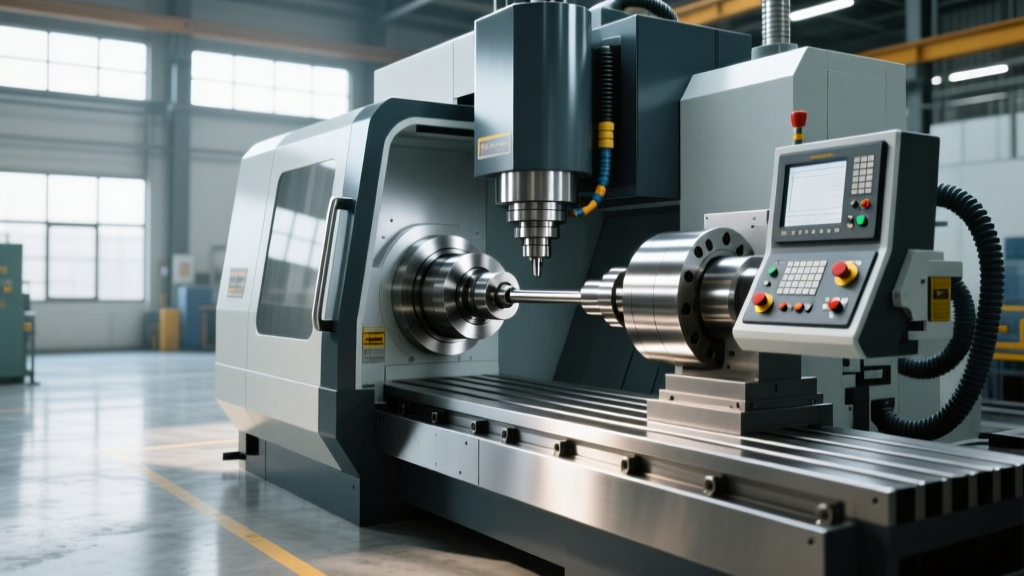
The tooling interface dictates the machine's actual material removal rate (MRR). The Tormach 1100MX utilizes the proprietary TTS (Tormach Tooling System), a modification of the R8 taper. While TTS toolholders are highly economical—averaging $35 each compared to $85 for standard BT30 holders—they rely on a simple setscrew and drawbar tension. During the Chicago case study, when the shop attempted to run a 1/2" 3-flute carbide endmill taking a 0.200" radial depth of cut in 6061 aluminum, the TTS holder experienced micro-slippage under high lateral loads. This ruined the surface finish and fractured the endmill. The engineering solution was restricting roughing passes to 3/8" endmills and utilizing the machine's rigid tapping cycle for threading, which the 1100MX handles flawlessly thanks to its closed-loop spindle encoder.
Conversely, the Haas Desktop Mill utilizes ER11 collets, capping the maximum tool shank diameter at 7mm (just over 1/4"). This eliminates heavy roughing entirely but provides exceptional runout accuracy (under 0.0002") for micro-machining, engraving, and precision brass valve components where fine detail outweighs aggressive MRR.
Thermal Dynamics in Lightweight Castings
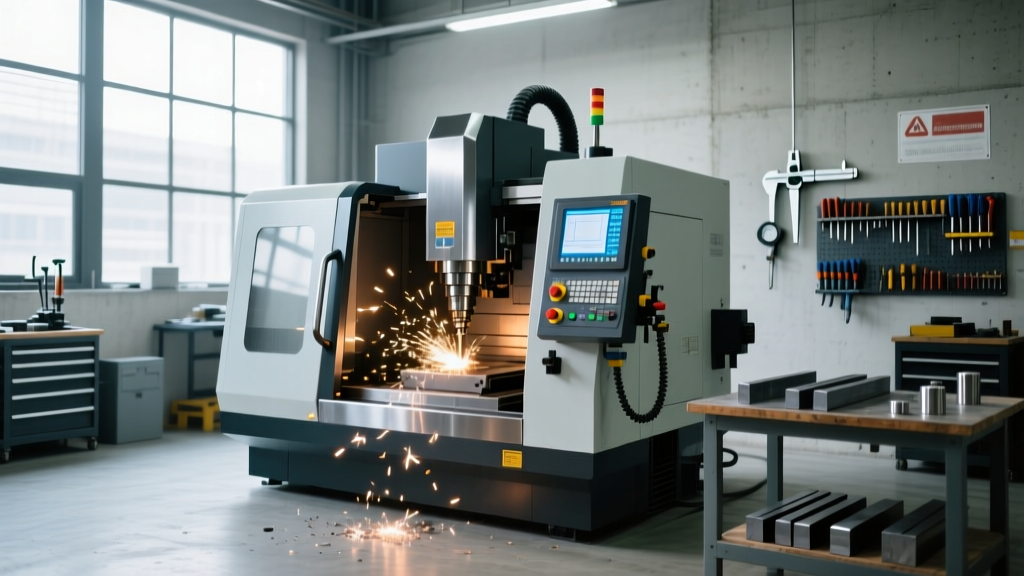
Small CNC machines lack the massive cast-iron mass of a full-size VMC to absorb and dissipate thermal energy. The Tormach 1100MX uses a steel column mated to a cast-iron base. During a continuous 4-hour run machining 17-4 PH stainless steel valve bodies, the shop's dial indicators documented a Z-axis thermal growth of 0.0018". In tight-tolerance aerospace prototyping, this drift is catastrophic.
To mitigate this without upgrading to a $60,000 machine with a chilled spindle, the shop implemented a strict thermal protocol:
- A mandatory 15-minute spindle warm-up cycle at 4,000 RPM before the first cut.
- Programming a Z-axis compensation offset in the CAM post-processor that adjusted by -0.0004" every hour of continuous operation.
- Running flood coolant at 68°F (shop ambient) rather than mist, which acts as a heat sink for the casting.
Workholding and Z-Axis Clearance Limitations
A frequently overlooked factor when selecting a good CNC machine for small environments is the Z-axis clearance relative to workholding. The Tormach 1100MX table is 36" x 11", with a spindle-to-table distance of roughly 16". Using a standard 6" Kurt-style vise consumes nearly 4" of Z-height and takes up a third of the table real estate, severely limiting the height of the parts you can machine.
The Chicago facility swapped the standard vise for a 4" low-profile precision vise (Glacern GPV-40). This dropped the part height by 1.5", allowing for taller enclosures and, more importantly, reducing the center-of-gravity distance from the table. This reduction in overhang minimized harmonic chatter during aggressive facing operations in steel, proving that workholding selection is just as critical as the machine itself in compact setups.
Chip Evacuation and Air Quality in Confined Spaces
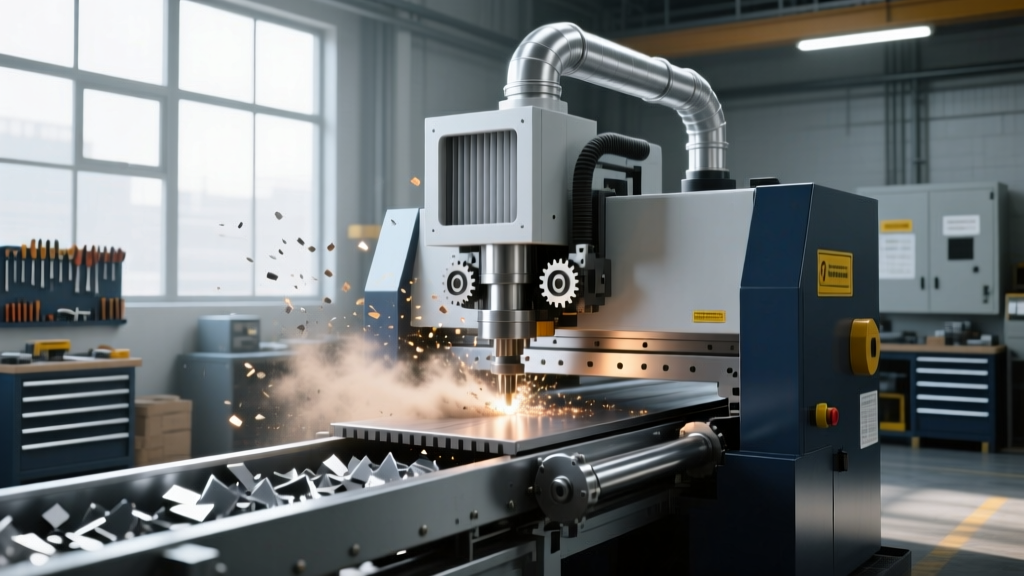
In a 650 sq ft space, flood coolant splash and atomized mist are major air quality hazards. While the Haas Desktop Mill and Pocket NC rely on air blast or minimal lubrication (mist), machining stainless steel requires aggressive cooling to prevent work hardening and tool welding. The shop opted for a localized mist system using a Unist applicator, combined with an ambient HEPA air scrubber rated for 400 CFM. This kept the footprint small while maintaining OSHA compliance for airborne particulates.
The Small Shop Decision Framework
Use this matrix to determine which compact machine class fits your specific application:
- If machining > 1/2" features in steel: Benchtop machines will fail. You need a floor-standing mill with a BT30/BT40 taper. Look at the Tormach 1500MX or a used Haas Mini Mill, provided you have 3-phase power or a high-quality VFD.
- If machining micro-features (<1/8") in aluminum/brass: The Haas Desktop Mill or Pocket NC V2-10 offers superior runout and footprint efficiency. The ER11 limitation is a benefit here, forcing the use of appropriate micro-tooling.
- If general prototyping in aluminum/plastics with a tight budget: The Tormach 1100MX remains the undisputed king of the single-phase, sub-$15,000 category, provided you respect the TTS tooling limitations and manage thermal drift.
'The biggest mistake small shops make is buying a machine based on its maximum travel specifications while ignoring the tooling ecosystem and facility power requirements. A machine is only as rigid as its weakest toolholder, and only as capable as the circuit breaker it is plugged into.'
— Lead Applications Engineer, Urban Manufacturing Initiative
Ultimately, defining what makes a good CNC machine for a small workshop requires looking past the marketing brochures and evaluating the holistic integration of power, tooling, thermal management, and spatial constraints. By matching the machine's physical realities to the shop's specific production goals, small facilities can achieve commercial-grade tolerances without commercial-grade overhead.