Selecting a Gantry CNC Machine for Milling and Turning (2026)
Expert 2026 buyer guide for gantry CNC machines with mill-turn capabilities. Compare specs, pricing, and architectures for heavy aerospace and energy parts.
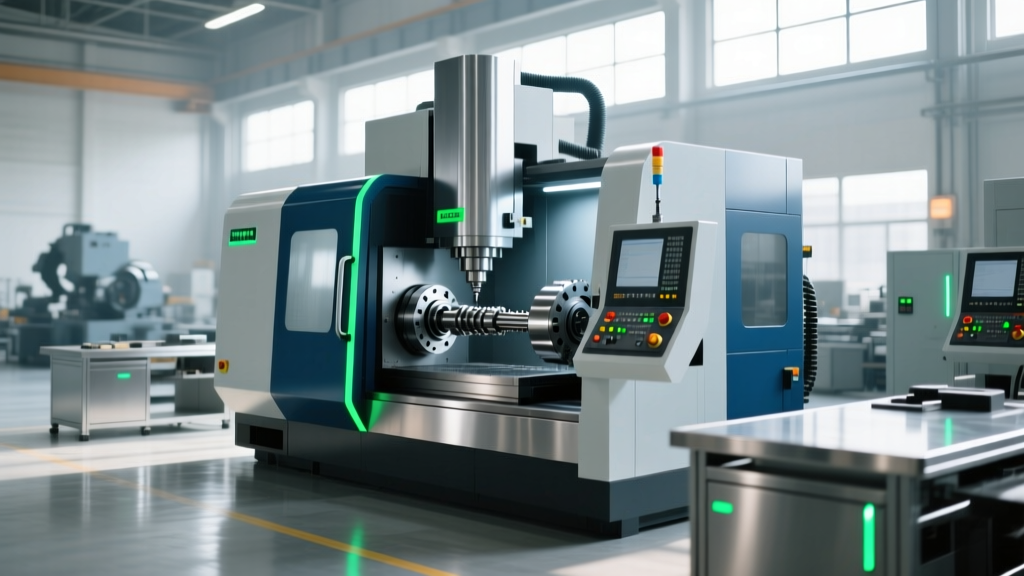
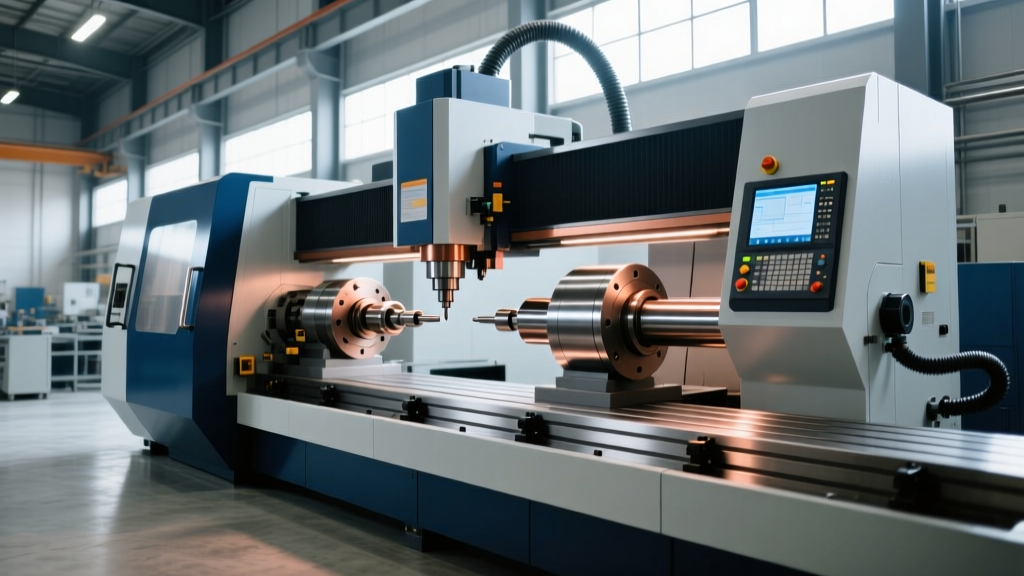
Procuring heavy-duty capital equipment for large-format structural components requires moving beyond standard machining paradigms. When manufacturing aerospace landing gear, wind turbine main shafts, or massive marine valve bodies, the traditional workflow of splitting operations between a vertical turret lathe (VTL) and a standard milling center introduces severe bottlenecks. Enter the modern gantry CNC machine configured for multi-function milling and turning. By integrating high-torque rotary carousels directly into the bed of a bridge-style gantry, manufacturers achieve single-setup completion for parts weighing up to 100 tons.
Expert Insight: The Hidden Cost of Part Handling
Moving a 15-ton titanium forging from a VTL to a gantry mill requires a heavy-lift overhead crane, specialized rigging, and up to six hours of re-indication and datum probing. Beyond the labor cost, transferring a massive part introduces a secondary setup error margin of 0.012mm to 0.025mm. A gantry mill-turn center eliminates this transfer, collapsing three weeks of floor time into a single 72-hour continuous operation.
Architecture of Large-Format Mill-Turn Gantries
Not all gantry architectures can withstand the dynamic loads of heavy turning. When evaluating a gantry CNC machine for mill-turn applications, the structural kinematics dictate the machine's ultimate accuracy and lifespan.
Moving Bridge vs. Moving Column Configurations
For pure milling, a moving-column (fixed-bridge) design is common. However, for mill-turn operations, a moving-bridge (fixed-table) architecture is strictly required. In a moving-bridge design, the massive workpiece and the integrated rotary table are bolted directly to the isolated foundation. The gantry bridge moves over the part on elevated rails. This ensures that the extreme centrifugal forces and asymmetric cutting loads generated during rough-turning a 4-meter diameter steel hub do not degrade the linear axis bearings. If a manufacturer attempts heavy turning on a moving-column machine where the table rides on linear guides, the Y-axis straightness will degrade within 18 months due to guide rail brinelling.
Specification Matrix: Gantry Mill-Turn vs. Traditional VTL + Gantry Mill
Before committing $2 million+ to a single machine footprint, compare the operational realities of a unified gantry mill-turn center against the traditional two-machine cell.
| Metric | Integrated Gantry Mill-Turn | Separate VTL + Standard Gantry |
|---|---|---|
| Capital Expenditure | $1.8M - $3.2M (Single Asset) | $2.1M - $3.8M (Two Assets + Tooling) |
| Footprint Required | ~85 sq. meters (including chip conveyors) | ~140 sq. meters + crane staging zone |
| Datum Accumulation Error | Zero (Single Setup) | 0.015mm - 0.040mm per transfer |
| Rough Turning Torque | Up to 12,000 Nm (Direct Drive Table) | Up to 25,000 Nm (Dedicated VTL) |
| Z-Axis Milling Rigidity | High (Hydrostatic Ram) | Very High (Dedicated Gantry Ram) |
Critical Component Selection for 2026 Procurement
When configuring the machine with the OEM, off-the-shelf specifications will not suffice for heavy industry. You must mandate specific sub-systems to ensure the gantry CNC machine survives the transition between high-speed milling and high-torque turning.
1. Spindle Interfaces: Capto C8 vs. HSK-A100
For a machine that will perform both 5-axis milling and heavy turning, the spindle interface is the most critical failure point. While HSK-A100 is excellent for milling, the Coromant Capto C8 interface is mandatory for mill-turn gantries. The Capto system utilizes a polygonal coupling combined with a face-and-taper clamping mechanism. This provides superior torsional rigidity during interrupted turning cuts (such as machining splines or cross-holes on a shaft) where an HSK toolholder might experience micro-fretting and eventual taper seizure under high radial loads.
2. Rotary Table Drive Systems
Reject traditional worm-gear driven rotary tables for mill-turn applications. Worm gears suffer from backlash over time and cannot handle the continuous high-speed rotation required for finish turning. Specify a direct-drive torque motor with an integrated absolute encoder. A high-end 2.5-meter direct-drive table should deliver a continuous torque of 8,000 Nm and a peak torque of 14,000 Nm, enabling aggressive roughing of Inconel or titanium forgings without stalling the part.
3. Guideway Technology: Hydrostatic vs. Roller
Linear roller guides are entirely unsuitable for the X and Y axes of a heavy-duty mill-turn gantry. The moment loads generated during off-center turning will crush the roller carriages. You must specify hydrostatic guideways for the bridge and cross-rail. Hydrostatic pockets maintain a 15-to-25-micron film of pressurized oil between the moving elements, eliminating stick-slip during low-RPM turning and providing infinite stiffness damping against chatter during heavy milling passes.
Step-by-Step Procurement and Integration Framework
Follow this sequence to ensure your facility is prepared for the physical and digital integration of a gantry mill-turn center.
- Foundation and Isolation Engineering: A 60-ton gantry machine turning a 30-ton asymmetric part generates low-frequency harmonic vibrations. Do not rely on standard shop-floor concrete. You must pour an isolated foundation block with a minimum mass ratio of 3:1 (foundation to machine) and install active pneumatic leveling mounts.
- Control System Selection: The CNC controller must seamlessly handle complex kinematic transformations between milling and turning modes. The Siemens Sinumerik ONE with its dedicated 'TurnMill' technology package, or the Heidenhain TNC 7 with its advanced turning cycles, are the only viable options for managing the collision avoidance and tool-center-point (TCP) transitions required in large-format mill-turning.
- Chip Evacuation Strategy: Turning generates long, stringy, and hot chips that will wrap around the Z-axis ram and destroy way covers. Mandate a high-pressure coolant system (minimum 70 bar) through the spindle, paired with a steeply pitched stainless-steel bed pan and a heavy-duty hinge-belt chip conveyor rated for 2.5 cubic meters per hour.
- Thermal Compensation Mapping: Require the OEM to perform laser interferometry and thermal growth testing in accordance with ISO 230-1:2012 standards before shipment. Ensure the Z-axis ram features an internal thermal stabilization loop to prevent the spindle nose from dropping as the turning motor generates heat over a 12-hour cycle.
Real-World Pricing and Hidden Capital Costs
Budgeting for a gantry CNC machine with mill-turn capabilities extends far beyond the base sticker price. Here is a realistic breakdown of capital deployment for a mid-sized aerospace contractor in 2026:
- Base 5-Axis Gantry Mill (3m x 2m x 1m envelope): $950,000
- Integrated 2.5m Direct-Drive Mill-Turn Table: $520,000
- Capto C8 Spindle & High-Torque Milling Head: $185,000
- Full Enclosure, Chip Management, and 70-bar Coolant: $140,000
- Siemens/Heidenhain Control & Software Licenses: $85,000
- Foundation Prep, Rigging, and Installation: $135,000
- Total Turnkey Capital Expenditure: ~$2,015,000
ROI Acceleration Note
While the upfront cost is 15-20% higher than buying a standard gantry mill, the elimination of secondary setups, crane rental, and WIP (Work in Progress) floor space typically yields a full return on the mill-turn premium within 14 to 18 months for high-mix, heavy-part job shops.
Common Failure Modes and Edge Cases to Avoid
Even with the correct specifications, operators frequently encounter edge cases when pushing a gantry CNC machine to its turning limits. Anticipate these issues during the commissioning phase:
- Z-Axis Sag Under Radial Load: During heavy facing operations on the rotary table, the lateral force can push the Z-axis ram backward if the hydrostatic pocket pressure is insufficient. Ensure the OEM configures dual-cylinder hydraulic counterbalances specifically tuned for the maximum lateral cutting force, not just the static weight of the spindle head.
- Rotary Table Brake Slippage: When performing heavy milling operations on the periphery of a part clamped to the rotary table, the table's holding brake must withstand immense torsional twist. Specify a hydraulic clamping brake with a minimum holding torque of 20,000 Nm to prevent the part from shifting degrees out of phase during a 5-axis milling pass.
- Way Cover Degradation: The telescopic steel way covers on the X-axis are highly vulnerable to the sharp, hot chips generated during turning. If the OEM uses standard wipers, chips will penetrate the covers and score the hydrostatic rails. Upgrade to specialized labyrinth seals with integrated air-purge systems to maintain positive pressure inside the way covers.
"The transition from a milling-only mindset to a mill-turn paradigm on a gantry scale requires rethinking not just the toolpaths, but the fundamental physics of the machine structure. The bridge must be as rigid as the foundation it rides upon."
Selecting the right gantry CNC machine for milling and turning is an exercise in structural engineering as much as it is in manufacturing strategy. By prioritizing moving-bridge kinematics, Capto C8 tooling, direct-drive torque tables, and advanced thermal compensation, heavy manufacturers can secure a 2026 production cell capable of dominating the most demanding aerospace and energy contracts.