First CNC Machine for Aluminum: Core Maintenance Schedules
Bought your first CNC machine for aluminum? Master daily, weekly, and annual maintenance schedules to prevent chip jams, coolant failure, and axis backlash.
Purchasing your first CNC machine for aluminum machining operations is a major milestone for any job shop or prototyping lab. Whether you have invested in an entry-level vertical machining center (VMC) like the Haas Mini Mill or a heavy-duty benchtop mill like the Tormach 15L, aluminum alloys such as 6061-T6 and 7075 are forgiving to cut but ruthless on machine components if maintenance is ignored. Unlike cast iron, which produces brittle dust, aluminum generates stringy, abrasive chips that easily infiltrate way covers and ball screws. Furthermore, aluminum's chemical reactivity demands strict coolant management to prevent oxidation and bacterial growth.
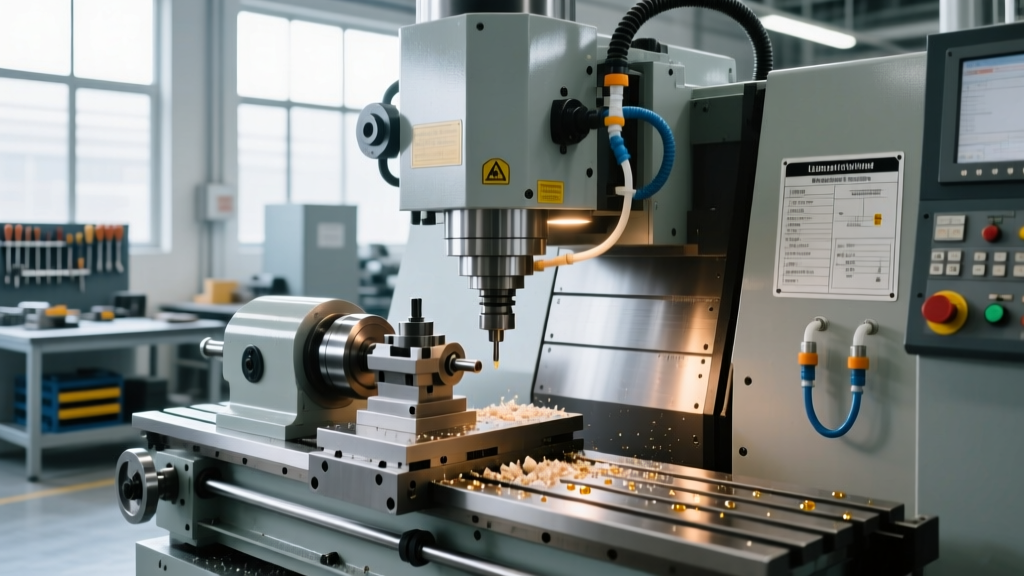
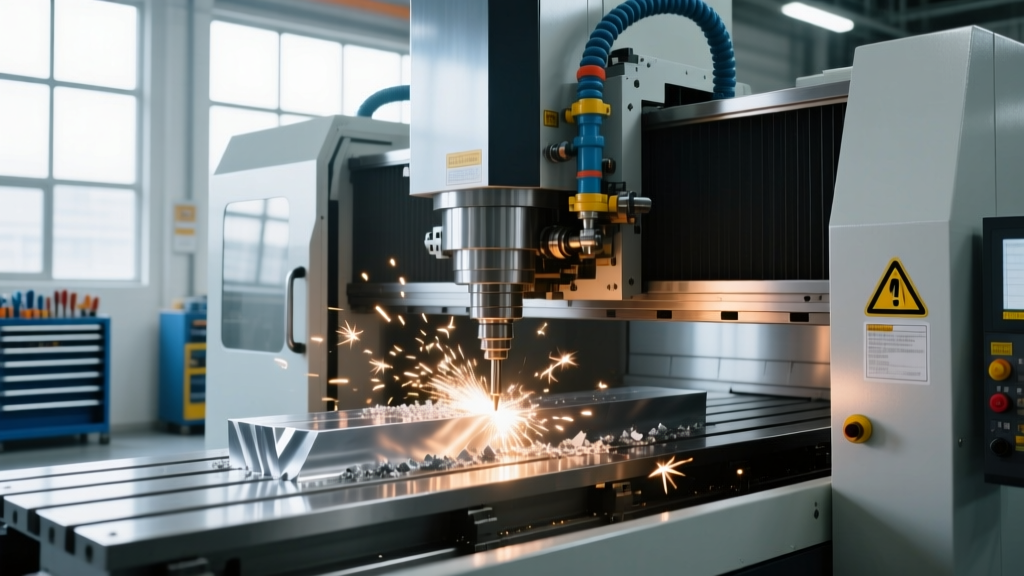
⚠️ The Aluminum Chip Hazard: Aluminum chips retain significant heat and can weld themselves to machine surfaces if allowed to accumulate. When stringy chips wrap around the Z-axis ball screw or pack beneath the way covers, they act as a lapping compound, rapidly degrading the machine's geometric accuracy. Never use compressed air to blow chips directly into the axis seals; always use a brush or dedicated chip vacuum.Daily Operations: Coolant Chemistry and Chip Evacuation
The most common failure point for a first CNC machine used in high-volume aluminum milling is coolant degradation. Aluminum is highly susceptible to galvanic corrosion and white staining (aluminum oxide formation) if the coolant pH drops below 8.5. Modern semi-synthetic coolants formulated specifically for non-ferrous metals, such as Fuchs Ecocool 68 CF or Master Fluid Solutions TRIM MicroSol 585XT, rely on tight concentration windows to protect the workpiece and the machine's internal plumbing.
Coolant Parameter Verification
Do not rely on visual inspection. You must use an optical refractometer every morning before the spindle starts. As water evaporates from the sump, the coolant concentration spikes, leading to foaming and residue buildup on the machine's way covers. Conversely, tramp oil infiltration dilutes the mixture, dropping the pH and inviting anaerobic bacteria that produce hydrogen sulfide (rotten egg odor).
| Parameter | Target Range (6061-T6) | Target Range (7075-T6) | Action if Out of Spec |
|---|---|---|---|
| Concentration | 6.0% - 7.0% | 7.0% - 8.5% | Add DI water or concentrate based on refractometer multiplier. |
| pH Level | 8.8 - 9.2 | 8.8 - 9.2 | If below 8.5, add pH booster; check for tramp oil contamination. |
| Sump Temperature | 68°F - 72°F | 68°F - 72°F | Install a sump chiller if ambient shop temps exceed 80°F. |
For comprehensive material-specific cutting data and tool wear expectations, consult the Sandvik Coromant aluminum milling knowledge base, which details how silicon content in cast vs. wrought aluminum alters both tooling and fluid requirements.
Weekly Service: Way Covers and Taper Hygiene
Aluminum fines are notoriously sticky. When mixed with the light oil film on the spindle taper, they form a microscopic abrasive paste. If you are running an R8 or BT30 taper common on entry-level CNC mills, a contaminated taper will cause the toolholder to seat improperly, resulting in chatter, poor surface finishes, and premature spindle bearing wear.
The Taper Cleaning Protocol
- Power down the spindle and engage the tool release mechanism manually (if applicable) to expose the taper.
- Spray a lint-free cloth with a fast-evaporating solvent like isopropyl alcohol (90% or higher). Avoid using standard WD-40, which leaves a carbon residue that attracts more aluminum dust.
- Wipe the internal taper in a single, twisting motion. Never scrub back and forth, as this pushes fines into the retention knob groove.
- Inspect the pull-stud retention groove for burrs. A damaged pull-stud will cause the toolholder to pull down unevenly, creating a 0.0005" to 0.001" runout at the tool tip.
Pro-Tip for First-Time Owners: Buy a dedicated taper cleaning tool with a spring-loaded cloth head. Relying on your finger wrapped in a rag often leaves lint behind, which burns onto the taper during high-RPM aluminum finishing passes.
Monthly Maintenance: Lubrication and Backlash Verification
The structural diversity of your maintenance routine must include the machine's automatic lubrication system. Most first CNC machines utilize a one-shot or automatic cyclic lube pump that distributes oil to the linear guideways and ball screws. The industry standard for this application is an ISO 68 way lube, such as Mobil Vactra No. 2, which contains tackifiers designed to prevent the oil from being thrown off by rapid traverse rates.
Checking Ball Screw Backlash
Aluminum machining often involves high feed rates and aggressive slotting, which places immense axial load on the ball screws. Over time, the recirculating ball bearings inside the nut wear down, introducing backlash. This manifests as visible witness lines on the workpiece during circular interpolation (e.g., boring operations).
Step-by-Step Backlash Measurement
- Step 1: Mount a 0.0001" (tenth-reading) dial indicator on the machine table, with the plunger pressing against the spindle nose or a rigid toolholder.
- Step 2: Preload the indicator by moving the axis 0.050" in the positive direction, then zero the dial.
- Step 3: Command the machine to move 0.010" in the negative direction via the MDI (Manual Data Input) screen.
- Step 4: Read the dial indicator. If the indicator moves exactly 0.010", backlash is negligible. If the indicator reads 0.0092", you have 0.0008" of backlash.
- Step 5: Enter this value into the CNC controller's backlash compensation parameters. If backlash exceeds 0.0015", mechanical adjustment of the ball screw nut preload or replacement is required.
Annual Calibration: Geometry and Spindle Runout
Once a year, or after any significant crash, the geometric alignment of your first CNC machine must be verified. Aluminum's high thermal conductivity means the workpiece expands rapidly during dry or near-dry machining, but the machine's cast iron or polymer concrete frame also experiences thermal growth. Annual tramming ensures the spindle is perfectly perpendicular to the table.
Use a precision ground test bar and a tenths dial indicator to check spindle runout. Insert the test bar, indicate the side near the collet, and rotate the spindle by hand. Runout exceeding 0.0002" on a new or well-maintained entry-level VMC indicates spindle bearing preload loss or taper damage. For detailed service intervals and alignment tolerances specific to your machine's architecture, always refer to the Haas Automation Service and Support portal or your specific OEM's maintenance manual.
The True Cost of Deferred Maintenance
Skipping these schedules on your first CNC machine does not just result in poor surface finishes; it compounds into catastrophic mechanical failure. A $50 bottle of pH stabilizer prevents a $3,000 sump cleanout and the scrapping of oxidized aluminum aerospace parts. Replacing a set of linear guideway blocks destroyed by aluminum-laced way lube can cost upwards of $1,500 in parts and require 12 hours of machine downtime. Treat your maintenance logbook with the same rigor as your G-code programs, and your machine will hold tight tolerances for decades.