Budgeting a CNC Tapping Machine for Stainless Steel in 2026
Analyze the true cost of a CNC tapping machine for stainless steel. Explore 2026 pricing, tooling budgets, and ROI frameworks for 304/316 alloys.
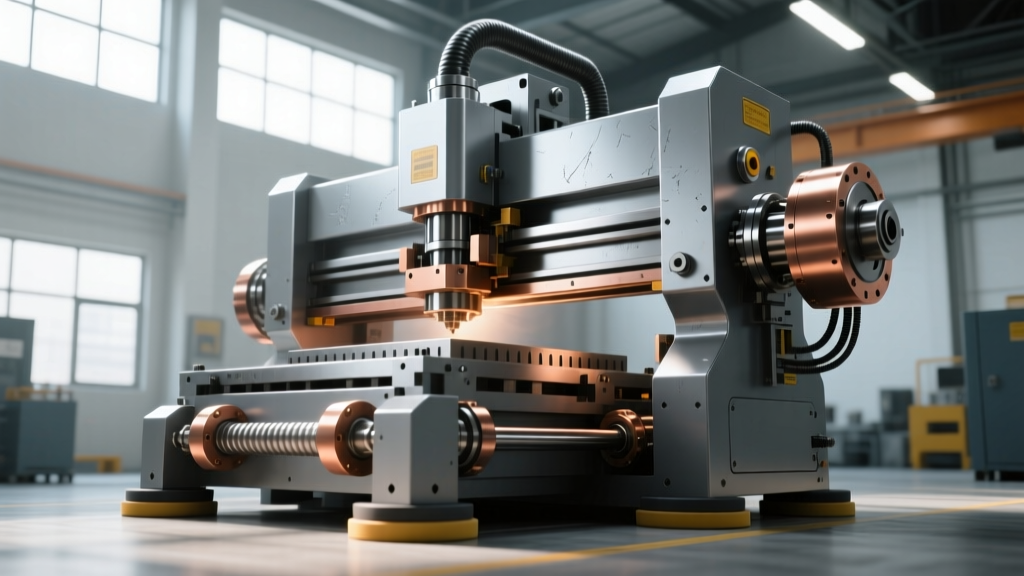
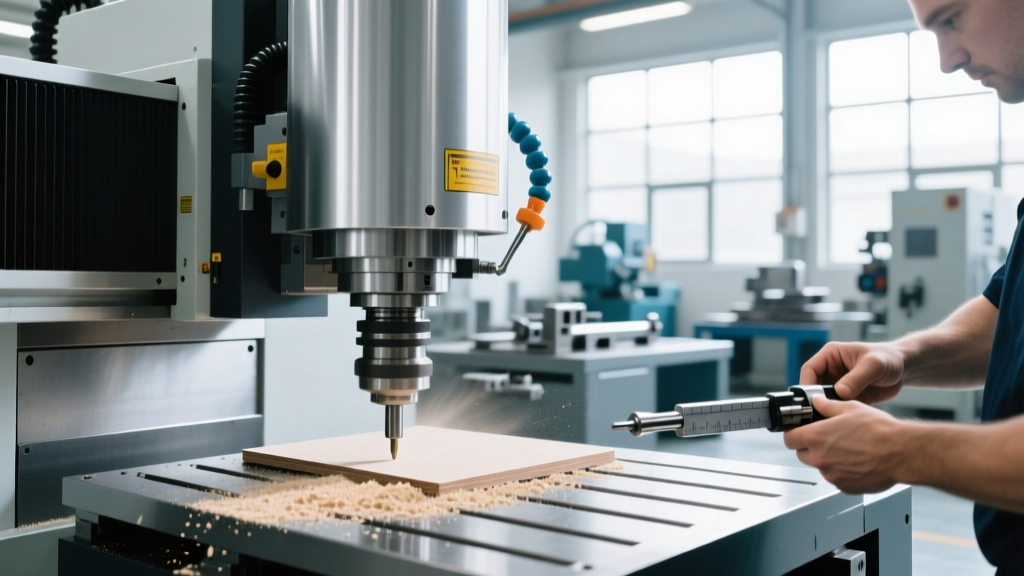
Tapping 300-series austenitic stainless steels (304, 316, 316L) introduces severe manufacturing challenges, primarily work hardening, galling, and stringy chip formation. Standard vertical machining centers (VMCs) often lack the rapid Z-axis acceleration and high-speed rigid tapping synchronization required for these alloys, leading to catastrophic tap breakage and scrapped components. To achieve profitable cycle times, shops must invest in a dedicated CNC tapping machine—commonly referred to as a drill/tap center. However, budgeting for this equipment requires looking far beyond the base machine price. This guide breaks down the exact capital, tooling, and operational costs required to run a CNC tapping machine for stainless steel in 2026.
Capital Expenditure: 2026 Machine Pricing and Configurations
The base price of a drill/tap center is misleading. Stainless steel machining demands specific factory options that are often listed as expensive add-ons. The most critical upgrade is Through-Spindle Coolant (TSC). Without high-pressure TSC (minimum 300 PSI, ideally 1,000 PSI for deep hole applications), chip evacuation in blind-hole stainless tapping will fail, snapping the tool instantly.
| Machine Model (2026 Config) | Base Price | TSC Upgrade (1000 PSI) | High-Speed Tool Changer | Total Est. Budget |
|---|---|---|---|---|
| Haas DT-1 | $79,900 | $6,995 | Included (20+1) | ~$95,000 |
| Brother Speedio S500X2 | $105,000 | $8,500 | Included (21-tool) | ~$125,000 |
| Fanuc Robodrill α-DiB5 Plus | $130,000 | $9,200 | Included (21-tool) | ~$152,000 |
When evaluating these platforms, refer to Haas Automation's DT series specifications or the Brother Speedio drill/tap center lineup to verify Z-axis acceleration rates. For stainless steel, you need a machine capable of 1.5G to 2.0G Z-axis acceleration to minimize dwell time at the bottom of the hole, which directly correlates to work hardening.
Tooling Budget: The True Cost of Tapping Stainless
Stainless steel's low thermal conductivity and high tensile strength mean taps wear 4x to 6x faster than in 6061-T6 aluminum. Budgeting for standard high-speed steel (HSS) taps is a false economy; the cost of scrapped parts and machine downtime will obliterate any initial savings.
Form Taps vs. Cut Taps in 304 vs. 316L
A common metallurgical mistake is applying the same tapping strategy across all stainless grades.
- 304 Stainless: Highly ductile but produces long, stringy chips. Form taps (thread rolling) are mandatory here. They extrude the thread rather than cutting it, completely eliminating chip evacuation issues.
- 316L Stainless: Contains molybdenum and has a higher work-hardening rate with lower ductility. Form taps will generate excessive torque and snap. You must use premium coated cut taps with specialized chip-breaking geometries.
Cost-Per-Hole Analysis (M6 x 1.0 Thread)
| Tap Type & Brand Example | Unit Cost | Avg. Tool Life in 304/316 SS | Cost Per Hole |
|---|---|---|---|
| Standard HSS (Generic) | $12.00 | 40 holes | $0.300 |
| Premium TiAlN Coated (OSG HY-PRO SUS) | $68.00 | 900 holes | $0.075 |
| Carbide Form Tap (Sandvik CoroTap 300) | $155.00 | 4,500 holes | $0.034 |
As detailed in Sandvik Coromant's threading and tapping knowledge base, upgrading to premium carbide or advanced powder-metallurgy HSS reduces your cost-per-hole by over 75%, despite the higher upfront tooling budget. Allocate $3,500 to $6,000 for your initial premium tap inventory.
Coolant and Consumable Overheads
Stainless steel requires high-lubricity coolants to prevent galling and built-up edge (BUE) on the tap's cutting face. Standard synthetic coolants used for aluminum will fail.
- Coolant Type: Semi-synthetic or heavy-duty soluble oil (e.g., Master Fluid Solutions TRIM MicroSol 585XT).
- Concentration: Must be maintained strictly at 8% to 10%. Running at the standard 5% used for aluminum will result in immediate tap welding.
- Annual Budget: Expect to spend $4,000 to $6,500 annually on coolant makeup, refractometer testing supplies, and tramp oil skimming maintenance to prevent bacterial growth in the richer mixture.
ROI Framework: Cycle Time Savings vs. Tap Breakage
To justify the $120,000+ investment in a high-end CNC tapping machine over a standard $90,000 VMC, you must calculate the cycle time savings derived from rigid tapping speeds.
The Math of High-Speed Rigid Tapping
A standard VMC typically maxes out at 2,000 to 3,000 RPM for rigid tapping and requires a slow deceleration/acceleration curve to reverse the spindle. A dedicated drill/tap center like the Brother Speedio can tap at 5,000+ RPM and reverse in milliseconds due to its lightweight, direct-drive spindle configuration.
ROI Calculation Example (10,000 Parts, 4x M6 Tapped Holes per part):Standard VMC: 4.5 seconds per hole = 18 seconds total tapping time per part.
Drill/Tap Center: 1.2 seconds per hole = 4.8 seconds total tapping time per part.
Time Saved: 13.2 seconds per part.
Total Time Saved: 36.6 hours over the 10,000-part run.
Financial Savings: At a fully burdened machine rate of $95/hour, you save $3,477 per production run. The CNC tapping machine pays for its price premium in roughly 8 production runs.
Maintenance Provisions for High-Shock Machining
Rigid tapping puts immense shock loads on the Z-axis ball screw and spindle bearings, especially when reversing direction at high RPMs in tough materials like stainless steel. When building your annual operating budget, include the following provisions:
- Z-Axis Ball Screw Inspection: Budget $1,200 annually for laser calibration and ball screw re-greasing with high-load molybdenum disulfide grease.
- Spindle Vibration Analysis: Budget $800 annually for dynamic balancing and vibration analysis to catch bearing degradation before it causes tap chattering.
- Tension/Compression Holders: Even with rigid tapping, use floating tap holders with a 0.020" axial float to absorb micro-synchronization errors. Replace the internal Belleville washers every 12 months ($150 per holder).
Frequently Asked Questions
Can I tap 17-4 PH stainless on a drill/tap center?
Yes, but 17-4 PH (especially in H1150 or annealed conditions) is significantly harder and more abrasive than 300-series stainless. You must reduce your tapping speed by 40-50% (typically 60-90 SFM) and use premium AlCrN-coated carbide taps. Expect tool life to drop by 60% compared to 304 SS.
Is peck tapping necessary for stainless steel?
Generally, no. Peck tapping (G84 with Q-word) ruins cycle time and introduces the risk of cross-threading or chip packing on the re-entry stroke. If your CNC tapping machine is equipped with 1,000 PSI TSC and you are using the correct chip-forming geometry, standard rigid tapping (G84) will clear the chips effectively, even in deep blind holes up to 3x diameter.
How does work hardening affect my budget?
If your machine dwells at the bottom of the hole for even 0.2 seconds too long, the friction work-hardens the austenitic structure of the stainless steel. The subsequent reverse stroke will encounter material that is effectively 2-3 times harder than the original cut, snapping the tap. This results in a scrapped part (often worth $50-$200 in raw material and prior machining time) plus a $150 broken tap extraction labor cost. High-acceleration spindles prevent this, protecting your profit margins.