Troubleshooting Coolant & Enclosure Leaks in CNC Machine Centers
Diagnose and fix coolant leaks, enclosure seal failures, and misting issues in CNC machine centers with this expert troubleshooting and repair guide.
The True Cost of Containment Failures in CNC Machine Centers
Coolant leaks and enclosure breaches in modern CNC machine centers are not merely housekeeping annoyances; they represent direct threats to spindle bearing life, control electronics, and operator respiratory health. When a vertical or horizontal machining center fails to contain its cutting fluid, the resulting downtime and component damage can easily exceed $15,000 per incident. Whether you are operating a Haas VF-2SS, a Mazak VARIAXIS, or a Doosan DNM series, the fundamental physics of fluid containment remain identical. This guide provides a systematic, engineer-level approach to diagnosing and repairing enclosure and coolant system failures.
⚠️ CRITICAL SAFETY WARNING: Never open the main enclosure door while the spindle is rotating or high-pressure Through-Spindle Coolant (TSC) is active. Modern TSC systems operate between 300 PSI and 1,000 PSI. A pinhole leak at these pressures can inject fluid through the skin, causing severe hydraulic injection injuries.Symptom-to-Solution Diagnostic Matrix
Troubleshooting fluid containment requires isolating the exact failure point. Use the matrix below to map your specific symptom to the root cause and required corrective action.
| Symptom | Probable Root Cause | Corrective Action | Est. Cost / Time |
|---|---|---|---|
| Coolant pooling under the X-axis way cover | Way wiper seal hardening or chip packing beneath the polyurethane lip | Remove way cover, clean linear guide surface, replace wiper seal | $45 - $90 / 45 mins |
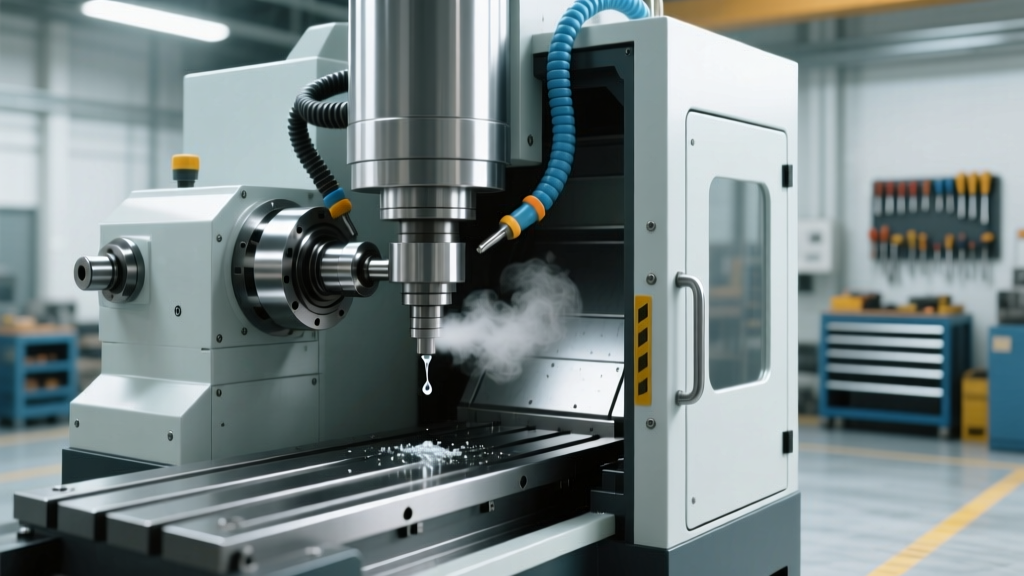
| Mist escaping enclosure during TSC operation | Door gasket compression set; enclosure negative pressure failure | Install closed-cell neoprene gasket; verify exhaust fan CFM | $85 - $150 / 1 hr |
| Coolant dripping from spindle nose (machine idle) | Rotary union mechanical seal wear or labyrinth air purge failure | Rebuild rotary union; verify air purge regulator is set to 45 PSI | $250 - $450 / 2 hrs |
| Fluid weeping through casting seams near the base | Micro-porosity in the cast iron base or degraded RTV silicone sealant | Degrease, apply metal-reinforced epoxy (e.g., Belzona 1391T) | $120 / 3 hrs (inc. cure) |
| Polycarbonate windows turning opaque/crazed | Chemical attack from synthetic coolants or UV degradation | Replace with PETG or chemically hardened Lexan Margard sheets | $300 - $600 / 1 hr |
Deep Dive: Through-Spindle Coolant (TSC) Rotary Union Failures
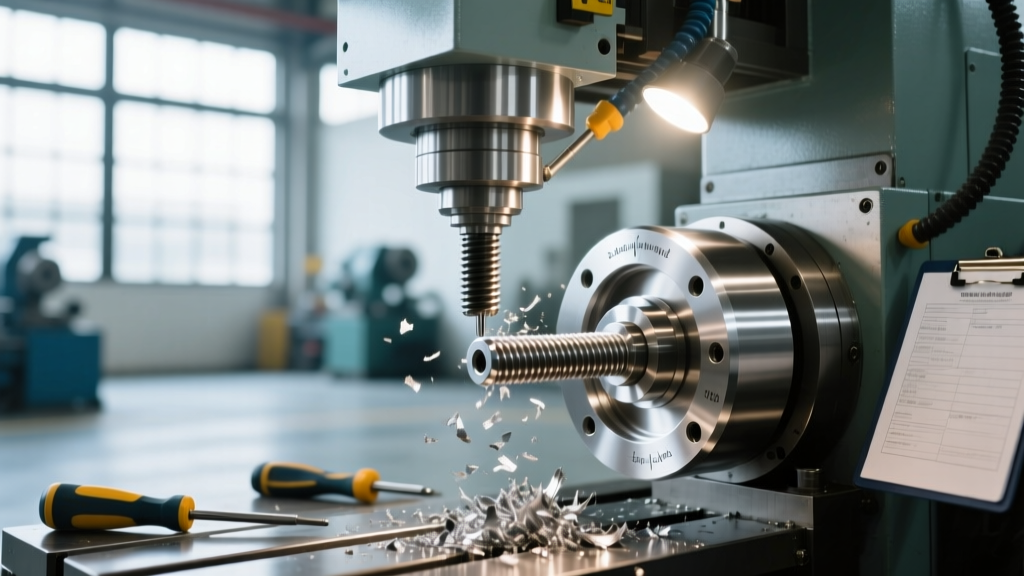
The rotary union is the most common failure point for high-pressure coolant systems in CNC machine centers. When coolant leaks from the spindle nose while the machine is idle, the mechanical seals inside the Deublin or Ott-Jakob rotary union have likely failed.
Step-by-Step Rotary Union Diagnosis
- Verify the Air Purge System: Most modern CNC machine centers use an air purge to keep coolant out of the spindle bearings when TSC is off. Check the pneumatic regulator on the side of the spindle head. It must read between 40 and 50 PSI. If the air pressure drops below 30 PSI, coolant will bypass the labyrinth seal and drip from the tool holder.
- Inspect the Supply Hose: High-pressure TSC hoses (rated for 1,000+ PSI) experience severe vibration. Check the crimped fittings at the rotary union inlet. If you see micro-fractures in the rubber or weeping at the crimp collar, replace the entire hose assembly. Do not attempt to re-crimp high-pressure hydraulic lines in-house.
- Evaluate the Seal Cartridge: If the air purge is functional and hoses are intact, the internal carbon-graphite mechanical seals are worn. Order the specific rebuild kit for your union model (e.g., Deublin Series 1117). Rebuilding requires a cleanroom-level environment; if your shop floor is contaminated with fine cast iron dust, swap the entire rotary union assembly instead of attempting a field rebuild.
Enclosure Integrity: Seals, Wipers, and Windows
The sheet metal enclosure of a CNC machine center is designed to maintain negative pressure and contain high-velocity chips. Over time, the dynamic seals degrade.
Way Cover Wiper Replacement
Telescopic steel way covers rely on polyurethane or nitrile rubber wipers at each joint to prevent coolant from migrating down into the ballscrew and linear guide carriages. When coolant breaches these wipers, it washes away the way lubricant (e.g., Mobil Vactra No. 2), leading to catastrophic stick-slip errors and axis servo alarms.
Repair Protocol: Do not simply wipe away the visible coolant. You must completely remove the way cover assembly. Use a non-chlorinated brake cleaner to dissolve the sludge packed behind the wiper lip. Install new wipers using a high-tack gasket sealant like Permatex High Tack (Part #80065) to ensure the backing plate remains waterproof. Torque the mounting screws to the manufacturer's specification—typically 4-6 Nm—to avoid distorting the wiper lip.
💡 PRO TIP: Polycarbonate Window CrazingIf your machine's polycarbonate windows are developing micro-cracks (crazing), this is a chemical reaction caused by the amines in semi-synthetic coolants. Standard polycarbonate will shatter under the impact of a heavy workpiece if crazed. Immediately replace compromised windows with PETG (Polyethylene Terephthalate Glycol), which offers superior chemical resistance to alkaline metalworking fluids, or specify polycarbonate with a hard-coat chemical barrier.
Casting Porosity and Base Leaks
A less obvious but highly destructive issue in CNC machine centers is micro-porosity in the cast iron base. Heavy roughing operations create harmonic vibrations that can cause microscopic fractures in the casting seams, particularly where the sheet metal enclosure meets the machine base.
Standard RTV silicone is insufficient for these high-vibration, high-chemical-exposure joints. To permanently seal casting porosity or degraded base seams:
- Drain the coolant reservoir and use a steam cleaner to remove all tramp oil and biofilm from the casting seam.
- Etch the cast iron with a phosphoric acid cleaner to open the pores.
- Apply a metal-reinforced, chemically resistant epoxy such as Belzona 1391T or Loctite EA 9460. These epoxies are specifically formulated to withstand continuous immersion in alkaline cutting fluids and maintain adhesion under heavy vibrational loads.
Coolant Chemistry and Mist Control Standards
Fluid containment is only half the battle; fluid chemistry dictates the severity of the mist generated when containment fails. According to the NIOSH Metalworking Fluids Guidelines, prolonged exposure to aerosolized metalworking fluids can cause occupational asthma and hypersensitivity pneumonitis.
"Maintaining proper coolant concentration and controlling tramp oil are the most effective methods for reducing the toxicity and volume of airborne mist in the machining environment." — Master Fluid Solutions Maintenance Guidelines
Refractometer Calibration and Tramp Oil Skimming
If your coolant concentration drops below 6%, the fluid loses its corrosion inhibitors, leading to rust on the machine's internal castings and way covers. If it exceeds 12%, the excess emulsifiers create excessive foam and sticky residue that clogs enclosure door tracks and skimmer belts.
- Daily Testing: Use a handheld optical refractometer. Multiply the Brix reading by the coolant manufacturer's specific multiplier (usually between 1.0 and 1.5) to find the true percentage. Maintain a strict 8.0% to 10.5% range.
- Tramp Oil Management: Hydraulic way lube inevitably leaks into the sump. This tramp oil starves the coolant of oxygen, promoting the growth of anaerobic sulfate-reducing bacteria (which causes the 'rotten egg' odor). Ensure your disc or belt skimmer is running continuously during shifts, and verify that the skimmer blade is properly adjusted to scrape only the oil layer, minimizing coolant waste.
Preventative Maintenance Schedule for Fluid Containment
Implement this strict PM cadence to prevent enclosure and coolant system failures before they trigger downtime.
- Daily: Check coolant concentration via refractometer. Verify TSC air purge pressure gauge reads >40 PSI. Inspect door gaskets for visible tearing.
- Weekly: Clean the enclosure exhaust fan intake screen. A clogged screen eliminates negative pressure, forcing mist out through the door seals. Empty the tramp oil skimmer collection drum.
- Monthly: Inspect telescopic way cover wipers for chip packing. Lubricate enclosure door hinges and tracks with a water-resistant lithium grease (avoid WD-40, which strips existing lubricants).
- Bi-Annually: Perform a complete sump clean-out using a coolant vac. Inspect the interior casting seams for epoxy degradation. Replace all high-pressure TSC O-rings at the tool holder retention knobs.
By treating the enclosure and coolant system as a unified, pressurized containment vessel rather than a simple splash guard, maintenance teams can drastically reduce fluid consumption, eliminate servo-killing way contamination, and ensure a safer shop floor environment.