What's a CNC Machine ATC? Safety Standards for Tool Change Systems
Explore CNC machine ATC safety standards, ANSI/ISO compliance, tool changer failure modes, and drawbar retention specs for 2026 audits.
Beyond 'What's a CNC Machine': The Hidden Dangers of the ATC
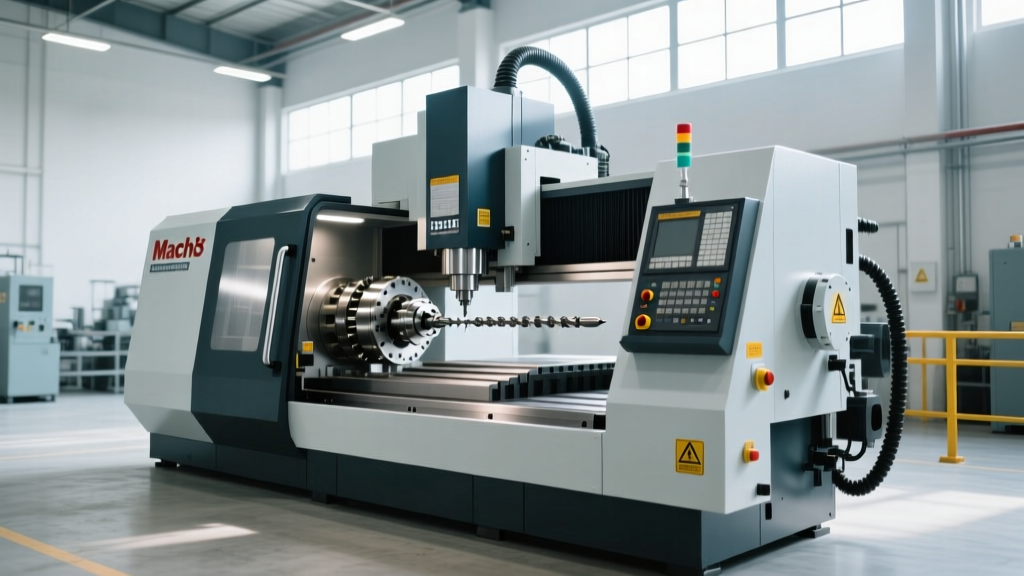
When a new operator first asks, "what's a CNC machine," the standard answer involves computer numerical control, G-code programming, and multi-axis spindle movement. However, from a safety engineering and compliance standpoint, the most hazardous automated subsystem on the shop floor is rarely the spindle itself—it is the Automatic Tool Changer (ATC). The ATC operates with high kinetic energy, heavy payloads, and complex pneumatic sequences, often in close proximity to human operators during setup and maintenance.
In 2026, manufacturing facilities face stricter enforcement of machine guarding and interlock compliance. A crashed tool carousel or a retained tool failing at 12,000 RPM doesn't just result in scrapped parts; it poses severe laceration and blunt-force trauma risks. Understanding the safety standards governing CNC machine tool change systems is mandatory for facility managers, safety officers, and lead machinists.
The Regulatory Framework: ANSI B11.23 and ISO 16089
CNC machining centers are governed by rigorous international and national safety standards that dictate how automated tool changing mechanisms must be guarded, interlocked, and maintained.
Key Compliance Standards for ATC Systems:- ISO 16089:2012: Machine tools — Safety — Milling. This standard explicitly covers the guarding requirements for automatic tool changers, mandating that operators cannot access the tool magazine during the automatic cycle without triggering a safe-stop (Category 0 or Category 1 stop).
- ANSI B11.23: Safety Requirements for Machining Centers. This North American standard details the specific interlock requirements for ATC doors and the pneumatic pressure monitoring required to prevent tool drops.
- OSHA 1910.212(a): General requirements for all machines, requiring that any machine part exposing an employee to injury (such as a swinging ATC arm) must be guarded.
For a deeper look at federal guarding requirements, refer to the OSHA 1910.212 standard on machine guarding. Additionally, the ISO 16089 standard documentation provides the baseline for milling machine safety architecture.
Kinetic Hazards: Arm-Type vs. Disc-Type Tool Changers
The physical design of the ATC dictates its specific safety profile and failure modes. Modern machining centers generally utilize one of two primary tool change systems, each presenting unique compliance challenges.
| ATC Type | Common Models | Primary Safety Hazards | Compliance Mitigation |
|---|---|---|---|
| Arm-Type (Cam/Geneva) | Mazak VCN-530C, DMG MORi CMX V | High-speed rotary arm (swinging up to 15kg tools). Crush hazards between the arm and the spindle. Cam-box failures causing mid-cycle drops. | Heavy-duty polycarbonate (Makrolon) shielding. RFID safety interlocks on the magazine access door. Pneumatic pressure sensors tied to the E-stop circuit. |
| Disc/Magazine-Type (SMTC) | Haas VF-Series (SMTC), Brother Speedio | Rotating carousel pinch points. Tools extending beyond the guard envelope during Z-axis tool changes. Servo motor brake failures. | Fixed perimeter guarding with light curtains. Tool length verification macros to prevent Z-axis over-travel into the guard. Electromagnetic carousel brakes. |
The Cost of Non-Compliance and Crashes
When safety interlocks are bypassed and an operator reaches into the magazine while the machine is in 'Feed Hold' rather than a full 'E-Stop', the consequences are expensive and dangerous. Replacing a crashed cam-driven arm mechanism and its associated Geneva gear box on a standard VMC typically costs between $4,500 and $8,500 in parts and OEM labor. More critically, OSHA fines for defeated machine guarding interlocks start at $16,131 per violation in 2026, scaling up to $161,323 for willful or repeated violations.
Interlock Compliance and Guarding Integrity
The most frequent safety violation observed during CNC machine audits is the defeat of ATC access door interlocks. Operators often use tape, zip-ties, or spare magnets to bypass magnetic reed switches to clear tool jams without powering down the machine.
Upgrading to RFID Safety Switches
To comply with ISO 13849-1 (Safety of machinery — Safety-related parts of control systems), modern facilities are moving away from easily defeated magnetic reed switches. Upgrading to coded RFID safety switches (such as the Euchner CES or Schmersal AZM series) ensures that the ATC door cannot be tricked by a standard magnet. These switches provide diagnostic data to the PLC, alerting maintenance if the door alignment shifts by even 2 millimeters, which could indicate a hinge failure or structural sag.
Drawbar Retention: Preventing Catastrophic Tool Pullout
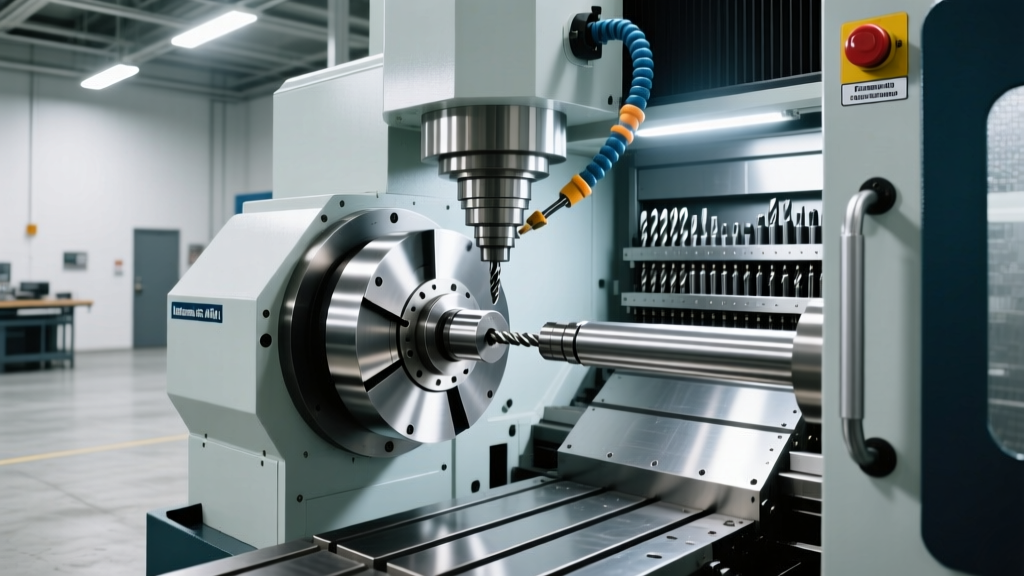
An often-overlooked aspect of ATC safety is the mechanical retention of the toolholder inside the spindle taper. If the drawbar fails to exert sufficient clamping force, the cutting forces can eject the toolholder from the spindle at high velocity—a phenomenon known as tool pullout.
Pull Stud Standards and Belleville Washers
The retention knob (pull stud) must strictly adhere to regional standards, such as MAS 403 for BT tapers or DIN 69871 and CAT V-flange standards. Mixing pull stud types (e.g., using a 45-degree retention knob in a spindle designed for a 90-degree knob) will result in the drawbar gripping only the very tip of the stud, leading to immediate metal fatigue and catastrophic failure.
Inside the spindle, a stack of Belleville (disc spring) washers generates the clamping force. Over time, these washers fatigue. A standard CAT40 spindle requires a minimum retention force of 2,500 to 3,500 lbs. If a force gauge test reveals the drawbar is pulling at less than 2,000 lbs, the ATC is mechanically unsafe for heavy roughing operations, regardless of how well the exterior guarding is maintained.
"Never rely on the 'sound' of the tool clamping to verify ATC safety. A sharp pneumatic 'pop' only indicates that the unclamp cylinder has released; it does not verify that the Belleville washers have successfully seated the pull stud with 3,000 lbs of force. Quarterly drawbar force testing with a calibrated hydraulic gauge is a non-negotiable requirement for ISO 9001 and safety compliance."
— Lead Applications Engineer, OEM Spindle Repair Division
2026 ATC Safety & Compliance Audit Checklist
Facility safety managers and maintenance leads should execute the following checklist bi-annually to ensure their CNC machine tool change systems meet current operational and legal safety standards.
- Verify Interlock Integrity: Test all ATC access doors. Attempt to initiate a tool change via MDI (Manual Data Input) with the magazine door open. The machine must trigger an alarm and halt the ATC sequence immediately. Inspect switches for physical tampering or zip-ties.
- Measure Drawbar Retention Force: Use a calibrated drawbar force gauge (e.g., from JM Test Systems or equivalent) to measure clamping force. For CAT40/BT40, ensure force is ≥ 2,500 lbs. For CAT50/BT50, ensure force is ≥ 5,000 lbs. Replace Belleville washers if force is below spec.
- Inspect Pull Studs (Retention Knobs): Remove all toolholders from the carousel. Inspect pull studs for galling, micro-fractures, or elongation. Discard any studs showing wear rings. Verify the thread engagement torque (typically 60-90 ft-lbs for CAT40, applied with a torque wrench and Loctile 243).
- Check Pneumatic Pressure Thresholds: Verify that the machine's PLC is programmed to halt the ATC if shop air pressure drops below the manufacturer's threshold (usually 85 PSI / 5.8 bar). A pressure drop during a tool change can cause the arm to drop the tool mid-swing.
- Assess Guarding Transparency and Impact Resistance: Inspect the polycarbonate windows on the ATC enclosures. If the polycarbonate is yellowed, crazed, or coated in degraded way-lube, it has lost its impact resistance and must be replaced with OEM-spec Makrolon or Lexan sheeting (minimum 8mm thickness for high-speed VMCs).
- Validate Tool Length and Weight Macros: Ensure the control parameter limits for maximum tool weight and length are active. Overloading an ATC pocket beyond its rated capacity (e.g., placing a 25 lb face mill in a pocket rated for 15 lbs) causes uneven carousel wear and potential arm-swing drop hazards.
Understanding the mechanical and regulatory complexities of the ATC elevates an operator's knowledge far beyond the basic answer to "what's a CNC machine." By enforcing strict adherence to ANSI and ISO standards, verifying mechanical retention forces, and eliminating interlock bypasses, manufacturing facilities can drastically reduce the risk of severe injury and unplanned downtime.