Vibration Damping vs CNC Grinding Machine Table Size Dimensions
Compare vibration damping alternatives for CNC grinders. Learn how CNC grinding machine table size dimensions impact isolation pad and air mount choices.
The Physics of Mass: Why Table Dimensions Alter Resonant Frequencies
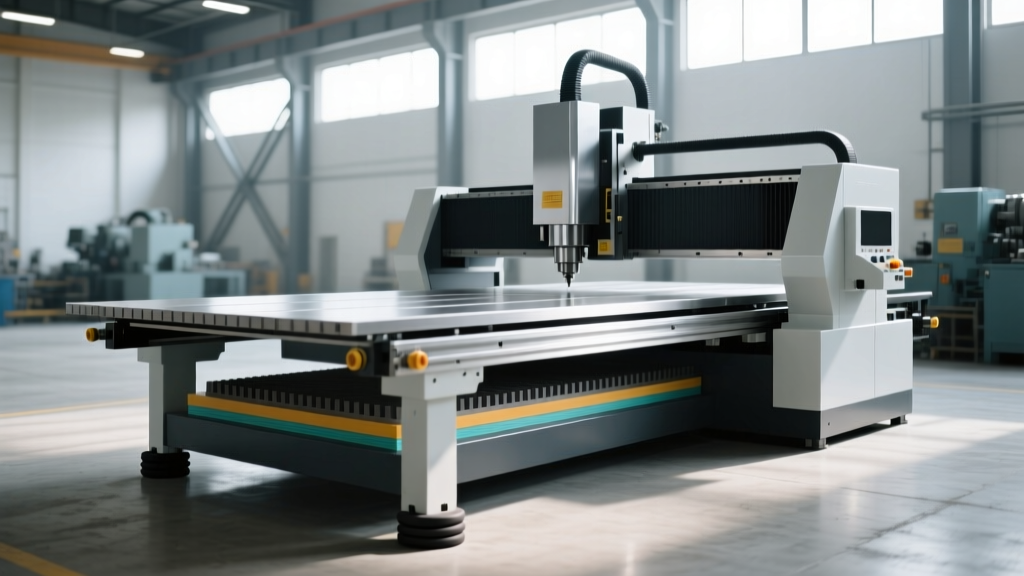
Vibration in CNC grinding is the primary enemy of surface finish quality and wheel life. While spindle dynamics and wheel balancing often dominate the conversation, the physical footprint of the machine—specifically the CNC grinding machine table size dimensions—dictates the foundational resonant frequencies that damping systems must counteract. A table measuring 400 x 200 mm behaves as a high-frequency, low-mass oscillator, whereas a 1500 x 600 mm creep-feed table acts as a low-frequency, high-mass tuning fork.
When evaluating vibration damping alternatives, shop managers frequently make the mistake of applying a one-size-fits-all isolation strategy. According to research on machine tool dynamics published by the National Institute of Standards and Technology (NIST), the natural frequency of a machine base and table assembly shifts inversely with the square root of its mass. Therefore, as table dimensions and corresponding workpiece capacities increase, the required damping mechanism must transition from simple high-frequency absorption to complex low-frequency pneumatic or active isolation.
Data Highlight: Resonance Thresholds by Table Size- Small Tables (Under 500mm length): Natural frequency typically 40–80 Hz. Requires high-damping elastomers.
- Mid-Range Tables (600mm–1000mm length): Natural frequency typically 15–35 Hz. Requires pneumatic air mounts.
- Jumbo Tables (Over 1200mm length): Natural frequency typically 5–15 Hz. Requires active piezoelectric damping or massive mineral cast bases.
Comparing Passive and Active Isolation Alternatives
Selecting the correct damping alternative requires matching the isolation system's cutoff frequency to the specific CNC grinding machine table size dimensions and the machine's total dynamic weight. Below is a comparative matrix of the most common industrial damping solutions, scaled by table footprint.
| Damping Alternative | Best Suited Table Dimensions | Isolation Cutoff Frequency | Estimated Cost (Per Set of 4) | Primary Limitation |
|---|---|---|---|---|
| Sorbothane Hemispheres (50A Durometer) | Small (e.g., 18' x 6' / 450 x 150 mm) | 25 - 40 Hz | $150 - $400 | Bottoms out under heavy creep-feed grinding loads |
| Pneumatic Air Mounts (e.g., Firestone/Fabreeka) | Medium (e.g., 40' x 16' / 1000 x 400 mm) | 1.5 - 3.0 Hz | $2,500 - $6,500 | Requires dedicated shop air supply and leveling valves |
| Active Piezoelectric Isolation Systems | Large / Jumbo (e.g., 60' x 24' / 1500 x 600 mm+) | 0.5 - 2.0 Hz (Adaptive) | $25,000 - $45,000+ | High initial capital; requires specialized calibration |
| Polymer Concrete (Mineral Cast) Base Integration | All Sizes (Built into machine chassis) | N/A (Absorbs rather than isolates) | Baked into machine price (+$15k-$30k premium) | Cannot be retrofitted to existing cast-iron machines |
Small-Format Tables: The Elastomeric Approach
For precision cylindrical or small surface grinders like the Okamoto ACC-6-18, the table dimensions are compact, and the grinding forces are relatively light. The primary vibration offenders here are high-frequency structural vibrations transmitted through the shop floor from nearby stamping presses or heavy milling machines. In this scenario, high-viscoelastic polyurethane pads or Sorbothane hemispheres are the most cost-effective alternative. By placing 50A durometer pads under the machine's leveling feet, you create a mechanical low-pass filter that absorbs frequencies above 30 Hz. The cost is minimal, but the load capacity must be calculated precisely; over-compressing the elastomer will cause it to act as a solid block, transmitting 100% of the floor vibration directly into the grinding zone.
Mid-Range Creep-Feed Tables: Pneumatic Dominance
When moving to mid-range universal grinders, such as the Studer S33 or similar machines with table lengths around 650mm to 1000mm, elastomeric pads fail. The increased mass of the table and the heavier workpieces lower the machine's natural frequency into the 15–25 Hz range. Pneumatic air mounts become the mandatory alternative. These mounts use a pressurized air bladder and a rubber diaphragm to achieve isolation frequencies as low as 1.5 Hz. For a 4,000 kg machine, a set of four double-convolution air springs, regulated by self-leveling pneumatic valves, will cost between $3,500 and $5,000. The critical installation requirement here is ensuring the air mounts are perfectly leveled; an unlevel grinder table will cause uneven wheel wear and severe chatter marks on the workpiece.
Heavy-Duty Jumbo Tables: Active Damping and Mass
For large-scale profile and creep-feed grinders like the Blohm Profimat XT, featuring table dimensions exceeding 1500mm in length, the dynamic forces generated during deep-cut grinding are immense. Passive isolation is often insufficient because the low-frequency rocking motion of a massive table can induce sub-harmonic chatter. Here, the alternative is active damping. Active systems utilize accelerometers and piezoelectric actuators to measure incoming vibrations in real-time and generate an equal-and-opposite counter-force within milliseconds. While the $30,000+ price tag is steep, it is economically justified when grinding aerospace turbine blades where a single scrapped part can cost more than the damping system itself.
Base Material Alternatives: Cast Iron vs. Mineral Cast
Beyond isolating the machine from the floor, the internal damping of the table and bed itself is a critical alternative to consider during the purchasing phase. Traditional gray cast iron has a specific damping capacity (SDC) of roughly 1% to 2%. In contrast, polymer concrete (often branded as Mineral Cast or Granitan) offers an SDC of 6% to 10%.
'When CNC grinding machine table size dimensions exceed 1.2 meters, the sheer mass of a cast-iron table becomes a liability rather than a stabilizer. The thermal expansion and low internal damping of cast iron at that scale will manifest as mid-cycle chatter. Transitioning to a mineral cast base reduces the vibration decay time by a factor of six, allowing for heavier depth-of-cut passes without compromising the Ra surface finish.'
According to machining fundamentals documented by Sandvik Coromant's technical knowledge base, controlling chatter requires addressing both the tool-workpiece interface and the machine tool structure. If you are specifying a new large-format grinder, demanding a mineral cast bed is a superior alternative to attempting to retrofit active damping onto a cast-iron machine later.
Decision Framework: Matching Damping to Your Grinder
Use this step-by-step framework to finalize your vibration damping strategy based on your specific equipment:
- Calculate Total Dynamic Mass: Add the machine weight, the maximum workpiece weight, and the fixture weight. Do not base your isolator choice solely on the machine's tare weight.
- Measure Table Dimensions & Center of Gravity: Long, narrow tables (e.g., 1000 x 200 mm) are prone to torsional twisting. Place pneumatic mounts closer to the center of gravity rather than strictly at the corners to prevent edge-loading.
- Conduct a Floor Vibration Survey: Use a seismometer or accelerometer to measure ambient shop floor vibrations. If floor vibrations peak below 10 Hz, elastomeric pads are useless; you must invest in pneumatic or active isolation.
- Verify Wheel Head Isolation: Even with perfect table isolation, internal hydraulic pump vibrations can ruin a finish. Ensure the grinder's hydraulic power unit is decoupled from the main base using flexible hoses and remote mounting.
Frequently Asked Questions: Troubleshooting Grinder Chatter
Why am I still seeing chatter marks after installing air mounts under my large table?
Air mounts isolate the machine from the *floor*, but they do not stop internally generated vibration. If your CNC grinding machine table size dimensions are large and you are taking heavy creep-feed cuts, the chatter is likely being generated by the grinding wheel spindle or an unbalanced wheel adapter. Check your wheel balancing system and ensure the spindle bearings are not experiencing preload loss.
Can I use standard rubber machinery mounts instead of specialized Sorbothane?
Standard neoprene or rubber machinery mounts are designed for shock absorption (like a drop forge), not high-frequency micro-vibration isolation. Rubber tends to stiffen over time and has a much lower damping coefficient than viscoelastic polyurethanes. For precision grinding, the $200 premium for engineered Sorbothane or specialized Fabreeka pads is mandatory to achieve sub-micron surface finishes.