What Can You Make With a CNC Machine? Stainless Steel Cost Guide
Discover what you can make with a CNC machine using stainless steel. This cost analysis covers material grades, tooling budgets, and ROI frameworks.
The Real Cost of Machining Stainless Steel
When shop owners evaluate production capabilities and ask what can you make with a cnc machine, the conversation often defaults to high-speed aluminum milling or mild steel prototyping. However, transitioning to stainless steel fundamentally alters your shop's economic model. Stainless steel is not merely a different material; it is a different discipline. Due to its high shear strength, low thermal conductivity, and severe tendency to work-harden, machining stainless steel typically incurs a 2.5x to 3.5x cost multiplier compared to 6061-T6 aluminum.
This cost disparity is rarely factored into initial capital equipment budgets. A machine that effortlessly cuts aluminum at 12,000 RPM will bog down, chatter, and destroy tooling when faced with a 316L stainless steel billet. Understanding the true cost of stainless steel machining requires a deep dive into material science, tooling depreciation, and machine rigidity requirements.
⚠️ Budget Warning: The Work-Hardening TrapStainless steel alloys (particularly the 300 series) work-harden rapidly if the cutting tool dwells or rubs instead of shearing. If your CNC feed rate drops below the chip-load threshold, the material surface hardens to a Rockwell C scale that will instantly shatter standard carbide endmills. Budgeting for stainless requires investing in high-torque spindles and premium toolpaths that maintain constant tool engagement.
What Can You Make With a CNC Machine? High-Margin Stainless Parts
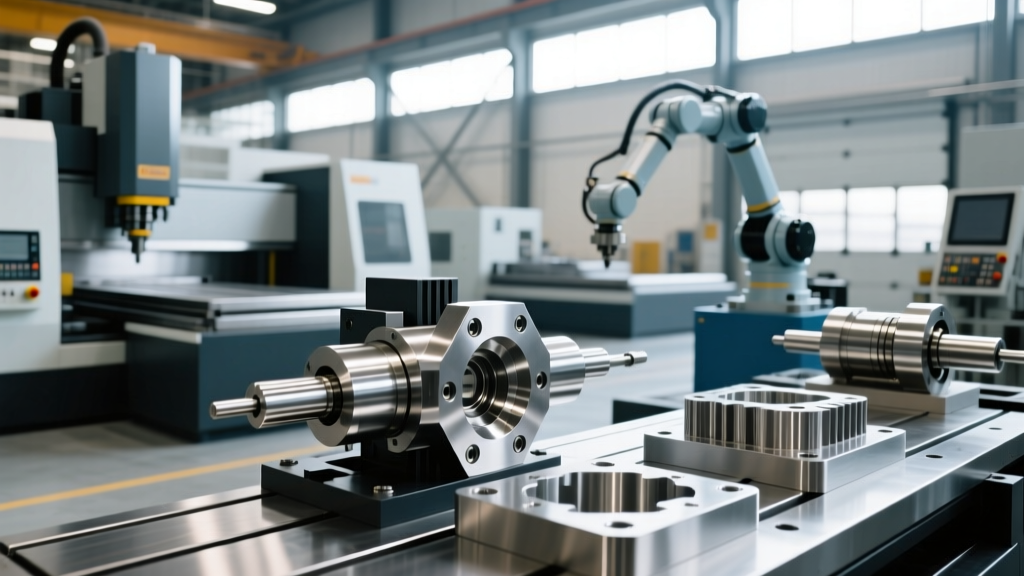
Despite the elevated machining costs, stainless steel parts command premium market prices due to their corrosion resistance, hygiene properties, and structural integrity. If you are planning your 2026 production budget, here are the most profitable part categories to target:
- Marine Grade Hardware (316L): Custom yacht cleats, winch drums, and propeller shafts. The marine industry tolerates high margins for certified 316L components that resist saltwater pitting. Estimated machining cost: $45-$85/hour; Retail margin: 60-80%.
- Food & Beverage Sanitary Fittings (304/316): Tri-clamp ferrules, butterfly valve bodies, and CIP (Clean-in-Place) manifolds. These require mirror-finish internal bores (Ra < 32 µin) to prevent bacterial harboring, necessitating specialized polishing tooling and strict coolant filtration.
- Medical & Orthopedic Implants (316L VM / 17-4 PH): Bone screws, spinal plates, and surgical instrument housings. 316L VM (Vacuum Melted) offers superior fatigue life. Machining these micro-parts requires Swiss-type CNC lathes and high-pressure coolant to evacuate microscopic stringy chips.
- Aerospace Fasteners & Actuators (17-4 PH): Precipitation-hardening stainless like 17-4 PH offers tensile strengths up to 190 ksi. Used in landing gear components and actuator shafts. Note: 17-4 PH is significantly easier to machine in the H1150 condition before final heat treatment.
Material & Tooling Budget Matrix
Allocating your consumables budget requires understanding how different stainless grades interact with cutting tools. According to Sandvik Coromant's stainless steel material guidelines, the thermal conductivity of austenitic stainless steels is only about 25% that of carbon steel, meaning heat concentrates at the cutting edge rather than dissipating into the chip.
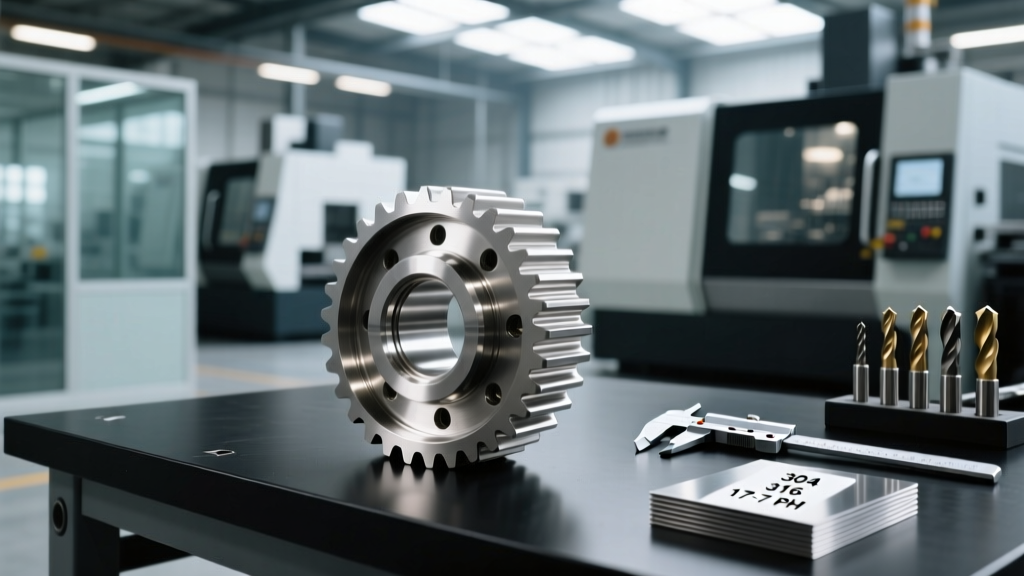
| Alloy Grade | Raw Material Cost (per lb) | Machinability Index | Required Tool Coating | Tool Life Expectancy |
|---|---|---|---|---|
| 304 / 304L | $2.50 - $3.20 | Moderate (Gummy) | TiAlN or AlCrN | 90 - 120 mins |
| 316 / 316L | $3.50 - $4.80 | Poor (Severe Work Hardening) | AlCrN + Polished Flutes | 45 - 75 mins |
| 17-4 PH (H1150) | $5.50 - $7.50 | Good (Martensitic) | TiCN or Standard TiAlN | 150+ mins |
Budgeting Rule of Thumb: Allocate 35% more to your endmill and insert budget for 316L compared to 304. The addition of molybdenum in 316L increases abrasion resistance, accelerating flank wear on carbide substrates.
Hidden Budget Killers in Stainless Operations
1. Through-Spindle Coolant (TSC) Requirements
You cannot effectively machine deep pockets or drill deep holes in stainless steel with standard flood coolant. The stringy, ductile chips generated by 300-series stainless will nest in the flutes, causing immediate tool breakage. You must budget for a Minimum 300 PSI (preferably 1000 PSI) Through-Spindle Coolant system. Furthermore, standard 5% concentration water-soluble coolants will fail; you must run a semi-synthetic or heavy-duty emulsifiable oil at an 8% to 10% concentration to provide adequate boundary lubrication and prevent chip welding.
2. Machine Rigidity and Depreciation
Stainless steel demands high torque at low RPMs (typically 1,500 to 3,500 RPM for roughing with a 1/2 inch endmill). Standard high-speed, low-torque aluminum routers will suffer premature spindle bearing failure and way-cover degradation under the sustained lateral loads of stainless milling. When reviewing Haas Automation technical support documentation and similar OEM specs, look for machines with heavy-duty cast iron frames, direct-drive or high-torque geared spindle options, and linear guideways rated for high static loads. Expect to pay a 15-20% premium for a "heavy-duty" or "universal" machining center over a standard production mill.
3. Specialized Tooling Geometries
Standard 3-flute endmills designed for aluminum will clog instantly. For stainless, you must purchase specialized variable-helix, 4-to-5 flute endmills with eccentric relief and polished rake faces. Brands like Helical Solutions (HEV-4) or Harvey Tool cost between $45 and $85 per tool. While expensive, their chip-evacuation geometry prevents the recutting of work-hardened chips, ultimately lowering the cost-per-part.
ROI Framework: In-House vs. Outsourcing
Should you bring stainless steel machining in-house or outsource it to a specialized job shop? Use this break-even framework to guide your 2026 capital expenditure decisions:
The 5,000-Hour Rule: If your shop plans to run stainless steel for more than 5,000 spindle hours annually, the capital investment in a high-torque CNC mill, 1000 PSI TSC unit, and specialized tooling crib will yield a positive ROI within 14 months compared to paying the standard 40% outsource markup on stainless parts.
Cost Breakdown for a Sample Part (316L Valve Body):
- Raw Material (2.5" x 2.5" x 4" billet): $18.50
- Tooling Consumables (Amortized per part): $6.20
- Coolant & Power Overhead: $3.10
- Machine Time (1.5 hours @ $65/hr burden rate): $97.50
- Total In-House Cost: $125.30
- Outsourced Quote Average: $185.00 - $220.00
The margin capture of $60 to $95 per part easily justifies the initial equipment and tooling investments, provided your operators possess the expertise to manage work-hardening and optimize feeds and speeds.
Frequently Asked Questions
What is the best CNC cutting fluid for 316 stainless steel?
Heavy-duty semi-synthetic fluids with high lubricity additives (such as chlorine-free EP additives) are ideal. Maintain a concentration of 8-10% using a refractometer. Low concentration leads to rust and poor tool life, while excessively high concentration causes foaming and residue buildup on machine way covers.
Can I use a standard 3-axis CNC router for stainless steel?
While technically possible for very shallow, light-duty engraving or thin sheet cutting, standard CNC routers lack the mass, damping characteristics, and low-end torque required for 3D milling or drilling in stainless. Attempting to do so will result in severe chatter, poor surface finishes, and catastrophic spindle failure.
How do I prevent chip re-welding during stainless steel milling?
Chip re-welding (Built-Up Edge or BUE) occurs when heat and pressure fuse the chip to the cutting edge. Prevent this by utilizing AlCrN coated tooling with polished flutes, maintaining a strict minimum chip load (never let the tool rub), and applying high-pressure air or through-spindle coolant to evacuate chips from the cut zone immediately.