Mastering CNC Filling Machine Controllers: Operator Training
Master CNC filling machine controllers and HMI interfaces. Learn operator training best practices for Siemens and Beckhoff servo-driven systems.
The Evolution of CNC Motion Control in Fluid Packaging
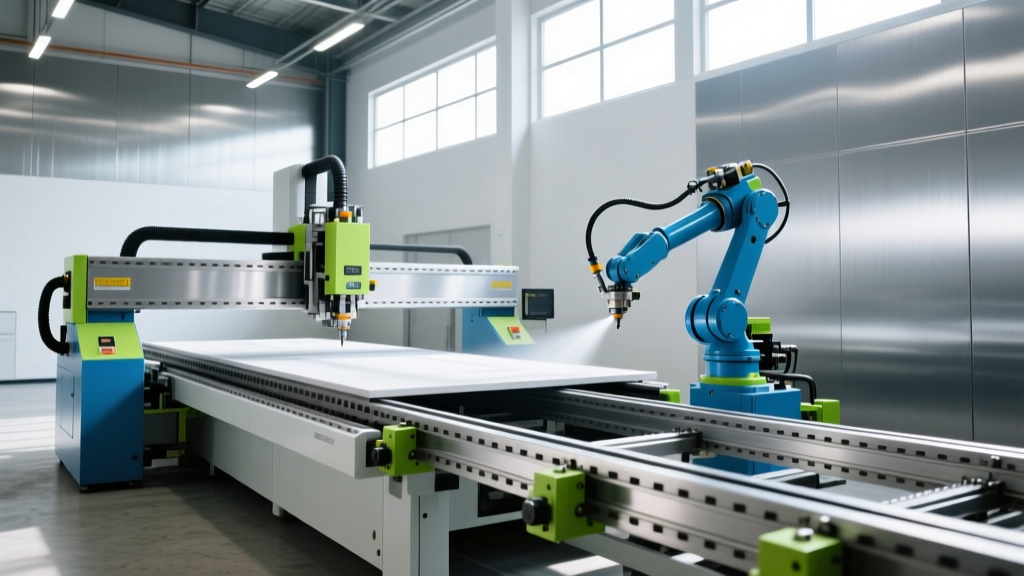
Historically, liquid and viscous packaging relied on pneumatic cylinders and basic programmable logic controllers (PLCs). Today, high-speed volumetric and piston fillers operate as sophisticated CNC filling machines, utilizing multi-axis servo motion control to achieve fill accuracies of ±0.15% at speeds exceeding 1,200 bottles per minute (BPM). For operators and packaging engineers, mastering the CNC controllers and Human-Machine Interfaces (HMIs) driving these systems is no longer optional. It is critical for minimizing product giveaway, ensuring batch consistency, and preventing catastrophic mechanical collisions on rotary filler carousels.
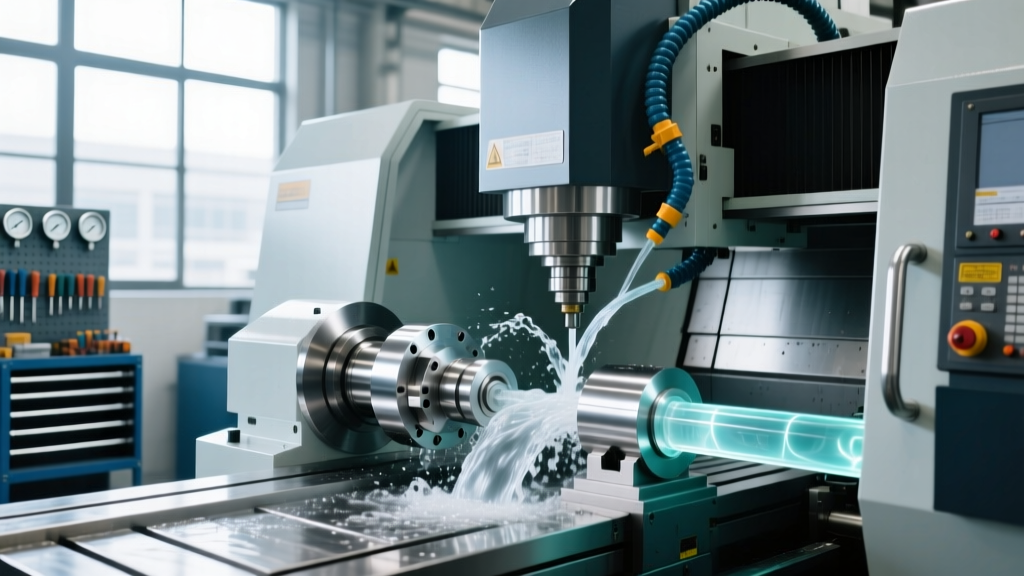
Unlike traditional metal-cutting CNC mills or lathes, a CNC filling machine requires tightly synchronized camming profiles. The master axis (the carousel) must perfectly synchronize with the slave axes (the filling nozzles and capping heads) while tracking containers on a continuously moving conveyor. This requires advanced motion controllers capable of microsecond-level bus cycle times. This guide details the dominant controller architectures, HMI interfaces, and structured operator training protocols required to run these systems safely and efficiently.
Dominant Controller Architectures in Modern Fillers
Modern servo-driven filling systems predominantly rely on three high-end motion control ecosystems. Operators must understand the underlying architecture to interpret alarms, manage axis resets, and execute homing procedures correctly.
1. Beckhoff TwinCAT 3 (PC-Based Control)
Beckhoff's PC-based control architecture is the industry standard for high-speed rotary CNC fillers. Utilizing the EtherCAT fieldbus, TwinCAT 3 achieves bus cycle times as low as 100µs. This extreme speed is necessary for 'flying shear' and 'flying fill' applications where the nozzle must dive into a moving bottle, fill the exact volumetric profile, and retract without dripping or splashing. Operators interacting with TwinCAT systems will frequently use the Beckhoff TwinCAT HMI web-based interface, which allows for complex, multi-touch recipe management.
2. Siemens SIMOTION and S7-1500T (Technology CPUs)
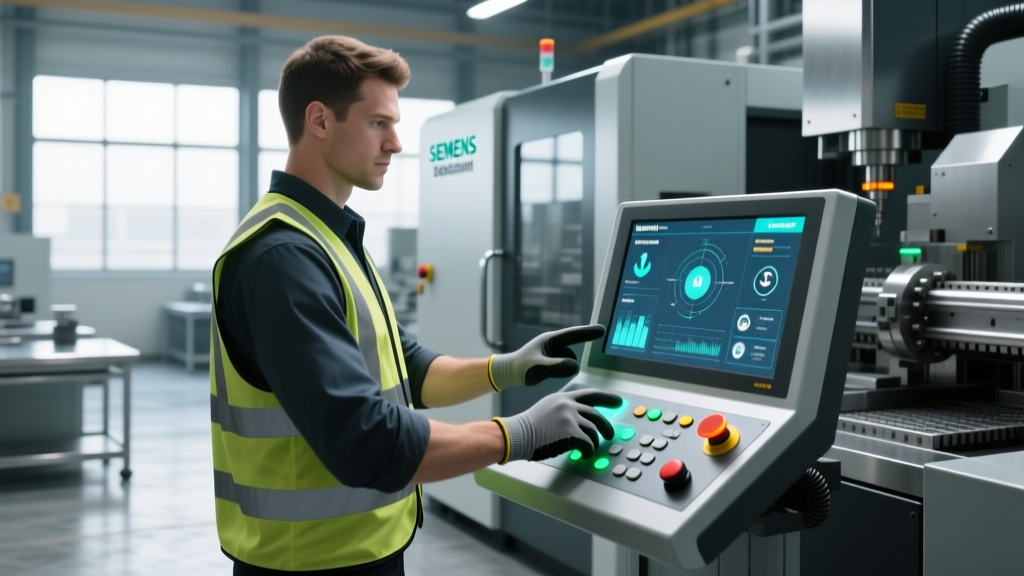
Siemens approaches CNC filling through its S7-1500T Technology CPUs and legacy SIMOTION controllers. These systems utilize PROFINET IRT (Isochronous Real-Time) to synchronize up to 128 axes. The primary advantage of the Siemens ecosystem in filling applications is integrated PROFIsafe. Safety functions like Safe Torque Off (STO) and Safe Limited Speed (SLS) are handled over the same network cable, simplifying wiring but requiring operators to understand safety acknowledgment protocols on the HMI before resetting a faulted axis.
3. Bosch Rexroth IndraMotion MLC
Common in heavy-duty, highly viscous filling applications (e.g., peanut butter, adhesives, or silicone), the IndraMotion MLC combines PLC logic and motion control in a single hardware unit. It relies on the SERCOS III real-time Ethernet protocol. Operators on these machines must be trained to monitor the drive's oscilloscope functions via the HMI to tune the PID loops for thick fluids that cause high inertial lag during the acceleration phase of the fill cycle.
Controller Comparison Matrix for Packaging Engineers
| Controller Ecosystem | Primary Fieldbus | Cycle Time | Best Filler Application | Typical HMI Hardware |
|---|---|---|---|---|
| Beckhoff TwinCAT 3 | EtherCAT | 100µs - 250µs | Ultra-high-speed rotary liquid fillers (>1000 BPM) | Beckhoff CP3xxx Multi-touch |
| Siemens S7-1500T | PROFINET IRT | 250µs - 1ms | Inline piston fillers, integrated capping safety | Siemens SIMATIC Comfort Panels |
| Rexroth IndraMotion | SERCOS III | 250µs - 500µs | High-viscosity, high-torque volumetric fillers | Rexroth IndraControl VCP |
HMI Interface Design and Operator Interaction
The Human-Machine Interface is the operator's only window into the CNC filling machine's internal state. Modern HMIs have transitioned from resistive touchscreens to 15-inch to 21-inch capacitive multi-touch glass displays, such as the Siemens SIMATIC Comfort Panels or the Beckhoff CP3915 (priced between $2,800 and $4,500 per unit).
ISA-88 Batch Control Implementation
Best-in-class CNC filling machines structure their HMI recipes according to the ISA-88 batch control standard. Operators must be trained to navigate the four levels of recipe management:
- General Recipe: Product-agnostic parameters (e.g., 'Carbonated Liquid Profile').
- Site Recipe: Adjusted for specific facility line constraints.
- Master Recipe: Specific to the product (e.g., '500ml Sparkling Water').
- Control Recipe: The final, machine-specific execution file sent to the CNC controller, including exact servo cam tables and dive-depth coordinates.
Structured Operator Training Protocol (40-Hour Framework)
Operating a CNC filling machine requires a blend of packaging line awareness and CNC motion control literacy. The Packaging Machinery Manufacturers Institute (PMMI) recommends structured, tiered training. Below is a proven 40-hour onboarding framework for new servo-filler operators.
Phase 1: Theory and Safety (10 Hours)
- Servo Fundamentals: Understand the difference between absolute and incremental encoders on the carousel master axis.
- Safety Interlocks: Map the physical E-stops, light curtains, and PROFIsafe door switches to their HMI indicators.
- Fluid Dynamics Basics: Learn how product viscosity and temperature affect the servo torque limits and fill-time parameters.
Phase 2: Dry-Run Simulation and Jogging (15 Hours)
- Axis Homing: Execute the master-slave homing sequence. Operators must verify that the 'Nozzle Dive' axis registers its absolute home position before the carousel is enabled.
- Cam Table Verification: Use the HMI's electronic camming (e-Cam) visualization tool to verify the dive-and-fill profile matches the physical bottle height.
- Jogging and Bumping: Practice inching the carousel at 5% speed to thread the star-wheels and timing screws without causing container crush.
Phase 3: Supervised Live Product Run (15 Hours)
- Recipe Loading: Load the ISA-88 Control Recipe and verify all physical change parts (guide rails, star-wheels) match the HMI prompt.
- CIP/SIP Integration: Execute the Clean-In-Place (CIP) sequence, ensuring the CNC controller moves the nozzles into the designated CIP cup positions.
- OEE Monitoring: Track Overall Equipment Effectiveness via the HMI dashboard, focusing on micro-stops caused by container accumulation.
Troubleshooting Decision Tree: Servo and Filler Faults
When a CNC filling machine faults, the HMI alarm log provides the diagnostic roadmap. Operators must be trained to interpret motion-control-specific errors rather than just treating them as generic 'machine stops'.
⚠️ Safety Warning: Never bypass the PROFIsafe or FSoE (Fail Safe over EtherCAT) door interlocks on a rotary CNC filler. Bypassing these circuits to clear a jam while the master axis is active can result in severe crushing injuries due to the high inertia of the carousel.Fault 1: 'Following Error' or 'Axis Lag' on Dive Axis
- Symptom: The HMI displays a 'Following Error Exceeded' alarm on the Z-axis (nozzle dive). The machine E-stops.
- Cause: The physical nozzle assembly is binding on its linear guide rails, or the product viscosity has increased (due to temperature drop), causing the servo motor to exceed its torque limit while trying to follow the programmed cam profile.
- Operator Action: Check the HMI torque trend graph. If torque is spiking at the bottom of the stroke, inspect the linear rails for dried product buildup. If rails are clean, verify the product temperature in the holding tank.
Fault 2: EtherCAT / PROFINET CRC Communication Error
- Symptom: Intermittent 'Network Sync Loss' alarms, usually occurring when the machine vibrates at high speeds.
- Cause: A degraded shielded Ethernet cable in the rotary joint (slip ring assembly) is dropping data packets, causing the slave drives to lose synchronization with the master controller.
- Operator Action: Do not simply reset the fault. Log the error frequency. Maintenance must inspect the rotary union's fiber-optic or shielded copper slip ring for wear. Continuing to run will result in erratic nozzle diving and shattered glass.
Fault 3: Volumetric Overfill / Nozzle Drip
- Symptom: Bottles are overfilling by 3-5ml, and product drips onto the conveyor after the nozzle retracts.
- Cause: The 'Suck-Back' or 'Anti-Drip' servo profile at the end of the fill cycle is mistimed. The pneumatic pinch valve is closing before the servo piston completes its final 2mm upward retraction.
- Operator Action: Navigate to the e-Cam editor on the HMI. Shift the valve-closure trigger point 15 degrees later in the master axis rotation to allow the servo to pull the fluid meniscus back inside the nozzle tip before sealing.
Conclusion: The Shift to Data-Driven Operation
Operating a modern CNC filling machine is an exercise in applied mechatronics. The transition from simple pneumatic logic to high-speed, multi-axis servo control demands that operators possess a deep understanding of motion profiles, fieldbus diagnostics, and HMI recipe architecture. By implementing structured 40-hour training protocols and empowering operators to interpret CNC-specific fault codes, packaging facilities can drastically reduce unplanned downtime, eliminate product giveaway, and maintain the strict volumetric tolerances required in today's market. For further technical standards on packaging machinery safety and operation, refer to the guidelines published by the Packaging Machinery Manufacturers Institute (PMMI) and the motion control documentation provided by Beckhoff Automation.