What's a CNC Machine? Fixing Enclosure & Coolant Leaks
Master CNC enclosure and coolant repairs. Diagnose pump cavitation, replace way cover seals, and optimize fluid chemistry with expert troubleshooting steps.
Beyond the Basics: The Sealed Fluid-Dynamics Environment
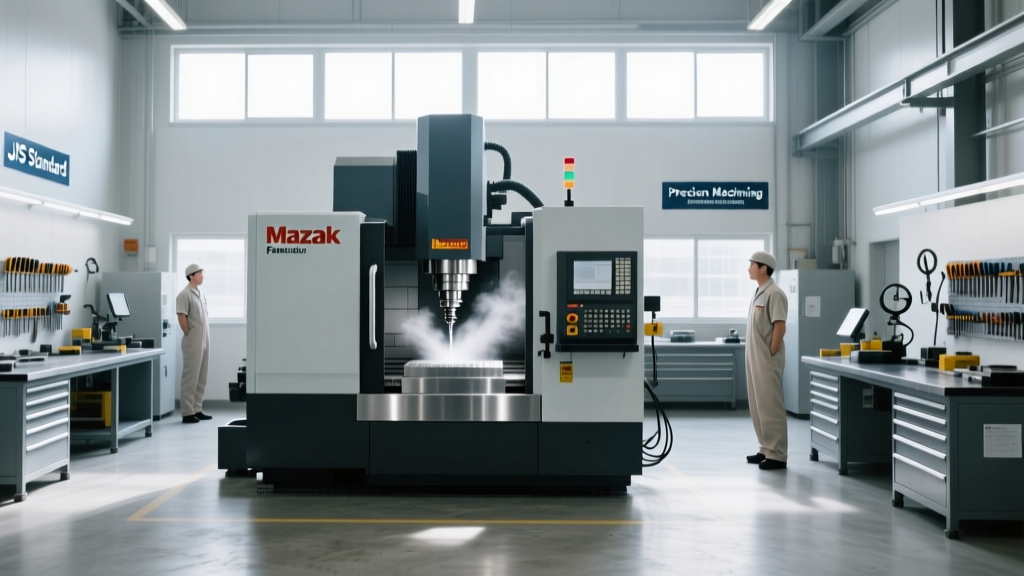
Beginners frequently ask, 'What's a CNC machine?' expecting a simple definition of computer numerical control routing or milling. However, from a maintenance engineering perspective, a modern CNC machining center is fundamentally a sealed fluid-dynamics environment. The enclosure and coolant delivery systems are not mere accessories; they are critical thermal and contamination barriers. When a Haas VF-2, DMG Mori NLX, or Mazak INTEGREX begins throwing low-pressure alarms or leaking fluid onto the shop floor, the root cause is rarely the spindle—it is the degradation of way covers, pump cavitation, or seal hardening.
This guide bypasses basic definitions and dives directly into advanced troubleshooting for CNC enclosure integrity and coolant system failures. We will cover exact diagnostic matrices, specific replacement part costs, and fluid chemistry parameters required to keep your machine running within OEM tolerances in 2026.
Coolant System Diagnostic Matrix
Before tearing down the pump or ordering new way covers, use this matrix to isolate the exact failure mode. Coolant issues rarely exist in isolation; a leak in the enclosure often masks a deeper fluid chemistry problem.
| Symptom | Probable Root Cause | Diagnostic Test | Corrective Action & Cost |
|---|---|---|---|
| Growling noise from coolant pump; erratic pressure gauge | Suction line cavitation or clogged foot valve | Check vacuum gauge on suction line; inspect tank floor for heavy fines | Clean foot valve or replace suction hose ($45-$90). Replace impeller if pitted ($250). |
| Coolant pooling under X-axis way covers | Polyurethane wiper lip hydrolysis or steel cover misalignment | Inspect wiper lip for cracking; check cover travel parallelism with dial indicator | Replace Hennig/KabelSchlepp wiper seals ($60-$140 per seal). Re-shim cover mounts. |
| Excessive foaming in the sump; poor surface finish | Tramp oil contamination destroying surfactant balance | Use a refractometer; check for >2% tramp oil layer on surface | Install coalescing oil skimmer ($1,200); adjust concentration to 7-8% Brix. |
| Enclosure fogging; operator respiratory irritation | Mist collector filter saturation or negative pressure failure | Measure static pressure drop across HEPA filter; check enclosure door seals | Replace primary mist filter media ($180-$300); replace door sweep gaskets. |
Enclosure Way Cover & Wiper Seal Restoration
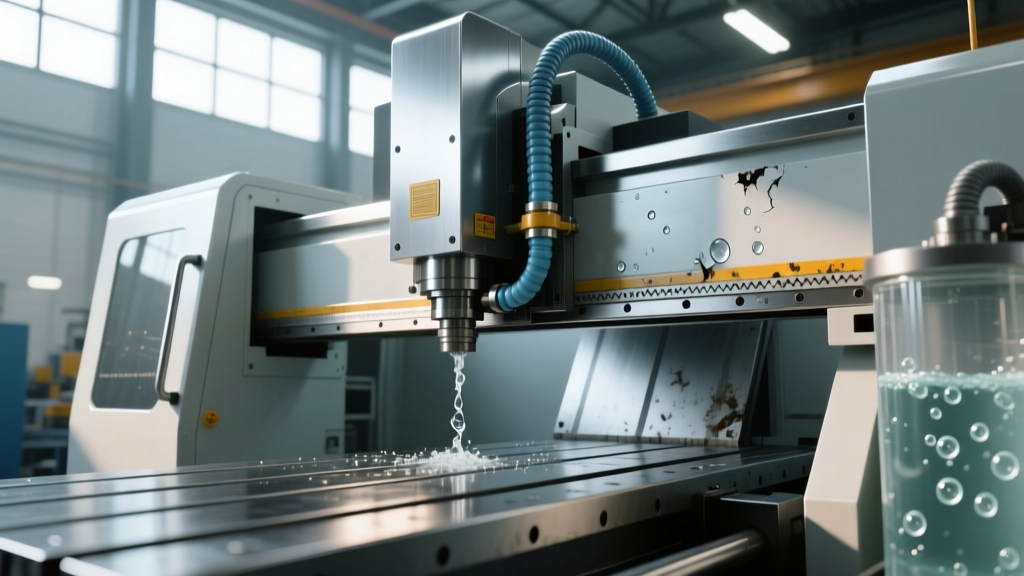
Telescopic steel way covers (commonly manufactured by Hennig or KabelSchlepp) protect the precision ball screws and linear guideways from abrasive cast iron and aluminum fines. When these fail, the machine's positioning accuracy degrades rapidly due to way contamination.
Step 1: Inspecting Telescopic Steel Covers
Do not assume a leak requires a full cover replacement. In 80% of cases, the issue is localized to the wiper seals or the brass glide shoes. Run the X or Y axis to its maximum positive travel to expose the innermost cover lamina. Look for scoring on the steel surface. If the steel is scored deeper than 0.05mm, the wiper seal will never seat properly, and that specific lamina must be replaced (Cost: $300-$600 per section depending on machine size).
Step 2: Replacing Polyurethane Wiper Seals
⚠️ Expert Warning: Never use standard shop air (which contains ambient moisture and compressor oil) to blow out way covers. The oil will degrade the polyurethane wiper lips via hydrolysis, causing them to crack within weeks. Always use a dedicated, filtered nitrogen blow-off or a dry vacuum.- Remove the Retainer Strip: Use a 4mm hex key to remove the M5 socket head cap screws securing the wiper retainer. Note the exact orientation of the seal lip.
- Measure Compression: The new wiper seal must compress against the steel lamina by exactly 1.5mm to 2.0mm. If the compression is less than 1mm, fines will bypass the seal. If it exceeds 2.5mm, the friction will cause the cover to bind and tear the seal during rapid traverses.
- Lubricate the Lip: Apply a thin film of the machine's specific way oil (e.g., Mobil Vactra Oil No. 2) to the new polyurethane lip before the first cycle. Dry running a new seal will burn the lip in under 50 cycles.
Fluid Chemistry and Pump Cavitation
The coolant pump—often a Grundfos MTH or MTR series multistage centrifugal pump—is the heart of the enclosure's fluid dynamics. Cavitation is the silent killer of these pumps, caused by a pressure drop in the suction line that allows the coolant to vaporize and collapse against the impeller.
Diagnosing Cavitation vs. Mechanical Wear
If your pump sounds like it is pumping gravel, you have cavitation. This is rarely a pump motor issue; it is a fluid restriction issue. Check the suction hose for internal delamination. Coolant hoses degrade from the inside out due to the alkaline nature of semi-synthetic fluids. A hose that looks perfect externally may have collapsed internally, restricting flow. Replace suction lines every 36 months as preventative maintenance.
Refractometer Calibration and Brix Multipliers
Maintaining the correct coolant concentration is vital for both tool life and enclosure seal preservation. Highly concentrated coolant (above 10%) will cause polyurethane seals to swell and degrade, while low concentration (below 5%) leads to bacterial growth and corrosion.
- Master Chemical TRIM MicroSol 585XT: Target 6.0% - 8.0%. Refractometer multiplier is 1.2. (If Brix reads 5.5, actual concentration is 6.6%).
- Castrol Alusol SL 51 XBB: Target 5.0% - 7.0%. Refractometer multiplier is 1.0.
- Test Frequency: Manual optical refractometers must be used every 48 hours. Automated IoT inline sensors (e.g., from Sensia or similar 2026 shop-floor integrations) require monthly calibration against a manual baseline to account for sensor fouling from tramp oil.
Mist Collection and OSHA Compliance
A perfectly sealed enclosure is useless if the mist extraction system fails. High-pressure coolant systems (70 bar / 1,000 PSI and above) atomize fluid into sub-micron particles that easily escape through microscopic enclosure gaps if negative pressure is not maintained.
📊 Regulatory Data Point: According to the OSHA Metalworking Fluids Standards, the permissible exposure limit (PEL) for mineral oil mist is 5 mg/m³ over an 8-hour time-weighted average. However, the NIOSH Metalworking Fluids Guidelines recommend a much stricter REL (Recommended Exposure Limit) of 0.4 mg/m³ to prevent occupational asthma and hypersensitivity pneumonitis.Optimizing Enclosure Negative Pressure
To meet the stricter NIOSH guidelines and keep your shop floor safe, your mist collector must maintain a minimum negative pressure of 0.15 inches of water gauge (in. w.g.) inside the CNC enclosure.
- Verify Fan RPM: Use a laser tachometer to ensure the mist collector blower is spinning at the rated RPM. A slipping belt can drop airflow by 30% without tripping the VFD fault alarm.
- Filter Media Selection: For water-soluble and semi-synthetic coolants, use a multi-stage system: a wire mesh demister pad (to catch large droplets), followed by a HEPA cartridge. Do not use electrostatic precipitators for water-based coolants; the moisture causes arcing and rapid failure of the collector cells.
- Ducting Geometry: Ensure the duct connecting the collector to the CNC enclosure has no horizontal runs longer than 3 feet without a cleanout port. Horizontal runs accumulate condensed coolant, restricting airflow and eventually causing the duct to collapse under vacuum.
Summary Checklist for Maintenance Teams
Troubleshooting CNC enclosures and coolant systems requires moving past the basic understanding of what the machine does, and focusing on how it manages its internal environment. Keep this checklist on the shop floor:
- Weekly: Check sump concentration with a calibrated refractometer; skim tramp oil.
- Monthly: Inspect way cover wiper lips for hydrolysis; measure mist collector static pressure drop.
- Annually: Replace coolant pump suction hoses; verify telescopic cover parallelism with a dial indicator; replace mist collector HEPA cartridges regardless of pressure drop readings to prevent media degradation.
By treating the enclosure and coolant system as a precision fluid-dynamics assembly rather than a simple splash guard, you eliminate 90% of the secondary failures that destroy ball screws, linear guides, and spindle bearings.