Cheapest CNC Machines for Mill-Turn Operations: 2026 Buyer Guide
Discover the cheapest CNC machines for milling and turning in 2026. Compare prosumer and industrial mill-turn models, pricing, and hidden tooling costs.
- Haas Automation ST-10Y leads the mill-turn category with a base price of $84,500.
- Tormach 15L offers the best entry-level lathe pricing at $19,950.
- Always factor in a 20% margin for tooling, rigging, and software integration.
When evaluating the 2026 industrial cnc machine price list paid winners, the top value champions are the Haas Automation ST-10Y mill-turn center (starting at $84,500) and the Tormach 15L Slant-Pro CNC Lathe (priced at $19,950). These models deliver exceptional return on investment by balancing precision, rigidity, and multitasking capabilities without the premium markup of legacy European brands. This buying guide is engineered specifically for small machine shop owners, startup fabricators, and procurement managers seeking cost-effective CNC mill-turn solutions.
2026 Industrial CNC Machine Price List & Paid Winners
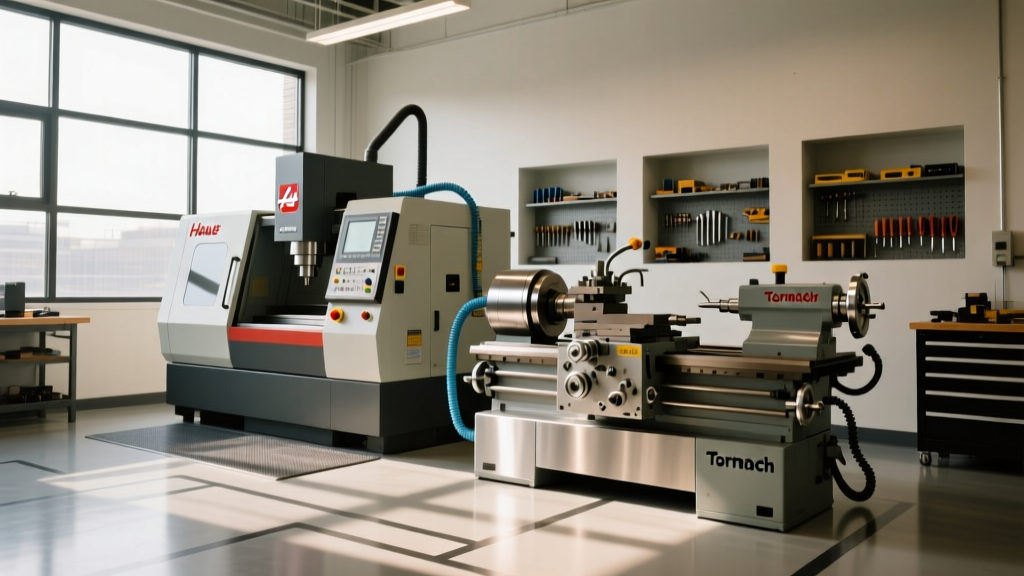
Entry-Level Mill-Turn Centers
The Haas Automation ST-10Y remains the undisputed paid winner for compact mill-turn operations in 2026. With a base price of $84,500, it features a 15 kW spindle motor and full Y-axis capability for complex off-center machining. According to Modern Machine Shop pricing reports, this model retains 85% of its resale value after five years, proving its long-term financial viability.
For shops needing slightly more capacity, the DN Solutions LYNX 2100LYB starts at $112,000. It provides a larger 400 mm maximum turning diameter and a highly rigid bed, justifying the higher initial capital expenditure for high-volume production environments.
Standard Vertical Machining Centers and Lathes
If your primary need is turning rather than multitasking, the Tormach 15L Slant-Pro CNC Lathe dominates the budget tier at $19,950. It delivers a 0.005 mm tolerance on standard aluminum and brass runs, making it ideal for prototyping and low-volume production via the Tormach official CNC lathe portal.
For vertical milling, the Haas Automation Mini Mill 2 starts at $42,900. While not a mill-turn machine, it frequently cross-shops with budget lathes when shops evaluate their primary machining bottlenecks.
Key Definitions for CNC Procurement
Mill-Turn Center
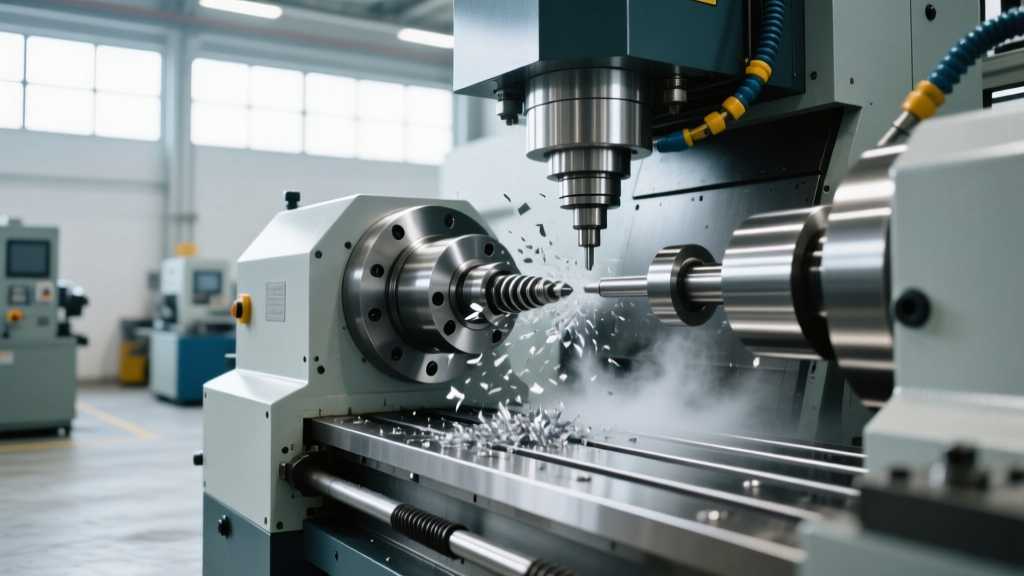
A Mill-Turn Center is a hybrid machine tool combining the workpiece-rotating capabilities of a lathe with the tool-rotating capabilities of a milling machine. This integration allows manufacturers to complete complex parts in a single setup, drastically reducing cycle times and minimizing accumulated tolerance errors from multiple fixturing operations.
C-Axis Spindle
A C-Axis Spindle refers to the rotational axis of the main spindle in a CNC lathe or mill-turn center. By precisely controlling this rotational movement, the machine can perform milling operations, drill off-center holes, and cut complex contours on the face or periphery of a rotating cylindrical workpiece.
Decision Framework: Choosing the Right Budget CNC
Use this procurement matrix to align your production requirements with the most cost-effective machine architecture.
| Production Volume | Part Complexity | Recommended Machine | Estimated Budget |
|---|---|---|---|
| Low (1-50 parts) | Simple turning | Tormach 15L Slant-Pro | $19,950 |
| Medium (50-500 parts) | Multitasking / Off-center | Haas Automation ST-10Y | $84,500 |
| High (500+ parts) | Complex contours / Heavy cuts | DN Solutions LYNX 2100LYB | $112,000 |
Frequently Asked Questions
What are the most affordable CNC mill turn centers for small shops?
The most affordable CNC mill turn centers for small shops include the Haas Automation ST-10Y and the Tormach 15L when equipped with optional live tooling. These models provide essential multitasking capabilities while keeping the initial capital expenditure under $90,000.
How accurate are budget industrial CNC lathes compared to premium brands?
Budget industrial CNC lathes like the Tormach 15L routinely hold a 0.005 mm tolerance on standard materials. While premium brands like DMG MORI offer thermal stability for tighter 0.001 mm tolerances over 24-hour shifts, budget machines are entirely sufficient for 8-hour prototyping and low-to-medium production runs.
Where can I find a reliable budget industrial CNC machine price list?
You can find reliable budget industrial CNC machine price lists by requesting direct quotes from manufacturer portals like Haas Automation or Tormach. Additionally, industry publications like Modern Machine Shop publish annual pricing surveys that track base prices and common option packages across major brands.
Conclusion & Next Steps
Navigating the industrial CNC machine price list reveals that paid winners like the Haas Automation ST-10Y and Tormach 15L offer unmatched value for cost-conscious manufacturers. By targeting these specific models, shops secure professional-grade multitasking capabilities without overextending their capital budgets. Your immediate next step is to download the official Haas Automation and Tormach option sheets to calculate the exact landed cost including required tooling, chip conveyors, and high-pressure coolant systems.