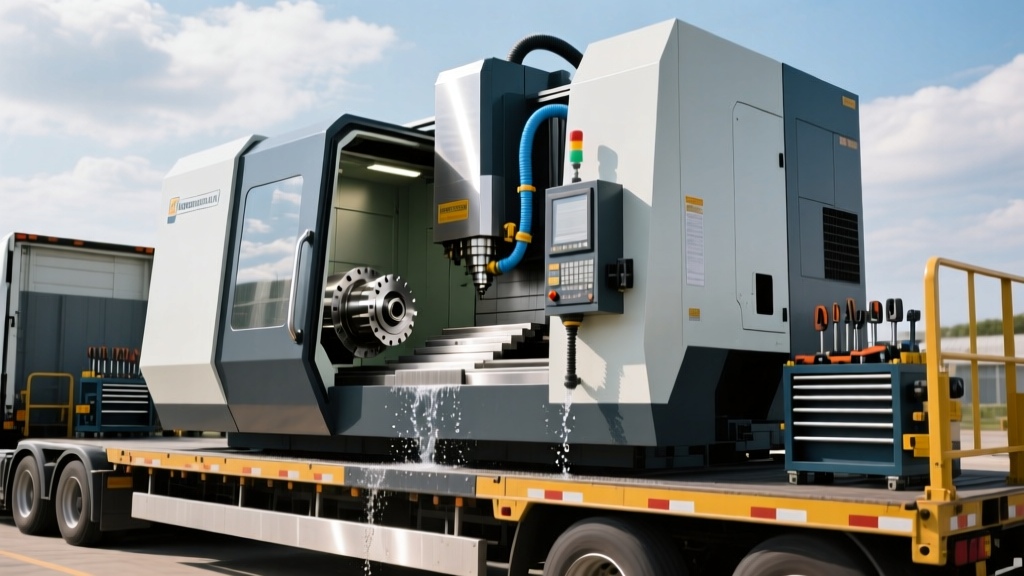
Auditing ATC Safety Compliance Using CNC Machine Images
Learn how to audit ATC safety compliance and spot critical guard failures by analyzing cnc machine images before purchasing used milling equipment.
The Kinetic Hazard of Automatic Tool Changers
Automatic Tool Changers (ATCs) are among the most hazardous sub-systems on modern vertical and horizontal machining centers. During a standard tool swap, an ATC arm accelerates a tool assembly—often weighing between 5kg and 15kg—to velocities exceeding 2 meters per second, completing the exchange in 1.5 to 3.5 seconds. If a retention knob fails or the carousel guarding is compromised, the resulting kinetic energy can eject a tool holder with enough force to penetrate standard sheet metal enclosures.
When sourcing used equipment or conducting remote safety audits, physical inspection is not always immediately possible. Consequently, safety managers and procurement engineers must rely on high-resolution cnc machine images provided by sellers or internal audit teams to identify critical compliance failures before the machine ever touches the shop floor. Analyzing these visual records requires a trained eye for specific regulatory standards, material degradation, and mechanical bypasses.
Visual Audit Framework: Extracting Safety Data from Imagery
Evaluating cnc machine images for safety compliance goes far beyond checking for cosmetic damage or spindle hours. A rigorous visual audit focuses on the intersection of the tool magazine, the ATC arm, and the primary machining enclosure. Under the UK's Provision and Use of Work Equipment Regulations (PUWER) and OSHA's general machine guarding requirements (1910.212), employers must ensure that point-of-operation guarding prevents the operator from being exposed to moving parts and flying chips.
⚠️ CRITICAL RED FLAG: If cnc machine images show the ATC carousel door propped open, zip-tied, or lacking a visible magnetic safety interlock switch (such as a Schmersal or Euchner coded sensor), assume the machine's safety logic has been deliberately bypassed. Remedying bypassed safety PLC logic can cost upwards of $4,500 in specialized integrator labor.Guard Material Degradation and ISO 16089 Compliance
One of the most common and dangerous compliance failures visible in cnc machine images is the degradation of viewport materials. ISO 16089 (Machine tools - Safety - Stationary grinding machines) and related milling standards dictate strict impact-resistance requirements for enclosure windows.
- Polycarbonate (Lexan): Standard on older machines. It is highly susceptible to chemical crazing and yellowing when exposed to synthetic and semi-synthetic water-soluble coolants. In photos, look for a distinct amber tint, micro-fractures, or a cloudy appearance. Polycarbonate that has yellowed has lost up to 60% of its impact resistance and is a severe projectile hazard.
- PETG and Laminated Safety Glass: Modern 2026 compliance requires coolants-resistant materials. Laminated glass (often with a polycarbonate inner layer) remains optically clear and structurally sound despite years of coolant exposure. If the viewport in the images shows deep scratching but remains perfectly clear without yellowing, it is likely a compliant laminated or PET-based guard.
Pull Stud and Retention Knob Visual Identification
The retention knob (pull stud) is the sole mechanical link holding the tool holder inside the spindle taper during high-speed machining. Mixing up pull stud standards is a leading cause of catastrophic tool ejection. While it is difficult to see the exact retention knob profile inside the spindle, cnc machine images of the tool carousel or the spare tooling included with the machine can reveal if the previous owner was mixing incompatible standards.
| Standard | Flange / V-Flange | Pull Stud Neck Angle | Visual Identifier in Images |
|---|---|---|---|
| MAS 403 BT | BT30, BT40, BT50 | 45° | Symmetrical flange, no drive dogs. Pull stud has a distinct 45-degree gripping angle. |
| DIN 69871 | ISO 40, ISO 50 | 90° (Straight neck) | Flange features two drive dogs (slots) for spindle orientation. Pull stud neck is nearly straight. |
| CAT (V-Flange) | CAT40, CAT50 | 60° | Asymmetrical flange design. Pull stud features a 60-degree angle and often a coolant-through bore. |
The Ejection Risk: If a machine designed for a 45° BT40 pull stud is loaded with a 90° DIN pull stud, the spindle's retention fingers will only grip the very edge of the knob. At 10,000 RPM, the centrifugal force will overcome the weakened grip, ejecting the tool holder downward into the workpiece or operator zone. Always demand close-up cnc machine images of the tooling magazine to verify uniformity in the pull stud profiles.
Carousel Guarding and Pneumatic Shielding
The ATC carousel itself is a massive rotating hazard. Under ANSI B11.8 (Safety Requirements for Machining Centers), the tool storage magazine must be enclosed to prevent operators from reaching into the moving chain-type or disc-type magazine during operation.
What to Look for in the Images:
- Sheet Metal Integrity: Look for dents or missing panels on the side of the machine where the magazine is housed. Missing panels often indicate that the previous owner removed them for maintenance and never reinstalled the safety interlocks.
- Pneumatic Door Actuators: High-speed VMCs use pneumatically actuated doors that open only for the 2-second tool change duration. In static cnc machine images, check the door tracks for heavy grease buildup or metal shavings, which indicate the door is sticking and operators may have disabled the pneumatic cylinder to leave it permanently open.
- Chip Accumulation: Excessive chip buildup around the ATC arm pivot point in the images suggests poor sealing. If chips infiltrate the ATC cam box, the arm timing drifts, leading to tool drops and severe spindle taper damage.
The Financial Impact of Non-Compliance
Purchasing a machine with hidden ATC safety and mechanical flaws based on poorly vetted images can destroy a capital equipment budget. Below is a breakdown of typical remediation costs if a visual audit is skipped and the machine fails commissioning.
💰 Cost Breakdown: ATC Failure Remediation (2026 Estimates)- Spindle Taper Re-grind/Replacement (Due to tool drop): $8,500 - $14,000
- ATC Arm Cam Box Rebuild (Due to chip ingress/timing loss): $3,200 - $5,500
- Viewport Replacement (Upgrading to Laminated Safety Glass): $1,800 - $3,500 per window
- Safety PLC Integration (Fixing bypassed interlocks): $2,500 - $6,000
- Total Potential Hidden Liability: $16,000 - $29,000
Actionable Protocol: Requesting the Right Visual Evidence
To conduct a proper remote safety audit, standard wide-angle listing photos are insufficient. Procurement teams must issue a formal request to the equipment broker or seller for specific, high-resolution cnc machine images and video evidence.
Mandatory Image Request Checklist for Sellers:
- Macro-lit, close-up photos of 5 random tool holders in the magazine, clearly showing the retention knob neck and flange profile.
- High-resolution images of the main operator viewport, taken with a flashlight shining through the glass to reveal micro-crazing or coolant etching.
- Photos of the ATC carousel door tracks, pneumatic cylinders, and the physical safety interlock switch (showing the brand and wiring condition).
- Images of the machine's diagnostic screen displaying the ATC input/output (I/O) ladder logic status, proving the door switches are actively registering open/closed states without manual override.
Final Verification
Visual auditing is a powerful first-line defense, but it must be paired with on-site mechanical verification before final payment. Use the insights gathered from analyzing cnc machine images to build a targeted punch list for your on-site technician. By focusing on guard material integrity, pull stud uniformity, and interlock authenticity, manufacturing facilities can ensure their CNC equipment meets stringent 2026 safety compliance standards while avoiding catastrophic kinetic failures on the shop floor.