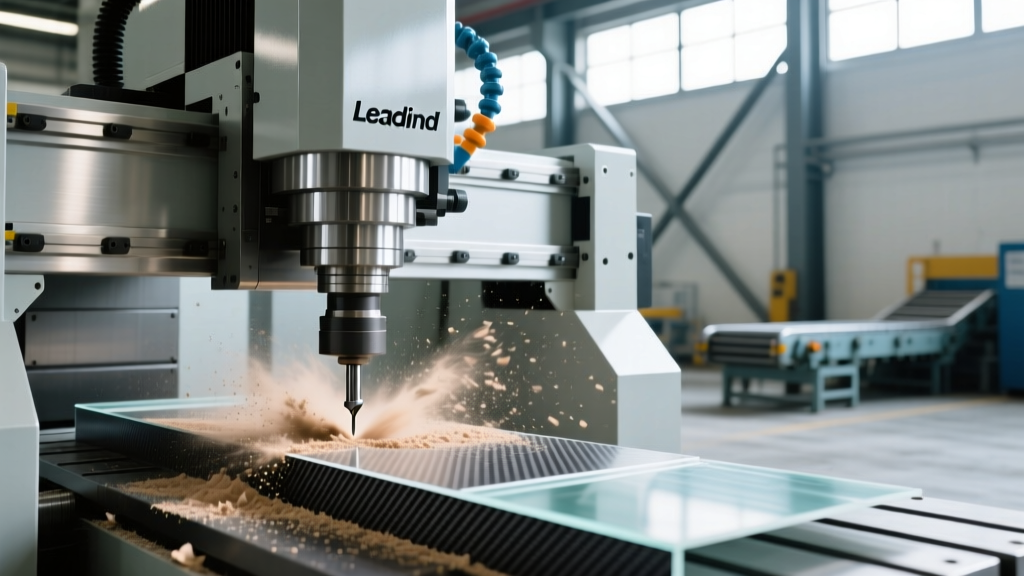
CNC Machine Feed and Speed Calculator vs Hardware Vibration Damping
Compare software tuning via a CNC machine feed and speed calculator against hardware vibration damping to eliminate chatter and reduce shop noise.
The Acoustic Signature of Regenerative Chatter
Excessive noise in a CNC machining environment is rarely just an annoyance; it is the acoustic byproduct of destructive mechanical energy. When a milling operation exceeds 95 dB, the primary culprit is usually regenerative chatter—a self-excited vibration caused by the phase shift between the current tool pass and the waviness left by the previous pass. Left unchecked, this vibration accelerates tool wear by up to 400%, destroys surface finishes, and risks catastrophic spindle bearing failure.
Manufacturing engineers generally divide noise reduction and vibration damping into two distinct paradigms: algorithmic avoidance and mechanical mitigation. Algorithmic avoidance relies on precision software—specifically, leveraging an advanced cnc machine feed and speed calculator to map stability lobes and find chatter-free RPM zones. Mechanical mitigation involves altering the physical mass and stiffness of the machine-tool-workpiece system using hardware damping alternatives. Choosing the right approach requires a deep understanding of your specific L/D (Length-to-Diameter) ratios, machine rigidity, and budget.
Algorithmic Avoidance: The Software Alternative
A standard lookup chart is insufficient for modern noise reduction. High-end machining requires a dynamic cnc machine feed and speed calculator capable of generating Stability Lobe Diagrams (SLDs). An SLD maps spindle speed (RPM) against the axial depth of cut, revealing 'stable pockets' where the natural frequency of the toolholder harmonizes with the cutting forces, effectively canceling out regenerative chatter.
Comparing Top Calculator Platforms
- FSWizard Pro: Excellent for job shops running diverse materials. Its proprietary deflection algorithm accounts for tool stickout, alerting operators when the L/D ratio exceeds 4:1—a threshold where software tuning alone often fails to prevent low-frequency vibration.
- Sandvik CoroPlus Machining Insights: Integrates directly with Coromant's tool library. It excels in high-volume production by calculating exact chip thinning and radial immersion, allowing operators to adjust feed rates to maintain constant cutting forces, which drastically reduces forced vibration noise.
- MachiningCloud: Focuses on toolpath optimization and digital twin integration. By simulating the exact engagement angle, it helps programmers maintain a constant Material Removal Rate (MRR), preventing the sudden load spikes that trigger acoustic resonance in thin-walled parts.
Mechanical Mitigation: Hardware Damping Alternatives
When tool overhang is unavoidable (e.g., deep cavity milling with L/D ratios > 5:1) or when the machine base itself lacks mass, hardware damping becomes mandatory. The goal is to increase the system's dynamic stiffness and dissipate vibrational energy as heat.
Passive Damping Solutions
- Sorbothane Isolation Pads: Placed under the machine feet or between the vise and the table, 50-durometer Sorbothane pads absorb up to 94.7% of vibrational energy. They are highly effective at isolating high-frequency floor vibrations from transferring into the workpiece.
- Epoxy Granite Fill: For custom machine builds or retrofits, filling welded steel frames with epoxy granite increases the specific damping capacity by a factor of 10 compared to standard cast iron. This massive reduction in structural resonance lowers ambient shop noise by 4 to 6 dB.
- Tuned Mass Dampers (TMDs): Devices like the Sandvik Silent Tools series utilize an internal heavy-metal mass suspended in a viscous fluid. When the tool shank vibrates, the internal mass moves out of phase, absorbing the kinetic energy. These are essential for boring bars extending beyond 7x diameter.
Active Damping Systems
For 5-axis aerospace machining, passive solutions are often too slow to react to changing dynamic conditions. Active damping systems utilize piezoelectric actuators and accelerometers mounted directly to the spindle housing. Systems like Okuma's Machining Navi or external retrofits sample vibration data at 10,000 Hz and inject counter-vibrations in real-time. While highly effective at eliminating chatter across complex 3D contouring, these systems represent a massive capital expenditure.
Head-to-Head Comparison Matrix
The following matrix contrasts the operational realities of software optimization versus hardware damping alternatives based on current 2026 market data.
| Feature | CNC Machine Feed & Speed Calculator | Passive Hardware (Pads / TMDs) | Active Damping Systems |
|---|---|---|---|
| Target Vibration | Regenerative Chatter (High Freq) | Forced Vibration & Resonance | Dynamic / Shifting Chatter |
| Avg. Cost (2026) | $50 - $300 / year (Subscription) | $150 - $1,200 per tool/setup | $15,000 - $35,000 per axis |
| Setup Time | 2 - 5 minutes (Programming) | 10 - 30 minutes (Physical Install) | Days (Integration & Calibration) |
| L/D Ratio Limit | Effective up to 4:1 | Effective up to 10:1 (with TMDs) | Effective beyond 12:1 |
| Noise Reduction | Eliminates high-pitch squeal | Reduces structural hum/rattle | Flattens entire acoustic profile |
Diagnostic Decision Framework: Which Alternative to Choose?
Do not blindly invest in hardware if a software adjustment will suffice, and do not rely on software when the physical setup is fundamentally flawed. Use this step-by-step diagnostic flow on the shop floor:
- Step 1: Analyze the Acoustic Profile. Record the sound. A high-pitched, glass-breaking squeal indicates regenerative chatter. A low, rhythmic thumping indicates forced vibration or runout.
- Step 2: Check the L/D Ratio. If your tool stickout is less than 4x its diameter, open your favorite technical resource library and utilize a premium cnc machine feed and speed calculator to find the stable RPM lobe. Increase RPM to the next stable pocket and reduce the axial depth of cut by 20%.
- Step 3: Evaluate Toolholder Balance. If the noise is low-frequency and you are running above 10,000 RPM, your toolholder is likely unbalanced. Switch to a hydraulic or shrink-fit toolholder (which offer superior concentricity and damping compared to collet chucks) before adding external damping pads.
- Step 4: Deploy Passive Hardware. If the L/D ratio exceeds 5:1 and you are machining deep cavities, software calculators will not save you. Invest in anti-vibration boring bars or tuned mass dampers. Consult the milling knowledge base of your tooling provider for specific TMD tuning instructions.
- Step 5: Consider Active Damping. If you are machining thin-walled aerospace structures (e.g., titanium bulkheads) where the part's natural frequency shifts dynamically as material is removed, passive and software solutions will fail. This is the only scenario where the ROI of a $25,000 active piezoelectric damping system is justified.
"The most common mistake we see in modern job shops is attempting to solve a rigidity problem with a software calculator. A feed and speed calculator can optimize the cutting edge engagement, but it cannot change the fact that a 6-inch stickout on a 1/2-inch end mill acts like a tuning fork. You must match the solution to the physical constraint."
— Senior Applications Engineer, Aerospace Tooling Division
The Role of Machine Base Mass
Finally, vibration damping is intrinsically tied to the machine tool's foundation. According to industry machining techniques literature, a machine's dynamic stiffness is heavily reliant on its footprint and mass. If your CNC mill is mounted on a flexible mezzanine floor, no amount of software tuning or toolholder upgrades will eliminate low-frequency structural resonance. In these environments, pouring a dedicated 12-inch thick reinforced concrete pad isolated from the surrounding floor with high-durometer neoprene is the ultimate, albeit permanent, hardware alternative for noise reduction.
Summary: Optimizing Your Vibration Strategy
Eliminating CNC noise and vibration requires a layered approach. Begin with the lowest-hanging fruit: utilize a sophisticated cnc machine feed and speed calculator to map stability lobes and optimize chip loads. When tool geometry or part dynamics push beyond the limits of algorithmic control, transition systematically through passive hardware alternatives like Sorbothane isolation and tuned mass dampers. Reserve active, sensor-driven damping systems for high-value, dynamic aerospace applications where the cost of scrapped titanium parts far outweighs the capital investment in piezoelectric hardware.