Maintaining Different Types of CNC Machines for Aluminum Alloys
Optimize service schedules for different types of CNC machines machining aluminum. Expert guide on VMC, HMC, coolant pH, and chip management.
Machining aluminum alloys like 6061-T6 and 7075-T6 presents a unique paradox: the material is soft and highly machinable, yet the sheer volume of stringy, abrasive chips and the chemical reactivity of the material wreak havoc on machine tool components. When managing a modern shop floor, understanding how to maintain different types of CNC machines for aluminum operations is critical because a generic, one-size-fits-all preventative maintenance (PM) schedule will inevitably lead to premature ball screw failure, rotary axis seizure, and coolant rancidity.
In 2026, with aerospace and EV structural components demanding aggressive material removal rates (MRR) on 20,000+ RPM spindles, maintenance protocols must be specifically calibrated to the machine architecture and the physical byproducts of aluminum milling.
The Aluminum Factor: Chip Volume and Chemical Reactivity
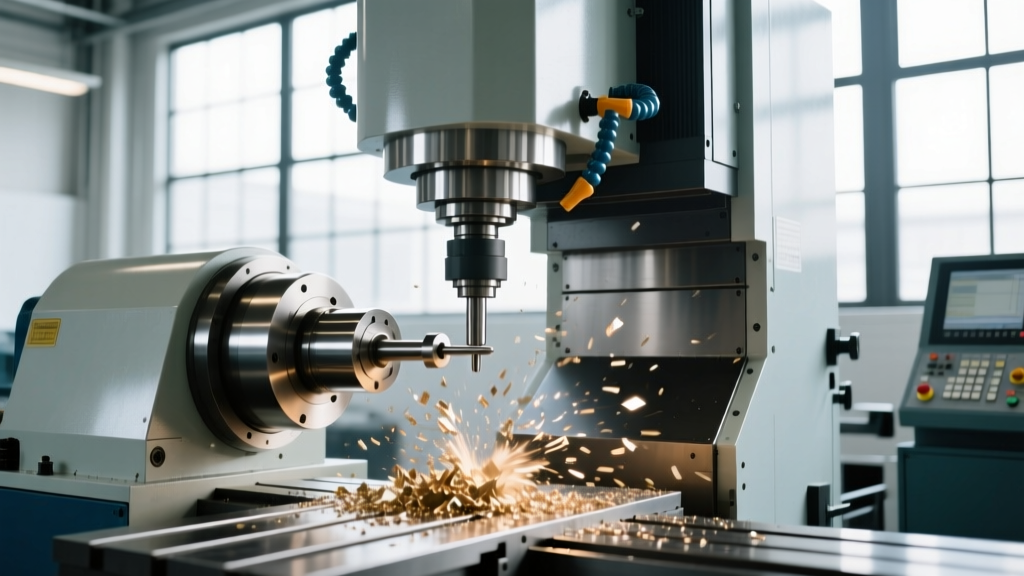
Before defining service intervals, it is necessary to quantify why aluminum demands specialized maintenance. According to Sandvik Coromant's machining guidelines, aluminum allows for cutting speeds 3 to 5 times higher than steel. This translates directly to a massive increase in chip volume per hour.
CRITICAL DATA POINT: A VMC roughing a 6061-T6 aerospace structural pocket at 15,000 RPM and 300 IPM can generate over 40 lbs of chips per hour. If the machine's chip evacuation system is rated for steel (which produces heavier, brittle chips that shatter), the stringy aluminum chips will wrap around conveyor hinges and clog coolant filters within 48 hours.Furthermore, aluminum is amphoteric. It reacts chemically to both high and low pH levels in your coolant sump, meaning fluid maintenance is just as mechanically vital as greasing the linear guideways.
PM Matrix: Service Schedules by Machine Architecture
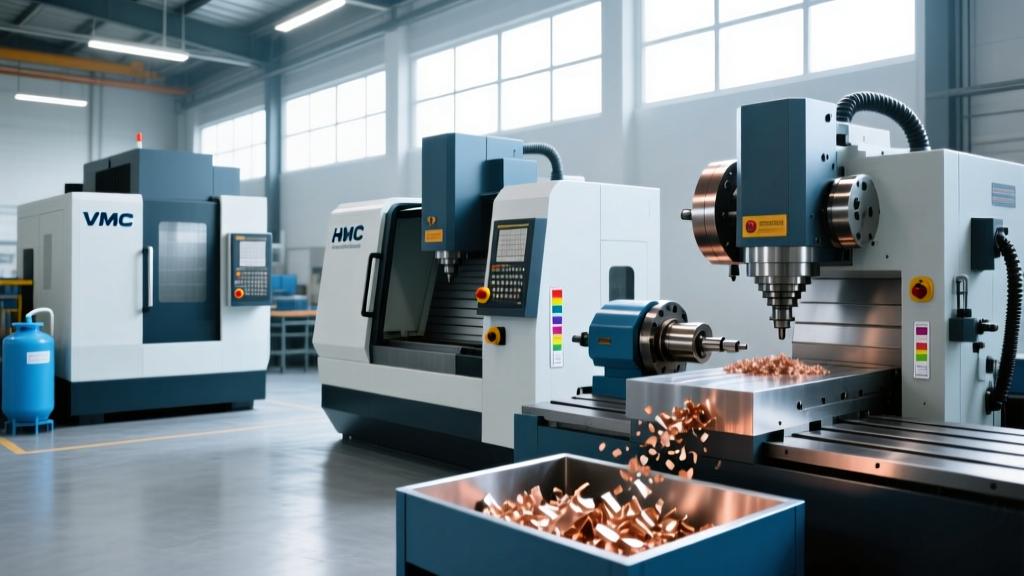
The maintenance requirements shift drastically depending on the machine type. Below is a targeted PM matrix for the most common architectures used in high-volume aluminum machining.
| Machine Type | Critical Component | Interval | Aluminum-Specific Action |
|---|---|---|---|
| VMC (Vertical Machining Center) | Telescoping Way Covers & Wipers | 250 Hours | Inspect nitrile wipers for embedded aluminum fines. Aluminum dust acts as lapping compound; replace wipers immediately if scored to protect ball screws. |
| HMC (Horizontal Machining Center) | Hinge Belt Chip Conveyor | 500 Hours | Clear stringy 6061 wrap from drive sprockets. Check belt tension. (Consider upgrading to a scraper-type conveyor for dedicated aluminum cells). |
| 5-Axis Trunnion | Rotary Axis Labyrinth Seals | 1,000 Hours | Purge air-blast seal lines. Fine aluminum powder infiltrates standard grease seals, mixing with lubricant to form an abrasive paste that destroys trunnion bearings. |
| Swiss-Type Lathe | Guide Bushing & Collets | Weekly | Flush guide bushing with dedicated solvent. Aluminum buildup inside the bushing causes bar stock drag, resulting in spindle stall and part taper. |
Deep Dive: VMC Way Cover and Spindle Chiller Maintenance
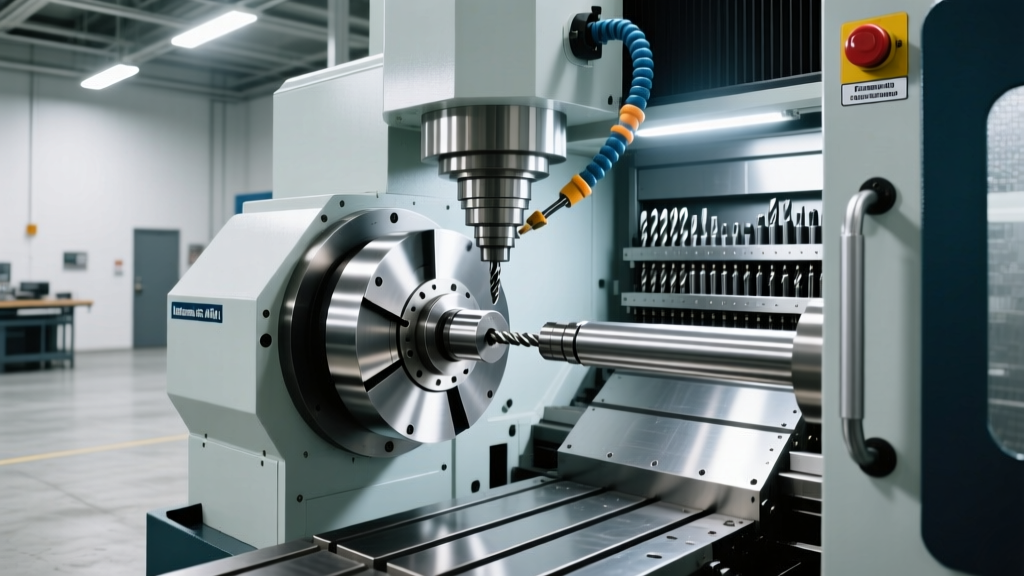
For shops running dedicated aluminum cells on VMCs (such as the Haas VF-2SSDT or DMG Mori DMC 80 H VMC), the telescoping way covers are the first line of defense. Standard polyurethane wipers degrade quickly against the sharp edges of extruded aluminum chips. Upgrade to nitrile rubber or specialized composite wipers, which resist cutting and prevent fine aluminum dust from migrating behind the cover and into the ball screw raceways.
Spindle Chiller Glycol Management
High-speed aluminum milling requires spindles running at 15,000 to 24,000 RPM. These spindles rely on external chillers to maintain thermal stability. In humid environments, if the chiller's glycol-to-water ratio drops below 40%, condensation forms inside the spindle housing. This moisture mixes with the spindle's oil-air mist, emulsifying the grease and leading to catastrophic bearing failure. Test the glycol concentration with a refractometer every 6 months and flush the chiller loop annually with a biocide to prevent algae buildup in the heat exchanger.
Horizontal Machining Centers: Tombstone Hydraulics and Chip Flow
HMCs are the workhorses of high-volume aluminum automotive and aerospace production. However, the horizontal orientation means chips fall directly onto the tombstone and pallet pool mechanisms.
- Hydraulic Tombstone Seals: Aluminum chips are notorious for lodging in the quick-disconnect hydraulic couplings on pallet pools. When a pallet is seated, the embedded chip prevents a full seal, causing hydraulic pressure drops and tombstone vibration during heavy roughing. Install protective chip guards over all hydraulic couplings and mandate a 30-second air-blowoff protocol for operators before pallet changes.
- Coolant Nozzle Pressure: To prevent long, stringy aluminum chips from wrapping around the tool and breaking the cutting edge, through-spindle coolant (TSC) must operate at a minimum of 300 PSI (preferably 1,000 PSI for deep cavity milling). Check the TSC pump filter screen weekly; aluminum fines easily bypass standard 100-mesh drum filters and will score the internal pistons of the high-pressure pump.
The Coolant Protocol: pH and Concentration for Aluminum
Coolant management is where most shops fail when machining aluminum. According to extensive industry testing documented by Modern Machine Shop, fluid degradation directly impacts both machine life and part quality. Aluminum requires a highly specific chemical environment.
WARNING: The pH Danger ZoneTarget pH for aluminum machining: 8.5 to 9.2.
• Below 8.2: Bacteria thrives, causing rancidity. More importantly, cobalt leaching from your carbide end mills accelerates, drastically reducing tool life.
• Above 9.5: The alkaline environment chemically attacks the aluminum parts, causing dark oxidation staining and ruining the surface finish required for subsequent anodizing or powder coating.
Daily Sump Action Plan
- Measure Concentration: Use a handheld digital refractometer. Multiply the Brix reading by the coolant manufacturer's refractive index factor. Target 8% to 10% concentration for heavy roughing to maintain lubricity and prevent built-up edge (BUE) on the cutting tools.
- Check pH: Use a calibrated digital pH meter (litmus strips are inaccurate in emulsions). If pH drops, use a mild, aluminum-safe pH elevator (typically an alkanolamine-based additive), never pure soda ash, which causes localized staining.
- Skim Tramp Oil: Aluminum fines bind with tramp oil from way lubrication, creating a thick sludge that clogs the machine's internal coolant pathways. Run a belt skimmer continuously during the shift.
Troubleshooting Decision Tree: Aluminum-Specific Faults
When machine performance degrades during aluminum operations, use this diagnostic framework before calling a service technician.
Symptom: Chatter marks on the floor of deep aluminum pockets.
Cause: Not necessarily tool deflection. Often caused by aluminum chips welding to the tool holder taper (HSK or CAT40), destroying the tool-to-spindle connection rigidity.
Fix: Implement a strict taper cleaning protocol using a specialized taper wiper and isopropyl alcohol. Inspect the spindle pull-stud retention force; it should read within 5% of the manufacturer's spec (e.g., ~1,800 lbs for CAT40).
Symptom: X/Y axis following errors and servo alarms during high-speed contouring.
Cause: Aluminum dust has bypassed the way covers and mixed with the linear guideway grease, creating a grinding paste that increases stiction.
Fix: Purge the linear block grease zerks with fresh NLGI Grade 2 lithium-complex grease until clean grease extrudes past the seals. Replace the way cover wipers and verify the air-blast way-cover lift system is functioning.
The Economics of Preventative Maintenance
The financial argument for rigorous, aluminum-specific maintenance is undeniable. Replacing a single X-axis ball screw on a mid-sized VMC costs between $4,500 and $7,500 in parts and technician labor, not including the $150-$250 per hour cost of machine downtime. Conversely, a premium set of nitrile way wipers costs roughly $85, and a digital refractometer costs $120. By tailoring your PM schedules to the specific realities of aluminum chip generation and chemical reactivity, shops can easily extend the mean-time-between-failures (MTBF) of their critical machine components by 40% or more.
For comprehensive baseline intervals, always cross-reference your specific machine's OEM documentation, such as the Haas Automation Service Manuals, but overlay the aluminum-specific adjustments detailed above to ensure your equipment survives the rigors of high-MRR structural milling.