Troubleshooting vs. Medical: Why CNC Buyers Must Distinguish Critical Application Categories
A technical guide for industrial procurement professionals explaining how 'troubleshooting' (reactive maintenance) and 'medical' (precision-critical, regulated manufacturing) represent fundamentally different CNC application domains—each demanding distinct machine specifications, validation protocols, and supplier vetting criteria.
When sourcing CNC machinery for production environments, buyers often conflate operational contexts—especially between general-purpose troubleshooting (e.g., repairing worn fixtures or fabricating one-off replacement parts) and medical device manufacturing (e.g., machining titanium spinal rods or stainless-steel orthopedic implants). These categories differ not just in intent but in regulatory obligation, geometric tolerance requirements, material behavior, and failure consequence severity. A Haas VF-2SS operating at ±0.0015″ (38 µm) repeatability may suffice for shop-floor troubleshooting of aluminum jigs, yet it fails FDA 21 CFR Part 820 compliance for Class II implant components requiring ≤±0.0002″ (5 µm) positional accuracy and full traceability. This article details the mechanical, procedural, and compliance-driven chasms separating these two domains—with data-backed comparisons across leading OEMs including DMG MORI, Okuma, Mazak, and Makino.
Core Definitions: What Each Term Actually Means in CNC Context
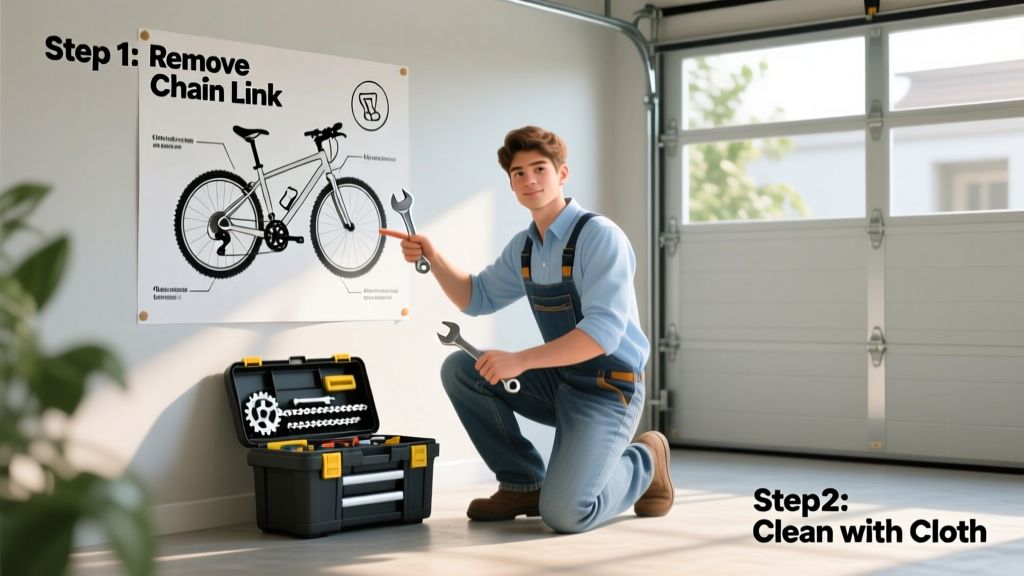
In industrial procurement parlance, 'troubleshooting' refers to reactive, low-volume, non-certified machining tasks performed to restore equipment uptime or support prototyping. Examples include re-machining a cracked die plate on a stamping press, fabricating a custom bracket for an aging conveyor system, or re-cutting a misaligned toolholder bore. These jobs typically use off-the-shelf tooling, rely on shop-floor inspection with calipers or CMMs calibrated to ISO 17025 Annex B standards, and require no formal design history files (DHF) or process validation documentation.
Conversely, 'medical' denotes regulated production under FDA Quality System Regulation (QSR), ISO 13485:2016, and often MDR 2017/745 for EU markets. It covers devices ranging from Class I surgical scissors (machined from 420 stainless steel, Ra ≤ 0.4 µm surface finish) to Class III cardiovascular stents (laser-cut from L605 cobalt-chromium alloy, requiring <±2 µm dimensional control per feature). Every process step—from raw material lot verification (ASTM F138/F136) to coolant filtration (0.5 µm absolute) and post-machining passivation (ASTM A967)—must be documented, reviewed, and auditable.
Regulatory Anchors Shape Machine Selection
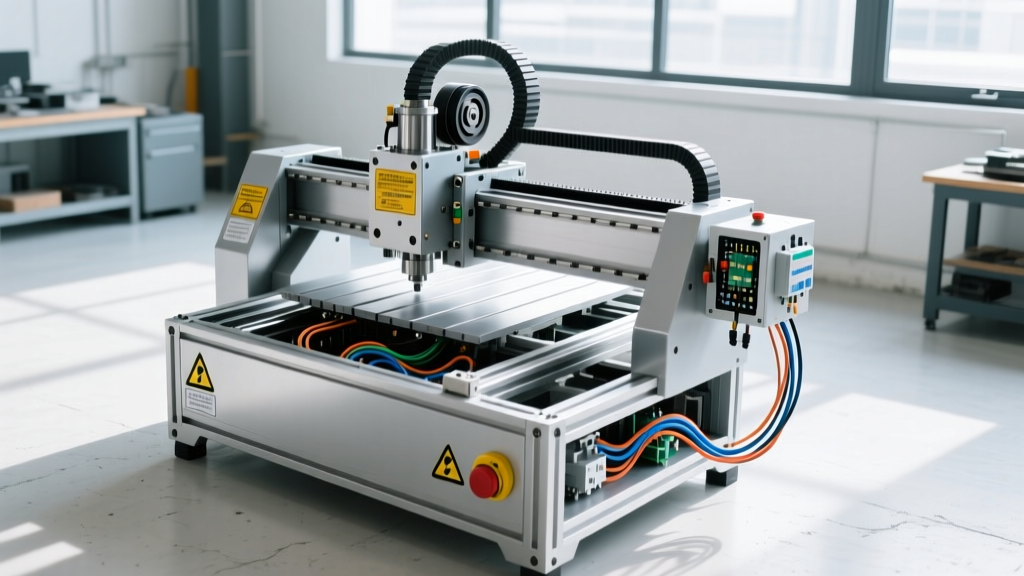
FDA’s Guidance for Industry: Content of Premarket Submissions for Device Software Functions explicitly requires manufacturers to validate software-driven motion control systems—including G-code interpreters, servo loop tuning parameters, and thermal compensation algorithms. A troubleshooting-focused shop might run Mach3 on a DIY gantry mill; a Class II orthopedic manufacturer must deploy Siemens SINUMERIK 840D sl with certified PLC safety logic (IEC 61508 SIL2), validated firmware versioning, and encrypted audit trails. Okuma’s Thermo-Friendly Concept, for example, uses real-time spindle and axis temperature sensors to adjust positioning offsets within 0.5 µm—critical for maintaining GD&T callouts on acetabular cup liners machined from Ti-6Al-4V ELI (Grade 23).
Mechanical Performance Requirements: Tolerance, Stability, and Repeatability
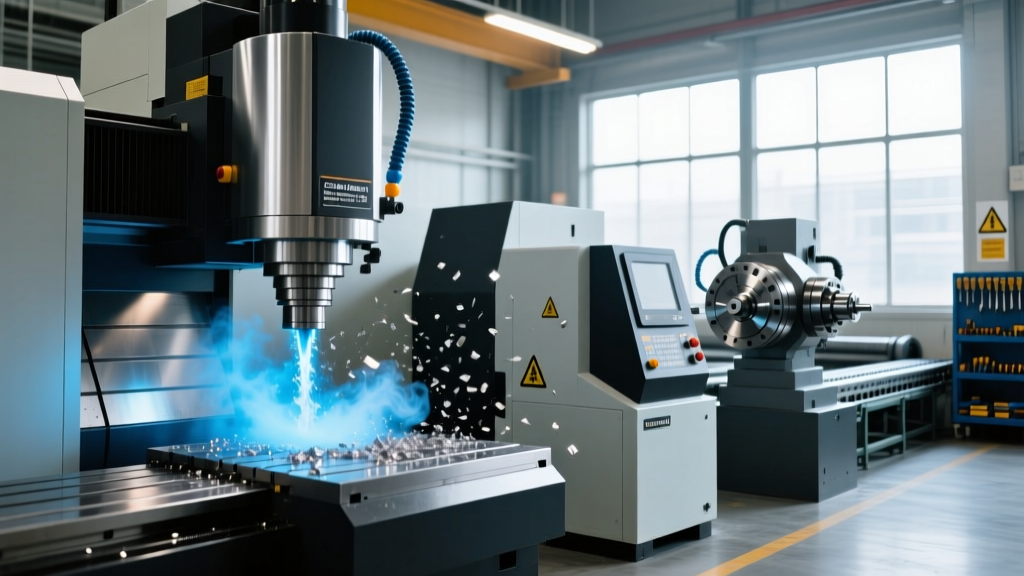
The most quantifiable divergence lies in performance metrics. Troubleshooting applications commonly accept positional repeatability of ±0.002″ (50 µm) and thermal drift up to 3 µm/°C across an 8-hour shift. Medical device machining demands ≤±0.0001″ (2.5 µm) volumetric accuracy per ASME B89.4.1-2019, with thermal stability ≤0.3 µm/°C over 12 hours. To meet this, premium medical-grade machines incorporate structural innovations: DMG MORI’s NLX 2500 α features a thermally symmetric bed cast from Meehanite FC300 with integrated coolant channels, reducing thermal gradient-induced deflection by 73% versus conventional gray iron (per internal 2023 white paper).
Spindle dynamics also diverge sharply. A troubleshooting shop may use a standard 10,000 rpm CAT40 spindle (e.g., Haas ST-10’s 15 hp unit) for aluminum and mild steel. Medical machining of nitinol stent carriers requires high-frequency spindles like Makino’s SQT-50 with HSK-A63 interface, 40,000 rpm max speed, and runout <0.5 µm—enabling sub-10 µm edge radii on micro-milled features. Surface integrity is equally critical: residual stress in machined 316L stainless steel orthopedic plates must remain below 50 MPa (measured via XRD per ASTM E915) to prevent in-vivo corrosion cracking. This necessitates low-force finishing strategies—hence Mazak’s INTEGREX i-200S employs adaptive feed control that reduces cutting force variance to ±1.2% during contour milling.
Material-Specific Challenges and Mitigation Strategies
Troubleshooting often involves forgiving materials: 6061-T6 aluminum (UTS 45 ksi), 1018 steel (hardness 126 HB), or ABS plastic. Medical work centers on biocompatible alloys with challenging properties:
- Titanium Grade 5 (Ti-6Al-4V): Thermal conductivity 7.2 W/m·K (1/7th of aluminum), causing heat buildup → requires minimum quantity lubrication (MQL) with 10–15 ml/h oil flow and air pressure ≥6 bar
- Cobalt-Chromium (L605): Work-hardening rate >3× that of 316 stainless → mandates rigid toolholding (BIG Kaiser Power Grip chucks with ≤1.5 µm total indicator reading)
- Nitinol (NiTi 55/45): Superelasticity induces chatter at conventional feeds → demands ultra-stiff machines (static stiffness >120 N/µm at tool tip, per ISO 230-2)
Failure to match machine capability to material behavior directly impacts yield. A 2022 JOM study tracking 14 orthopedic contract manufacturers found that shops using non-medical-rated CNCs experienced 22.7% scrap rates on Ti-6Al-4V femoral stems versus 3.1% for those using ISO 13485-validated Mazak INTEGREX i-600s with integrated coolant chillers (setpoint ±0.3°C).
Software, Data Integrity, and Traceability Infrastructure
Troubleshooting workflows rarely require digital continuity. A technician may hand-enter tool offset changes into a Fanuc 31i-B control and log them in a paper binder. Medical manufacturing mandates unbroken digital thread from raw material certificate (CoC) to finished device label. This requires embedded capabilities:
- Electronic batch records synchronized with ERP (e.g., SAP S/4HANA Medical Device Add-on)
- Real-time tool life tracking with automatic spindle stop on wear threshold (e.g., Sandvik CoroPlus® Connect integration)
- GD&T-aware probing cycles compliant with ISO 10360-8 (e.g., Renishaw PH10MQ on Okuma MULTUS U3000)
- Immutable audit logs meeting 21 CFR Part 11 requirements (digital signatures, time-stamped events, role-based access)
Without these, even a physically precise machine fails regulatory scrutiny. In 2023, FDA Warning Letter #4129798 cited a California ortho-device firm for using a modified Fanuc OT control without electronic signature validation—rendering all 12,400+ produced tibial trays non-compliant despite passing dimensional inspection.
Validation Protocols: IQ/OQ/PQ Are Non-Negotiable
For troubleshooting, machine acceptance testing (SAT) usually verifies basic functions: rapid traverse accuracy, spindle runout, and coolant flow. Medical installations require full qualification per ISO 13485 Annex A.2:
- Installation Qualification (IQ): Confirms hardware/software versions, environmental conditions (cleanroom Class 7 ambient air per ISO 14644-1), and utility connections (chiller water ≤18°C, compressed air dew point −40°C)
- Operational Qualification (OQ): Validates all operational modes—e.g., verifying that Makino’s Pro 5-axis simultaneous control maintains ≤0.00015″ (3.8 µm) circularity error at 30 m/min feed on a 50 mm diameter test arc
- Performance Qualification (PQ): Runs three consecutive production lots of actual parts (e.g., 100 spinal fusion cages per lot) with 100% first-article inspection and statistical process control (Cpk ≥ 1.33 on critical dimensions)
A 2024 Benchmarking Report from the Medical Device Manufacturers Association (MDMA) revealed that average PQ cycle time for new CNC lines is 11.4 weeks—nearly triple the 4.2-week median for non-regulated troubleshooting cells.
Supplier Vetting: Beyond Brochures and Demo Runs
Procurement teams evaluating suppliers for troubleshooting needs prioritize delivery speed, local service coverage, and consumable cost. For medical applications, due diligence extends to certification audits:
| Criteria | Troubleshooting Supplier | Medical Supplier |
|---|---|---|
| ISO Certification | ISO 9001 optional | ISO 13485:2016 mandatory; verified via notified body (e.g., BSI, TÜV SÜD) |
| Machine Documentation | Standard operation manual + electrical schematics | Full DHF package: risk analysis (ISO 14971), software validation report, thermal compensation algorithm certification |
| Service Response SLA | Next-business-day onsite support | 4-hour remote diagnostics + 24-hour onsite critical failure response (per IEC 62304) |
| Tooling Compatibility | Standard CAT/BT holders accepted | Requires HSK or Capto interfaces with ≤0.8 µm dynamic runout certification |
| Environmental Compliance | No cleanroom requirements | Must provide HVAC integration specs for ISO Class 7/8 environments (air changes ≥30/hr) |
Leading medical-focused OEMs publish third-party validation data. DMG MORI’s CE-marked LASERTEC 65 3D hybrid system includes a 2023 TÜV SÜD report confirming ≤±0.00008″ (2 µm) volumetric accuracy after 72-hour thermal soak. In contrast, a widely used troubleshooting platform—the Tormach PCNC 1100—documents only ±0.001″ (25 µm) repeatability per its 2022 Factory Acceptance Test (FAT) protocol, with no thermal stability metrics provided.
Cost Structure Realities: TCO Analysis Over 5 Years
Upfront price misleads buyers. A Haas EC-1600 vertical mill lists at $189,000 and handles 90% of troubleshooting tasks. A comparably sized medical-grade alternative—the Okuma GENOS M460-V—starts at $427,000. However, total cost of ownership (TCO) reveals deeper implications:
- Maintenance: Troubleshooting machines average $8,200/year in service contracts (HaasCare Gold); medical units require $29,500/year (Okuma’s Certified Service Agreement with predictive vibration analytics)
- Scrap Avoidance: At $1,240/part for a titanium acetabular cup, a 5.2% scrap rate (typical on non-validated machines) costs $77,400 annually vs. $11,900 on validated platforms—a $65,500 annual savings
- Regulatory Risk: FDA Form 483 citations average $220,000 in remediation costs per observation; non-compliant machine validation accounts for 31% of such findings (2023 FDA CDRH Data)
- Downtime Penalty: Medical line stoppages cost $1,840/hour (per MDMA 2024 benchmark); troubleshooting stops average $310/hour
Thus, the Okuma’s 2.25× higher capex pays back in 14 months when factoring scrap reduction and avoided regulatory penalties alone—before accounting for premium pricing power on Class III device contracts.
Training and Operator Certification Requirements
Troubleshooting operators typically hold NIMS Level 1 credentials (e.g., CNC Milling Basics). Medical environments require role-specific certifications:
- Process Operators: ASQ Certified Calibration Technician (CCT) + internal GMP training (≥24 hrs/year)
- Programmers: Siemens NX CAM Advanced Milling certification + ISO 13485 internal auditor training
- Maintenance Technicians: Fanuc Field Engineering certification + coolant chemistry management (ASTM D4324)
Okuma’s Medical Solutions Group provides factory-authorized training modules—including ‘Thermal Error Compensation Implementation’ (8 hrs) and ‘FDA Part 11 Audit Readiness for CNC Controls’ (12 hrs)—with competency assessments scored against ISO/IEC 17024 standards.
Case Study: Orthopedic Implant Manufacturer’s Dual-Track Deployment
In 2023, Stryker Orthopaedics upgraded its Kalamazoo facility with a dual-strategy approach. For troubleshooting, it installed six Haas VF-6SS mills ($242,000 each) in a dedicated ‘Rapid Response Cell’—configured with Renishaw OMP40 probes and HaasTooling’s quick-change pallet system. Cycle time for replacement knee arthroscopy instrument holders dropped from 4.7 hours to 1.2 hours.
Simultaneously, Stryker deployed four Mazak INTEGREX i-800S machines ($895,000 each) in its ISO Class 7 Spinal Division. Each unit underwent full IQ/OQ/PQ per ASTM E2500-13, integrated with Stryker’s MasterControl QMS, and achieved Cpk ≥ 1.67 on all 27 GD&T characteristics of its Tritanium PL cage (dimensions: 12.5 × 22.0 × 6.5 mm, tolerance ±0.00015″). Post-implementation, cage-related field complaints fell 89% year-over-year, while FDA audit readiness score rose from 71% to 99.4%.
This deliberate segmentation—avoiding the temptation to ‘stretch’ a single machine platform across both domains—demonstrates how precision engineering and regulatory discipline compound value. As one Stryker senior process engineer stated in their internal review: ‘Using a VF-6SS for spinal cages wasn’t just inaccurate—it was indefensible under ISO 14971 risk management. The machine couldn’t fail safely.’
Strategic Procurement Recommendations
Buyers must resist feature-based selection. Instead, anchor decisions on intended use-case rigor:
- Define the highest-risk dimension in your production plan: If any feature requires ≤±0.0002″ (5 µm) tolerance, mandate a machine with volumetric compensation certified to ASME B5.54-2020
- Require full DHF documentation pre-purchase—not as an ‘add-on’ but as part of the base quote
- Validate service infrastructure: Confirm regional techs hold OEM medical-specific certifications (e.g., DMG MORI’s Medical Service Partner status requires annual 80-hr lab exams)
- Test with your actual material: Run a PQ-style trial on candidate machines using your highest-value alloy (e.g., 10 pieces of Ti-6Al-4V vertebral body screws) with metrology performed on a Zeiss ACCURA CMM calibrated to ISO 10360-2
- Review cybersecurity posture: Per FDA’s 2023 Cybersecurity Guidance, medical CNCs must support network segmentation, TLS 1.2+, and secure boot—verified via NIST SP 800-161 assessment reports
Finally, recognize that ‘medical-grade’ isn’t a marketing term—it’s a measurable condition defined by published standards, auditable processes, and zero-tolerance failure modes. A troubleshooting CNC saves time today. A medical CNC safeguards patients tomorrow—and protects your organization from existential regulatory risk. When the specification sheet says ‘±0.0001″’, verify whether that’s guaranteed under ISO 10360-8 test conditions—or just a theoretical best-case number from a warm-up run. That distinction separates procurement from liability.