CNC Machining Cost vs Alternatives: 3D Printing and Molding
Compare true CNC machining cost against 3D printing and injection molding. Analyze hourly rates, material costs, and breakeven volumes for 2026.
The 2026 CNC Machining Cost Baseline
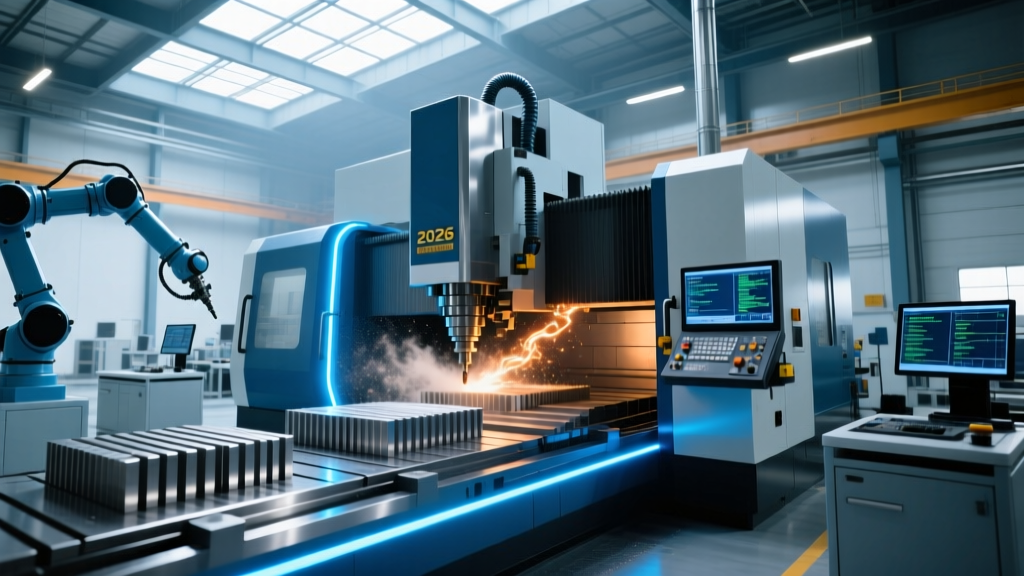
Evaluating manufacturing processes requires moving beyond simplistic per-part quotes to understand the underlying cost architecture. As of 2026, the true CNC machining cost is dictated by machine depreciation, spindle hours, material utilization, and setup labor. For a standard 3-axis vertical machining center like the Haas VF-2SS, shop rates typically range from $75 to $105 per hour. When stepping up to simultaneous 5-axis machining on platforms like the DMG Mori DMU 50, hourly rates jump to $140 to $195 due to higher capital equipment costs and specialized CAM programming requirements.
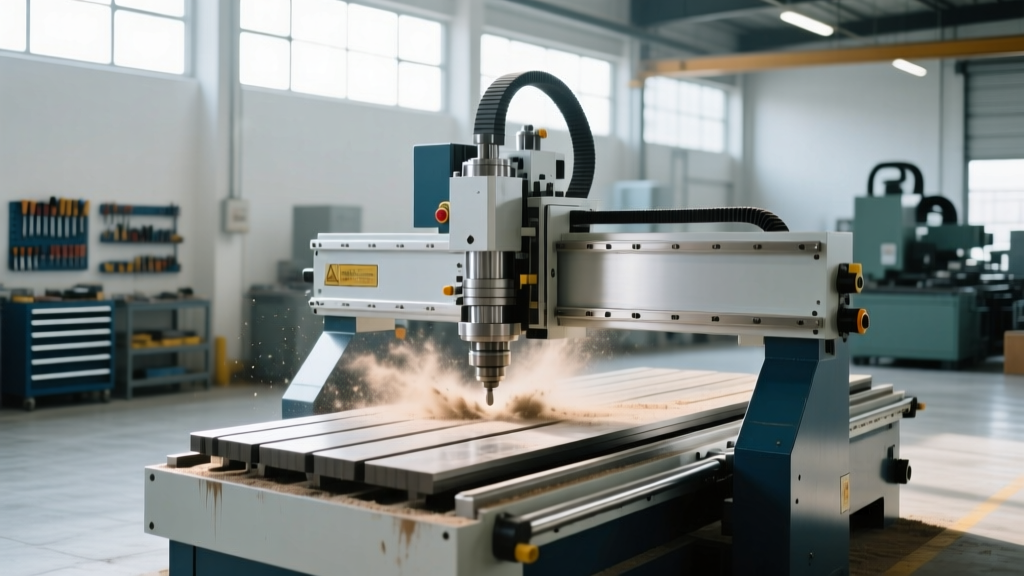
Material Buy-to-Fly Ratio: Unlike additive processes, CNC machining is subtractive. A complex aerospace bracket machined from a solid block of Ti-6Al-4V can have a buy-to-fly ratio of 10:1, meaning 90% of the raw material is converted to chips. At current titanium mill prices, this material waste heavily inflates the final unit cost compared to near-net-shape alternatives.Setup costs remain a fixed burden in CNC machining. Fixturing, toolpath verification, and first-article inspection typically consume 2 to 4 hours of shop time before the first part is completed. Consequently, CNC machining cost per unit drops significantly as volume increases from 1 to 50 parts, but the curve flattens considerably after 100 units because the cycle time per part remains constant.
Additive Alternatives: SLS and DMLS Economics
Industrial 3D printing has matured from a prototyping novelty to a viable end-use alternative, particularly for complex geometries. According to Xometry manufacturing comparison guides, the decision between CNC and additive often hinges on part complexity rather than pure volume.
Selective Laser Sintering (SLS) for Polymers
For functional polymer parts, SLS using PA12 (Nylon) eliminates the need for support structures and allows for batch nesting. While the raw material cost for SLS PA12 powder is roughly $45 to $60 per kilogram, the lack of subtractive waste and minimal setup time makes it highly competitive for low-volume production. An SLS part that would require 3 hours of 5-axis CNC machining and complex multi-axis fixturing can often be printed in a nested batch for a fraction of the cost, provided the ±0.005 in. tolerance and slightly porous surface finish are acceptable.
Direct Metal Laser Sintering (DMLS)
Metal additive manufacturing via DMLS on machines like the EOS M 290 is the premier alternative for lightweighting and internal cooling channels. However, the CNC machining cost advantage returns during post-processing. DMLS parts require stress relief heat treatment, wire EDM removal from the build plate, and extensive CNC surface finishing for critical mating surfaces. For solid, simple metal geometries, CNC machining remains 40% to 60% cheaper than DMLS due to the exorbitant cost of metal atomized powders and slow build rates.
Formative Alternatives: Injection Molding and Die Casting
When production volumes exceed 500 units, formative processes like injection molding and aluminum die casting fundamentally alter the unit economics. Protolabs process selection analysis highlights that the barrier to entry for molding is the upfront tooling investment, not the cycle time.
Tooling Cliff Warning: A multi-cavity hardened P20 steel injection mold for a complex 6x6 inch enclosure can easily cost $12,000 to $25,000 and require 4 to 6 weeks to machine via EDM and high-speed milling. If your project requires design iterations, this sunk cost can destroy your budget.Injection molding cycle times for thermoplastics like ABS or Polycarbonate are measured in seconds, driving the piece-part price down to $0.40 to $1.50 at volumes of 10,000+. In contrast, the CNC machining cost for that same enclosure in Delrin (POM) might be $18.00 per unit, regardless of whether you order 100 or 10,000 parts. Die casting for aluminum alloys like A380 follows a similar trajectory, offering superior thermal conductivity and EMI shielding compared to plastics, but requiring even higher tooling capital for the hardened H13 steel dies.
Hidden Post-Processing Costs Across All Methods
Buyers frequently underestimate the secondary operations required to achieve final part specifications. A comprehensive Thomasnet custom fabrication overview notes that post-processing can account for up to 30% of total manufacturing spend.
- CNC Machining: Requires manual deburring, media tumbling, and potentially Type II or Type III anodizing (adding $2.00 to $6.00 per part and 1-2 weeks of lead time).
- SLS 3D Printing: Requires media blasting to remove powder, and often vapor smoothing or epoxy infiltration to achieve a sealed, injection-mold-like surface finish.
- Injection Molding: Requires gate trimming, ejector pin witness mark removal, and potentially ultrasonic welding or secondary tapping for threaded inserts.
Process Selection Matrix: Cost vs. Geometry
| Manufacturing Process | Optimal Volume | Avg. Unit Cost (Al/Plastic) | Geometric Freedom | Standard Tolerance |
|---|---|---|---|---|
| 3-Axis CNC Milling | 1 - 100 | $45 - $120 | Low (Requires fixturing) | ±0.001 in. |
| 5-Axis CNC Milling | 1 - 50 | $150 - $400+ | Medium (Complex contours) | ±0.0005 in. |
| SLS (Nylon PA12) | 10 - 500 | $15 - $60 | High (Internal lattices) | ±0.005 in. |
| DMLS (Titanium) | 1 - 50 | $300 - $800+ | Very High (Conformal cooling) | ±0.004 in. |
| Injection Molding | 1,000+ | $0.50 - $3.00 | Medium (Draft angles required) | ±0.002 in. |
Final Decision Framework for Buyers
To optimize your manufacturing spend, apply this sequential decision framework based on your specific engineering requirements:
- Evaluate Tolerance and Load Requirements: If the part requires true positional tolerances under ±0.001 in. or must endure high cyclic fatigue loads along the Z-axis, eliminate 3D printing immediately. CNC machining or forging followed by CNC finishing is mandatory.
- Analyze the Buy-to-Fly Ratio: Export your CAD model and calculate the volume of the bounding box versus the volume of the final part. If the material removal exceeds 75% and the material is expensive (e.g., Inconel 718 or Titanium), pivot to DMLS or near-net investment casting to eliminate material waste costs.
- Calculate the Volume Breakeven: Divide the total tooling cost of injection molding by the difference between the CNC unit cost and the molded unit cost. If your required production volume does not exceed this breakeven number, stick with CNC machining or SLS to preserve cash flow and maintain design agility.
By mapping your exact geometric, material, and volume constraints against these 2026 cost baselines, you can avoid the common trap of defaulting to CNC machining for parts that are economically optimized for additive or formative manufacturing.