Industrial Sewing Machine Cleaning Tools: 2026 Budget & Cost Analysis
Analyze the true cost of industrial sewing machine cleaning tools in 2026. Compare manual, pneumatic, and automated systems to optimize factory budgets.
The Financial Reality of Lint and Oil Management
In high-volume apparel manufacturing, the accumulation of textile lint, fabric dust, and degraded lubricants is not merely a housekeeping issue; it is a primary driver of mechanical failure and margin erosion. When micro-particulates from synthetic blends and cotton infiltrate the hook race of a direct-drive lockstitch machine like the Juki DDL-9000C or the thread trimmer mechanism of a Brother S-7300A, they mix with sewing oil to form an abrasive sludge. This sludge increases motor amperage, degrades timing belts, and causes skipped stitches.
For factory managers and procurement directors in 2026, budgeting for sewing machine cleaning tools requires shifting the perspective from purchasing disposable supplies to investing in uptime preservation. The cost of a rejected garment due to an oil spot ranges from $4.50 to $12.00, while the cost of machine downtime averages $2.15 per minute per operator. This analysis breaks down the capital and operational expenditures of modern cleaning systems, providing a framework to optimize your maintenance budget.
Warning: The Compressed Air FallacyMany factories rely on 90 PSI compressed air blow-guns to clear lint. This is financially disastrous. High-pressure air forces abrasive lint past the needle bar seals and into the main shaft bushings, causing premature bearing failure. Furthermore, OSHA Standard 1910.242(b) strictly regulates compressed air use, requiring pressure reduction to 30 PSI and chip guards for safety compliance. Using unregulated air for cleaning invites both mechanical destruction and regulatory fines.
2026 Cost Matrix: Evaluating Sewing Machine Cleaning Tools
Selecting the right cleaning infrastructure depends on your factory's scale, fabric type, and automation level. The table below compares the upfront capital, recurring consumable costs, and labor efficiency of the primary cleaning methodologies available in 2026.
| System Type | Upfront Cost (Per Station) | Annual Consumables | Labor Time (Per Shift) | Best Application |
|---|---|---|---|---|
| Manual Brush & Pick Kits | $28 - $45 | $60 (Replacement brushes/solvents) | 4 - 6 minutes | Low-volume, heavy natural fibers |
| Pneumatic Lint Vacuums (Localized) | $650 - $850 | $90 (HEPA filters, seals) | 45 - 60 seconds | Mid-to-high volume synthetics/blends |
| Centralized Vacuum Extraction | $18,000 - $25,000 (50-line) | $1,200 (Industrial filters, duct cleaning) | Continuous / Automated | Mass production, strict air-quality mandates |
| OEM Self-Cleaning Hook Upgrades | $350 - $500 (Retrofit part) | $0 | Reduces manual by 80% | New machine procurement / OEM retrofits |
Deep Dive: Pneumatic Lint Extraction Systems
For most mid-sized apparel manufacturers in 2026, localized pneumatic lint vacuums represent the optimal intersection of cost and efficiency. Unlike compressed air blow-guns that scatter particulate matter into the ambient environment—creating a secondary combustible dust hazard as identified by OSHA—localized vacuums capture the lint at the source.
Capital Expenditure Breakdown
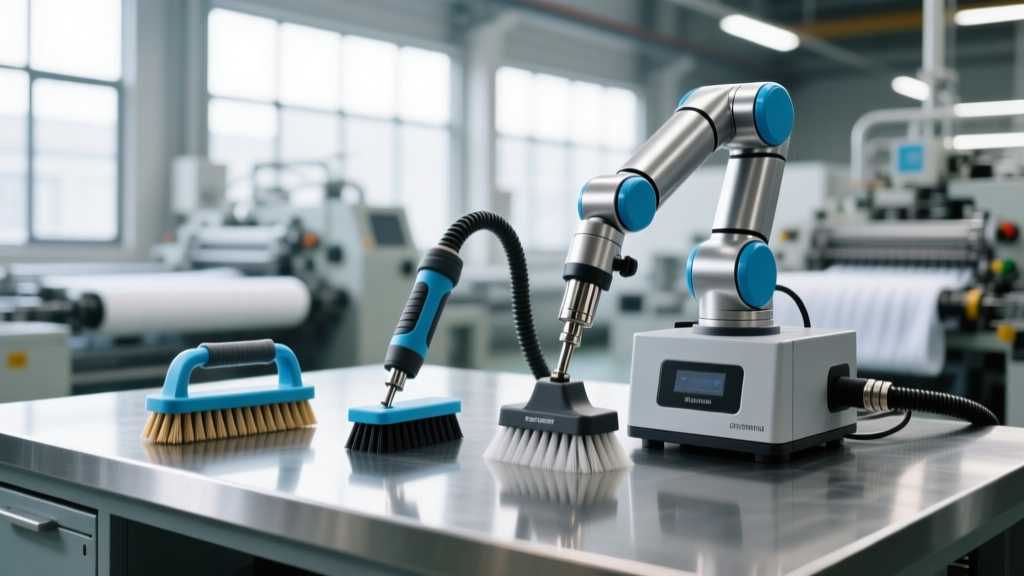
A complete localized vacuum station (such as those integrated into modern Kobold or specialized textile maintenance carts) includes a venturi-powered nozzle, a flexible static-dissipative extraction arm, and a dual-stage HEPA filter cartridge. The initial outlay of $650 to $850 per station is significant, but it eliminates the need for operators to manually disassemble the needle plate and bobbin case every shift.
The Hidden Cost of Static Electricity
When budgeting for vacuum tools, procurement officers must specify ESD-safe (Electrostatic Discharge) hoses and nozzles. High-speed synthetic fabric sewing generates massive static charges. Standard plastic vacuum nozzles will attract lint rather than extract it, and the resulting static shock can damage the sensitive PCB boards and IoT sensors found in 2026's smart sewing heads (e.g., Juki's JaNets monitoring systems). ESD-safe tooling adds approximately 15% to the upfront cost but prevents catastrophic electronic failures that cost upwards of $800 per board replacement.
Consumable Budgeting: Brushes, Solvents, and Filters
Even with automated systems, manual detailing is required during weekly preventative maintenance (PM). Budgeting for these consumables requires understanding their lifecycle and degradation rates.
- Hook Race Brushes: Groz-Beckert and OEM brass-bristle brushes ($12 - $18 each) are mandatory for cleaning the rotary hook. Nylon brushes melt or shed bristles into the oil wick. Expect to replace brass brushes every 4 months per machine due to bristle deformation.
- Lint Picks and Micro-Wands: Carbon-fiber lint picks ($8 each) are preferred over steel picks, which can scratch the anodized aluminum surfaces of the feed dog and throat plate, leading to fabric snags and increased reject rates.
- Specialized Solvents: Standard degreasers leave residues that contaminate sewing thread. Textile-specific evaporative solvents (e.g., Arobone or SpotLift equivalents) cost $22 to $35 per liter. Budget approximately $14 per machine annually for solvent use during deep PM cycles.
- HEPA Filter Cartridges: For localized vacuums, filters clog rapidly when processing acrylic or polyester fleece. Budget for bi-annual filter replacements at $45 per cartridge.
ROI Calculation Framework for Maintenance Upgrades
To justify the capital expenditure of upgrading your sewing machine cleaning tools to factory ownership, utilize the following ROI framework based on a 100-machine production line operating two shifts per day.
Scenario: Transitioning from Manual Kits to Pneumatic Vacuums1. Baseline Labor Cost: Manual cleaning takes 5 minutes per machine, per shift. Across 100 machines and 2 shifts, that is 1,000 minutes (16.6 hours) of lost production daily. At an average operator burden rate of $18/hour, daily lost labor is $298.80.
2. Upgraded Labor Cost: Pneumatic extraction reduces cleaning time to 1 minute per machine. Daily lost labor drops to 200 minutes (3.3 hours), costing $59.40.
3. Daily Savings: $239.40 in recovered production time.
4. Payback Period: A $75,000 investment in pneumatic vacuums ($750 x 100 machines) is recovered in approximately 313 working days, not including the secondary savings from reduced oil-stain rejects and extended timing belt life.
Automated Innovations: The OEM Self-Cleaning Hook
The most significant shift in the 2026 textile machinery landscape is the integration of self-cleaning mechanisms at the OEM level. Brother's Nexio series and Juki's advanced direct-drive models now feature specialized hook race geometries and centrifugal lint-shedding designs. These mechanisms use the rotational force of the hook (spinning at 5,000 RPM) to eject lint outward into a specialized collection channel, rather than allowing it to pack into the bobbin case latch.
While you cannot retrofit this exact geometry onto legacy machines, you can budget for semi-automated oiling and cleaning kits that mimic this efficiency. Automated micro-oilers dispense exact 0.05ml droplets of synthetic oil only when the machine is running, preventing the over-oiling that creates the sludge requiring heavy cleaning in the first place. Budgeting $120 per machine for precision micro-oiler retrofits will reduce your manual cleaning consumable budget by up to 40%.
Strategic Procurement Checklist for 2026
When issuing purchase orders for sewing machine cleaning tools, ensure your procurement team enforces the following specifications to avoid acquiring substandard equipment that damages machinery:
- Verify ESD Compliance: All vacuum hoses, nozzles, and manual picks must carry an ESD-safe certification to protect IoT control boxes.
- Reject Wire Bristles: Ban the purchase of steel wire brushes. Only approve brass or specialized polymer bristles that are softer than the machine's hardened steel hook and aluminum throat plates.
- Solvent Evaporation Rate: Ensure purchased cleaning solvents have a high flash point and rapid evaporation rate to prevent oil migration onto the fabric during the first run after PM.
- Filtration Micron Rating: For localized vacuums, specify HEPA filters rated to capture 99.97% of particulates at 0.3 microns to comply with modern indoor air quality standards and protect facility HVAC systems.
By treating sewing machine cleaning tools as a critical component of your factory's mechanical reliability strategy rather than a miscellaneous expense, you can drastically reduce unplanned downtime, eliminate oil-stain defects, and ensure compliance with modern occupational safety standards.