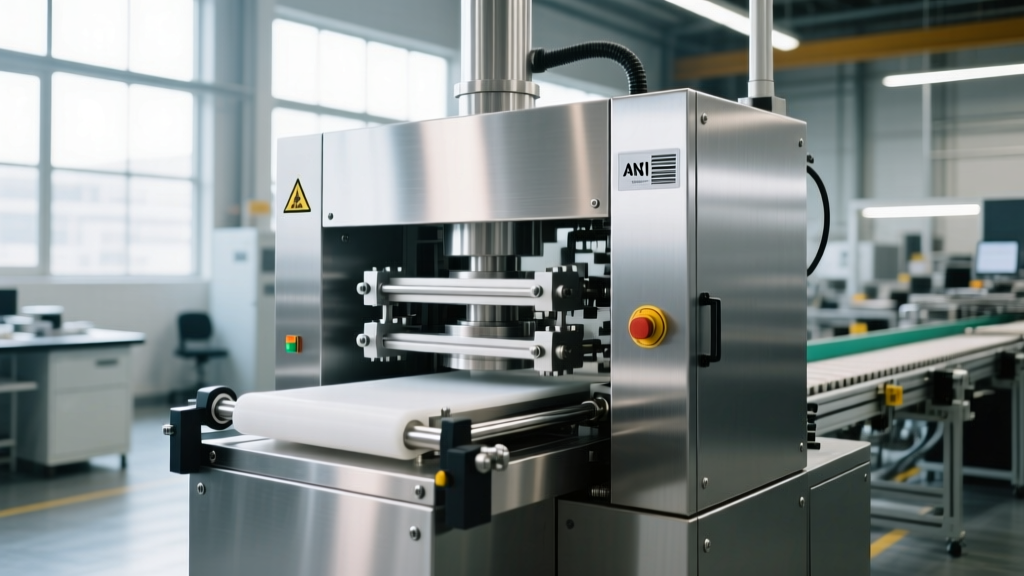
Packaging Machinery News October 2025: Vacuum Sealer Safety
Reviewing packaging machinery news from October 2025: A deep dive into vacuum sealer safety standards, ANSI compliance, and food preservation retrofits.
For plant managers and safety officers tracking packaging machinery news in October 2025, a distinct regulatory shift has emerged: enforcement agencies are no longer treating operator safety and food safety as separate compliance silos. Recent audits under the updated ANSI/PMMI B155.1-2023 framework demonstrate that vacuum packaging machinery—specifically equipment used for food preservation—faces intense scrutiny regarding both mechanical guarding and hygienic design. As we move into 2026 compliance cycles, understanding the intersection of OSHA mechanical standards and FDA food safety requirements is critical for avoiding costly line shutdowns.
⚠️ Compliance Warning: Under 21 CFR Part 117, equipment that poses a physical hazard to operators (e.g., unguarded pneumatic pinch points) can simultaneously be cited as a food safety risk if the hazard introduces physical contaminants (like sheared metal or hydraulic fluid) into the packaging environment.The Intersection of ANSI/PMMI B155.1 and FSMA
Vacuum sealers operate under extreme mechanical and thermal stress. A standard double-chamber vacuum sealer utilizes pneumatic pressures exceeding 6 bar to compress seal bars, while simultaneously pulling absolute pressures down to 1–5 mbar to extract oxygen. The PMMI B155.1 standard mandates comprehensive risk assessments for these specific pinch points, thermal burn zones, and vacuum implosion risks.
Simultaneously, the FDA’s Food Safety Modernization Act (FSMA) requires that this same equipment meet stringent sanitary design principles to prevent Listeria or Salmonella harborage. A machine that is mechanically safe but impossible to clean properly will fail a Preventive Controls Qualified Individual (PCQI) audit. Therefore, selecting or retrofitting vacuum machinery requires a dual-lens approach.
Risk Matrix: Chamber Sealers vs. Continuous Thermoformers
Different vacuum preservation technologies present vastly different safety profiles. Below is a technical breakdown of the primary hazards associated with the two most common industrial formats, referencing industry-standard benchmarks.
| Equipment Type | Common Models | Primary Operator Hazards | Required Mitigation (2026 Standard) |
|---|---|---|---|
| Single/Double Chamber Vacuum Sealers | Henkelman Boxer 52 II, Promarks SV-42 | Thermal burns from seal bars (140°C–165°C); lid crush-zone pinch points. | Pneumatic lid-assist with anti-drop valves; PTFE tape maintenance logs; two-hand start controls. |
| Continuous Thermoformers (Rollstock) | Multivac R 255, ULMA TFS 407 | Servo-driven chain in-feed shearing; high-volume vacuum pump oil mist inhalation. | SICK deTec4 Core light curtains (14mm resolution); enclosed dry-vane or oil-free vacuum pumps. |
| External Nozzle (Snorkel) Vacuum Sealers | Audionvac AJ 800 | Crush hazards from descending seal jaws; repetitive strain from bag manipulation. | Auto-reversing seal jaws upon obstruction detection; ergonomic bag-loading jigs. |
Critical Edge Cases and Thermal Failure Modes
Surface-level safety manuals often ignore the secondary hazards created by component degradation. One of the most frequently cited issues in late-2025 safety reports involves the degradation of PolyTetraFluoroEthylene (PTFE) non-stick tapes on vacuum seal bars.
The PTFE Degradation Burn Hazard
Seal bars on chamber machines must reach 140°C to 165°C to properly fuse polyethylene (PE) and polypropylene (PP) barrier films. Over time, the 0.13mm to 0.25mm PTFE coating degrades. When this occurs, molten plastic adheres to the bare metal seal bar. Operators attempting to pry stuck pouches from the seal bar immediately after the cycle completes suffer severe contact burns.
Actionable Fix: Implement a strict preventive maintenance (PM) schedule requiring PTFE tape replacement every 40,000 cycles or 30 days, whichever comes first. Utilize high-grade, fabric-reinforced PTFE tapes rather than standard skived films to extend lifecycle and prevent tearing.
Pneumatic Exhaust and Oil Mist Exposure
Continuous thermoformers rely on massive rotary vane vacuum pumps. If legacy oil-lubricated pumps (e.g., Busch R5 series) are not fitted with proper exhaust filtration, they atomize mineral oil into the facility air. This violates both OSHA air quality standards and FSMA preventive controls. Upgrading to dry-claw vacuum technology (such as the Busch COBRA series) eliminates oil mist entirely, though it requires a capital expenditure of $12,000 to $18,000 per unit.
Retrofitting Legacy Equipment for 2026 Compliance
Many food processors operate legacy vacuum chamber machines that lack modern electro-sensitive protective equipment (ESPE). Rather than replacing a $25,000 machine, facilities can retrofit guarding systems to meet current OSHA 1910.212 machine guarding requirements. Below is the engineering workflow for retrofitting a standard double-chamber sealer with automated safety interlocks.
- Install Magnetic Safety Interlocks: Replace standard mechanical lid latches with RFID-coded magnetic safety switches (e.g., Euchner CES-C02). This prevents the chamber from initiating a vacuum cycle unless the lid is fully seated, eliminating the risk of the lid dropping prematurely if pneumatic pressure fails.
- Integrate Light Curtains on Loading Zones: For continuous band sealers or large-format chambers, mount Type 4 safety light curtains with a 30mm hand-detection resolution across the loading aperture. Wire the curtains directly into the machine’s Safety PLC to trigger a Category 0 stop (immediate power removal) if an operator's hand breaches the plane while the seal bar is active.
- Upgrade to Two-Hand Control Panels: Remove single-button pneumatic cycle initiators. Replace them with synchronized two-hand control modules requiring both buttons to be depressed within 0.5 seconds of each other, ensuring the operator's hands are clear of the seal zone during the 4-to-6 bar clamping phase.
- Implement Lockout/Tagout (LOTO) Bleed Valves: Install manual pneumatic dump valves with LOTO hasps directly on the main air supply line to the seal bar cylinder, ensuring zero stored mechanical energy during cleaning and PTFE tape replacement.
"The biggest mistake food manufacturers make is assuming a CE mark or UL listing on a vacuum sealer guarantees OSHA compliance on the plant floor. Machine directives cover the equipment in isolation; they do not account for the specific integration, operator reach distances, and workflow bottlenecks present in your specific facility. Site-specific risk assessments are non-negotiable."
Hygienic Design: The IP69K Imperative
Safety standards also encompass the biological hazards associated with poor machine design. Vacuum sealers used for raw poultry, seafood, or ready-to-eat (RTE) meats must withstand aggressive daily washdowns. Standard IP65 ratings are insufficient for modern food safety audits.
Facilities must specify equipment with an IP69K ingress protection rating, which certifies the electrical enclosures can withstand close-range, high-pressure (100 bar), high-temperature (80°C) spray downs. Furthermore, the chassis material must be scrutinized. While 304-grade stainless steel is common, it is highly susceptible to chloride pitting when exposed to quaternary ammonium sanitizers. For vacuum sealers operating in high-salinity environments (e.g., seafood packaging), specifying 316L stainless steel—which contains 2-3% molybdenum for superior chloride resistance—is a critical capital investment that prevents structural degradation and subsequent bacterial harborage in micro-fissures.
Summary Checklist for Plant Managers
- Audit Seal Bar Temps: Verify thermocouple calibration; ensure temps do not exceed film specs to prevent toxic off-gassing.
- Check PTFE Integrity: Inspect non-stick tapes daily for micro-tears that expose bare aluminum heating elements.
- Validate Interlocks: Test magnetic lid switches weekly by attempting to initiate a cycle with the lid ajar.
- Review FSMA Documentation: Ensure all vacuum pump maintenance logs (oil changes, filter replacements) are digitized and accessible for FDA inspectors.
By aligning mechanical safeguarding with hygienic design principles, food processors can navigate the stringent regulatory environment highlighted in recent industry reports. Upgrading to oil-free vacuum systems, enforcing strict PTFE maintenance, and retrofitting legacy chambers with ESPE technology will ensure both operator safety and uncompromised food preservation through 2026 and beyond.