Shanklin Shrink Packaging Machinery in Automated Case Packing Lines
Explore technical specs and integration methods for pairing Shanklin shrink packaging machinery with automated case packing and cartoning systems.
System Architecture: Primary Collation vs. Secondary Enclosure
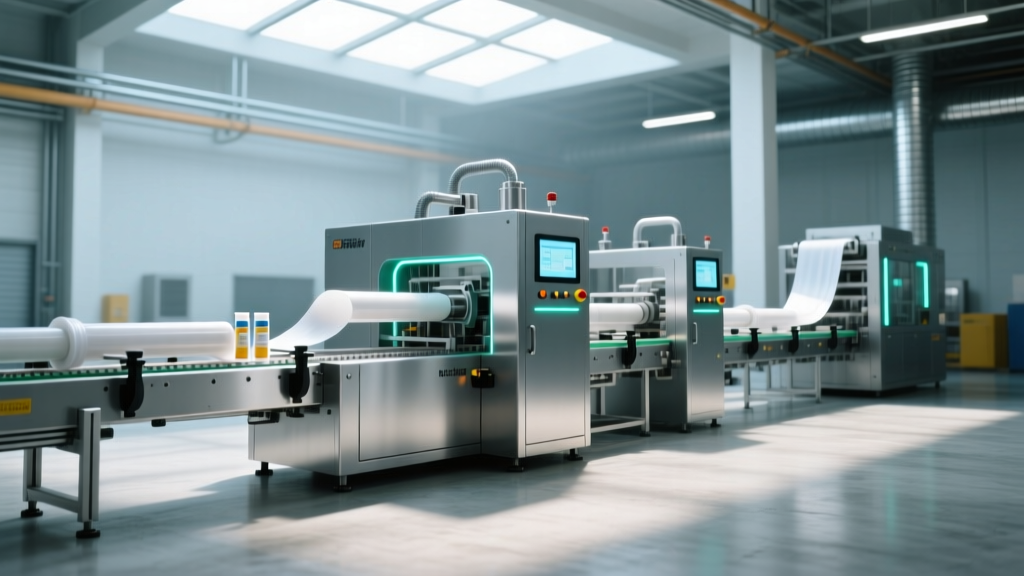
In modern end-of-line packaging facilities, the integration of shanklin shrink packaging machinery with automated case packing and cartoning systems creates a hybrid architecture designed for high-speed multi-pack collation. Traditional cartoning machinery typically relies on pre-glued sleeves or wrap-around corrugated blanks to enclose products. However, when packaging heavy, irregular, or high-density multi-packs (such as glass beverage bottles, aerosol cans, or industrial solvents), primary shrink bundling provides superior tensile containment before the secondary case packing phase.
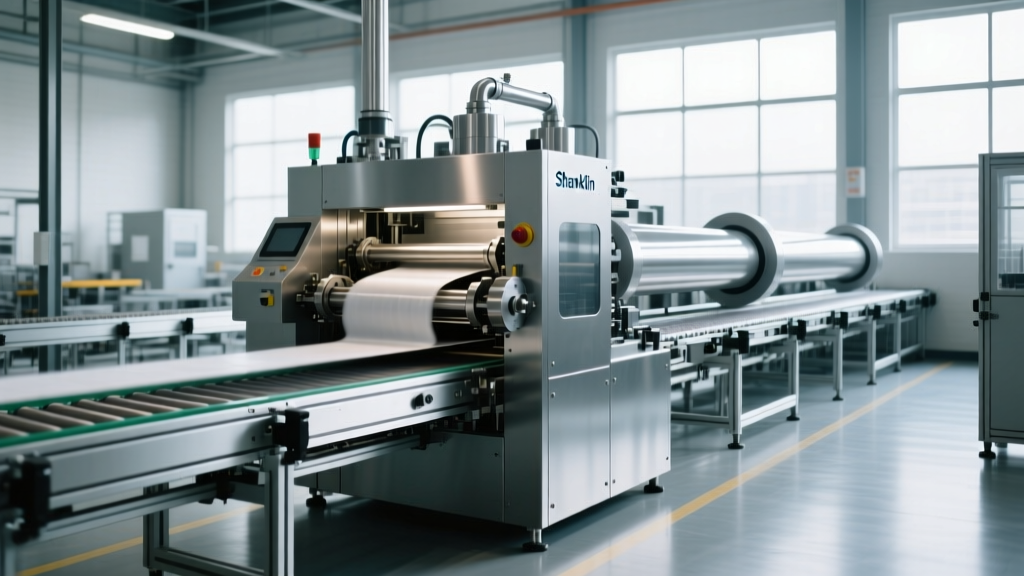
In this hybrid configuration, the Shanklin bundler acts as the primary collation and stabilization node. Products are grouped into matrices (e.g., 2x3 or 3x4 configurations), wrapped in low-density polyethylene (LDPE) film, and passed through a heat tunnel. The resulting rigid shrink bundle is then discharged via a zero-pressure accumulation conveyor directly into the infeed of an automated robotic case packer or drop packer. This dual-layer approach eliminates the need for expensive internal corrugate partitions while maintaining structural integrity during palletization and transit.
Technical Specifications Matrix: Shanklin Bundlers vs. Robotic Case Packers
Integrating these two distinct machines requires precise synchronization of line speeds, footprint allocation, and programmable logic controller (PLC) handshakes. The table below contrasts the core technical specifications of a heavy-duty Shanklin Omega series bundler with a standard 4-axis robotic case packer.
| Specification Parameter | Shanklin Omega Bundler (Primary Node) | Robotic Case Packer (Secondary Node) |
|---|---|---|
| Primary Function | Film wrapping, sealing, and thermal shrinking | Pick-and-place transfer into RSC corrugated cases |
| Maximum Line Speed | Up to 45 bundles per minute (depending on matrix) | Up to 60 picks per minute (using multi-head EOAT) |
| Material Handled | 3-mil to 6-mil LDPE center-fold or single-wound film | 200# to 350# test corrugated cases, hot-melt adhesives |
| Seal / Dwell Time | 1.2 to 1.8 seconds (Teflon-coated seal bar) | N/A (Relies on 2-4 second hot-melt compression) |
| Thermal Output | 280°F - 350°F (Tunnel operating temperature) | Ambient (Requires external cooling prior to infeed) |
| PLC Architecture | Allen-Bradley CompactLogix with HMI touchscreen | Allen-Bradley ControlLogix / Fanuc R-30iB Controller |
| Communication Protocol | EtherNet/IP for upstream/downstream handshakes | EtherNet/IP, PROFINET, or Modbus TCP |
The Shrink-to-Case Transfer Sequence: How It Works
The physical and digital handshake between the shrink packaging machinery and the automated case packer is governed by a strict sequential logic flow. Any deviation in timing causes catastrophic line jams. The standard operational sequence operates as follows:
- Product Collation and Grouping: Products arrive single-file on the Shanklin infeed conveyor. A servo-driven lane divider and grouping belt assemble the products into the programmed matrix (e.g., six 16oz cans). A photoelectric sensor verifies the matrix count before releasing the group into the wrapping zone.
- Film Dispensing and Enclosure: The film carriage pulls the LDPE sheet over the product group. The Shanklin's side-seal or lap-seal mechanism engages, trimming excess film and creating a continuous tubular enclosure around the multi-pack.
- Thermal Shrinking: The loose bundle enters the recirculating hot-air tunnel. Airflow nozzles direct 320°F air at the film edges, causing the polymer chains to contract tightly against the product contours. Dwell time in the tunnel is strictly maintained at 3.5 seconds to ensure uniform tension without melting the film.
- Ambient Cooling and Rigidification: The bundle exits the tunnel onto a forced-air cooling conveyor. High-CFM ambient air blowers rapidly drop the surface temperature of the LDPE film from 180°F to below 95°F. This rigidifies the pack, creating a flat, stable surface necessary for robotic picking.
- Zero-Pressure Accumulation: The cooled bundles enter a slug accumulation zone. Variable frequency drives (VFDs) modulate the belt speed to ensure bundles queue up without crushing against one another, maintaining a steady supply for the case packer.
- Robotic Pick and Case Placement: The 4-axis robot's End-of-Arm Tooling (EOAT) descends, secures the bundle, and places it into an erected corrugated case. The case is then routed through a hot-melt glue closure system.
⚠️ Critical Warning: Thermal Transfer and Corrugate Delamination
If the ambient cooling conveyor is bypassed or undersized, shrink bundles will enter the case packer at temperatures exceeding 140°F. When placed into a corrugated case, this residual heat transfers directly to the case's hot-melt adhesive flaps. The secondary heat spike re-melts the PVA or metallocene hot-melt glue, causing flap spring-back, case delamination, and eventual pallet collapse. Always engineer a minimum 15-foot forced-air cooling conveyor between the Shanklin tunnel exhaust and the robotic pick point.
EOAT Adaptations: Gripping Shrink Bundles vs. Bare Containers
Automated case packing machinery is traditionally designed to pick bare, rigid containers using standard vacuum cup arrays. However, picking a shrink-wrapped bundle introduces complex surface topography. The LDPE film creates uneven, dimpled surfaces between individual containers where the film has pulled tight.
Standard neoprene vacuum cups frequently fail to achieve the required 29 inHg vacuum seal on these irregular surfaces, resulting in dropped packs and faulted cycles. To resolve this, integration engineers must equip the robotic case packer with custom 3D-printed TPU (Thermoplastic Polyurethane) contoured grippers or mechanical finger-scoop EOATs. Mechanical scoops slide beneath the bundle's base, bypassing the need for a vacuum seal entirely and supporting the pack's center of gravity during the high-acceleration transfer arc into the carton.
Edge Cases and Mechanical Failure Modes
When operating hybrid lines at speeds exceeding 30 cycles per minute, several non-obvious failure modes emerge that require precise mechanical and sensor calibration:
- Film Dog-Earing and Flap Interference: If the seal bar temperature on the Shanklin machinery drops below 340°F, the LDPE film may not fully sever, leaving thin 'dog-ears' of excess plastic. When the robotic EOAT attempts to pick the bundle, these flaps can catch on the carton's minor flaps, tearing the corrugate and jamming the case erector.
- Photoeye Misreads on Glossy Surfaces: The tight, glossy finish of heated LDPE film reflects standard infrared photoeye beams, causing the accumulation conveyor sensors to register 'empty' zones. Engineers must specify polarized retro-reflective sensors or ultrasonic proximity switches to accurately track shrink bundle positions.
- Static Charge Accumulation: The rapid unwinding and thermal shrinking of PE film generates significant static electricity. This static can cause lightweight cartons to stick to the case packer's magazine or cause bundles to cling to guide rails. Installing active ionizing air bars at the tunnel exit and case erector magazine is mandatory to neutralize surface charges.
Capital Expenditure and Footprint Analysis
Deploying a hybrid shrink-bundling and automated case packing line requires significant capital investment and floor space allocation. A standalone Shanklin heavy-duty bundler typically ranges from $75,000 to $110,000 depending on tunnel width and automation level. A fully integrated robotic case packer with carton erector and case sealer adds $160,000 to $240,000 to the CapEx.
Furthermore, the linear footprint for a complete hybrid line—including the Shanklin infeed, bundler, tunnel, 20-foot cooling conveyor, accumulation table, robotic cell, and case sealer—requires a minimum of 65 to 80 linear feet of continuous production floor space. Facilities must also ensure the electrical infrastructure supports the combined amperage draw of the shrink tunnel's heating elements (often requiring 480V, 3-phase, 60-amp dedicated drops) alongside the robotic controller's power requirements.
Compliance and Safety Guarding Standards
Because hybrid lines combine thermal hazards (shrink tunnels) with high-speed kinetic hazards (robotic articulation), they must strictly adhere to automated packaging safety standards. Guarding must incorporate interlocked polycarbonate enclosures with trapped-key release systems. For comprehensive guidelines on safeguarding automated packaging machinery, engineers should consult the OSHA machine guarding standards and the specific ANSI/PMMI B155.1 safety requirements for packaging machinery. Additionally, material safety data regarding the thermal degradation thresholds of LDPE films should be verified via the Flexible Packaging Association to ensure tunnel temperatures do not exceed the polymer's safe processing limits, preventing the off-gassing of volatile organic compounds (VOCs) onto the production floor.