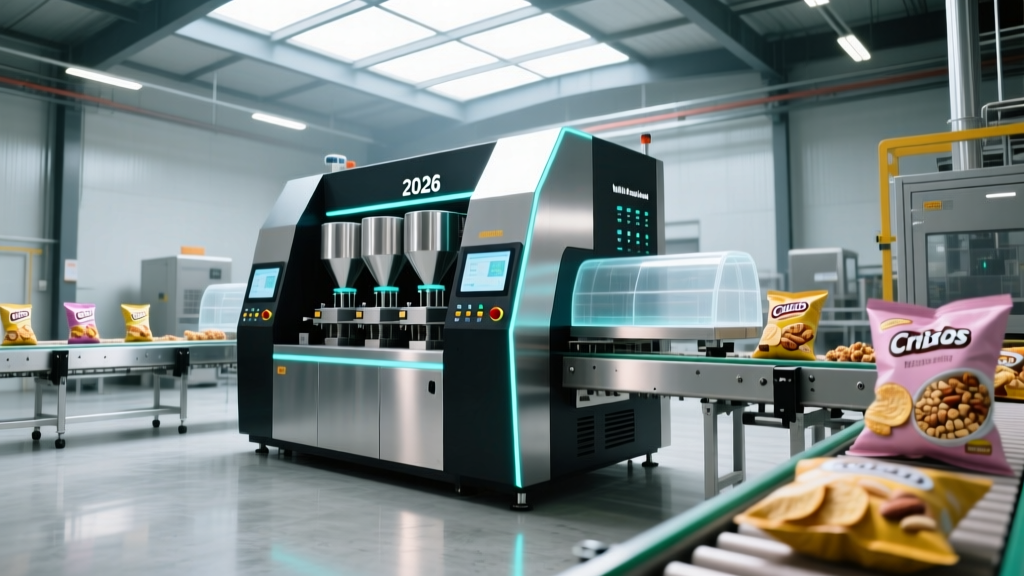
Pharmaceutical Packaging Machinery Manufacturers & Snack Weighers
Explore how pharmaceutical packaging machinery manufacturers are applying pharma-grade precision and AI to snack food multi-head weigher systems.
The Cross-Pollination of Pharma and Snack Packaging Tech
The rapid expansion of the functional food sector—encompassing fortified gummies, CBD-infused trail mixes, and high-protein clusters—has fundamentally altered the requirements for snack food packaging. Unlike traditional potato chips or pretzels, these premium products demand micro-dosing accuracy, stringent hygiene protocols, and near-zero product giveaway. This paradigm shift has prompted leading pharmaceutical packaging machinery manufacturers to adapt their high-precision counting, blistering, and micro-filling algorithms for industrial multi-head weigher systems.
By integrating pharmaceutical-grade sanitation and AI-driven predictive flow control into snack packaging lines, these manufacturers are solving the edge cases that plague standard confectionery and snack weighers. In 2026, the crossover technology from pharma to snack is no longer a niche experiment; it is the baseline requirement for any co-packer handling functional foods valued at over $15 per kilogram.
Market Insight: According to recent industry analyses aligned with ISO 22000 food safety management standards, cross-contamination risks in multi-ingredient snack blends have forced 68% of tier-1 co-packers to upgrade to pharma-specification weighers with toolless, sub-five-minute teardown capabilities.Core Innovations Driven by Pharmaceutical Packaging Machinery Manufacturers
1. AI-Powered Micro-Dosing and Giveaway Reduction
Standard multi-head weighers rely on basic combinatorial math to hit target weights, often resulting in a 2% to 4% product giveaway to avoid underfilling penalties. Pharmaceutical packaging machinery manufacturers have ported machine learning models—originally designed to verify 5mg active pharmaceutical ingredient (API) dosages—into the weigher’s central processing unit. These neural networks analyze the flow characteristics of sticky or irregularly shaped snacks (like gummy vitamins) in real-time, adjusting the vibration amplitude of the radial feeders by micro-millimeters. The result is a reduction in product giveaway from an industry average of 3.2 grams per bag down to 0.4 grams, a critical margin saver when packaging high-cost nutraceutical snacks.
2. IP69K Washdown and 3-A Sanitary Compliance
Snack food environments are traditionally dusty but dry, requiring only basic IP65 washdown ratings. However, functional snacks often contain active cultures, oils, or hygroscopic sugars that promote bacterial growth if trapped in machine crevices. Applying FDA’s Current Good Manufacturing Practice (CGMP) regulations to snack machinery, modern hybrid weighers are constructed from 316L stainless steel (rather than the standard 304 grade) and feature IP69K ratings. This allows for high-pressure, high-temperature (80°C) steam cleaning without degrading the hermetically sealed load cell sensors.
Standard Snack Weighers vs. Pharma-Hybrid Multi-Head Systems
| Specification | Standard Snack Weigher (14-Head) | Pharma-Hybrid Weigher (24-Head AI) |
|---|---|---|
| Chassis Material | 304 Stainless Steel | 316L Stainless Steel / Anodized Aluminum |
| Washdown Rating | IP65 (Low-pressure water) | IP69K (High-pressure steam/caustic) |
| Bucket Design | Smooth stainless steel | Dimpled with C4 non-stick coating |
| Teardown Time | 15–25 minutes (requires tools) | < 4 minutes (100% toolless, snap-fit) |
| Typical Giveaway | 2.5% – 4.0% | 0.3% – 0.8% |
| 2026 CapEx Range | $65,000 – $85,000 | $145,000 – $195,000 |
Overcoming Edge Cases: Sticky and Fragile Snack Profiles
The greatest point of failure when adapting pharma tech to snacks is the physical handling of the product. Pills are uniform and rigid; snack clusters are fragile and tacky. To bridge this gap, manufacturers have developed specialized contact parts:
- Ultrasonic Vibration Hoppers: For hygroscopic gummies that clump together due to static electricity or ambient humidity, ultrasonic waves are applied to the pool hoppers. This breaks surface tension and ensures a consistent, singular flow into the weigh buckets without crushing the product.
- C4 Tungsten Carbide Coatings: Standard Teflon coatings degrade under the abrasive friction of salted nuts or granola. C4 dimpled coatings provide a microscopic air gap, reducing the coefficient of friction by 40% and preventing product sticking during the discharge phase.
- Low-Angle Z-Elevators: To prevent the fracture of fragile protein chips, the infeed elevation is restricted to a maximum 45-degree angle, utilizing soft-touch silicone cleats rather than rigid plastic buckets.
Financial Impact: ROI and Capital Expenditure Breakdown
The premium pricing of pharma-hybrid multi-head weighers requires a strict ROI justification. While a standard 14-head snack weigher costs between $65,000 and $85,000, a 24-head pharma-specification system commands $145,000 to $195,000. The financial return is realized through giveaway reduction and sanitation downtime elimination.
Consider a co-packer running a fortified gummy snack valued at $18 per kilogram, operating two shifts (16 hours) at 80 bags per minute. A standard weigher with a 3% giveaway on a 150-gram bag wastes 4.5 grams per bag. Over a 250-day production year, this equates to 864,000 bags, resulting in 3,888 kilograms of lost product—valued at $69,984. By dropping the giveaway to 0.5% (0.75 grams per bag), the pharma-hybrid system saves $58,320 annually in pure product recovery. Furthermore, reducing sanitation teardown from 25 minutes to 4 minutes per shift yields an additional 21 minutes of production time daily. At an average line throughput of $400 per minute, this recovers $8,400 in potential revenue daily, drastically accelerating the ROI timeline to under six months.
“The snack industry is no longer just selling empty calories; they are selling functional nutrition. When your product costs $20 a kilo and contains active probiotics, you cannot use a machine designed for salted peanuts. The precision of pharmaceutical packaging machinery manufacturers is the only way to protect margins and ensure regulatory compliance.”
— Director of Engineering, Tier-1 Nutraceutical Co-Packer
Strategic Sourcing: What to Demand from Your OEM
When evaluating multi-head weighers for high-value snack lines, procurement teams must look beyond basic speed ratings. Demand the following technical validations from your OEM:
- Load Cell Isolation: Ensure the load cells are hermetically sealed and thermally compensated. High-temperature washdowns can cause thermal shock, leading to calibration drift in inferior sensors.
- Actuator Lifecycle Ratings: Standard pneumatic actuators fail quickly under caustic cleaning chemicals. Specify IP69K-rated stepper motors or brushless servo actuators rated for a minimum of 20 million cycles.
- Software Traceability: The HMI (Human-Machine Interface) must comply with 21 CFR Part 11 standards for electronic records, ensuring every weight deviation and calibration adjustment is logged with a user-specific digital signature—a pharma requirement that is rapidly becoming mandatory for premium snack audits.
- Predictive Maintenance Telemetry: Require integrated IoT gateways that monitor motor current draw and vibration harmonics. By establishing a baseline for healthy operation, the system can predict actuator bearing failures up to 300 hours before catastrophic breakdown, scheduling maintenance during planned weekend downtimes rather than disrupting mid-week production runs.