Used CNC Inspection Checklist: Evaluating Washing Machine Tools
Inspecting used CNC equipment? Use this comprehensive checklist to evaluate washing machine tools, parts washers, and ultrasonic cleaners before buying.
The Hidden Value in Ancillary Cell Equipment
When purchasing a used CNC machining cell, buyers typically hyper-focus on the primary assets: spindle runout, ball screw backlash, and way lubrication. However, a fully equipped machining cell relies heavily on its ancillary systems to maintain profitability and tool life. In the context of industrial manufacturing, washing machine tools refers to the critical ancillary equipment—such as aqueous rotary washers, ultrasonic tooling baths, and solvent cabinets—used to clean CNC cutters, fixtures, and machined components before inspection or re-use.
Overlooking these systems during a used equipment inspection can result in thousands of dollars in unbudgeted refurbishment costs. A degraded parts washer doesn't just slow down your workflow; it introduces abrasive particulate back into your tool holders, accelerating spindle taper wear and ruining surface finishes. This guide provides a rigorous, technical checklist for evaluating washing machine tools included in a used machinery purchase.
⚠️ Safety Lockout Warning: Before inspecting any industrial washer, ensure the main disconnect is locked out. Aqueous washers often utilize high-pressure pumps (up to 150 PSI) and high-voltage immersion heaters that pose severe arc flash and scalding hazards if accidentally triggered during visual inspection.Aqueous Rotary and Cabinet Washer Inspection
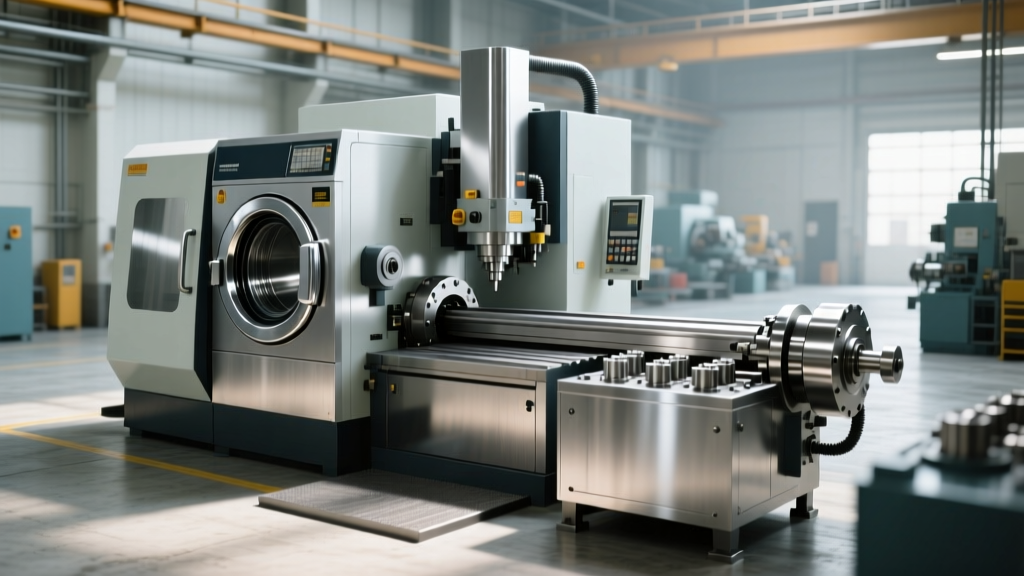
Most modern CNC cells utilize aqueous-based washing machine tools rather than solvent cabinets, driven by strict environmental regulations and the superior cleaning power of heated, high-impact alkaline detergents. When evaluating a used Alliance Manufacturing AquaMaster or a similar rotary cabinet washer, follow this mechanical and electrical diagnostic sequence:
Tank Integrity and Metallurgy
- Material Verification: Confirm the tank is constructed from 304 or 316L stainless steel. Use a portable XRF analyzer or a chemical spot test if the builder's plate is missing. 316L is mandatory if the shop previously used aggressive chlorinated cutting fluids, as 304 SS is highly susceptible to chloride-induced stress corrosion cracking.
- Weld Seam Inspection: Inspect the interior bottom corners and baffle welds for intergranular corrosion or micro-fractures. Leaks in used washers frequently originate at the turntable bearing seal or the sump return welds.
- Turntable Play: Manually rotate the internal turntable. Any grinding noise or lateral play exceeding 0.010 inches indicates bearing degradation. Replacing a heavy-duty turntable bearing on a 1,500-lb capacity washer typically costs between $1,800 and $3,200 in parts and labor.
Pump, Nozzle, and Filtration Systems
The wash pump is the heart of the system. Check the motor nameplate for the service factor and ensure the impeller matches the fluid's specific gravity.
- VFD Verification: Modern washing machine tools utilize Variable Frequency Drives (VFDs) to adjust pump pressure based on the part geometry. Power up the HMI and verify the VFD ramps up smoothly without throwing over-current faults.
- Nozzle Cavitation: Remove three random spray nozzles. If the orifice edges are rounded or pitted, cavitation erosion has occurred. This drops the impingement force drastically, leaving carbide tool flutes clogged with built-up edge (BUE).
- Filtration Media: Inspect the bag filter housing (typically rated for 10 to 50 microns). If the housing interior is heavily scored, the previous owner bypassed the filter baskets, allowing swarf to recirculate and destroy the pump impeller.
Ultrasonic Tooling Cleaner Diagnostics
Ultrasonic cleaners are essential washing machine tools for maintaining the accuracy of ER collets, shrink-fit holders, and hydraulic tooling. The cleaning action relies on acoustic cavitation, which degrades over time if the equipment is abused.
💡 Pro Tip: The Foil TestTo quickly test the uniformity of an ultrasonic bath's cavitation field without specialized meters, suspend a piece of standard aluminum foil in the tank filled with water. Run the generator for 60 seconds. Inspect the foil for a uniform pattern of microscopic pitting. Blank spots indicate dead transducers or delamination of the epoxy bond between the transducer and the tank floor.
When inspecting the generator cabinet, look for sweep-frequency technology. Older, fixed-frequency generators (e.g., locked at exactly 40.00 kHz) create standing waves in the tank, resulting in 'hot spots' that can micro-chip the delicate cutting edges of diamond-coated end mills. A modern sweep-frequency generator continuously modulates the frequency (e.g., 39.5 kHz to 40.5 kHz) to ensure uniform cavitation density.
2026 Refurbishment vs. Replacement Cost Matrix
Use the following matrix to calculate your leverage during the used equipment negotiation. These figures represent average industrial market rates for standard mid-sized CNC cell washers (50 to 150-gallon capacity) as of early 2026.
| Component | Common Failure Mode | Refurbishment Cost | Full Replacement Cost |
|---|---|---|---|
| Wash Pump (5 HP - 10 HP) | Impeller cavitation, seal leaks | $450 - $900 | $2,400 - $4,100 |
| Immersion Heater Array | Calcification, element burnout | $300 - $600 | $1,200 - $2,500 |
| Ultrasonic Transducer Array | Epoxy delamination, cracking | N/A (Must replace) | $1,800 - $4,500 |
| PLC / HMI Touchscreen | Screen burn-in, I/O failure | $250 (Rebuild) | $1,500 - $3,200 |
| Tramp Oil Skimmer | Belt degradation, motor seizure | $150 - $350 | $800 - $1,600 |
Environmental Compliance and Fluid Management
Evaluating washing machine tools also requires a strict assessment of environmental compliance. According to the OSHA Flammable Liquids Guidelines, if the used cell includes older solvent-based parts washers, you must verify the presence of self-closing lids, flame arrestors, and proper grounding lugs to prevent static discharge ignition.
For aqueous systems, evaluate the fluid management accessories. A high-quality used washer should include a coalescing oil skimmer (such as an Abanaki or Monroe Engineering unit) to remove tramp oil. If the sump is covered in a thick layer of anaerobic bacteria (identifiable by a 'rotten egg' odor and dark grey sludge), the previous owner neglected the fluid chemistry. This biological growth corrodes the internal plumbing and requires a complete chemical flush, passivation of the stainless steel, and new fluid chemistry setup, adding roughly $800 to $1,200 in downtime and materials.
Furthermore, consult the NIOSH Solvent Safety Guidelines if the facility utilizes vapor degreasers or specialized solvent washing machine tools for cleaning aerospace or medical components. Ensure the local exhaust ventilation (LEV) hoods are intact and the condenser coils on the degreaser are free of scale, which severely impacts solvent recovery rates.
Leveraging Defects in Price Negotiation
Ancillary equipment is often treated as a 'freebie' in used CNC machine sales, but its refurbishment costs are very real. Do not accept a blanket 'as-is' condition for the washing machine tools without quantifying the defects.
Negotiation Framework: If the primary CNC mill is priced at $85,000 and the included rotary parts washer has a failed 7.5 HP pump, a calcified heater array, and a dead HMI, the total refurbishment cost easily exceeds $6,500. Present the seller with the itemized replacement matrix. Request a direct deduction from the primary machine's invoice, framing it as: "The cell is incomplete without functional washing machine tools. The cost to bring the ancillary systems to 2026 operational standards is $6,500, which we will deduct from the final wire transfer."
By treating washing machine tools with the same rigorous inspection standards as the CNC spindle and tool changers, you protect your shop's tooling investment, ensure environmental compliance, and secure a significantly better financial deal on used equipment acquisitions.