Spindle Bearing Costs: Three M Tool and Machine Analysis
Analyze machine tool spindle types and bearing configurations. Learn budget planning and cost metrics with Three M Tool and Machine procurement data.
Machine shop profitability is inextricably linked to spindle uptime. When a high-speed machining center goes down due to a seized bearing or thermal runaway, the cost extends far beyond the replacement parts; it encompasses lost cycle time, scrapped aerospace or medical components, and expedited freight fees. For manufacturing engineers and procurement managers, understanding the true Total Cost of Ownership (TCO) for machine tool spindle types and bearing configurations is critical. By analyzing regional supply chain data and procurement baselines from distributors like Three M Tool and Machine, we can map out exact capital expenditures (CapEx), operational expenditures (OpEx), and rebuild costs for modern CNC spindles in 2026.
Spindle Drive Types: CapEx vs. Rebuild Economics
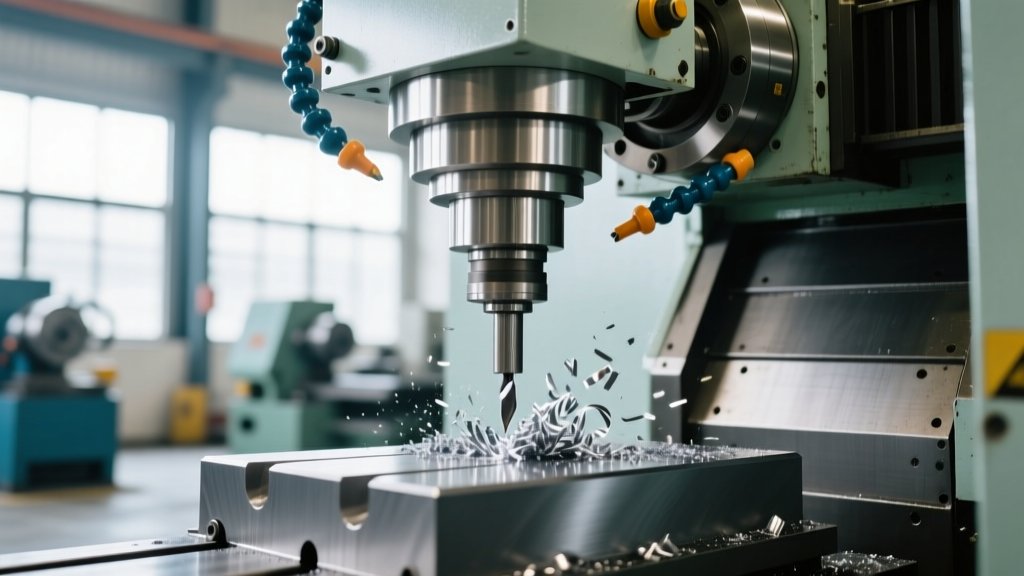
The architecture of the spindle dictates both the initial machine cost and the long-term maintenance budget. Selecting the wrong spindle type for your specific cutting application results in either overspending on unused RPM capabilities or destroying a low-tier spindle with high-torque roughing operations.
| Spindle Type | Max RPM Range | Initial CapEx Premium | Avg. Rebuild Cost (2026) | Primary Failure Mode |
|---|---|---|---|---|
| Belt-Driven | 8,000 – 12,000 | Base (Included) | $2,800 – $4,500 | Belt slip, rear bearing contamination |
| Direct-Drive (Inline) | 14,000 – 20,000 | +$12,000 – $18,000 | $5,500 – $8,000 | Coupling wear, thermal expansion |
| Motorized (Electrospindle) | 24,000 – 42,000+ | +$25,000 – $45,000 | $11,000 – $18,500 | Cooling jacket failure, rotor burnout |
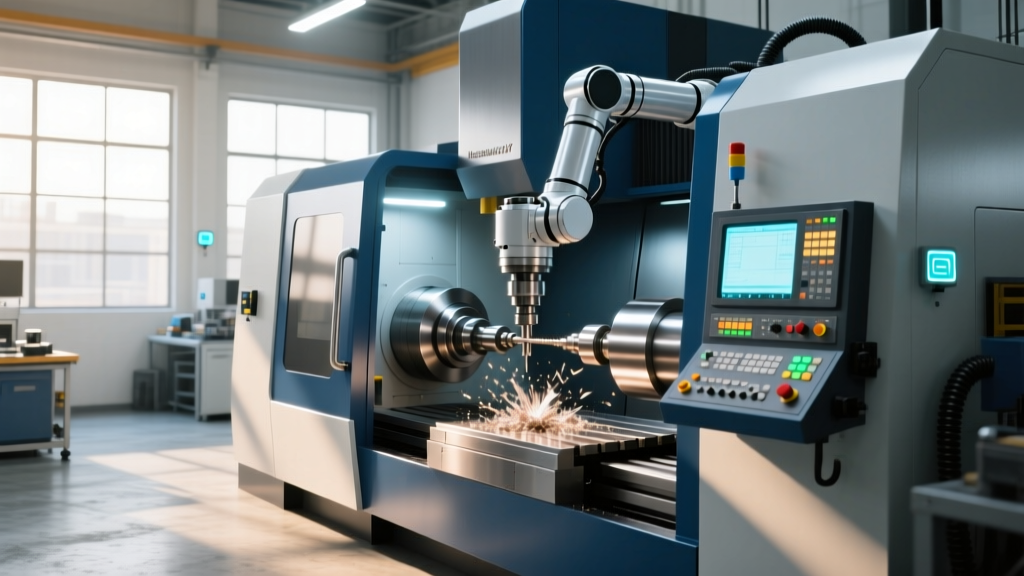
Motorized spindles integrate the rotor directly onto the spindle shaft, eliminating transmission losses and allowing for extreme surface speeds required in aluminum aerospace structural milling or hardened steel die-mold finishing. However, the OpEx is severe. A single failure in the internal liquid cooling jacket can warp the shaft, turning a standard bearing swap into a complete $15,000+ shaft replacement. Budget planners must allocate a minimum of 8% of the spindle's initial CapEx annually for preventative maintenance and chiller system upkeep.
Bearing Configurations: The True Driver of Spindle OpEx
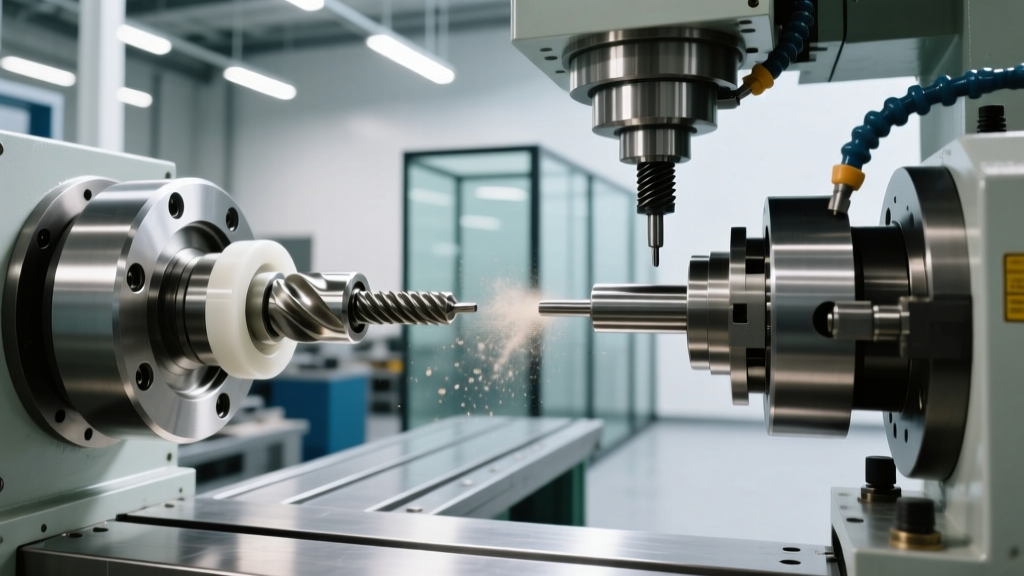
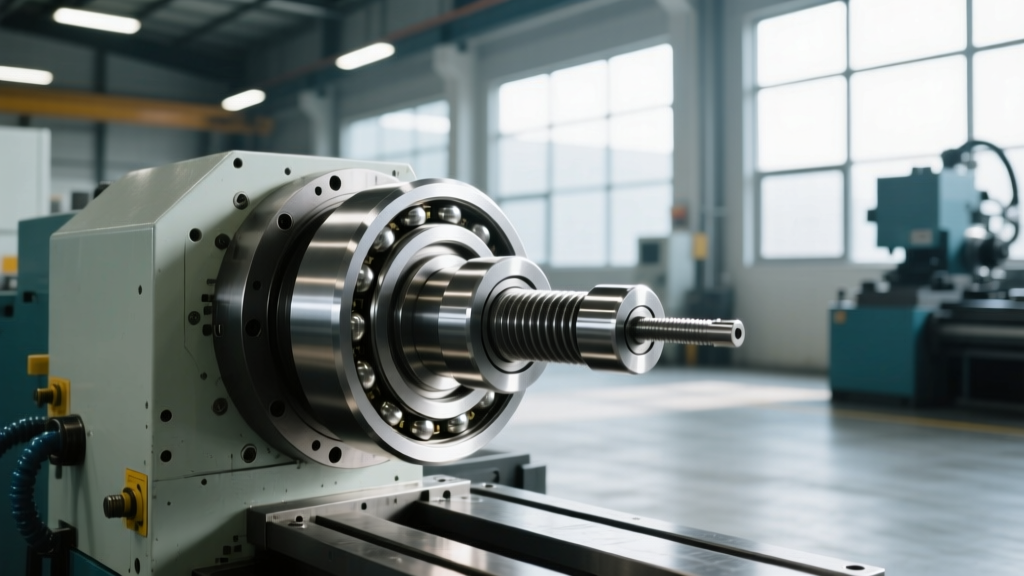
The heart of any spindle is its bearing configuration. The industry standard for high-precision CNC machining centers relies on a hybrid arrangement: angular contact ball bearings at the front (for axial and radial loads) paired with cylindrical roller bearings at the rear (for radial support and thermal expansion compensation).
Steel vs. Hybrid Ceramic Angular Contact Bearings
When sourcing through networks like Three M Tool and Machine, buyers are frequently presented with a choice between standard high-carbon chrome steel (e.g., SKF 7014 CD/P4A) and hybrid ceramic bearings featuring silicon nitride (Si3N4) balls (e.g., SKF 7014 CD/HCP4A).
Cost-Benefit Insight: A set of four ISO P4 (ABEC 7) steel angular contact bearings for a standard 15,000 RPM spindle costs approximately $1,800. The exact same configuration in hybrid ceramic costs roughly $2,950. While the hybrid set carries a 63% upfront premium, the ceramic balls are 40% lighter and possess a lower coefficient of thermal expansion. In continuous high-speed milling (above 1M DN value), hybrid bearings routinely outlast steel equivalents by 300%, effectively cutting bearing replacement labor costs in half over a five-year period.According to technical data on SKF super-precision bearings, the reduced mass of the silicon nitride balls drastically lowers centrifugal forces on the outer ring raceway at high speeds. This minimizes contact stress and delays the onset of subsurface fatigue, which is the primary cause of spalling in steel bearings operating above 18,000 RPM.
Rear Support: Cylindrical Roller Bearings
The rear of the spindle must accommodate thermal growth. As the spindle heats up, the shaft elongates. If the rear bearing restricts this axial movement, the front bearings will experience catastrophic preload spikes. Precision cylindrical roller bearings (such as the Schaeffler N1014 KPHA SP series) allow the inner ring to slide axially relative to the outer ring. Budgeting for these requires an allocation of $450 to $700 per bearing, but attempting to substitute them with standard deep groove ball bearings to save $200 will guarantee spindle seizure within 500 hours of operation due to thermal binding.
Lubrication Systems: Grease-Packed vs. Oil-Air
Bearing configuration is only half the equation; lubrication dictates the speed limit and lifespan. When planning your machine tool budget, the lubrication delivery system requires distinct line items.
- Grease-Packed (Sealed for Life): Requires zero upfront plumbing costs. Bearings are pre-packed with high-speed synthetic grease (e.g., Kluber Isoflex NBU 15). Limitation: Caps spindle speed at roughly 500,000 DN value. Once the grease degrades, the entire bearing must be replaced.
- Oil-Air Lubrication: Requires an external mixing unit, precision metering valves, and airline plumbing. Cost: Adds $3,200 to $4,800 to the initial machine build or retrofit budget. Advantage: Continuously flushes heat from the raceway, enabling operations past 1.5M DN value and extending bearing life indefinitely, provided the air supply is perfectly dry and filtered to 0.01 microns.
If budgeting for an oil-air system, do not cut costs on the air preparation unit. Standard shop air contains moisture and compressor oil. If you bypass a dedicated coalescing filter and desiccant dryer to save $800, atomized water will enter the spindle bearings, causing micro-corrosion and hydrogen-induced cracking on the raceways. The resulting $12,000 spindle rebuild will erase any initial savings immediately.
Procurement Strategy: Navigating Lead Times and Core Returns
Analyzing procurement logs from regional suppliers such as Three M Tool and Machine reveals that the hidden cost in spindle maintenance is not the part price, but the lead time penalty. In the current 2026 manufacturing landscape, lead times for super-precision ISO P2 (ABEC 9) bearings can stretch from 12 to 26 weeks due to specialized grinding and lapping bottlenecks at major European and Japanese manufacturing facilities, as noted in Schaeffler's industrial precision catalogs.
The Core Return Credit Framework
When budgeting for a complete motorized spindle replacement, always factor in the OEM core return policy. Most major spindle manufacturers (including GMN, Kessler, and Weiss) offer a 15% to 22% credit on the new spindle price if the old, failed spindle is returned within 30 days. On a $28,000 electrospindle, this yields a $5,600 rebate. However, if the spindle housing is cracked or the coolant jacket is filled with chips due to improper teardown, the core is rejected, and the budget takes a massive, unplanned hit. Always allocate $350 for a professional teardown and inspection prior to shipping the core back to the OEM.
Failure Mode Cost Analysis: Where Budgets Break Down
To build a resilient maintenance budget, shop managers must allocate funds based on statistical failure modes rather than optimistic lifespans.
- Contamination (42% of failures): Coolant ingress past the labyrinth seals. Budget Impact: Requires full bearing replacement and seal kit ($2,500 parts + $1,500 labor). Prevention: Budget $400 annually for replacing external air purge seals and checking labyrinth air pressure.
- Thermal Preload Loss (28% of failures): Improper run-in procedures cause the bearings to overheat, melting the grease and resulting in a loss of preload. Budget Impact: Complete scrap of the bearing set ($1,800). Prevention: Implement automated CNC spindle warm-up macros that gradually increase RPM over 15 minutes.
- Crash Damage (20% of failures): Operator error or CAM verification failure drives the tool into the tombstone. Budget Impact: Shaft taper runout exceeds 3 microns, requiring shaft replacement ($6,000+). Prevention: Invest in acoustic emission (AE) crash detection systems ($4,500 upfront) which stop the Z-axis in under 2 milliseconds.
Finalizing Your Spindle Budget
Effective budget planning for machine tool spindles requires moving beyond the initial purchase price of the machining center. By evaluating the specific RPM requirements of your toolpaths, selecting hybrid ceramic bearings for high-speed applications, investing heavily in oil-air filtration, and leveraging core-return credits through established distributors like Three M Tool and Machine, manufacturing facilities can reduce their 5-year spindle OpEx by up to 35%. Precision machining demands precision budgeting; treat your spindle not as a consumable, but as the most critical, high-maintenance asset on your shop floor.