Linear vs Box Ways in SMEC Machine Tools: Technical Specs & Performance
Compare linear and box way systems in SMEC machine tools. Analyze technical specs, damping ratios, friction coefficients, and precision for CNC machining.
The kinematic foundation of any CNC machining center or turning center dictates its ultimate capability in metal removal rates (MRR), surface finish, and geometric accuracy. When evaluating SMEC machine tools—a brand globally recognized for its robust SL-series lathes and VM-series vertical machining centers—the choice between linear guide ways and box ways is not merely a preference; it is a fundamental engineering decision. As manufacturing demands in 2026 push toward tighter tolerances for EV motor housings and high-speed aerospace structural components, understanding the exact tribological and dynamic differences between these two way systems is critical for process engineers and shop owners.
The Physics of Motion: Rolling vs. Sliding Friction
To understand the performance divergence in CNC way systems, one must examine the Stribeck curve, which maps the coefficient of friction against the Hersey number (speed and viscosity over load).
Core Tribological Differences
- Linear Ways (Rolling Contact): Utilize recirculating ball or roller bearings. The coefficient of friction ($\mu$) is exceptionally low, typically ranging from 0.002 to 0.004. This minimizes heat generation and eliminates the stick-slip phenomenon at ultra-low feed rates.
- Box Ways (Sliding Contact): Rely on metal-to-metal (or metal-to-polymer) sliding contact. The dynamic coefficient of friction is higher, generally between 0.02 and 0.05. However, the massive surface area contact provides exponential gains in vibration damping.
According to foundational manufacturing principles outlined by the Society of Manufacturing Engineers (SME), the selection between these systems hinges on the specific frequency and amplitude of cutting forces generated by the intended workpiece materials.
Linear Way Configurations in SMEC Machine Tools
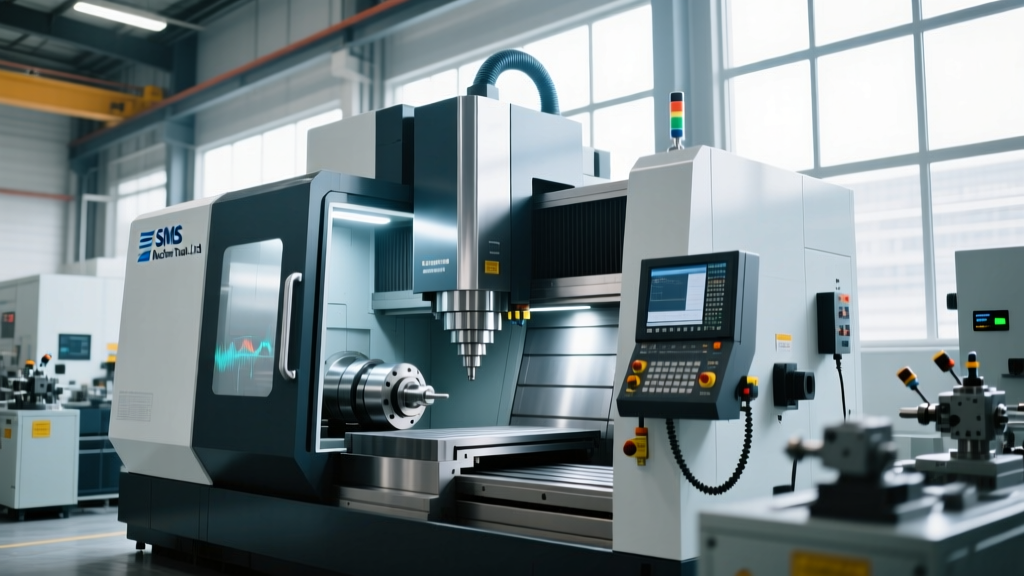
SMEC integrates high-precision linear motion (LM) guides primarily in their VM-series Vertical Machining Centers (e.g., VM-850, VM-1050) and high-speed SL-series turning centers. These systems are engineered for rapid acceleration and micro-positioning accuracy.
Technical Specifications & Architecture
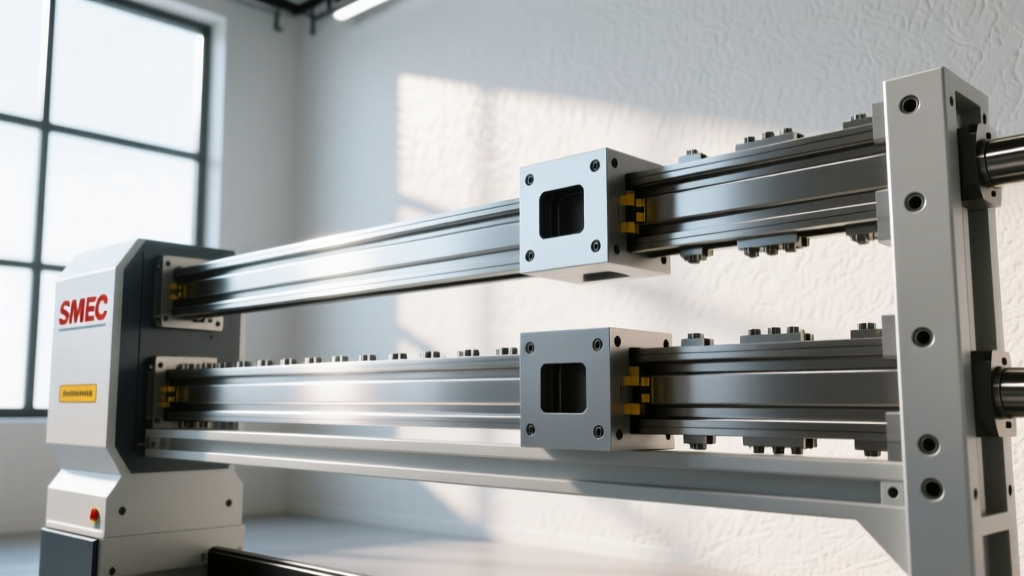
Modern SMEC linear way machines utilize preloaded recirculating ball bearing blocks. The preload is critical: it eliminates internal clearance, thereby increasing the static rigidity of the carriage. SMEC typically specifies Heavy Preload (C1 class) for their machining centers, which increases rigidity by approximately 2.5 times compared to standard clearance blocks, at the cost of a slightly reduced bearing lifespan.
- Rapid Traverse Rates: Up to 36 m/min to 48 m/min on X/Y axes, enabled by the near-zero rolling resistance.
- Positioning Accuracy: Capable of maintaining $\pm$0.005 mm repeatability over full axis travel, verified via laser interferometry.
- Thermal Displacement: Because rolling friction generates minimal heat, thermal growth along the Z-axis and X-axis is heavily mitigated, a crucial factor for 2026 precision boring operations where ambient temperature fluctuations can scrap tight-tolerance parts.
The Limitation: Dynamic Rigidity and Chatter
While linear ways excel in speed, their point-contact (ball) or line-contact (roller) architecture limits their dynamic damping capacity. When subjected to heavy, interrupted cuts—such as milling keyways in hardened steel or machining titanium aerospace forgings—the harmonic vibrations can exceed the damping threshold of the linear blocks, leading to tool chatter, accelerated carbide insert wear, and poor surface finishes.
Box Way Configurations: Heavy-Duty Damping
For heavy-duty turning and aggressive milling, SMEC offers box way configurations, prominently featured in their heavy-duty SL-series CNC lathes (e.g., SL-2000B) and specialized boring mills. Box ways represent the traditional, uncompromising approach to machine tool rigidity.
Material Science and Turcite-B Integration
Raw cast iron sliding on cast iron would result in catastrophic galling. To prevent this, SMEC machine tools utilize Turcite-B (a PTFE-based composite polymer) bonded to the moving carriage surfaces. Turcite-B reduces the static friction coefficient, effectively neutralizing the stick-slip effect that historically plagued box ways during micro-feed movements.
Furthermore, the mating cast iron surfaces (often graded GGG60 nodular iron) undergo precision hand-scraping or high-precision CNC grinding to achieve flatness tolerances of less than 5 microns per meter. This scraping creates microscopic oil pockets that maintain a hydrodynamic lubrication film even under extreme static loads.
Damping Capacity Metrics
The primary advantage of the SMEC box way system is its loss factor ($\eta$), which measures energy dissipation. A box way system typically exhibits a damping capacity 5 to 10 times greater than an equivalently sized linear way system. This allows the machine to absorb the high-frequency harmonics generated during aggressive roughing passes, protecting the spindle bearings and extending tool life by up to 30% in hard-milling applications.
Technical Comparison Matrix: Linear vs. Box Ways
The following matrix contrasts the operational parameters of SMEC's linear and box way architectures based on standard VDI/DGQ 3441 testing methodologies.
| Parameter | SMEC Linear Way (VM-Series) | SMEC Box Way (SL-Series Heavy) |
|---|---|---|
| Friction Type | Rolling (Recirculating Balls) | Sliding (Turcite-B on Cast Iron) |
| Static Rigidity | High (Dependent on Preload Class) | Exceptional (Massive Surface Area) |
| Dynamic Damping | Low to Moderate | Very High (Absorbs Chatter) |
| Max Rapid Traverse | 36 - 48 m/min | 15 - 24 m/min |
| Stick-Slip Tendency | None | Negligible (Mitigated by Turcite) |
| Lubrication Requirement | NLGI Grade 2 Grease / ISO VG 68 Oil | ISO VG 220 Way Oil (Tackified) |
| Maintenance Interval | 6 Months (Grease purge/repack) | Continuous (Automated Central Lube) |
Edge Case Analysis: Thermal Growth and Chip Evacuation
A frequently overlooked aspect of way system selection is chip evacuation and thermal management. In linear way systems, the carriage blocks are exposed. While telescopic steel covers protect the rails, fine swarf from aluminum or cast iron machining can infiltrate the wiper seals, leading to premature recirculation failure. SMEC mitigates this in their 2026 linear models with advanced multi-lip polyurethane wipers, but the risk remains in dry-machining environments.
Conversely, box ways are inherently enclosed within the machine casting. The sliding surfaces are completely shielded from direct chip impingement. However, the sliding friction of box ways generates more localized heat. If the automated central lubrication system fails, or if the way oil viscosity drops due to coolant contamination, the hydrodynamic film collapses, resulting in scoring. Therefore, box way machines require strict adherence to fluid maintenance schedules and the use of high-quality, tackified way oils that resist wash-off from flood coolants.
Decision Framework: Specifying the Right SMEC Way System
Selecting between linear and box ways in SMEC machine tools requires mapping your shop's specific production profile to the kinematic strengths of each system. Use the following engineering decision matrix:
Specify SMEC Linear Ways (VM-Series / High-Speed SL) If:
- Primary Materials: Aluminum alloys (6061, 7075), plastics, or pre-hardened steels under 45 HRC.
- Operation Profile: High-volume production requiring rapid tool changes, fast positioning, and light-to-medium continuous cutting forces.
- Tolerance Requirements: Micro-positioning for boring and jig-milling where stick-slip could ruin sub-micron surface finishes.
- Footprint Constraints: Linear ways allow for more compact machine designs, maximizing floor space in high-density CNC cells.
Specify SMEC Box Ways (Heavy-Duty SL / Boring Mills) If:
- Primary Materials: Inconel, titanium, hardened tool steels (50+ HRC), or heavy cast iron forgings.
- Operation Profile: Aggressive roughing, heavy interrupted cuts, and deep-hole boring where harmonic chatter is the primary failure mode.
- Tooling Investment: You are utilizing expensive, specialized carbide or CBN inserts and need to maximize tool life through superior vibration absorption.
- Machine Lifespan: Box ways can be re-scraped and rebuilt after decades of use, offering a lower total cost of ownership (TCO) over a 20-year lifecycle compared to replacing linear bearing blocks.
Ultimately, the architecture of the way system defines the physical limits of the machine. By aligning the tribological realities of linear guides and box ways with your specific metallurgical and production requirements, you ensure that your capital equipment investment yields maximum profitability and precision on the shop floor.