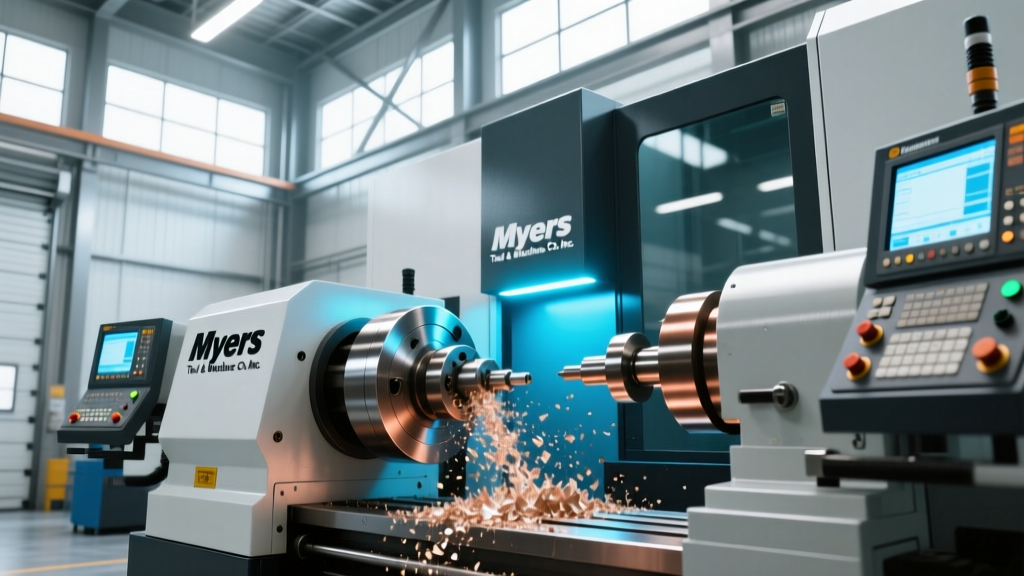
Myers Tool & Machine Co Inc: CNC Tooling Value Analysis
Evaluate Myers Tool & Machine Co Inc for CNC procurement. We compare brand value, TCO, and specialized support against national mega-distributors.
Procuring CNC tooling and machine accessories in 2026 requires looking far past catalog list prices. Machine shops running multi-axis platforms like the DMG Mori DMU 50 or Mazak VCN-530C cannot afford the downtime and scrap rates associated with generic, one-size-fits-all catalog ordering. This operational reality is driving a shift toward specialized regional partners. Evaluating Myers Tool & Machine Co Inc against national mega-distributors and direct OEM purchasing reveals distinct differences in Total Cost of Ownership (TCO), application engineering depth, and supply chain resilience.
2026 Procurement Data Highlight
Average CNC Downtime Cost: $250 - $580 per hour (depending on spindle utilization and overhead burden).
Tooling-Related Scrap Rate (Unoptimized): 4.2% of total material cost.
Value-Add Partner Impact: Specialized application engineering reduces tooling-induced scrap by an average of 1.8% and increases spindle uptime by 11%.
The Shift from National Catalogs to Regional Experts
National distributors excel at logistics and breadth of inventory, but they frequently lack the localized application engineering required for complex machining challenges. When a shop purchases directly from a massive catalog, they are buying a commodity. When partnering with a specialized entity like Myers Tool & Machine Co Inc, shops are procuring a machining solution.
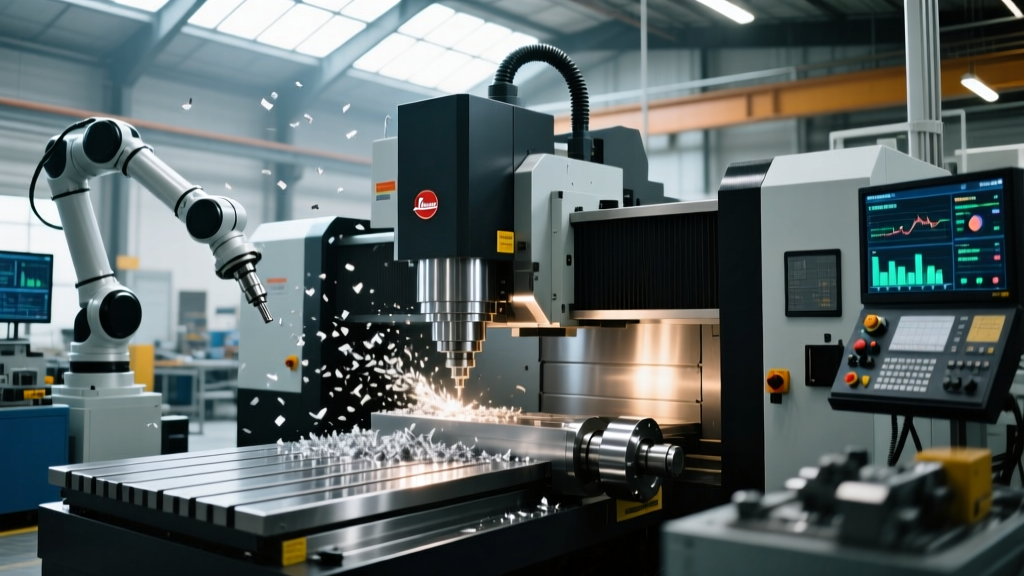
The primary differentiator is technical intervention. Consider the challenge of machining Inconel 718 on a 5-axis trunnion table. A standard distributor will fulfill an order for generic 4-flute carbide end mills. A specialized partner dispatches an application engineer to analyze spindle load data, recommends a variable-helix geometry specifically designed for high-temperature alloys, and works with the shop's CAM programmer to optimize toolpaths for dynamic trochoidal milling. This intervention routinely extends tool life from 14 minutes to over 45 minutes and eliminates chatter marks that would otherwise require secondary benchwork.
According to supply chain resilience reports from the National Institute of Standards and Technology (NIST), localized manufacturing partnerships significantly reduce vulnerability to global logistics disruptions, a critical factor for shops operating under strict aerospace and defense delivery schedules.
CNC Brand Compatibility & Procurement Matrix
Not all tooling brands perform equally across different machine tool spindles and material groups. Evaluating how Myers Tool & Machine Co Inc manages brand portfolios compared to alternative channels clarifies the value proposition.
| Procurement Channel | Application Engineering | Custom Tool Regrinding | VMI Integration | Lead Time (Specialty) |
|---|---|---|---|---|
| Direct OEM (e.g., Sandvik, Iscar) | High (but fragmented across brands) | Slow (ship back to factory) | Limited to specific brand ecosystems | 2-4 Weeks |
| National Mega-Distributor | Low (Call center support) | Outsourced (3-5 day turnaround) | High (RFID/Barcode cribs available) | 1-2 Days |
| Myers Tool & Machine Co Inc | High (On-site, multi-brandagnostic) | Localized (24-48 hour turnaround) | High (Tailored to shop floor layout) | Same-Day / Next-Day |
Direct OEM vs. Specialized Procurement
Buying direct from an OEM like Kennametal or Guhring guarantees authenticity and access to the newest product releases, such as the latest HARVI III 5-flute end mills for titanium roughing. However, it creates a fragmented vendor base. A shop running a Doosan DVF 5000 might buy coromant drilling tools from Sandvik, threading tools from Seco, and workholding from Kurt. Managing five different direct OEM accounts results in disjointed freight invoices, incompatible Vendor Managed Inventory (VMI) software, and zero cross-brand optimization. Partners like Myers Tool & Machine Co Inc consolidate these brands into a single, optimized ecosystem, providing a unified point of contact for technical and logistical support.
Financial Breakdown: Calculating True Tooling Value
Shop owners often fixate on the unit price of a carbide insert, ignoring the massive hidden costs embedded in their procurement strategy. To understand the true value of a specialized distributor, we must analyze the Total Cost of Ownership (TCO) for a mid-sized, 15-machine CNC job shop generating $8 million in annual revenue.
Warning: The Hidden Costs of Direct & Catalog Buying
- Inventory Carrying Costs: Maintaining a redundant safety stock of $60,000 in tooling ties up capital. At a standard 20% carrying cost, this bleeds $12,000 annually.
- Freight Expediting: Paying for overnight shipping on forgotten or broken tooling averages $4,500 per year.
- Application Downtime: When a shop foreman spends 4 hours a week troubleshooting chatter or adjusting feeds/speeds instead of managing production, the burdened labor cost exceeds $18,000 annually.
- Scrap from Tool Failure: Unoptimized tooling paths and degraded regrinds result in scrapped parts. In aerospace machining, a single scrapped Inconel blisk can cost $4,000 in raw material and lost machine time.
When Myers Tool & Machine Co Inc implements a localized VMI system paired with bi-weekly application engineering reviews, the unit cost of the tooling might be 4% to 8% higher than a discounted internet catalog price. However, the elimination of the $34,500 in hidden costs outlined above, combined with a 12% reduction in scrap and a 15% increase in parts-per-hour, yields a net positive ROI within the first two quarters. Industry data from the Association for Manufacturing Technology (AMT) consistently shows that shops prioritizing process optimization over raw tooling cost achieve significantly higher profit margins in tight-tolerance sectors.
Decision Framework: When to Partner with Myers
Not every machine shop requires the intensive support of a specialized regional partner. High-volume, low-mix production environments running standard 6061 aluminum parts on 3-axis mills may achieve the best margins through automated, high-volume catalog purchasing. Use the following decision matrix to determine if Myers Tool & Machine Co Inc is the correct procurement channel for your specific operation.
- Material Complexity: If more than 30% of your work involves difficult-to-machine materials (Inconel, Hastelloy, Titanium, hardened steels above 45 HRC), the application engineering provided by a specialized partner is mandatory to maintain profitability.
- Spindle Utilization: If your machines are running 2+ shifts and spindle downtime costs exceed $300/hour, the localized inventory and rapid regrinding services of Myers Tool & Machine Co Inc will prevent catastrophic schedule delays.
- Tolerance Requirements: For shops holding sub-0.0005-inch tolerances where tool deflection and thermal growth dictate part acceptance, generic tooling is a liability. You require the brand-agnostic technical audits that specialized distributors provide.
- Internal Engineering Bandwidth: If your shop lacks a dedicated, full-time Manufacturing Engineer or Tooling Crib Manager, outsourcing the technical and logistical burden to a regional expert frees up floor leadership to focus on quoting and quality control.
Real-World Application: Aerospace vs. General Job Shop
Consider two distinct manufacturing profiles. Shop A is a general job shop producing mild steel brackets and aluminum enclosures. Shop B is an aerospace tier-3 supplier machining 5-axis structural titanium components.
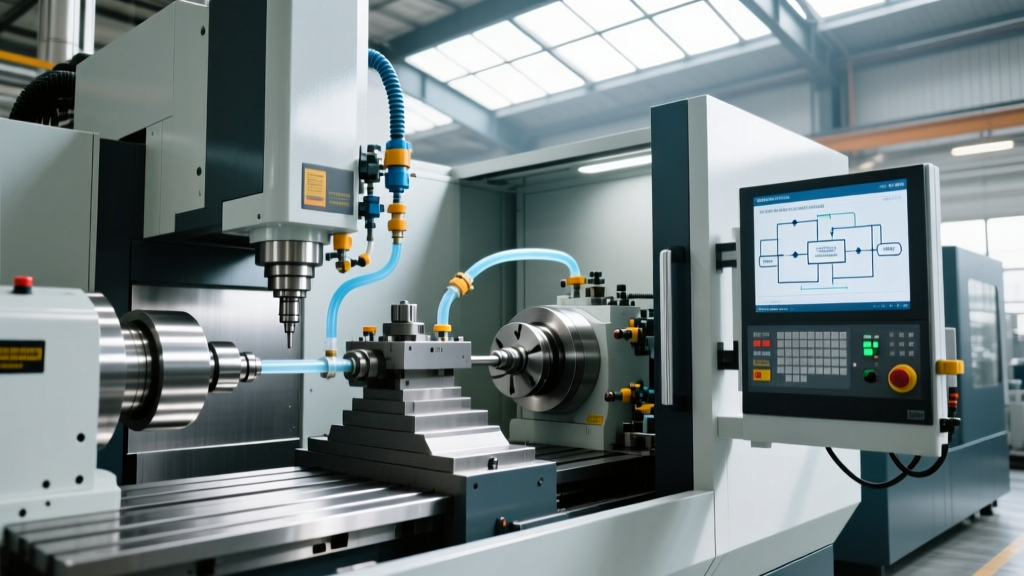
For Shop A, the value proposition of Myers Tool & Machine Co Inc lies primarily in logistics: consolidated invoicing, reliable next-day delivery, and basic VMI crib management. The tooling brands selected will be standard, cost-effective geometries. For Shop B, the value is entirely technical. Myers engineers will conduct time studies, implement specialized coolant-through tooling (such as Sandvik CoroDrill 860 for deep hole drilling), and establish a localized regrinding loop that guarantees the exact edge prep required for titanium roughing. The ROI in Shop B is measured in hundreds of thousands of dollars in saved cycle time, whereas in Shop A, it is measured in administrative efficiency.
'The modern machine shop cannot survive on cheap tooling and expensive downtime. The shops winning contracts in 2026 are those that treat their tooling distributors as an extension of their own engineering department, leveraging localized expertise to squeeze every ounce of efficiency out of their spindle hours.'
Final Procurement Verdict
Selecting a tooling and equipment partner is a strategic capital decision, not a routine purchasing task. While national distributors offer unmatched breadth and direct OEMs offer brand-specific depth, regional specialists like Myers Tool & Machine Co Inc bridge the gap by providing brand-agnostic application engineering, rapid localized support, and integrated inventory management. For machine shops tackling complex geometries, abrasive materials, and tight delivery windows, the slight premium in unit cost is vastly outweighed by the measurable gains in spindle uptime, scrap reduction, and overall manufacturing velocity.