How to Machine Tool Steel: Flood vs MQL Lubrication Compared
Discover how to machine tool steel by comparing flood coolant and MQL systems. Analyze schedules, costs, and failure modes for D2, A2, and M2 alloys.
The Metallurgical Reality of Tool Steel Alloys
Machining tool steel—specifically high-carbon, high-chromium grades like D2, air-hardening A2, and molybdenum high-speed M2—presents a unique thermal and mechanical challenge. These alloys are engineered for extreme wear resistance, which translates directly to high cutting forces and massive localized heat generation at the shear zone. When figuring out how to machine tool steel effectively, the primary variable you control is thermal management. If heat is not evacuated or managed correctly, you risk rapid insert wear, work hardening of the chip, and metallurgical damage to the workpiece surface.
Key Data Point: During the milling of pre-hardened D2 tool steel (approx. 200 HB), localized cutting zone temperatures can easily exceed 1,400°F (760°C). Without adequate boundary lubrication, this heat transfers directly into the carbide substrate, accelerating crater wear and plastic deformation.The industry standard has long been high-volume flood coolant, but Minimum Quantity Lubrication (MQL) has emerged as a highly viable, cost-effective alternative for specific tool steel operations. Below is a deep-dive comparison of both systems, including exact maintenance schedules, fluid specifications, and operational parameters.
Flood Coolant Systems: High-Pressure Delivery and Schedules
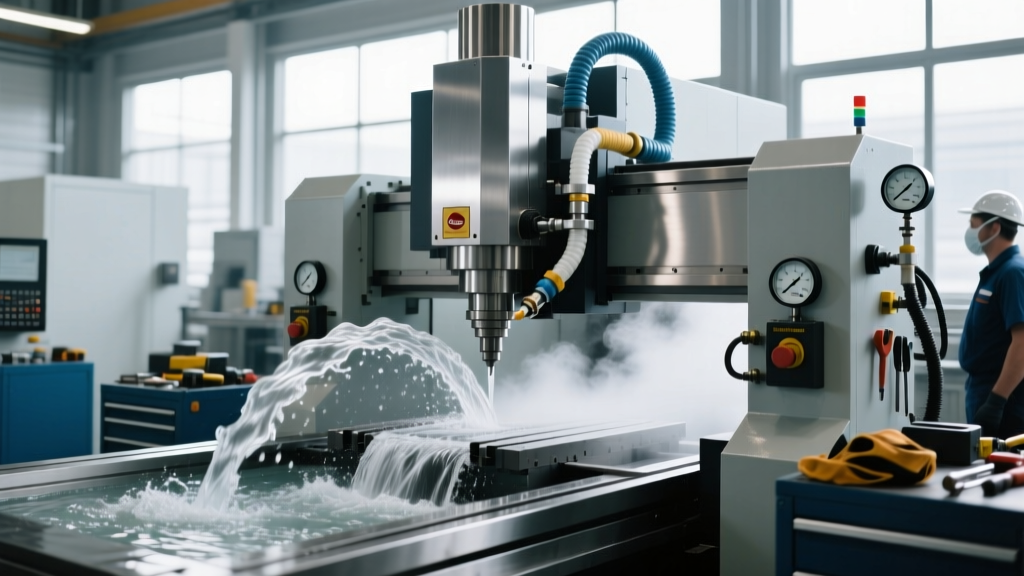
Flood coolant relies on high-volume fluid delivery to cool the cutting zone, lubricate the tool-chip interface, and evacuate chips. For tool steel, standard low-pressure (30-50 PSI) flood systems are largely inadequate for deep cavity milling or high-speed machining. Modern setups require high-pressure through-tool delivery.
System Specifications and Fluid Selection
For machining tool steel, a semi-synthetic fluid with high boundary lubrication additives is mandatory. A proven industry standard is Master Fluid Solutions TRIM MicroSol 585XT. This fluid provides the necessary lubricity to prevent built-up edge (BUE) on uncoated or TiAlN-coated carbide inserts.
- Pressure Requirements: Minimum 1,000 PSI (69 bar) through-tool for chip evacuation in deep drilling; 300-500 PSI external flood for general turning and face milling.
- Concentration Target: 8% to 10%. Tool steels are highly susceptible to flash rusting; running lean (below 7%) will result in immediate surface oxidation on A2 and O1 grades.
- Flow Rate: 3 to 5 gallons per minute (GPM) per active nozzle to ensure complete thermal envelopment of the cut.
Flood Coolant Maintenance Schedule
Flood systems require rigorous, labor-intensive maintenance to prevent bacterial growth, tramp oil contamination, and concentration drift.
- Daily: Check concentration using a handheld refractometer. Top off with pre-mixed fluid (not straight water) to maintain the 8-10% target.
- Weekly: Run a tramp oil skimmer for 4-6 hours. Skimmed hydraulic way oil depletes the emulsifiers in semi-synthetic fluids, causing the coolant to split and lose lubricity.
- Monthly: Test pH levels (target 8.8 - 9.2) and perform a total hardness test on the makeup water. High mineral content in tap water will destabilize the emulsion when machining abrasive D2 chips.
Minimum Quantity Lubrication (MQL): Precision Aerosol Delivery
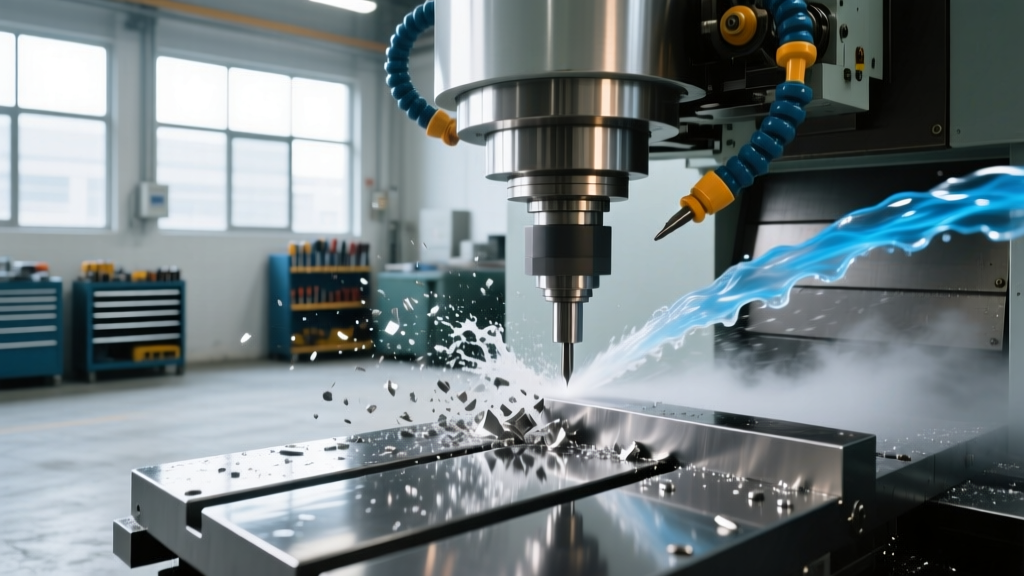
MQL abandons the cooling phase entirely, focusing 100% on boundary lubrication. By atomizing a biodegradable ester oil into a fine aerosol and delivering it via compressed air directly to the cutting edge, MQL creates a microscopic tribofilm that reduces friction. As detailed in extensive research by Sandvik Coromant's metalworking fluid knowledge base, MQL excels in operations where thermal shock is a primary failure mode.
System Specifications and Fluid Selection
MQL requires specialized delivery units, such as those manufactured by Unist or Accu-Lube, which precisely meter fluid in the microliter range. The fluid of choice for tool steel is typically a high-viscosity, plant-based ester, such as Accu-Lube LB-2000.
- Air Pressure: 4 to 6 bar (58-87 PSI) at the nozzle to ensure the aerosol penetrates the high-velocity air barrier surrounding a spinning spindle.
- Fluid Consumption: 5 to 15 mL per hour. A single 1-gallon jug of ester oil can last a single-shift machine shop several months.
- Nozzle Placement: External MQL nozzles must be positioned within 1.5 to 2 inches of the cutting zone, angled at 45 degrees to the tool rake face. Internal (through-tool) MQL is vastly superior for drilling tool steel, as it delivers the lubricant directly to the flute evacuation point.
MQL Maintenance Schedule
MQL eliminates sump maintenance, but requires strict attention to pneumatic and delivery components.
- Daily: Verify nozzle alignment. A deviation of just 0.5 inches in MQL delivery will result in catastrophic tool failure due to lack of lubrication.
- Weekly: Purge the air lines. Condensation in the shop air supply can mix with the ester oil, causing sputtering and uneven aerosol distribution.
- Quarterly: Inspect and replace the internal metering diaphragms in the MQL pump unit to ensure volumetric accuracy.
Head-to-Head Comparison Matrix
The decision between flood and MQL is not purely technical; it heavily impacts shop floor economics and environmental compliance.
| Parameter | High-Pressure Flood Coolant | Minimum Quantity Lubrication (MQL) |
|---|---|---|
| Primary Function | Heat extraction and chip evacuation | Friction reduction (boundary lubrication) |
| Fluid Cost (Per Gallon) | $35 - $60 (Semi-synthetic concentrate) | $120 - $180 (Ester-based MQL oil) |
| Annual Fluid Spend (1 Machine) | $1,500 - $3,000 (including disposal) | $300 - $600 (minimal volume used) |
| Chip Recyclability | Poor (chips are wet, hazardous waste) | Excellent (chips are nearly dry, high scrap value) |
| Setup Complexity | Moderate (plumbing, sump, skimmers) | High (requires precise nozzle targeting per tool) |
| Best Suited Operation | Deep hole drilling, heavy roughing, grinding | Finish milling, tapping, interrupted cuts |
Decision Framework: Choosing Your Lubrication Strategy
Use the following operational framework to determine the optimal lubrication system for your specific tool steel application:
When to Mandate Flood Coolant:
- Heavy Roughing of M2 High-Speed Steel: The sheer volume of chips generated during aggressive roughing requires the physical mass of flood coolant to flush the cavity. MQL aerosols will be overwhelmed by the chip volume, leading to recutting and insert chipping.
- Deep Hole Drilling (Depth > 5x Diameter): Chip evacuation in deep D2 or A2 mold bases requires 1,000+ PSI through-tool flood coolant to prevent chip packing and drill breakage.
- Creep-Feed Grinding: Thermal management is the only priority; MQL cannot extract heat fast enough to prevent metallurgical burning during grinding.
When to Mandate MQL:
- Finish Milling and Profiling: MQL provides superior surface finishes (Ra < 0.8 µm) on tool steel by preventing the micro-welding of workpiece material to the cutting edge.
- Tapping and Thread Milling: The high friction and low cutting speeds of tapping O1 or A2 steel benefit immensely from the extreme pressure (EP) additives in ester MQL oils, reducing tap breakage by up to 40%.
- Interrupted Cuts: Machining splines or cross-holes in tool steel with flood coolant causes rapid thermal cycling. MQL maintains a steady thermal baseline, drastically extending insert life.
Critical Failure Modes in Tool Steel Machining
Even with the correct system selected, specific failure modes plague tool steel machining. Understanding these edge cases separates novice setups from expert manufacturing cells.
Thermal Shock and the 'White Layer' Effect
When using flood coolant on an interrupted cut (such as milling a keyway in a D2 shaft), the cutting edge experiences extreme temperature spikes followed by immediate quenching as it exits the cut and hits the coolant stream. This rapid thermal cycling causes micro-cracking in the carbide insert. Worse, it can quench the surface of the tool steel workpiece, forming a brittle, untempered martensitic structure known as the 'white layer'. This layer will spall and crack under operational stress. Solution: Switch to MQL for interrupted cuts, or use an air-blast assist with flood coolant to reduce the quenching severity.
Built-Up Edge (BUE) on Air-Hardening Grades
A2 and D2 tool steels contain high levels of chromium and carbon, making them highly prone to BUE when machined in their annealed states. If your semi-synthetic flood coolant is running lean (below 6% concentration), the boundary lubrication film will collapse. The tool steel will weld to the rake face of the insert, eventually tearing out the carbide substrate when the BUE breaks off. Solution: Increase coolant concentration to 10%, or apply a targeted MQL ester spray directly to the rake face to supplement the flood system.
Summary of Best Practices
Mastering how to machine tool steel requires abandoning the 'one-size-fits-all' approach to lubrication. Flood coolant remains indispensable for high-volume chip evacuation and gross thermal management in heavy roughing and deep-hole applications. However, the integration of MQL for finishing, tapping, and interrupted cuts offers a mathematically superior ROI, eliminating sump maintenance while protecting the metallurgical integrity of high-value tool steel components. Evaluate your specific cycle times, alloy grades, and scrap values to engineer a hybrid or targeted lubrication strategy for your shop floor.