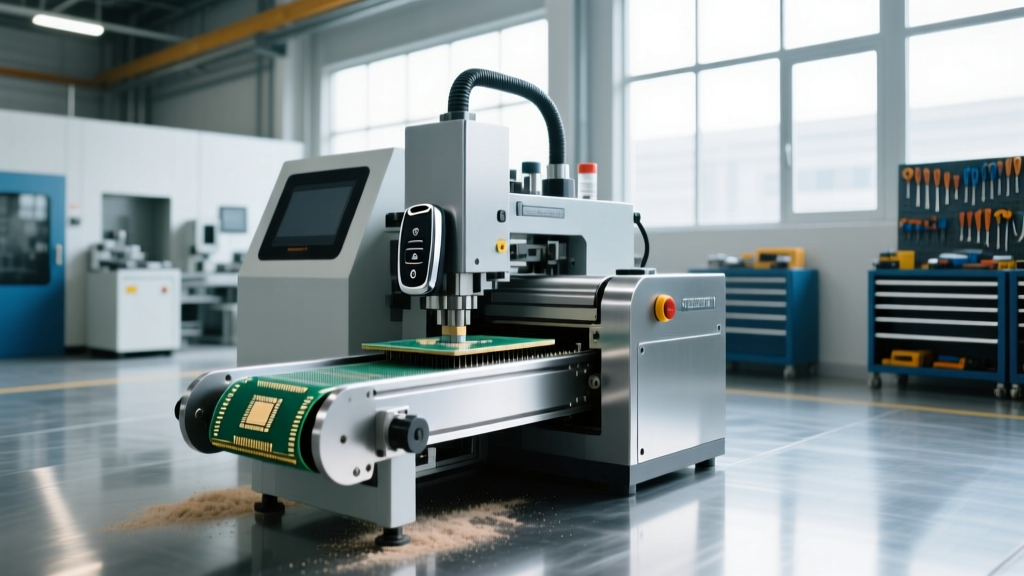
How the Design of Machine Tool Assets Impacts Auction Liquidation
Maximize auction returns by troubleshooting machine tool designs before liquidation. Learn repair strategies for CNC mills, lathes, and proprietary controls.
The Liquidation Triage: Assessing Repairability by Machine Architecture
When a manufacturing facility faces closure, consolidation, or bankruptcy, the liquidation strategy dictates the final capital recovery. However, shop owners and asset managers frequently overlook how the original design of machine tool architectures directly influences refurbishment costs, auction marketability, and ultimate hammer prices. In the 2026 secondary equipment market, buyers are increasingly scrutinizing serviceability and control obsolescence over raw specification sheets. A machine with superior machining capabilities but a proprietary, unsupported control system will often liquidate for scrap value, while a highly serviceable, modular machine commands a premium.
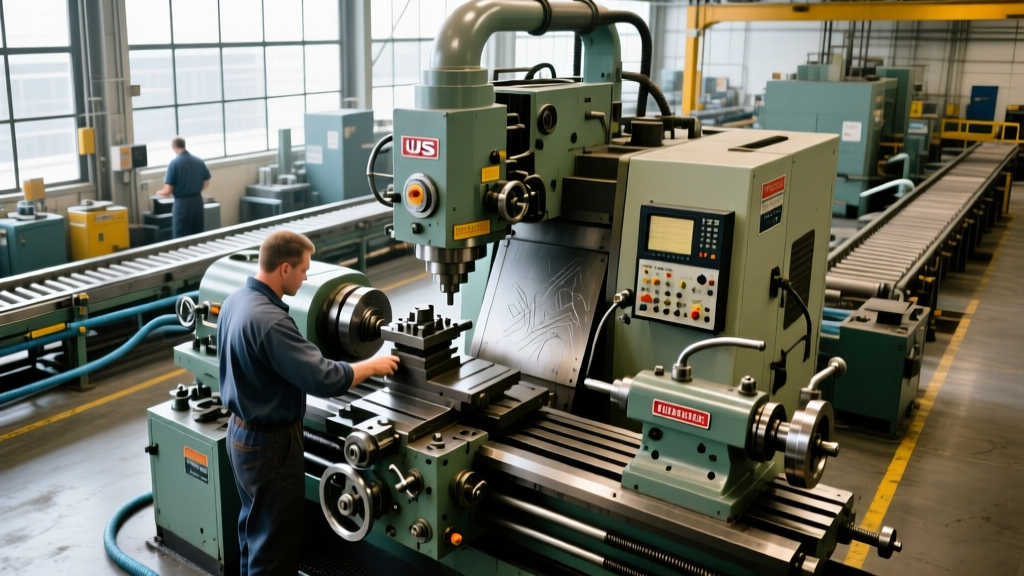
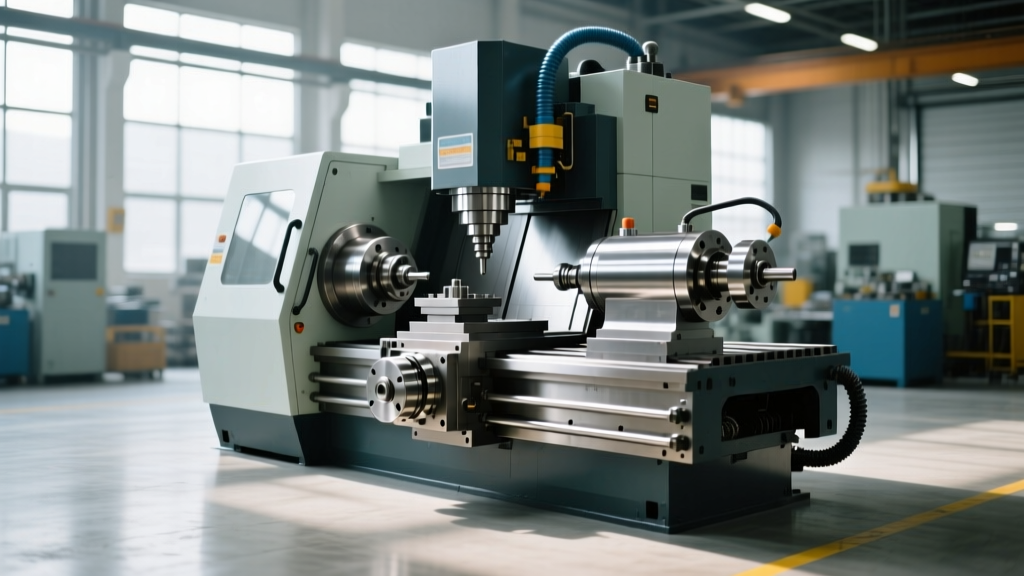
Understanding the engineering intent behind the equipment is the first step in pre-auction triage. The fundamental design of machine tool structures generally falls into two categories: monolithic castings and modular weldments. Monolithic castings, such as those found in legacy Mori Seiki lathes or older Bridgeport mills, offer superior vibration damping and thermal stability. However, when these machines suffer from way wear or internal casting cracks, the repair is often economically unviable for liquidation. Conversely, modular weldment designs—common in modern Haas VF series mills or Doosan vertical machining centers—allow for easier component swapping. If a sheet metal enclosure is damaged or a specific axis motor mount is cracked, the modular design allows liquidators to source and replace individual sub-assemblies for under $1,200, instantly restoring the machine's visual and functional appeal for the auction block.
⚠️ Liquidation Warning: Never attempt to power on a machine that has been in cold storage for over 18 months without first inspecting the way lubrication system. The design of machine tool lube distribution relies on meter units (such as Bijur or Injecto models) which frequently clog with congealed oil. Forcing a dry axis will score the linear guides or box ways, instantly deducting $8,000 to $15,000 from the machine's auction value.Troubleshooting Common Failures in Legacy vs. Modern Tool Designs
Before listing equipment with auction houses tracked by industry directories like Surplus Record, a rigorous mechanical and electrical troubleshooting protocol must be executed. The repair strategy depends entirely on the machine's specific engineering era and component sourcing.
Spindle Taper Wear and Runout Diagnostics
Spindle health is the primary value driver for CNC milling machines. The design of the tool retention system—whether a BT40, CAT50, or HSK63 taper—dictates the troubleshooting approach. For CAT50 spindles common in heavy-duty hogging mills, taper fretting is a frequent failure mode caused by micro-movements during high-torque cuts. To troubleshoot this pre-auction:
- Insert a certified test bar (minimum 12-inch projection) into the spindle.
- Mount a 0.0001-inch resolution dial indicator on the table, touching the test bar near the spindle nose.
- Rotate the spindle by hand. Runout exceeding 0.0003 inches indicates internal bearing degradation or taper bell-mouthing.
- Move the indicator to the 12-inch mark. If runout exceeds 0.0008 inches at this distance, the spindle requires a complete rebuild.
A professional spindle rebuild for a standard 10,000 RPM BT40 cartridge costs between $3,800 and $5,500 in 2026. If the machine's estimated auction value is below $12,000, liquidate it as-is with a full disclosure report rather than investing in the repair.
Proprietary CNC vs. Open-Architecture Controls
The electrical design of machine tool cabinets often determines whether a machine will sell at auction or be parted out. Machines equipped with proprietary, integrated controls (such as older Mazak Mazatrol or Okuma OSP systems) pose a massive liquidation risk. If the CRT monitor fails or the main CPU board drops a memory chip, sourcing a replacement from the OEM can cost upwards of $14,000 and take months.
Conversely, machines designed with open-architecture controls (like Fanuc 0i-F Plus or Siemens Sinumerik 828D) are highly liquid. Troubleshooting a dead Fanuc control usually isolates to a $450 power supply unit or a $1,200 axis amplifier, both of which are readily available on the secondary market. If you are liquidating a facility full of proprietary-control machines, consider partnering with a specialized retrofitter to install a universal CNC brain (such as a Centroid or MachMotion system) before the auction. A $16,000 retrofit can increase a dead machine's hammer price from $2,000 (scrap) to over $25,000.
Comparative Repair Economics by Machine Class
Use the following matrix to determine whether to repair, retrofit, or liquidate as-is based on the machine's design class and current secondary market demand.
| Machine Design Class | Common Failure Mode | Avg. Repair Cost (2026) | Liquidation Strategy |
|---|---|---|---|
| Standard VMC (Haas VF-2, DMG Mori CMX) | Way lube system failure / Ballscrew backlash | $800 - $3,500 | Repair. High auction demand; ROI on repair is typically 3x to 5x. |
| Complex 5-Axis (Mazak Integrex, Hermle C40) | Trunnion bearing wear / Rotary union leaks | $12,000 - $28,000 | Sell As-Is. Only specialized rebuilders buy these at auction; provide maintenance logs instead of repairing. |
| Legacy CNC Lathe (Monolithic, proprietary) | Control board failure / Turret indexing fault | $8,000 - $18,000 | Retrofit or Part Out. Sell the chuck, tailstock, and chip conveyor individually if control retrofit exceeds machine value. |
| Heavy Gantry Mill (Weldment, open control) | Gearbox backlash / Spindle orientation fault | $4,000 - $9,000 | Repair. Heavy iron commands high freight costs; buyers expect operational readiness upon arrival. |
Step-by-Step Diagnostic Protocol for Pre-Auction Refurbishment
To maximize recovery, follow this systematic troubleshooting sequence recommended by manufacturing technology standards organizations like AMT for preparing assets for sale.
💡 Pro Tip: Always record a continuous, unedited 10-minute video of the machine executing a standard circle-square-diamond test cut. Upload this to the auction listing. Buyers in 2026 heavily discount machines that only show 'power on' photos, assuming hidden geometric errors.1. Hydraulic and Pneumatic Isolation
Check the hydraulic pump pressure against the manufacturer's nameplate specification (typically 1,000 to 1,500 PSI for standard clamping circuits). Listen for cavitation whines, which indicate a failing pump shaft seal. For pneumatics, verify the FRL (Filter-Regulator-Lubricator) unit. A dried-out air tool oiler will destroy the tool changer cylinder in a matter of weeks. Replace the FRL filter element ($35) and fill with ISO 32 air tool oil before the auctioneer photographs the machine.
2. Ballscrew and Axis Repeatability Mapping
Backlash is the silent killer of auction value. Command the X-axis to move exactly 1.0000 inch in one direction, then reverse 1.0000 inch. Measure the actual displacement with a dial indicator. If the variance exceeds 0.0005 inches, the ballscrew nut is worn. While a full ballscrew replacement costs $2,500+, you can temporarily troubleshoot this for the auction by adjusting the backlash compensation parameters in the CNC control. Document the exact parameter changes in the machine's binder so the buyer can recalibrate it with a laser interferometer post-purchase.
3. Tool Changer (ATC) Timing Verification
The ATC is the most frequent point of catastrophic failure during an auction demonstration. The design of the cam box and mechanical arm requires precise timing. Run the ATC empty for 50 continuous cycles. If the arm hesitates or the tool retention fingers fail to fully open, the cam switch proximity sensors are likely misaligned by a fraction of a millimeter. Loosen the sensor brackets, adjust the timing until the transitions are seamless, and re-torque to 14 Nm.
Valuation Impact: When to Repair and When to Sell As-Is
According to market analyses published by Modern Machine Shop, the secondary market has bifurcated. Startups and job shops are aggressively bidding on plug-and-play, late-model VMCs, while seasoned rebuilders scour auctions for heavy, repairable iron. Your troubleshooting efforts should align with your target buyer.
"In the current liquidation climate, spending $5,000 to fix a cosmetic sheet metal issue or a broken chip conveyor yields a negligible return. However, spending $3,000 to verify spindle runout, flush the coolant tank, and certify the axis geometry can increase the final hammer price by 40%. Buyers are paying for certainty, not just iron."
Ultimately, the decision to repair hinges on the machine's baseline architecture. If the design of the machine tool allows for easy access to wear components—such as linear guide blocks that can be swapped in four hours—invest in the repair. If the design requires tearing down the entire casting to access a worn gear, sell it transparently as a rebuilder's special.
FAQ: Troubleshooting and Liquidation Edge Cases
How do I troubleshoot a machine with a completely dead control before listing it?
Start at the main disconnect and verify incoming 3-phase voltage. Check the 24VDC control power supply; these fail frequently due to capacitor degradation. If the 24V rail is dead, the CNC will not boot. Replacing a standard 24V power supply costs under $200 and can instantly resurrect a $40,000 machine for the auction block.
Should I drain the coolant and hydraulic fluids before an auction?
Never drain fluids unless the machine is being exported or shipped via a carrier that strictly prohibits hazardous materials. A dry machine signals to buyers that it has been sitting neglected, and rust will form on the cast iron table within 48 hours. Leave the fluids in, but skim the tramp oil and add a fresh shot of biocide to eliminate foul odors during the in-person auction preview.
What is the biggest mistake sellers make when preparing machines for liquidation?
The most costly mistake is wiping the CNC memory to 'protect proprietary data' without first backing up the machine parameters, macros, and tool offsets. The design of machine tool software relies on these specific calibration files. Stripping the memory forces the buyer to spend 40+ hours re-calibrating the machine, which they will factor into their bid, often deducting $3,000 to $5,000 from their offer.