Beyond the Hype in Machine Tool Industry News: Linear vs Box Ways
Compare linear and box way CNC systems. Discover friction coefficients, damping ratios, and real-world costs to choose the right machine tool architecture.
When scanning the latest machine tool industry news, buyers and shop owners are frequently bombarded with headlines about 20,000 RPM spindles, AI-driven thermal compensation, and automated probing cycles. While these features improve productivity, the true determinant of a CNC machining center's longevity, dynamic rigidity, and chatter resistance lies hidden beneath the sheet metal: the way system. The debate between linear guide systems and traditional box ways remains one of the most critical architectural decisions in machine tool design.
Choosing the wrong way system for your specific material mix and cycle times will result in premature tool wear, poor surface finishes, and catastrophic chatter during heavy roughing. This analysis strips away the marketing jargon to compare the exact physics, real-world costs, and application frameworks of linear versus box way architectures in 2026.
Quick Data Snapshot: The Physics of Friction
- Linear Ways (Ball Type): Friction coefficient (μ) ≈ 0.002. Stick-slip is virtually eliminated.
- Linear Ways (Roller Type): Friction coefficient (μ) ≈ 0.003. Higher rigidity, slightly lower speed limits.
- Box Ways (Turcite-Coated): Friction coefficient (μ) ≈ 0.05 to 0.08. Relies on hydrodynamic oil films.
- Damping Capacity: Box ways offer up to 10x greater vibration absorption than ball-type linear guides due to the squeeze-film effect of the lubricant.
The Anatomy of Linear Guide Systems
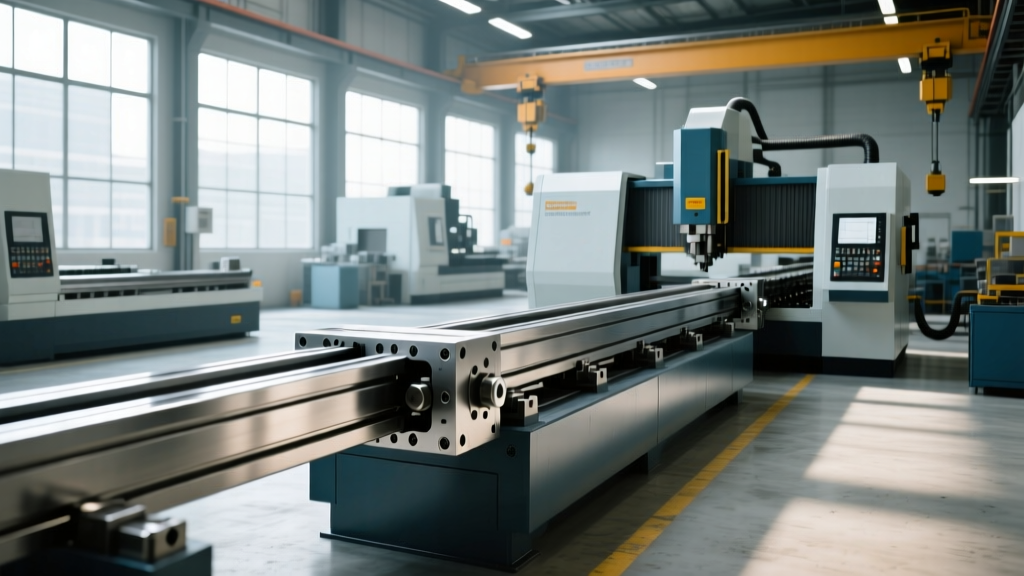
Linear motion systems utilize recirculating ball or cylindrical roller bearings that travel along hardened steel rails. Brands like THK Linear Motion Systems and Bosch Rexroth dominate this space with highly engineered carriage blocks. In a standard ball-type linear guide, the point contact of the balls against the raceway allows for exceptionally low rolling resistance.
Speed and Positioning Accuracy
Because rolling friction is a fraction of sliding friction, linear ways permit rapid traverse rates that box ways simply cannot match. Modern vertical machining centers (VMCs) equipped with linear guides routinely achieve rapid traverses of 48 to 60 meters per minute (m/min), with high-speed aerospace models pushing past 100 m/min. The absence of stick-slip—a phenomenon where static friction exceeds kinetic friction—allows linear systems to execute micro-movements down to sub-micron levels without hesitation, making them ideal for high-speed contouring and 3D mold machining.
The Rigidity Trade-Off
Standard ball-type linear guides suffer from lower dynamic rigidity compared to box ways. The contact area between a spherical ball and a steel rail is microscopic. When subjected to heavy radial cutting forces (such as side-milling a steel forging), the carriage can deflect. To counter this, manufacturers now offer pre-loaded roller linear guides, which replace balls with cylindrical rollers to increase the contact area from a point to a line. However, this increases friction and cost, bridging the gap between traditional linear and box way performance.
The Enduring Power of Box Way Architecture
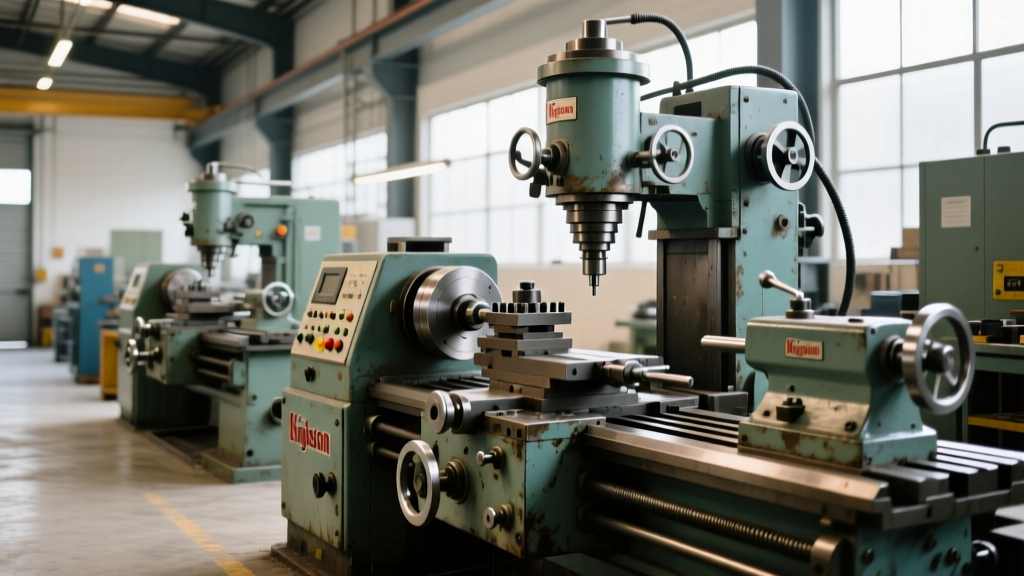
Box ways rely on sliding friction. The machine's saddle and table slide directly against the column and bed. To prevent galling and reduce friction, the sliding surfaces are lined with low-friction polymers like Turcite-B (a PTFE and bronze composite) or Rulon, and lubricated by a continuous film of way oil (typically ISO VG 68).
The Art of Hand Scraping
A true box way machine requires meticulous hand scraping. Master technicians use precision straightedges and scraping tools to create microscopic pockets in the cast iron. Achieving a standard of 20 to 30 points per square inch (PPI) ensures that the way oil is trapped in these pockets, maintaining a hydrodynamic film even when the machine is static. This oil film is the secret to the box way's superior damping characteristics.
Chatter Resistance in Heavy Cutting
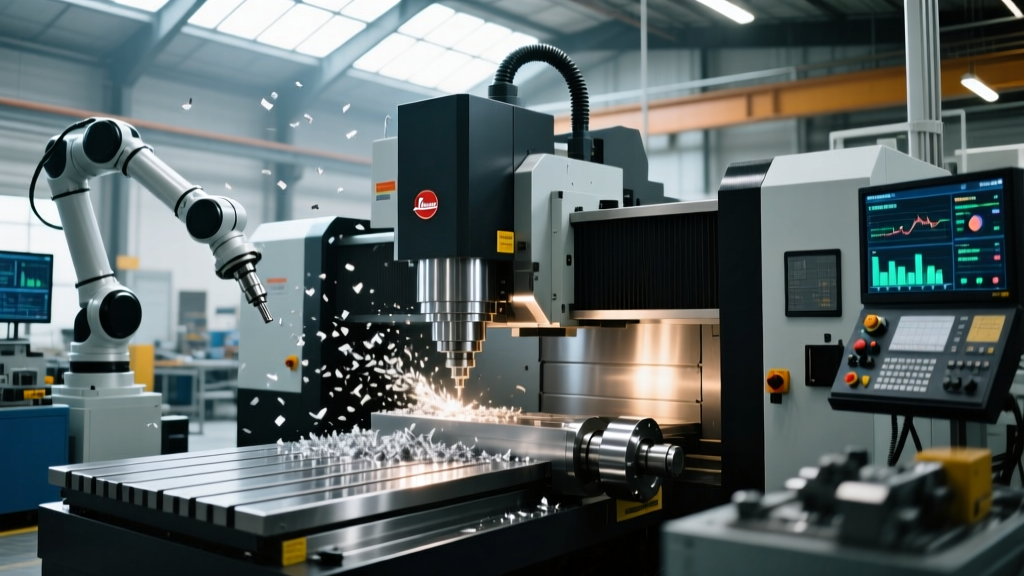
When machining difficult materials like Inconel 718 or Titanium Ti-6Al-4V, cutting forces generate high-frequency vibrations. The large surface area of a box way, combined with the viscous squeeze-film effect of the oil, absorbs these vibrations before they can transfer to the spindle or tool. Machines like the Kitamura Mycenter series or heavy-duty Makino Machining Centers utilize massive box way footprints specifically to allow aggressive depth-of-cut roughing without tool chatter.
Head-to-Head Comparison Matrix
| Feature | Linear Ways (Ball/Roller) | Box Ways (Sliding/Turcite) |
|---|---|---|
| Rapid Traverse | 48 - 120 m/min | 15 - 30 m/min |
| Dynamic Damping | Low to Moderate (Roller > Ball) | Exceptional (Oil film absorption) |
| Stick-Slip | Negligible | Present (mitigated by Turcite/oil) |
| Load Capacity | High (Concentrated point/line load) | Extreme (Distributed surface load) |
| Thermal Growth | Low friction heat generation | Higher friction heat; requires warm-up |
Real-World Application Decision Framework
Selecting between these systems requires matching the machine's physics to your shop's specific part geometry and material mix. Use this framework to guide your capital equipment purchases in 2026.
Scenario A: High-Speed Aluminum Aerospace Milling
Verdict: Linear Ways (Ball Type).
When machining 6061 or 7075 aluminum, cutting forces are relatively low, but material removal rates (MRR) require high feed rates and rapid traverses to keep cycle times profitable. The low friction of ball-type linear guides allows the machine to accelerate and decelerate rapidly without drawing excessive servo current. Box ways would generate excessive heat and limit your traverse speeds, bottlenecking production.
Scenario B: Heavy Roughing of Steel and Titanium Forgings
Verdict: Box Ways.
If your primary work involves hogging out large steel molds or roughing titanium aerospace structural components, you need mass and damping. A box way machine's heavy cast-iron construction and sliding oil film will absorb the severe interrupted cutting forces. Attempting this on a standard ball-type linear guide machine will result in carriage deflection, premature bearing brinelling, and catastrophic insert failure.
Scenario C: High-Precision Jig Boring and Hard Milling
Verdict: Pre-loaded Roller Linear Guides or Hydrostatic Ways.
For tolerances held under 5 microns, standard box ways suffer from stick-slip during micro-adjustments. Pre-loaded roller linear guides eliminate the clearance while maintaining smooth motion. For the absolute highest tier of precision, hydrostatic way systems (where a pressurized oil film completely separates the sliding surfaces) offer zero stick-slip and infinite damping, though at a massive price premium.
Capital Cost & Pricing Reality
The architectural choice directly impacts your bottom line. A standard 40-taper VMC with linear ways (such as a base model Haas VF-2) typically starts between $65,000 and $75,000. A comparable machine featuring true, hand-scraped box ways (like a Kitamura Mycenter-3XD or equivalent heavy-duty Doosan DNM variant) commands a $15,000 to $25,000 premium, pushing the base price well over $100,000. This premium pays for the massive castings, the labor-intensive scraping process, and the high-pressure way lube systems required to keep the sliding surfaces separated.
Maintenance and Lifecycle Considerations
The total cost of ownership extends far beyond the initial purchase price. Way systems dictate your long-term maintenance schedules and rebuild costs.
- Linear Way Maintenance: Linear guides require minimal daily maintenance, relying on automated grease or oil mist injection directly into the carriage blocks. However, if a seal fails and swarf enters the recirculation channel, the entire block is ruined. Replacing a single high-precision THK SHS35 linear block costs roughly $800 to $1,200, while a full carriage and rail replacement on a large machine can exceed $4,500.
- Box Way Maintenance: Box ways are incredibly forgiving of minor contamination but require strict adherence to way oil schedules. Running a box way machine dry will score the Turcite and the cast iron within minutes. Over a 15-year lifecycle, box ways may eventually wear or sag. Rebuilding them requires a specialized technician to re-scrape the surfaces and apply new Moglice (an injectable epoxy resin) or Turcite, a process that can cost $10,000 to $20,000 but restores the machine to factory-new geometric accuracy.
"A linear guide machine is a sprinter; it will win the race in aluminum and light steel. A box way machine is a heavyweight boxer; it absorbs the punches of heavy interrupted cuts that would shatter a linear carriage."
Final Specifications Checklist
When reviewing machine tool quotes, do not simply look at the spindle taper and travel dimensions. Demand the following specifications from the OEM to verify the way system architecture:
- Way Contact Area: Ask for the square-inch footprint of the way contact. Larger footprints equal better damping.
- Pre-load Specification: If quoting roller linear guides, ensure the pre-load is specified (e.g., C1 or C2 pre-load class) to guarantee rigidity under side-loads.
- Scraping Standard: For box ways, require written confirmation of hand-scraping standards (minimum 20 PPI on all mating surfaces, not just mated to a master flat).
- Lube System Type: Ensure the machine utilizes a volumetric or high-pressure proportional way lube system, not a simple resistive drip system, to guarantee oil reaches the furthest points of the axis travel.
By looking past the superficial headlines in modern manufacturing media and focusing on the foundational mechanics of way systems, shop owners can align their capital investments with their actual cutting mechanics, ensuring decades of profitable, chatter-free production.