Upgrading Existing Machine Tool Automation: 2026 Industry 4.0 Cases
Discover how manufacturers upgrade existing machine tool automation with Industry 4.0 connectivity. Real case studies, ROI data, and protocol guides.
The Brownfield Reality: Why Rip-and-Replace is Obsolete
North American machine shops face a compounding dilemma in 2026: the demand for smart factory telemetry is absolute, yet over 65% of the installed CNC base is older than a decade. Replacing a fully depreciated, mechanically sound Okuma MU-8000V or Makino a61nx simply to gain native Industry 4.0 connectivity is mathematically indefensible. Instead, tier-1 and tier-2 suppliers are aggressively retrofitting existing machine tool automation to extract high-fidelity operational data without disrupting production floors.
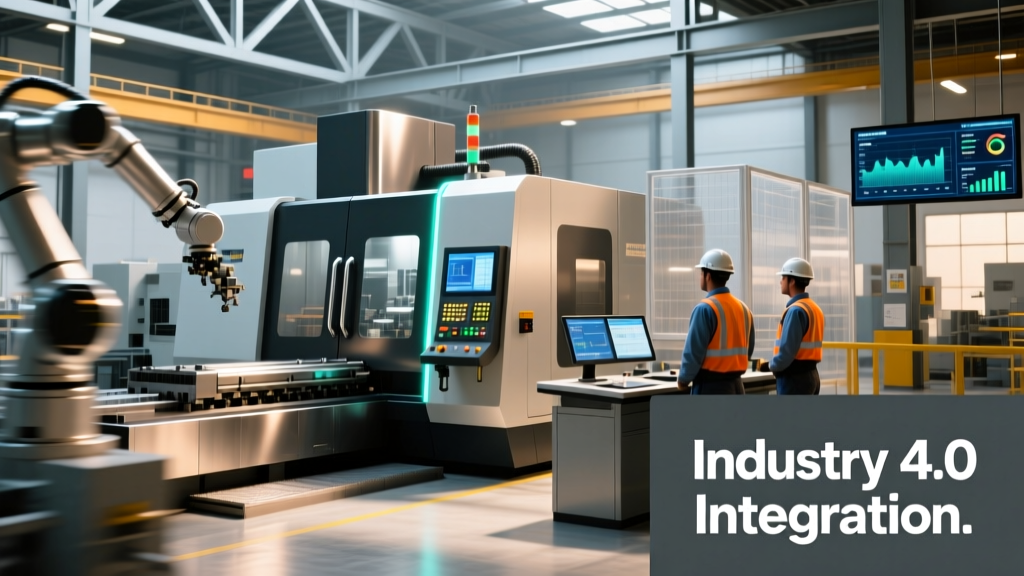
The modern approach to smart machine tools relies on edge computing, protocol translation, and non-intrusive sensor overlays. By bridging legacy PLCs and proprietary CNC controllers to open-standard IT networks, manufacturers are unlocking predictive maintenance and Overall Equipment Effectiveness (OEE) visibility at a fraction of the cost of new capital equipment.
Core Retrofit Economics (2026 Benchmarks)
- Average New 5-Axis HMC: $450,000 - $850,000+
- Average Edge Connectivity Retrofit per Node: $1,800 - $4,500
- Typical OEE Improvement Post-Integration: 8% - 14%
- Average Payback Period: 3.5 to 6 months
Case Study 1: Aerospace Tier-2 Bridges the FOCAS Protocol Gap
An aerospace structural components supplier in Ohio operated a cell of twelve FANUC Robodrill units and three older DMG Mori DMU 50 3rd Generation machines. The existing machine tool automation included standalone FANUC LR Mate robotic loaders, but the cell lacked centralized state monitoring. The FANUC 31i-B5 controls utilized the proprietary FOCAS (FANUC Open CNC API Specifications) protocol, which could not natively communicate with the company’s newly deployed AWS IoT Core cloud infrastructure.
The Integration Architecture
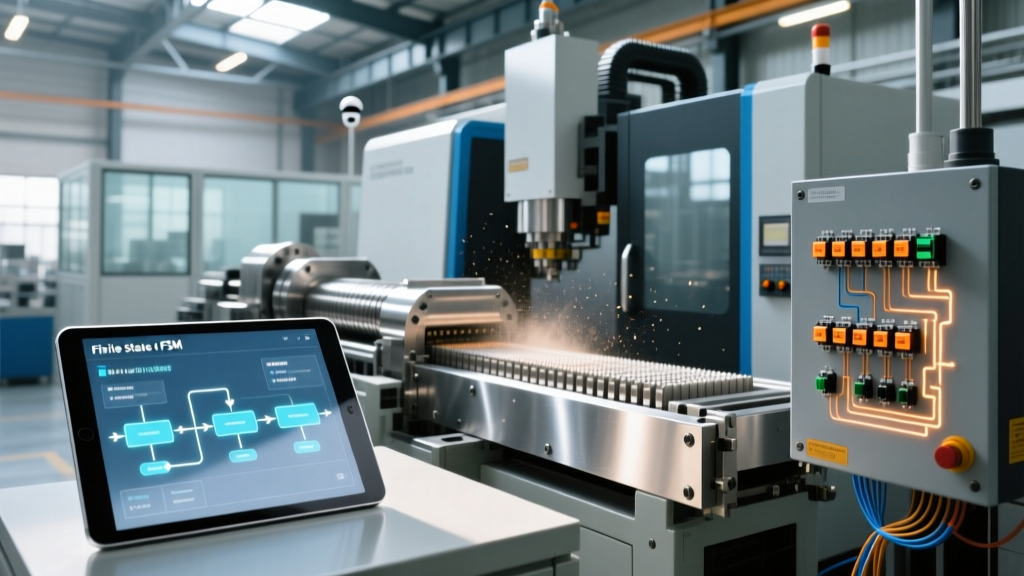
Rather than licensing expensive proprietary OEM cloud portals, the shop deployed Moxa MGate 5105-MB-EIP industrial edge gateways at the cell level. These gateways polled the FOCAS data registers locally via Ethernet and translated the payload into MQTT (Message Queuing Telemetry Transport) for secure, lightweight transmission to the cloud.
- Local Extraction: The gateway polled spindle load, axis servo lag, and active G-code line numbers every 200ms.
- Edge Filtering: To prevent cloud ingestion cost overruns, the edge gateway was programmed to transmit state changes immediately, but only send steady-state telemetry once per minute.
- Cloud Ingestion: AWS IoT Core ingested the MQTT payloads at a cost of roughly $0.05 per 10,000 messages, keeping monthly cloud overhead under $40 for the entire 15-machine cell.
The result was a real-time dashboard showing exact cycle times, tool-change delays, and robotic loader fault codes. By identifying a recurring 4.2-second delay in the robotic gripper actuation sequence, maintenance replaced a worn pneumatic valve, recovering 11 hours of lost production per month. For deeper protocol standardization, many facilities reference the MTConnect Institute to map proprietary CNC data points to standardized XML schemas.
The Connectivity Matrix: Protocols for Legacy Automation
Selecting the correct communication protocol is the most common failure point in brownfield Industry 4.0 deployments. The table below outlines the optimal use cases for connecting existing machine tool automation to enterprise networks.
| Protocol | Best Application | Legacy Compatibility | Security Profile | Avg Node Cost |
|---|---|---|---|---|
| MTConnect | CNC state monitoring, read-only OEE tracking | Excellent (via software adapters) | HTTP/HTTPS (Read-only) | $500 - $1,500 |
| OPC-UA | PLC logic, robotic arms, read/write commands | Moderate (requires modern PLC or gateway) | High (X.509 certificates) | $1,200 - $3,500 |
| MQTT | Edge-to-cloud telemetry, high-frequency sensors | Requires Edge Gateway translation | TLS/SSL encrypted | $800 - $2,000 |
| Modbus TCP | Simple I/O, older VFDs, basic environmental sensors | High (native to older hardware) | Low (plaintext, requires VLAN) | $200 - $600 |
Case Study 2: High-Volume Automotive Spindle Analytics
A Michigan-based automotive transmission housing manufacturer operated a fleet of Makino a61nx horizontal machining centers equipped with legacy Pro6 controls and automated pallet pools. The existing machine tool automation handled material routing flawlessly, but the shop suffered from catastrophic spindle bearing failures that caused $85,000 in scrapped cast aluminum housings annually.
Implementing Non-Intrusive Vibration Telemetry
The engineering team bypassed the CNC controller entirely for high-frequency data. They installed ifm electronic VVB001 vibration sensors directly onto the spindle head castings. These sensors utilized IO-Link to communicate with an ifm IO-Link master, which then pushed the parsed FFT (Fast Fourier Transform) vibration data to an on-premise edge server via OPC-UA.
"Attempting to pull 10kHz vibration data through the CNC's MACRO variables crashed the machine's processor. By utilizing an independent IO-Link sensor overlay, we secured the high-frequency data needed for predictive bearing analysis without risking the existing machine tool automation's core logic."
— Lead Controls Engineer, Tier-1 Automotive Supplier
The edge server ran a localized machine learning model that tracked the degradation of the 1B frequency band. When the vibration amplitude crossed a dynamically calculated threshold, the system automatically triggered an alert in the shop's CMMS (Computerized Maintenance Management System) to schedule a spindle rebuild during a planned weekend shutdown, entirely eliminating unplanned downtime and scrap events.
The PLC Polling Bottleneck: A Hidden Failure Mode
When integrating existing machine tool automation, engineers frequently attempt to poll legacy PLCs—such as the Allen-Bradley SLC 500 or Siemens S7-300—at high frequencies (e.g., every 50ms) to capture rapid state changes. This is a critical error.
Legacy PLC processors prioritize ladder logic execution over communication requests. Aggressive polling from modern SCADA or edge gateways starves the CPU, leading to watchdog timer faults, dropped robotic handshakes, and scrapped parts. The 2026 best practice, heavily documented in NIST Smart Manufacturing guidelines, is to utilize asynchronous, event-driven architectures. By configuring OPC-UA subscriptions or utilizing hardware interrupt routines within the PLC to push data only upon state changes, shops maintain network visibility without compromising the deterministic cycle times of the legacy automation.
ROI Framework: Calculating the Payback of Smart Retrofits
Justifying the capital expenditure for Industry 4.0 connectivity requires moving beyond vague 'smart factory' promises. Use this exact framework to calculate the ROI of upgrading your existing machine tool automation:
Step 1: Quantify the Micro-Stoppages
Review the last 90 days of production logs. Identify the cumulative hours lost to 'unplanned idle' or 'waiting on material/tooling' that the current automation cannot track. Multiply this by your fully burdened shop rate (typically $85-$125/hour).
Step 2: Calculate Scrap Avoidance via Predictive Alerts
Determine the annual cost of scrap caused by tool breakage or thermal drift that could have been prevented by real-time spindle load or temperature monitoring. Apply a conservative 40% mitigation rate to this figure.
Step 3: Factor in Cloud and Maintenance Overhead
Add the annual cost of edge gateway hardware depreciation (typically 5 years), MQTT broker hosting, and cloud database storage. Do not forget the internal IT labor required for certificate management and network security patching.
Step 4: Determine the Payback Multiplier
Divide the total gross annual savings (Steps 1 + 2) by the total first-year implementation cost (Hardware + Integration Labor + Cloud Overhead). A viable brownfield connectivity project should yield a payback multiplier of at least 2.5x in Year 1.
Expert Takeaways for Shop Floor Integration
Upgrading existing machine tool automation for Industry 4.0 connectivity is no longer an experimental IT project; it is a fundamental requirement for maintaining margins in 2026. The most successful deployments share three traits: they respect the real-time constraints of legacy CNC processors, they utilize edge gateways to filter noise before cloud ingestion, and they focus relentlessly on solving specific, costly production bottlenecks rather than collecting data for its own sake. By leveraging open standards like MTConnect and OPC-UA, machine shops can transform their legacy iron into highly visible, data-driven assets without the crushing capital burden of replacement.