2026 Die Machine Tool Auction & Liquidation Strategies
Master 2026 die machine tool auction and liquidation strategies using IoT telemetry, AI valuation, and digital twin verification for maximum ROI.
The secondary market for precision manufacturing equipment has undergone a radical transformation. In 2026, liquidating or acquiring a die machine tool—specifically high-speed 5-axis die profilers and die-sinking EDMs—requires far more than a visual inspection and a power-on test. Today, auction strategies are dictated by data integrity, IoT telemetry, and digital twin verification. Buyers are no longer just purchasing cast iron and spindles; they are acquiring the machine's historical data footprint. For sellers, failing to leverage this data leaves tens of thousands of dollars on the auction block. For buyers, ignoring it invites catastrophic hidden maintenance costs.
The Shift: IoT Telemetry in Die Machine Tool Liquidations
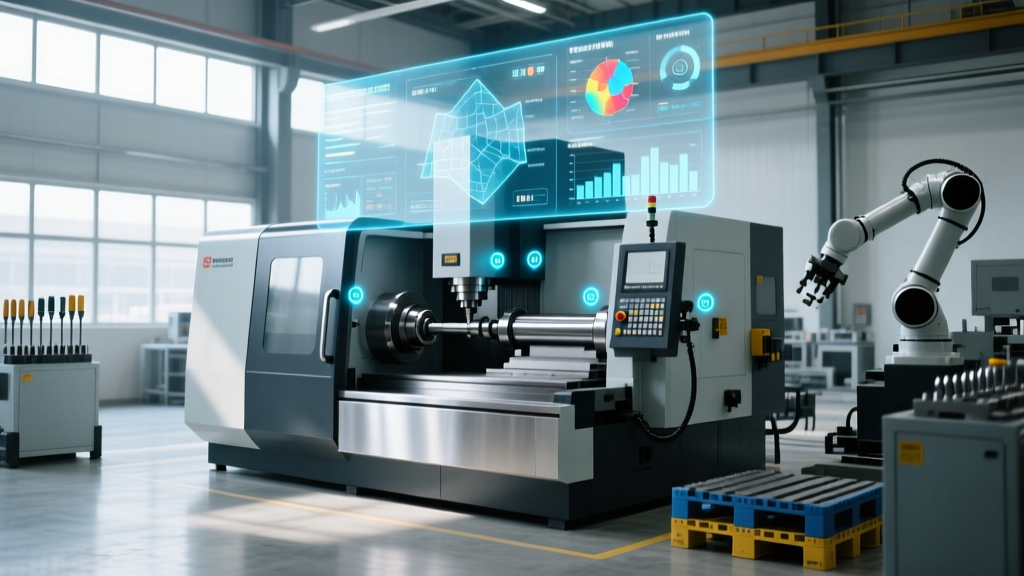
Historically, the auction of a die machine tool operated on an "as-is, where-is" caveat emptor basis. The modern paradigm, driven by the widespread adoption of the MTConnect standard, has shifted the leverage toward data-rich transactions. Machines equipped with MTConnect agents continuously log spindle load, axis servo lag, thermal displacement, and collision events.
When liquidating a die-sinking EDM like the Sodick AG60L or a die profiler like the Makino F5, sellers who provide a verified, unbroken MTConnect data log from the machine's CNC controller can command a 15% to 22% premium over identical models lacking this "digital pedigree." Buyers use this telemetry to run predictive maintenance algorithms, instantly calculating the remaining useful life (RUL) of critical components like the Z-axis ball screw, which experiences disproportionate wear during the constant plunging cycles inherent to die-sinking operations.
Industry Insight: According to market data analyzed by The Association For Manufacturing Technology (AMT), equipment sold with verifiable IoT utilization logs in 2025 and 2026 experienced a 34% faster time-to-sale on major industrial auction platforms compared to data-blind listings.
AI-Driven Valuation Matrix for Die-Making Equipment
AI valuation models now scrape global auction results, cross-referencing specific CNC controller generations and spindle hours to generate real-time liquidation targets. Below is a 2026 valuation framework for three benchmark die machine tools, illustrating how specific technological configurations impact auction hammer prices.
| Machine Model | Primary Die Application | Baseline New Price (2026) | Target Auction Liquidation Value | Key Telemetry Depreciation Factor |
|---|---|---|---|---|
| Makino F5 (FANUC 31i-B5) | High-Speed 3-Axis Die Profiling | $285,000 - $310,000 | $115,000 - $145,000 | Spindle runout > 0.0002" drops value by 18% |
| Sodick AG60L (Sodick NC) | Precision Die-Sinking EDM | $160,000 - $185,000 | $65,000 - $85,000 | Z-axis servo load variance > 5% indicates screw wear |
| DMG MORI HSC 20 linear | Micro-Die & Mold 5-Axis | $450,000 - $500,000 | $210,000 - $260,000 | Linear drive magnetic track degradation logs |
Step-by-Step: Executing a Tech-Enabled Liquidation
If you are preparing to liquidate a die machine tool through platforms like Surplus Record, Ritchie Bros, or specialized private treaty brokers, follow this data-first preparation protocol to maximize your return.
- Extract the Controller Maintenance Logs: Access the diagnostic pages of the FANUC 31i-B5 or Siemens 840D Solution Line controller. Export the alarm history, spindle load histograms, and servo tuning parameters to a USB drive. Do not rely on screenshots; buyers require raw CSV or XML data.
- Perform a Wireless Ballbar Test: Run a Renishaw QC20-W wireless ballbar test on the X-Y and X-Z planes. Upload the circularity and backlash compensation data directly to the auction listing. A documented volumetric accuracy report removes buyer uncertainty.
- Compile the Tooling and Dielectric Inventory: For EDMs, document the remaining life of the dielectric filtration system and the resin beds. For high-speed profilers, list the exact HSK-E40 toolholders included, as precision die tooling holds significant secondary value.
- Generate a Digital Twin Snapshot: Use the machine's kinematic data to generate a current-state digital twin model. Forward-thinking buyers will use this to simulate their specific die-milling toolpaths before bidding, ensuring the machine meets their cycle-time requirements.
Buyer's Due Diligence: Verifying Axis and Spindle Health
For buyers navigating die machine tool auctions, the availability of telemetry data requires a new level of analytical due diligence. You must know which specific data points correlate with impending failure modes in die-making applications.
1. Analyzing Z-Axis Ball Screw Wear in EDMs
Die-sinking EDMs are subjected to aggressive, high-frequency Z-axis plunging to maintain the spark gap. This rapid acceleration and deceleration, combined with the abrasive nature of suspended carbon particles in older dielectric fluid, accelerates Z-axis ball screw wear. Request the servo load logs for the Z-axis. If the baseline current required to move the Z-axis has crept up by more than 8% to 12% over the last 18 months of operation, budget $12,000 to $18,000 for a ball screw replacement and laser calibration.
2. Spindle Thermal Displacement in High-Speed Profilers
When machining hardened tool steels (like P20 or H13) for injection molds and stamping dies, high-speed spindles (20,000 to 40,000 RPM) generate immense heat. Review the spindle thermal displacement logs. If the machine lacks a functional spindle chiller unit or the logs show Z-axis growth exceeding 15 microns during sustained 8-hour roughing cycles, the spindle bearings are likely fatigued. A replacement HSK-E40 spindle cartridge for a Makino or DMG MORI profiler will cost between $25,000 and $45,000 in 2026, drastically altering your true acquisition cost.
Smart Contracts and Blockchain in Equipment Title Transfer
A major innovation in 2026 machine tool liquidations is the integration of blockchain-based smart contracts for title transfer and escrow. High-value die machine tools are frequent targets for auction fraud, including lien disputes and phantom equipment listings. Leading auction houses now utilize smart contracts that hold the buyer's funds in escrow. The funds are only released when the machine's IoT GPS tracker verifies physical delivery to the buyer's facility, and the digital title token is transferred to the buyer's wallet. This eliminates the traditional 30-day lien search delay and provides absolute cryptographic proof of ownership, which is increasingly required by equipment financing firms.
Frequently Asked Questions: 2026 Auction Strategies
Can I retroactively install an MTConnect agent on an older die machine tool before selling it?
Yes. If your machine has an Ethernet port and a compatible FANUC, Siemens, or Heidenhain controller, you can install a hardware gateway (like an MTConnect adapter box) for under $1,500. However, buyers will easily see that the data log only spans the last few months. A short data log is better than none, but it will not command the same premium as a multi-year continuous history.
How do import tariffs affect the liquidation value of Japanese die machine tools?
Fluctuating trade policies heavily impact the secondary market. In 2026, tariff exemptions for specific high-precision manufacturing equipment mean that Japanese-made die machine tools (Sodick, Makino, Mitsubishi EDM) hold their domestic auction value exceptionally well, as importing new equivalents remains cost-prohibitive for mid-tier tool and die shops.
What is the most critical software license to verify before buying a used 5-axis die profiler?
Verify the transferability of the CNC controller's 5-axis kinematic transformation licenses (e.g., FANUC Option 68 or Siemens TCA). If the original owner purchased the machine with 3-axis-only software and the 5-axis license is tied to their corporate master agreement rather than the machine's serial number, you will be unable to legally or technically operate the rotary table and trunnion without purchasing a new license, which can exceed $15,000.